
What if a laptop didn't need to physically contain a powerful GPU to use one?
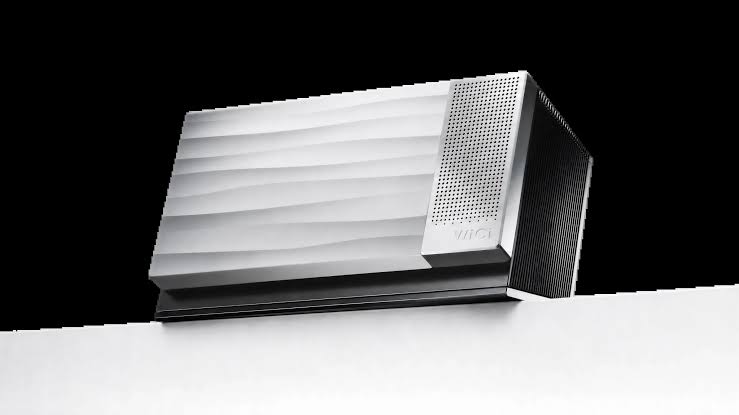
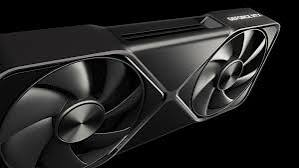
That's the idea behind WiCi One, a wireless local-GPU system that places desktop-class graphics hardware in a dedicated box and makes it available to nearby devices over Wi-Fi. The company says the system can be configured with an NVIDIA RTX 5090 with 32GB of GDDR7, allowing a single GPU to become a shared resource across multiple devices.
Unlike cloud gaming, WiCi says the game itself can continue running on the user's device, with WiCi One acting as its GPU over the local network. The system is built around Wi-Fi 7, a virtual GPU driver, and WiCi's proprietary networking technology.
WiCi One Overview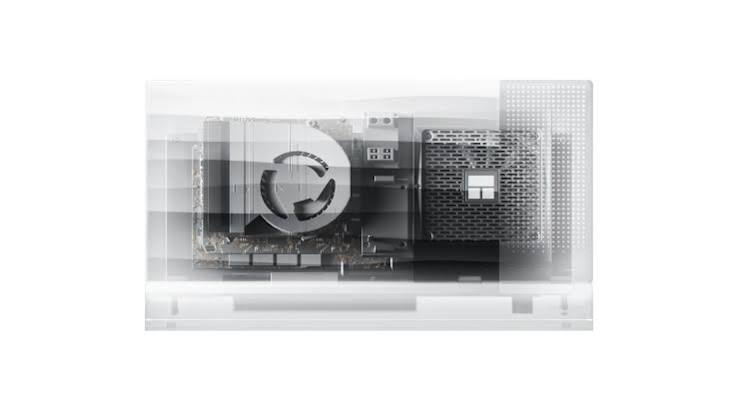
WiCi One is essentially a GPU that sits nearby instead of inside the computer.
The device contains the GPU, CPU, storage, wireless hardware, cooling, and software runtime needed to provide GPU compute to other devices.
WiCi's current specifications list an RTX 5060 Ti 16GB configuration, while the higher-end version is configurable with an RTX 5090 32GB GPU. The company says pricing for the RTX 5090 configuration will be announced closer to launch.
The system is designed to serve laptops, phones, and other compatible devices without requiring a physical GPU cable.
The Wireless GPU Concept
Traditional external GPUs rely on physical connections such as Thunderbolt, USB4, or OCuLink.
WiCi One moves the connection into the wireless network.
Its WiCi Protocol is designed to make a remote GPU feel more like a local computing resource. The company says its software uses caching, deduplication, streaming, and pipelining to reduce the number of network operations that would otherwise introduce latency.
The GPU remains in the WiCi One enclosure, while the host device handles the application's interface, input, and other local functions.
RTX 5090 Configuration
The headline configuration is an NVIDIA RTX 5090 with 32GB of GDDR7.
That gives WiCi One access to a flagship-class GPU without requiring the graphics card to be physically installed inside the user's laptop or compact PC.
The RTX 5090 edition also combines the GPU with 4TB of NVMe 5 storage, which WiCi uses as part of its hierarchical-memory architecture. Its TurboStream system is designed to stream model weights from storage when workloads exceed available GPU memory.
The company has published performance figures for AI workloads and says the RTX 5090 edition can also be used for demanding gaming and creative applications.
Wi-Fi 7 Connectivity
Wi-Fi 7 is at the center of the WiCi One experience.
The hardware specification lists:
- Wi-Fi 7
- 4×4 MIMO
- 320MHz channels
- AirLink Multi-Link transport
WiCi's own architecture documentation describes the system as a one-hop local-network connection rather than a cloud connection. The company reports approximately 1.5 ms link round-trip time in its architecture material, although actual performance depends on the network environment and workload.
This distinction is important because wireless GPU computing has different constraints from conventional wired external GPUs.
Local Gaming
Gaming is one of the most striking applications for WiCi One.
WiCi says the game runs on the user's laptop, rather than being streamed as a finished video from another computer. WiCi One provides the GPU resources remotely over the home Wi-Fi network.
The company's demonstrations include demanding AAA games such as Cyberpunk 2077.
This makes WiCi One different from conventional cloud gaming. The system is intended to keep the application and user interaction local while moving GPU computation to the nearby WiCi hardware.
However, independent testing is still important because wireless GPU performance can vary according to network conditions, workload behavior, and application compatibility.
One GPU, Multiple Devices
The other major concept behind WiCi One is GPU sharing.
Rather than dedicating a graphics card to a single computer, WiCi's architecture is designed to allow one GPU to serve multiple nearby workloads.
The company explains that model weights can be shared between workloads while individual workloads retain their own private state. Its runtime then schedules GPU compute and memory resources between connected devices.
This could allow one powerful GPU to serve several lightweight computers around a home, office, or studio.
Virtual GPU Driver
WiCi's Virtual GPU driver is what makes the concept particularly different from simple remote rendering.
In Driver Mode, WiCi says supported applications can treat the wireless system as a GPU-shaped device. The company lists support across macOS, Windows, and Linux for its virtual GPU approach.
This is intended to allow existing workloads to use WiCi without requiring every application to be rewritten specifically for wireless GPU computing.
WiCi's Three Access Modes
WiCi provides three primary ways of accessing the hardware.
Driver Mode
The virtual GPU driver makes WiCi One available to supported GPU workloads while keeping the application running on the host device.
SDK Mode
Developers can use WiCi's SDK with Python, JavaScript, and Swift to build applications around its wireless compute system.
API Mode
WiCi also provides an OpenAI-compatible API endpoint, allowing compatible AI applications to connect to the local GPU system without requiring a completely new interface.
Unified Hierarchical Memory
WiCi One is not limited to the VRAM installed on its GPU.
The RTX 5090 configuration includes 4TB of NVMe 5 storage, which forms part of WiCi's unified hierarchical-memory architecture.
Its TurboStream technology is designed to stream model weights from storage to the GPU as needed. This is primarily aimed at AI workloads whose models can exceed the amount of physical VRAM available on the graphics card.
WiCi reports RTX 5090 edition results of approximately:
- 5 tokens/sec on Kimi K3, a 2.8T-parameter model
- 20 tokens/sec on DeepSeek V4 Flash
- 500+ tokens/sec on Gemma 4
These figures are WiCi's own published benchmarks, not independent testing.
Hardware and Technology
The WiCi One RTX 5090 configuration combines several components into one dedicated compute box.
GPU: NVIDIA RTX 5090, 32GB GDDR7
CPU: Intel Core Ultra 7 255H
Wireless: Wi-Fi 7, 4×4 MIMO, 320MHz
Storage: 4TB NVMe 5
Runtime: WiCi Protocol, virtual GPU driver, scheduler, SDK, and API
The system is designed to keep the most power-hungry hardware away from the user's primary device while keeping the compute physically nearby.
Platforms and Availability
WiCi One is being developed for local devices including laptops and other compatible computers.
Supported software environments include:
- Windows
- macOS
- Linux
WiCi's developer documentation also references development from Macs, Linux machines, phones, and backend systems.
The company currently advertises WiCi One from $2,599, discounted to $1,999 for early signups. The RTX 5090 configuration's final pricing is listed as being announced closer to launch.
WiCi has announced a product launch event in New York for October 5–6, 2026, featuring live wireless GPU demonstrations across AI, gaming, and creative workloads.
Why It Matters
WiCi One represents a different approach to the traditional GPU upgrade.
Instead of putting an increasingly powerful graphics card inside every computer, the company is trying to make one nearby GPU available to multiple devices.
For gaming, that could mean a thin laptop accessing RTX 5090-class graphics without becoming a heavy gaming laptop. For AI, the same GPU could serve several devices while its local storage provides an additional memory tier.
The biggest question is how well the concept performs outside controlled demonstrations. Wi-Fi introduces variables that wired GPU connections do not, and WiCi itself acknowledges that performance depends on the workload and network.
🎮 The Bottom Line
WiCi One turns the traditional external GPU concept into a wireless local-computing system. Its planned RTX 5090 configuration places a 32GB flagship GPU on the local network and lets nearby devices access it through Wi-Fi 7.
The most important distinction is that WiCi One isn't simply cloud gaming: WiCi says games can run locally on the host device while the wireless system supplies GPU compute. Its shared-GPU architecture also means one powerful graphics card can potentially serve multiple devices.
The technology is ambitious, but independent real-world testing will ultimately determine how effectively Wi-Fi 7 can deliver the promised wireless GPU experience.