
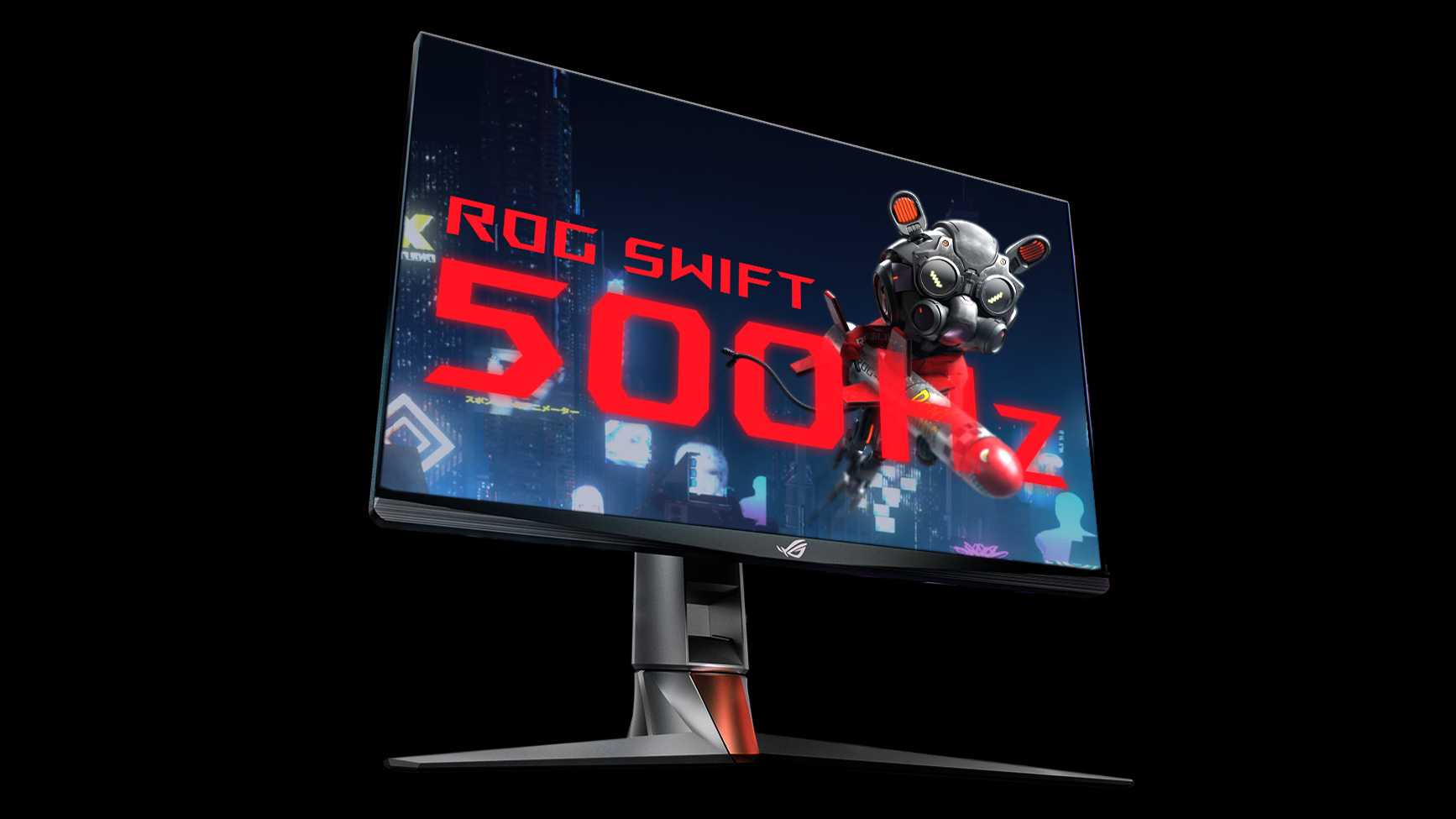
The ASUS ROG Swift 500Hz 4K Monitor is a premium gaming display designed to solve a long-standing problem in high-end monitors: choosing between extremely high resolution and extremely high refresh rates.
Its defining feature is dual-mode display technology, allowing users to switch between a detailed 4K gaming mode and a 500Hz 1080p esports mode. Combined with a QD-OLED panel and DisplayPort 2.1 bandwidth, the monitor is designed for both immersive AAA gaming and competitive esports.
Dual-Mode Display Technology
The monitor's most important feature is its ability to operate in two different display modes.
The primary mode targets 4K resolution, providing considerably greater image detail for modern games, productivity and cinematic content.
The second mode prioritizes speed, switching to 1920 × 1080 resolution at up to 500Hz.
This allows the same monitor to serve two very different audiences:
- 4K mode: Image quality, detail and immersion
- 1080p/500Hz mode: Maximum refresh rate and competitive responsiveness
Instead of requiring two separate monitors, users can select the mode that best matches the game being played.
500Hz 1080p Esports Mode
The 500Hz mode is designed primarily for competitive gaming.
At 500Hz, the display can theoretically refresh the image every 2 milliseconds. This provides extremely low frame intervals when the graphics system can produce sufficiently high frame rates.
The benefits are most relevant in fast-paced games where players constantly track moving targets.
Potential advantages include:
- Smoother motion
- Lower perceived motion blur
- Faster visual feedback
- Reduced display latency
- Improved tracking of rapidly moving objects
- Greater responsiveness in competitive shooters
The 500Hz mode is most useful with games capable of producing hundreds of frames per second. It is therefore aimed more at competitive esports than graphically intensive cinematic games.
4K Gaming Mode
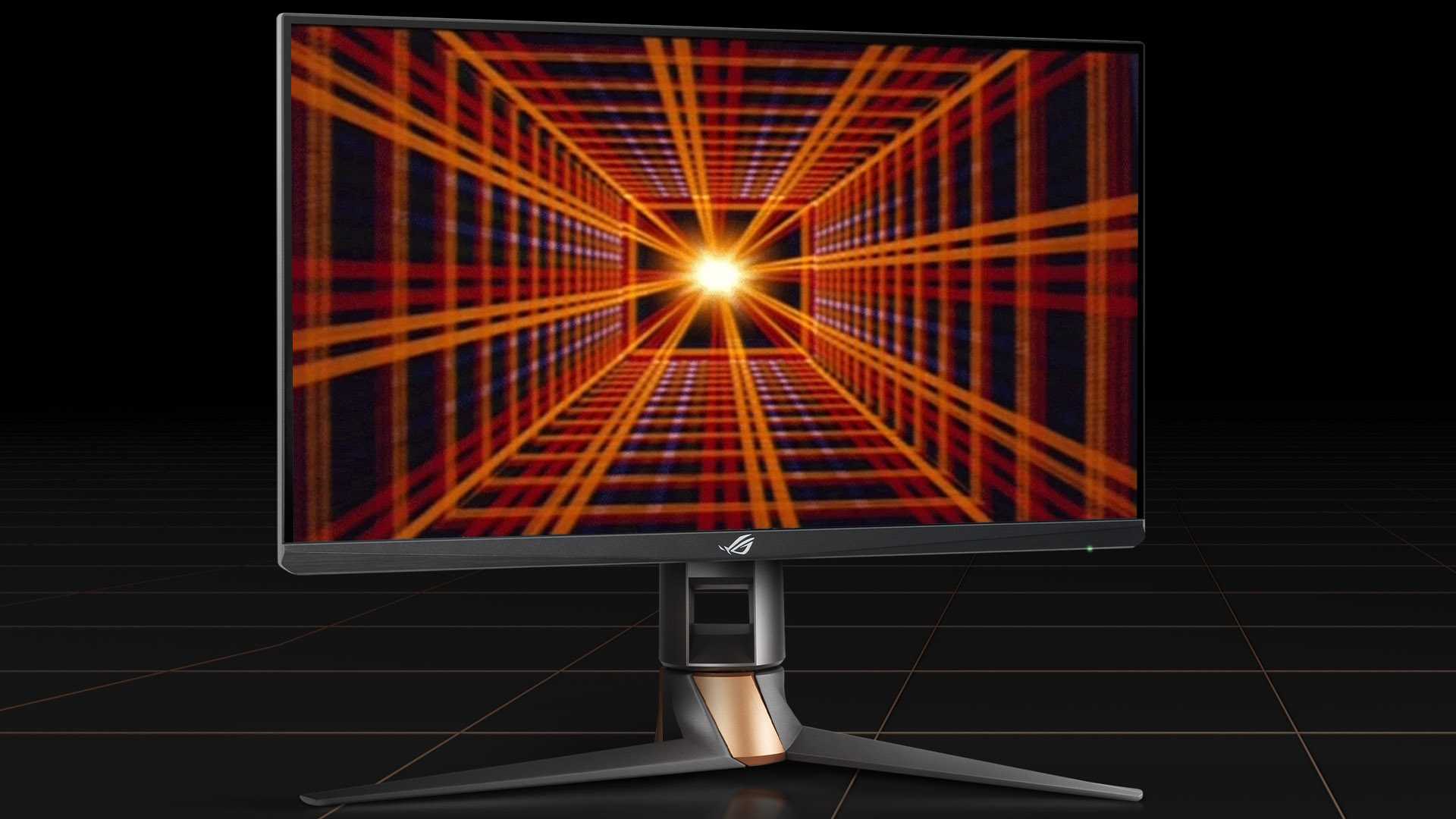
The 4K mode is designed for players who prioritize visual quality.
A 4K display provides 3840 × 2160 pixels, giving four times the pixel count of 1080p.
This makes 4K particularly useful for:
- AAA games
- Open-world games
- Racing simulations
- RPGs
- Strategy games
- Video editing
- High-resolution media
The high pixel density can produce sharper textures, cleaner geometry and more detailed environments.
QD-OLED Panel Technology
The monitor's QD-OLED panel combines OLED's individually controlled pixels with quantum-dot technology.
Unlike conventional LCD displays that rely on a separate backlight, OLED pixels can switch themselves on and off. This enables extremely deep blacks because individual pixels can effectively turn off when displaying black.
QD-OLED adds quantum-dot technology to improve color reproduction and brightness characteristics.
Key advantages include:
- Extremely high contrast
- Deep blacks
- Fast pixel response
- Wide color gamut
- Strong HDR performance
- Excellent motion clarity
The combination is particularly well suited to gaming because fast OLED response times can minimize pixel-level ghosting.
DisplayPort 2.1 Bandwidth
High-resolution, high-refresh-rate gaming creates enormous bandwidth requirements.
This is where DisplayPort 2.1 becomes important.
Earlier display interfaces could require compression or other techniques when attempting to transmit extremely high-resolution images at high refresh rates.
DisplayPort 2.1 provides substantially greater bandwidth than older DisplayPort generations, creating more headroom for demanding display configurations.
For a monitor combining 4K resolution with very high refresh rates, high-bandwidth connectivity is particularly important.
The interface can also provide greater flexibility for future graphics cards as GPU performance continues to increase.
Competitive Gaming
The monitor's 500Hz mode is primarily aimed at esports players.
Competitive games such as first-person shooters benefit from high refresh rates because players frequently move their viewpoint rapidly and react to targets appearing on screen.
A 500Hz display does not automatically make a player better. The entire system must also be capable of producing very high frame rates with low latency.
The biggest benefits therefore appear when paired with:
- A powerful gaming PC
- High-end GPU
- Competitive settings
- Low-latency peripherals
- Games capable of extremely high frame rates
For slower single-player games, the 4K QD-OLED mode is likely to be more visually impressive.
Response Time and Motion Clarity
OLED technology is particularly effective for high-refresh-rate gaming because its pixels can change states extremely quickly.
Fast pixel transitions help reduce trailing artifacts and ghosting during rapid movement.
Combined with a 500Hz refresh rate, this creates a display optimized for motion clarity.
However, perceived responsiveness also depends on the GPU, game engine, input device, system latency and frame rate.
HDR and Image Quality
QD-OLED technology is also designed for high-quality HDR gaming.
The ability to independently control OLED pixels allows the panel to produce very dark blacks alongside bright highlights, creating a high-contrast image.
This can improve:
- Night scenes
- Explosions
- Bright lights
- HDR game environments
- Movies
- High-contrast visual effects
The display's wide color capabilities also make it useful beyond gaming, although professional color-critical work may require calibration and a display designed specifically for that purpose.
Connectivity and PC Requirements
To take full advantage of the monitor, users need compatible hardware.
A system targeting the highest refresh rates in 4K mode requires a powerful graphics card and an appropriate DisplayPort connection.
The 500Hz 1080p mode is considerably easier to drive because rendering at 1080p requires much less GPU power than native 4K.
This makes the dual-mode design practical: users can reserve 4K for visually demanding games and switch to 1080p/500Hz for competitive titles.
Why It Matters
The ASUS ROG Swift 500Hz 4K Monitor is significant because it combines two display categories that traditionally required separate products.
4K monitors prioritize resolution and image quality, while 500Hz esports monitors prioritize speed and responsiveness.
Dual-mode technology brings those priorities together.
The QD-OLED panel adds premium image quality, while DisplayPort 2.1 provides the bandwidth needed for increasingly demanding PC graphics.
For enthusiasts, the appeal is flexibility: one monitor can function as a high-resolution OLED display for cinematic games and a competitive esports monitor when maximum refresh rate matters.
What to Know at a Glance
| Detail | Information |
|---|---|
| Product | ASUS ROG Swift 500Hz 4K Monitor |
| Category | Gaming monitor |
| Panel | QD-OLED |
| Primary Resolution | 4K |
| Esports Resolution | 1080p |
| Maximum Esports Refresh Rate | 500Hz |
| Display Technology | Dual-mode |
| Connectivity | DisplayPort 2.1 |
| Target Users | PC gamers / esports players |
| HDR | Supported |
| Key Feature | 4K-to-500Hz mode switching |
| Status | High-end gaming display |
The Bottom Line
The ASUS ROG Swift 500Hz 4K Monitor combines high-resolution 4K gaming with an ultra-fast 500Hz 1080p esports mode, giving gamers two very different display experiences in one screen.
Its QD-OLED panel provides deep blacks, rapid response and strong color performance, while DisplayPort 2.1 provides the bandwidth needed for demanding high-resolution, high-refresh-rate configurations.
For competitive players, the 500Hz mode is the headline feature. For everyone else, the combination of 4K resolution and QD-OLED image quality makes the monitor a premium choice for immersive gaming.