
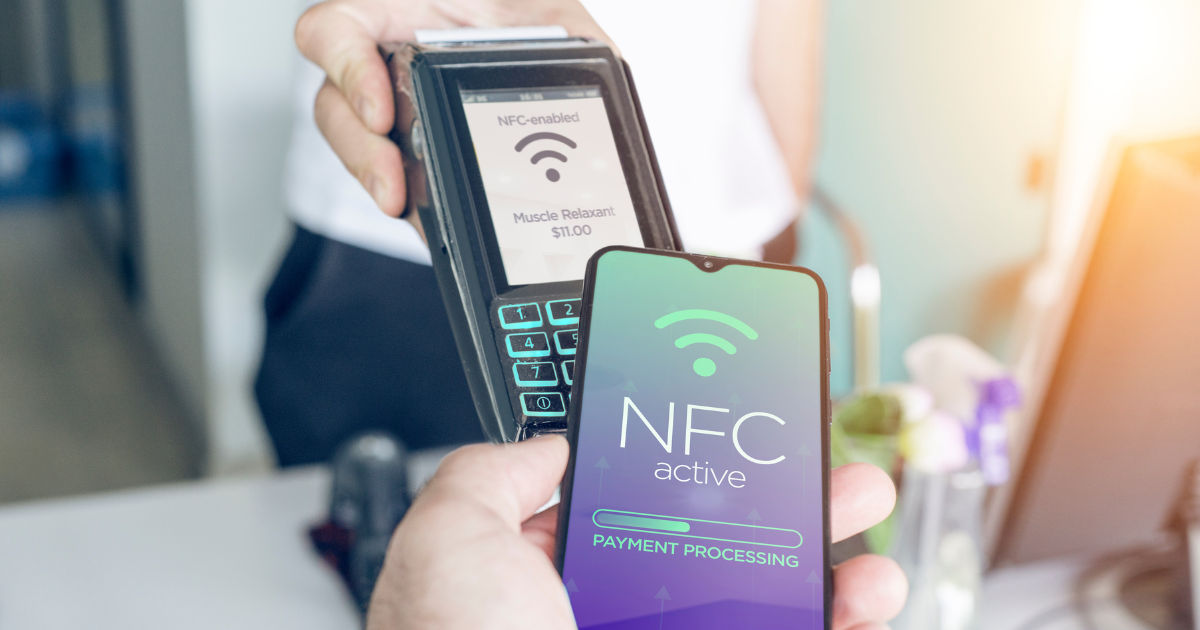
Have you ever tapped your phone to make a payment at a store or quickly shared a photo with another device? If yes, you've probably used NFC, even if you didn't realize it. NFC, or Near Field Communication, is a technology that allows two compatible devices to communicate when they're placed very close to each other—usually within a few centimeters.
While NFC has been around for years, many people still don't know what it does or how it makes everyday tasks easier. Let's break it down in simple terms.
What Is NFC?
NFC (Near Field Communication) is a short-range wireless technology that enables devices to exchange small amounts of data simply by bringing them close together.
Unlike Bluetooth, NFC doesn't require lengthy pairing or setup. A quick tap is often all it takes to establish a connection.
How Does NFC Work?
NFC works using radio waves over a very short distance. One device sends a signal, and the other receives it almost instantly.
This is why you'll often hear phrases like:
- Tap to Pay
- Tap to Pair
- Tap to Share
The short communication range also makes NFC more secure than many other wireless technologies because devices must be physically close to interact.
Common Uses of NFC
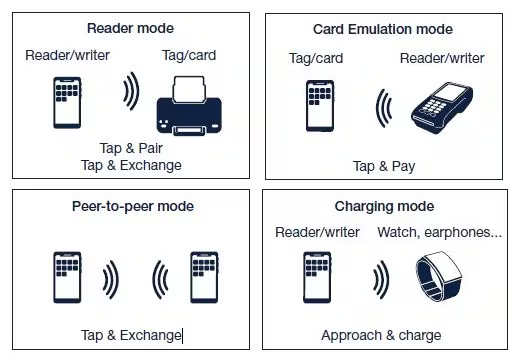
You may already be using NFC more often than you think.
Contactless Payments
One of the most popular uses of NFC is making payments with your smartphone or smartwatch.
Instead of swiping your card, you simply:
- Unlock your device.
- Hold it near the payment terminal.
- Wait for the confirmation.
The transaction is completed in just a few seconds.
Quick Device Pairing
Many wireless headphones, speakers, and smart devices support NFC pairing.
Rather than searching through Bluetooth settings, you can simply tap your phone against the device to establish a connection.
Sharing Files
NFC can also be used to share:
- Photos
- Videos
- Contacts
- Documents
- Website links
Although larger files are usually transferred through Bluetooth or Wi-Fi after the NFC connection is established, NFC makes starting the process much faster.
Access Cards and Tickets
Many offices, hotels, public transport systems, and event organizers use NFC technology for digital access.
You can use your phone to:
- Unlock doors.
- Check into hotels.
- Scan public transport passes.
- Store event tickets digitally.
Advantages of NFC
There are several reasons why NFC has become so popular.
Some of its biggest benefits include:
- Fast and convenient to use.
- No complicated setup required.
- Secure due to its short operating range.
- Low power consumption.
- Works with many smartphones, smartwatches, and payment terminals.
These features make NFC ideal for everyday tasks that need to be completed quickly.
Are There Any Limitations?
Although NFC is useful, it isn't perfect.
Some limitations include:
- It only works over very short distances.
- Both devices must support NFC.
- Large files still rely on Bluetooth or Wi-Fi for transfer.
- Older smartphones may not include NFC hardware.
For most users, however, these limitations are minor compared to the convenience NFC offers.
Is NFC Safe?
Yes, NFC is generally considered very secure.
Because devices need to be extremely close to communicate, it's much harder for someone to intercept your data. For contactless payments, your card details are usually protected through encryption and tokenization, meaning your actual card number isn't shared during the transaction.
However, it's still important to:
- Keep your phone locked when not in use.
- Only tap trusted payment terminals.
- Disable NFC if you never use it.
Following these basic precautions helps keep your information safe.