

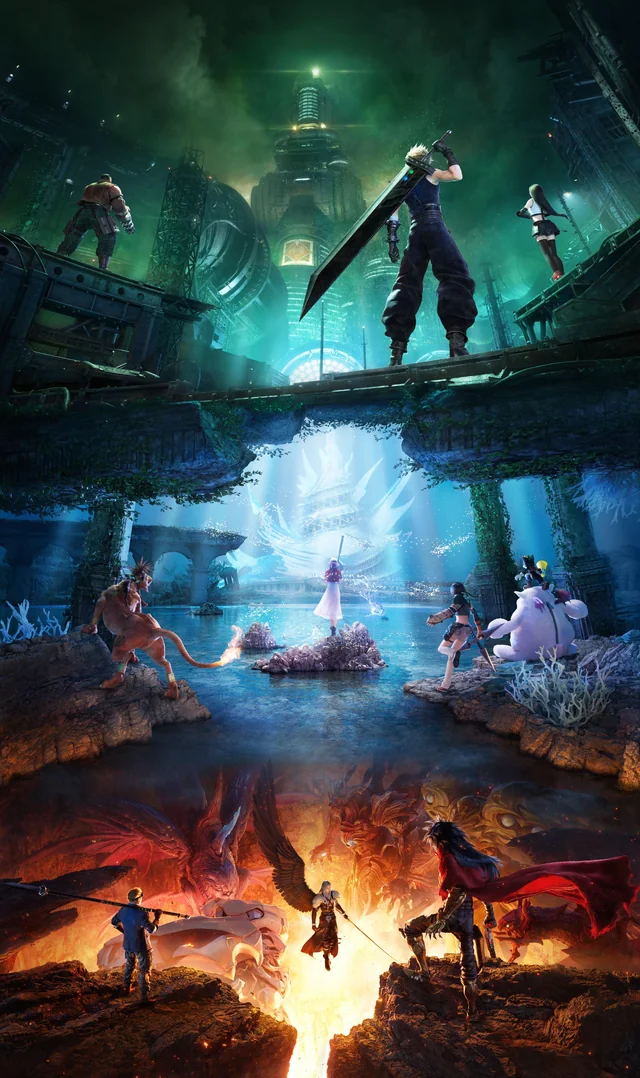
Nearly a decade after the Final Fantasy VII Remake project began, the journey is finally approaching its conclusion. Final Fantasy VII Revelation is the third and final game in Square Enix’s reimagined Final Fantasy VII trilogy, following Final Fantasy VII Remake and Final Fantasy VII Rebirth.
The TGS 2026 hands-on build offered players a closer look at the upcoming finale, including its combat, world design, characters, technical presentation, and new gameplay systems.
The game is scheduled to launch on April 8, 2027, with versions planned for PlayStation 5, Xbox Series X|S, Nintendo Switch 2, and PC.
The Final Chapter of the Remake Trilogy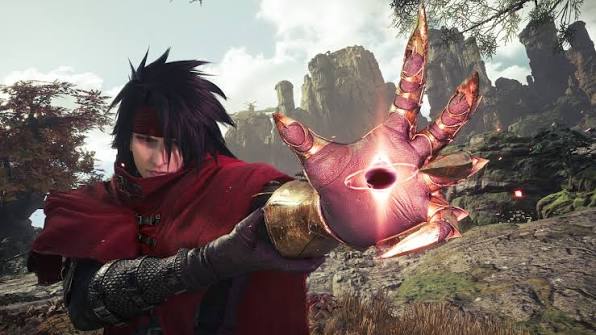
Revelation is designed as the conclusion to the three-part Remake project.
The first game, Final Fantasy VII Remake, transformed the opening Midgar portion of the 1997 RPG into a full-scale modern action RPG. Rebirth expanded the adventure beyond Midgar, introducing a much larger world and significantly more exploration.
Revelation takes the final step by bringing the entire journey toward its conclusion.
The game is positioned as the final entry in the Final Fantasy VII Remake Series, meaning it is intended to resolve the overarching narrative established across the previous two games.
TGS 2026 Hands-On Impressions
Tokyo Game Show 2026 provided one of the clearest playable looks at Revelation so far.
The playable demonstration focused on a combat-heavy section involving the Whirlwind Maze and Cloud's pursuit of Sephiroth. Players were also able to experiment with characters including Vincent Valentine and Cid Highwind, who become playable characters in the Remake trilogy.
The demo eventually led into a battle against Jenova Death, giving players a chance to experience the updated combat systems and new mechanics.
The hands-on material suggests that Revelation retains the real-time combat foundation established in Remake and Rebirth while expanding character customization, exploration, and encounter design.
The Graphics Engine: More Evolution Than Replacement
One of the most interesting technical aspects of Revelation is that the game does not completely abandon the technology used by its predecessors.
Rather than switching the project to Unreal Engine 5, the development team has continued working with a heavily customized version of Unreal Engine 4.
That does not mean the visuals are simply being carried over from Rebirth.
The technology has continued to evolve throughout development, allowing the team to push environmental detail, character models, lighting, effects, animations, and larger environments considerably further.
The result is a game that builds upon the technical foundation of the earlier entries instead of starting over with an entirely different engine.
PS5 Graphics and Performance Modes
Revelation also provides multiple visual options on PlayStation hardware.
The game features Quality, Performance – Sharp, and Performance – Smooth modes.
Quality mode prioritizes visual fidelity, while the Performance options focus on delivering a smoother gameplay experience with different approaches to image quality.
PS5 Pro hardware is also being supported with additional performance capabilities, giving players with Sony's upgraded console more options for balancing resolution and frame rate.
This demonstrates that Revelation's technical upgrade isn't simply about producing higher-resolution graphics. The game is also being optimized around different performance targets.
The World and the Highwind
One of Revelation's biggest expansions is the scale of exploration.
The party gains access to the Highwind, allowing Cloud and his companions to travel across the world.
The larger world represents another major step in the evolution of the trilogy.
Remake focused heavily on the confined urban environment of Midgar.
Rebirth opened the adventure into large explorable regions.
Revelation takes that concept even further by allowing players to explore the wider world through the Highwind.
This provides the finale with a much larger playground while also giving the developers room to revisit locations, characters, and story elements established earlier in the trilogy.
Combat, Vincent, Cid and FITS
The real-time combat system returns, but Revelation introduces additional character and equipment options.
Vincent Valentine and Cid Highwind are playable characters, bringing different combat styles to the party.
The game also introduces the FITS - Function-Integrated Tactical Suitware - system, which gives returning characters access to different classes and abilities.
This allows the developers to expand the combat system without simply repeating the exact character roles established in Rebirth.
Players can therefore expect familiar real-time battles combined with new ways to customize their party and approach encounters.
The Story and Sephiroth
The narrative moves toward the final confrontation with Sephiroth.
The TGS demo placed Cloud and the party in pursuit of Sephiroth through the Whirlwind Maze, eventually leading into a confrontation involving Jenova Death.
While major story details remain protected, the overall purpose of Revelation within the trilogy is clear.
It is the game responsible for bringing the reimagined Final Fantasy VII storyline to its conclusion.
The developers have also indicated that the game follows a single primary narrative rather than branching into completely separate endings.
Release Date and Platforms
| Detail | Information |
|---|---|
| Game | Final Fantasy VII Revelation |
| Developer | Square Enix / Creative Business Unit I |
| Director | Naoki Hamaguchi |
| Genre | Action RPG |
| Release Date | April 8, 2027 |
| PlayStation | PS5 |
| Xbox | Xbox Series X|S |
| Nintendo | Switch 2 |
| PC | Steam / Epic Games Store / Xbox PC |
| Engine | Customized Unreal Engine 4 |
| Series Position | Third and final Remake trilogy entry |
The multi-platform release also represents a broader launch strategy than the earlier entries, with Revelation planned for PlayStation 5, Xbox Series X|S, Nintendo Switch 2, and PC.
🎮 The Bottom Line
Final Fantasy VII Revelation is built as the conclusion to Square Enix's ambitious three-game reimagining of Final Fantasy VII.
Its TGS 2026 demo showcased a familiar combat foundation expanded through Vincent, Cid, and the FITS system, while the Highwind and larger world demonstrate the increased scale of the finale.
Technically, the game isn't switching to Unreal Engine 5. Instead, Square Enix is continuing to evolve its customized Unreal Engine 4 technology, pushing the existing foundation further rather than rebuilding the trilogy's technology from scratch.
With its April 8, 2027 release date, Revelation now stands as the final piece of the Remake trilogy and the game that will ultimately bring this new version of Final Fantasy VII to its conclusion.