
The Ultimate Guide to Nvidia RTX Spark PCs
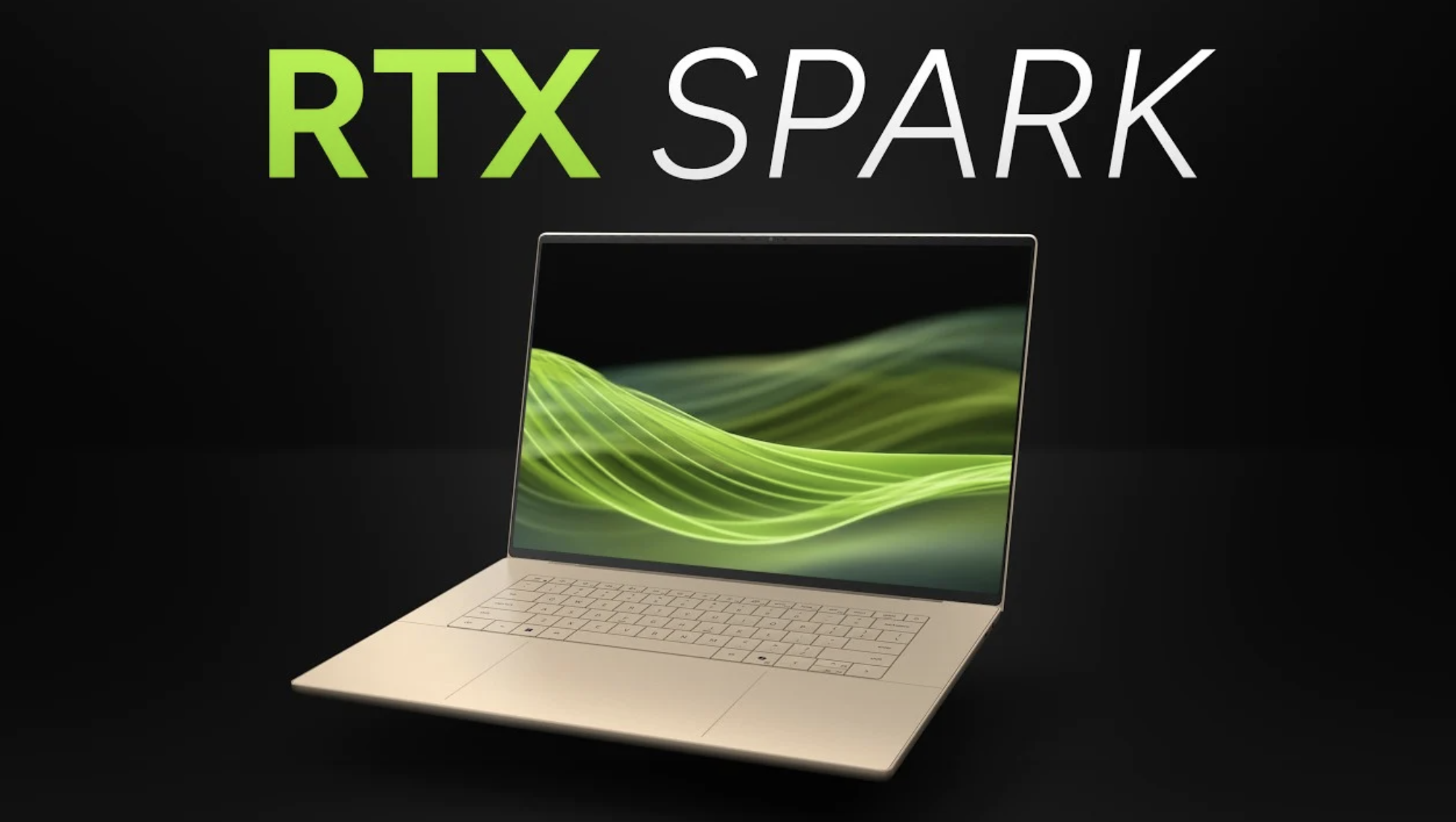
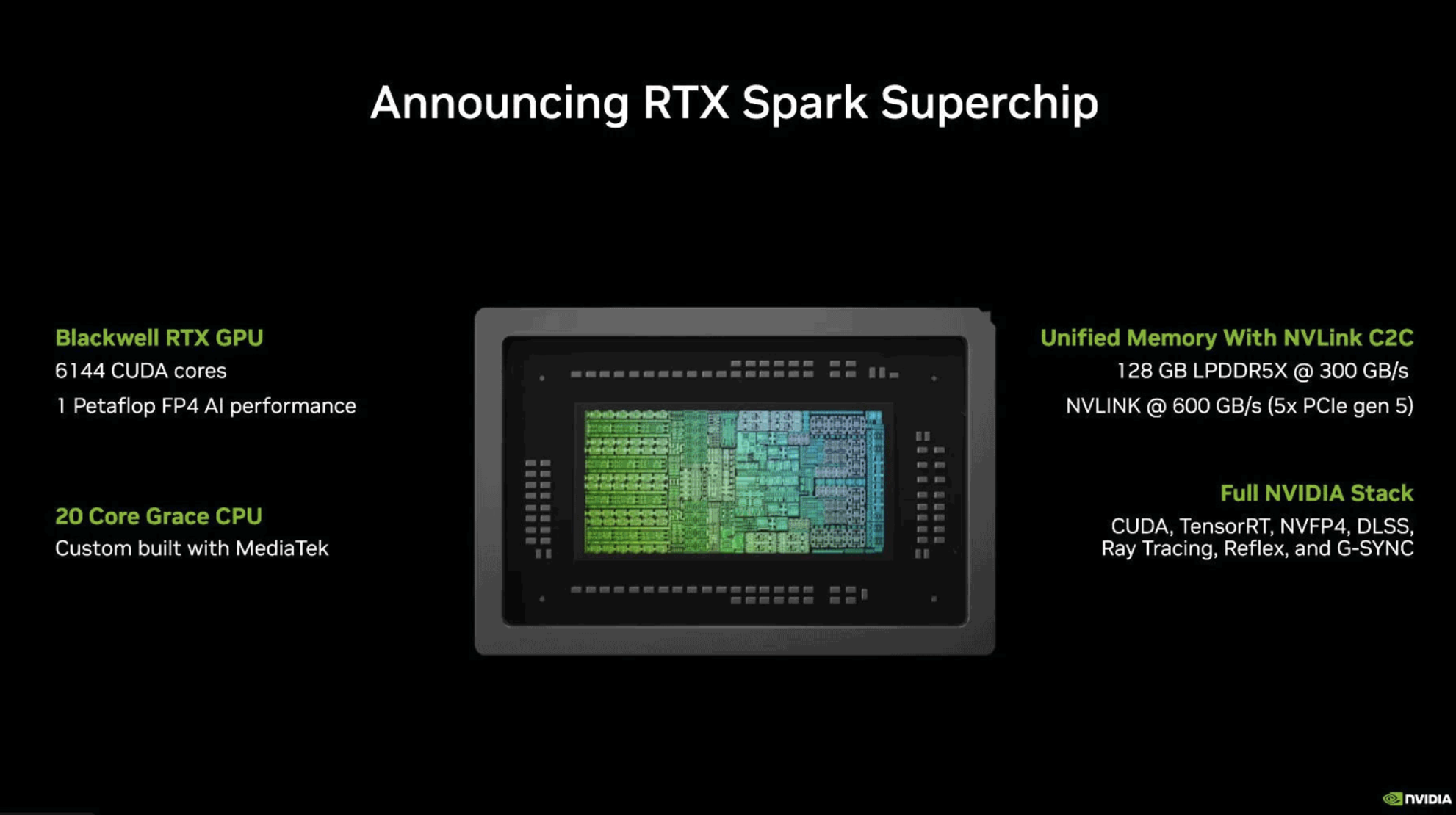
NVIDIA RTX Spark is a new generation of Windows laptops and compact desktops designed specifically for AI, gaming and content creation. The platform combines a Blackwell RTX GPU, Grace CPU and unified memory into a single superchip, with top configurations offering 1 petaflop of FP4 AI performance and up to 128GB of unified memory.
NVIDIA says RTX Spark PCs are designed to make local AI agents a core part of the Windows PC experience rather than relying entirely on cloud computing.
Blackwell GPU Architecture
The high-end RTX Spark configuration uses a 6,144-core NVIDIA Blackwell RTX GPU paired with a 20-core NVIDIA Grace CPU through NVIDIA's NVLink-C2C interconnect. It includes fifth-generation Tensor Cores with FP4 support and fourth-generation RT Cores.
The platform can deliver up to 1 petaflop of FP4 AI performance, giving it enough compute for demanding local inference and other AI workloads.
There is also a lower configuration with a 5,120-core Blackwell GPU and 18-core Grace CPU, alongside up to 64GB of unified memory.
128GB Unified Memory
One of RTX Spark's biggest differences from conventional PCs is its unified memory architecture.
The high-end configuration offers up to 128GB of LPDDR5X unified memory, shared between the CPU and GPU instead of being divided into separate system RAM and dedicated VRAM pools.
That large shared memory pool is particularly useful for local AI because larger models can remain on the system without being restricted by typical consumer GPU VRAM limits.
NVIDIA says RTX Spark can locally run 120-billion-parameter LLMs with agent workflows and up to 1 million tokens of context.
Windows Agent Framework
RTX Spark is designed around Microsoft's new Windows capabilities for personal AI agents. NVIDIA describes the platform as working with a Windows Agent framework, allowing agents to operate in the background under operating-system-level controls.
NVIDIA OpenShell adds a security layer for autonomous agents, while Microsoft's Windows security primitives provide capabilities for identity, containment and policy enforcement. Agents can therefore be sandboxed and controlled instead of receiving unrestricted access to the entire PC.
Supported agent software includes projects such as Hermes Agent and OpenClaw, which are being integrated with the Windows agent stack.
RTX Spark Configurations
| Configuration | GPU | CPU | Unified Memory |
|---|---|---|---|
| High-end | 6,144-core Blackwell RTX | 20-core Grace | Up to 128GB |
| Lower-end | 5,120-core Blackwell RTX | 18-core Grace | Up to 64GB |
Both configurations support Windows 11 and NVIDIA's broader CUDA, RTX, DLSS and AI software ecosystem.
October 2026 Launch
NVIDIA has confirmed that RTX Spark Windows PCs are arriving in October 2026. At IFA 2026, NVIDIA highlighted new systems from its hardware partners, including Lenovo's Yoga Pro 9n and Yoga 9n 2-in-1, alongside Acer's compact SFF RTX Spark design.
Acer's system features up to the 6,144-core Blackwell GPU, 20-core Grace CPU, 1 petaflop of AI performance and 128GB of unified memory, although Acer says its own availability date will be announced separately.
What to Know at a Glance
| Feature | RTX Spark |
|---|---|
| GPU | NVIDIA Blackwell RTX |
| Maximum GPU Cores | 6,144 |
| CPU | Up to 20-core Grace |
| AI Performance | Up to 1 PFLOP FP4 |
| Unified Memory | Up to 128GB |
| Operating System | Windows 11 |
| Primary Focus | Local AI, agents, gaming and creation |
| Launch Window | October 2026 |
Why It Matters
RTX Spark's biggest appeal is the combination of large unified memory, Blackwell AI hardware and Windows-native agents in relatively compact PCs.
Instead of treating AI as a cloud-only feature, NVIDIA is positioning RTX Spark as a machine where models, creative tools and autonomous agents can operate locally. That could make privacy-sensitive workflows, offline inference and always-on personal assistants much more practical.
🎮 The Bottom Line
NVIDIA RTX Spark is essentially NVIDIA's attempt to turn the Windows PC into a local AI machine. With up to 1 petaflop of FP4 performance, 128GB of unified memory and a Windows agent stack built around security and local execution, it targets users who want serious AI capability without depending entirely on the cloud.
The first RTX Spark PCs are expected to arrive in October 2026, making the launch one of the more interesting developments in the next generation of AI PCs.
Comments
Sign in to join the conversation
Sign inNo comments yet
Be the first to share your thoughts!