
The Ultimate Guide to NVIDIA DLSS 5
NVIDIA DLSS 5 is the latest generation of NVIDIA's neural-rendering technology for games.
Unlike traditional DLSS features focused primarily on reconstructing or generating frames, DLSS 5 introduces 3D-Guided Neural Rendering, which uses AI to enhance the appearance of lighting, materials and other visual elements.
The technology became available in September 2026 and debuted commercially in NBA 2K27.

How DLSS 5 Works
DLSS 5 uses a real-time generative rendering stage that works alongside conventional game rendering.
NVIDIA describes it as a way to introduce visual characteristics that are difficult or expensive to reproduce entirely through traditional rendering techniques, including effects such as subsurface scattering on skin and light scattering through foliage.
The goal is to push games closer to photorealistic lighting and materials without requiring developers to render everything traditionally.

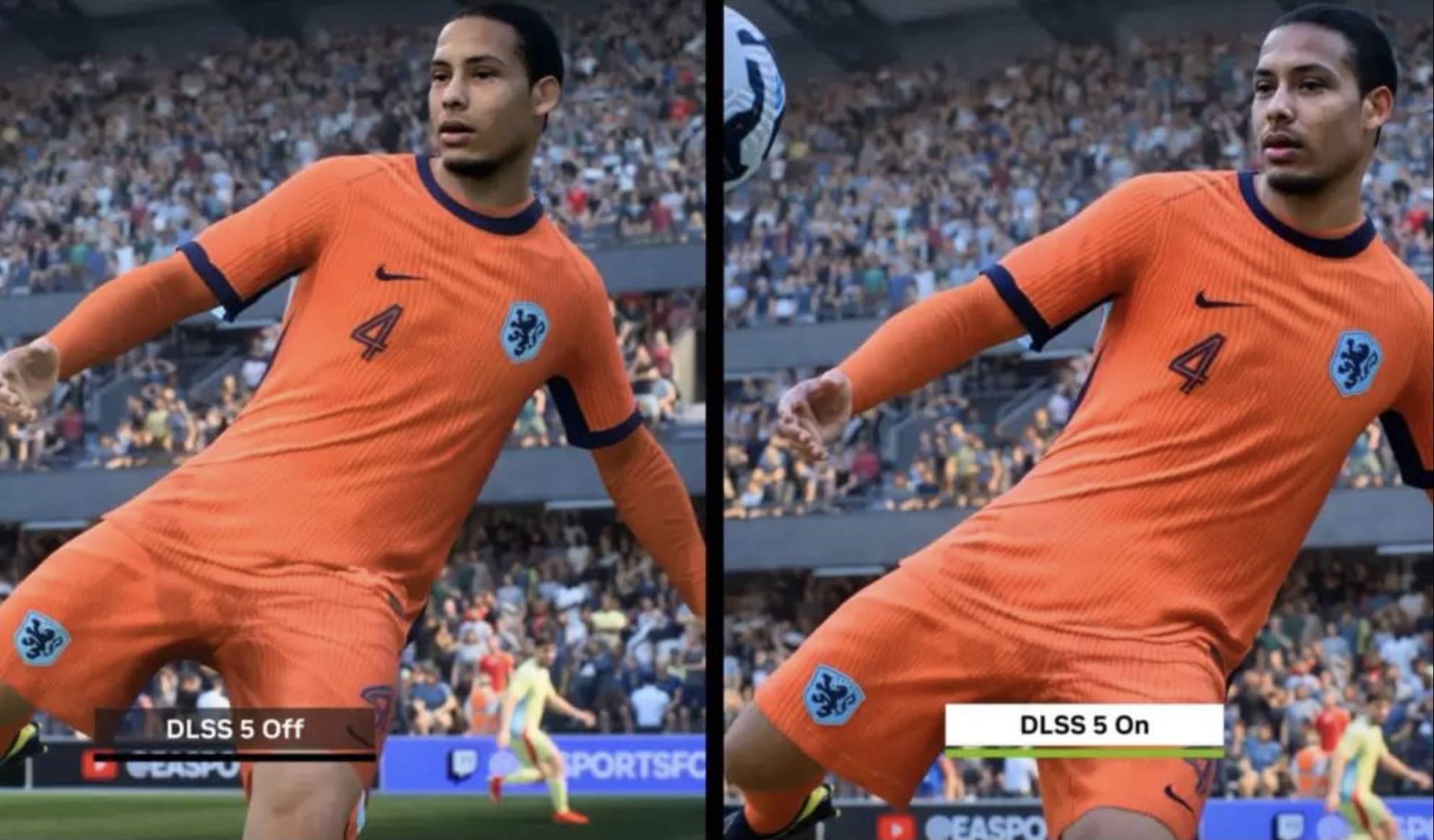
3D-Guided Neural Rendering
The core technology behind DLSS 5 is 3D-Guided Neural Rendering.
Rather than simply increasing resolution, the system uses information from the rendered scene to guide an AI model in producing additional visual detail.
NVIDIA says developers can tune the technology to preserve their intended artistic direction.
This makes DLSS 5 different from conventional upscaling technologies.
NBA 2K27 Debut
NBA 2K27 is the first game to officially support DLSS 5.
The feature appears in the game as DLSS Neural Rendering and can be enabled through the graphics settings.
It is completely optional, meaning players can turn it off if they prefer the standard rendering experience.
Hardware Requirements
DLSS 5 currently requires a GeForce RTX 50-series GPU.
That includes supported desktop and laptop RTX 50-series graphics cards. NVIDIA's implementation also extends to GeForce NOW Ultimate through cloud systems powered by RTX 5080 hardware.
Older RTX generations cannot currently run DLSS 5's 3D-Guided Neural Rendering.
Performance and Controversy
DLSS 5 has generated significant discussion because its visual approach is more aggressive than previous versions of DLSS.
Some players have praised the improved lighting and character detail, while others have criticized the technology for producing visuals that can appear overprocessed or AI-generated.
Performance is another consideration. Independent testing has shown that the technology can carry a substantial GPU cost, making the benefits more dependent on powerful hardware.
What to Know at a Glance
| Feature | DLSS 5 |
|---|---|
| Technology | 3D-Guided Neural Rendering |
| Main Purpose | AI-enhanced visual fidelity |
| Debut Game | NBA 2K27 |
| GPU Requirement | GeForce RTX 50 Series |
| Main Improvements | Lighting, materials, visual detail |
| Developer Control | Yes |
| Optional | Yes |
| Release | September 2026 |
Why It Matters
DLSS 5 represents a major shift in how NVIDIA approaches game graphics.
Traditional rendering attempts to simulate increasingly realistic lighting, materials and environments through increasingly complex calculations.
DLSS 5 instead asks a different question:
What if AI could help generate the appearance of realism in real time?
If developers adopt the technology effectively, it could make highly realistic visuals possible at lower traditional rendering costs.
But its success will ultimately depend on whether players see the visual improvements as worth the performance cost and whether developers can use the technology without sacrificing artistic consistency.
🎮 The Bottom Line
DLSS 5 is more than another image-upscaling update.
With 3D-Guided Neural Rendering, NVIDIA is pushing AI deeper into the actual visual creation process, using neural models to enhance lighting and materials in ways traditional rendering struggles to achieve efficiently.
Its debut in NBA 2K27 is only the beginning. The bigger test will be whether other developers can use DLSS 5 to make games look genuinely better without turning AI rendering into another performance-heavy compromise.
Comments
Sign in to join the conversation
Sign inNo comments yet
Be the first to share your thoughts!