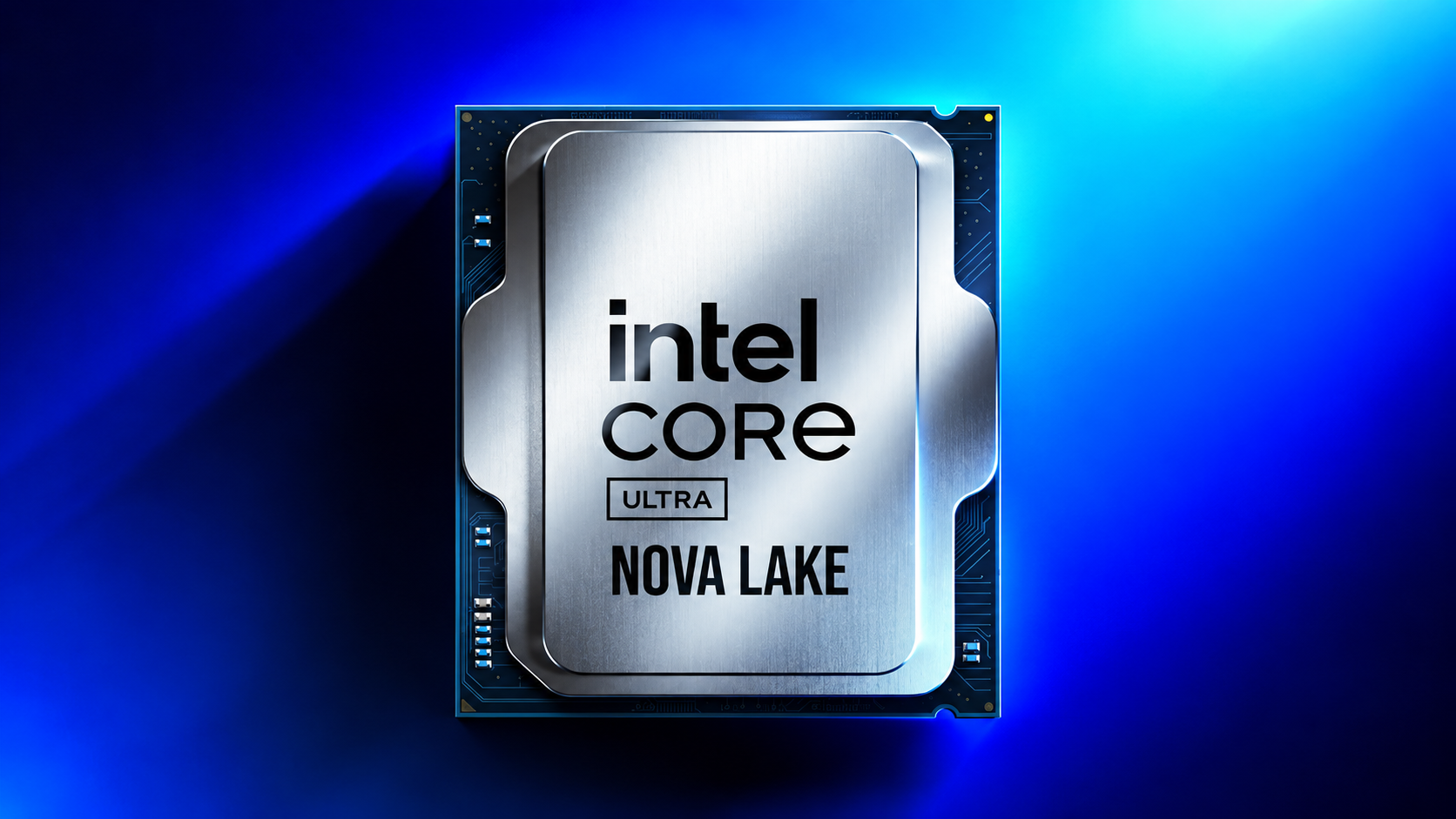

The Complete Wiki to Intel Nova Lake-S CPU Naming Conventions
Intel's next major desktop CPU generation is shaping up to look very different from the current Core Ultra 200S lineup.
Known as Nova Lake-S, the upcoming desktop architecture is expected to move Intel's mainstream desktop branding into the Core Ultra 400 series, with leaked models using four-digit identifiers such as Core Ultra 9 4970K.
The naming changes are particularly interesting because leaked Nova Lake-S SKUs also introduce the mysterious BFC designation, which appears to be connected to Intel's rumored big last-level cache, or bLLC, configurations.
At the same time, Nova Lake-S is expected to introduce desktop processors with unusual hybrid layouts combining P-cores, E-cores and LP-E cores.
The current leaked flagship configuration is a 28-core Core Ultra 9 4970K BFC, reportedly consisting of 8 P-cores, 16 E-cores and 4 LP-E cores. These specifications remain unofficial because Intel has not yet publicly confirmed the retail Nova Lake-S lineup.
Quick Facts
| Category | Details |
|---|---|
| Architecture | Intel Nova Lake |
| Desktop Family | Nova Lake-S |
| Expected Branding | Intel Core Ultra 400 Series |
| Generation Naming | Rumored four-digit model numbers |
| Top Initial Configuration | Up to 28 cores |
| Example Flagship | Core Ultra 9 4970K BFC |
| Reported Layout | 8 P-cores + 16 E-cores + 4 LP-E cores |
| BFC | Unconfirmed branding associated with larger last-level cache |
| Expected Socket | LGA 1954, according to current leaks |
| Expected Launch Window | 2027 |
| Official Intel Confirmation | Nova Lake-S retail naming and BFC details are not yet confirmed |
What Is Intel Nova Lake-S?
Nova Lake-S is the expected desktop version of Intel's next-generation Nova Lake processor family.
It follows the Arrow Lake-S / Core Ultra 200S generation.
Intel's current official desktop naming uses models such as Core Ultra 9 285K, Core Ultra 7 265K and Core Ultra 5 245K. Intel's official documentation identifies these as Core Ultra desktop processors and uses suffixes such as K, F, KF and T for different configurations.
Nova Lake-S is expected to move that naming system forward into the Core Ultra 400 family.
That means buyers could eventually see names structured more like:
Core Ultra 9 4970K
instead of:
Core Ultra 9 285K
This represents a substantial change in Intel's model-number format.
Core Ultra 400 Series
The first major naming change is the rumored transition to Core Ultra Series 4.
Intel has not yet published a retail Nova Lake-S product list, but leaked branding obtained by VideoCardz shows Core Ultra Series 4 branding associated with Nova Lake.
This would place the generation after:
- Core Ultra 100
- Core Ultra 200
- Core Ultra 400
The missing "300" branding is therefore notable.
The leaked Nova Lake branding does not suggest a conventional Core Ultra 300 desktop generation.
Why Four-Digit Model Numbers Matter
Arrow Lake-S introduced model numbers such as:
285K
265K
245K
Nova Lake-S leaks instead show numbers such as:
4970K
4950K
4870K
4850K
4650K
That gives Intel considerably more room to differentiate individual products.
For example, a number such as 4970K can identify a particular SKU more precisely than a shorter three-digit number.
Tom's Hardware notes that the rumored four-digit system would distinguish Nova Lake models more specifically than the current Arrow Lake numbering.
Breaking Down a Nova Lake-S Name
Consider the rumored:
Core Ultra 9 4970K BFC
Each section potentially communicates something different.
Core Ultra
Intel's premium processor family.
9
The performance tier.
Intel currently uses:
- Core Ultra 9
- Core Ultra 7
- Core Ultra 5
for its mainstream Core Ultra desktop hierarchy.
4970
The rumored four-digit model identifier.
K
Intel's established designation for an unlocked desktop processor.
BFC
The mysterious additional designation associated with the larger-cache versions in current Nova Lake leaks.
Intel has not officially explained what BFC means.
What Does BFC Mean?
This is currently one of the biggest mysteries surrounding Nova Lake-S naming.
Recent leaks show several Nova Lake models carrying the BFC tag.
The same models have been associated with the previously rumored bLLC, or big last-level cache, configuration.
The important distinction is:
BFC is leaked terminology, not an Intel-confirmed retail suffix.
The exact meaning of the letters has not been officially disclosed.
BFC and Big Last-Level Cache
The reason BFC is attracting attention is that the affected models reportedly feature a larger amount of last-level cache.
Previous Nova Lake rumors referred to this technology as bLLC, short for big Last Level Cache.
The latest leaked SKU table instead uses BFC.
Tom's Hardware reports that the three leaked BFC models are believed to represent chips with the larger cache configuration.
This could make BFC an important differentiator within the Nova Lake-S product stack.
Why More Cache Matters
CPU cache stores frequently needed data closer to the processor cores.
A larger last-level cache can potentially reduce the number of times a processor needs to access slower system memory.
This can be particularly relevant to:
- Gaming
- Large game worlds
- Simulation workloads
- Data-heavy applications
- Some productivity workloads
The rumored Nova Lake cache strategy appears particularly interesting because AMD has already made very large cache configurations a major part of its X3D gaming CPUs.
However, the actual performance impact of Nova Lake's rumored BFC configuration cannot be established until Intel releases official specifications and independent benchmarks.
The 28-Core Nova Lake Layout
One of the most important aspects of the leaked lineup is the reported 28-core configuration.
The rumored Core Ultra 9 4970K BFC contains:
- 8 P-cores
- 16 E-cores
- 4 LP-E cores
That produces:
8 + 16 + 4 = 28 cores
This is different from Intel's current mainstream desktop designs, where the advertised core count generally comes from P-cores plus E-cores.
Nova Lake's reported addition of LP-E cores makes the naming and specification system considerably more complicated.
What Are P-Cores?
P-cores, or Performance-cores, are designed for high-performance workloads.
They are generally responsible for demanding tasks such as:
- Game threads
- Heavy application workloads
- High-performance desktop software
- Latency-sensitive tasks
In the leaked 28-core Nova Lake configuration, there are 8 P-cores.
What Are E-Cores?
E-cores, or Efficient-cores, are designed to provide additional multithreaded throughput with a different performance and efficiency profile.
The rumored flagship contains:
16 E-cores
That already gives the chip:
8 P + 16 E = 24 cores
before adding the four LP-E cores.
What Are LP-E Cores?
The leaked Nova Lake-S tables include another category:
LP-E cores
The abbreviation generally refers to Low-Power Efficient cores.
The rumored 28-core configuration contains four of them.
Their precise desktop implementation and behavior have not yet been fully documented by Intel.
Therefore, it would be premature to assume that LP-E cores simply function as smaller versions of the normal E-cores.
Their exact role in Nova Lake-S remains an important technical question.
Why 28 Cores Is Different From 24 Cores
Intel's current Core Ultra 9 285K has 24 cores, consisting of:
8 P-cores + 16 E-cores
Intel's official Core Ultra 200S product brief confirms that configuration.
The rumored Nova Lake flagship would therefore expand the configuration to:
8 P + 16 E + 4 LP-E = 28 cores
The four additional LP-E cores are what push the reported configuration beyond the current 24-core mainstream Core Ultra 9 design.
The Rumored Nova Lake-S SKU Stack
The latest leaked table contains seven models.
| Rumored SKU | P-Cores | E-Cores | LP-E | Total Cores | BFC | TDP |
|---|---|---|---|---|---|---|
| Core Ultra 9 4970K BFC | 8 | 16 | 4 | 28 | Yes | 125W |
| Core Ultra 9 4950K | 8 | 16 | 4* | 24 | No | 125W |
| Core Ultra 9 4900 BFC | 6 | 12 | 4 | 22 | Yes | 65W |
| Core Ultra 7 4870K BFC | 8 | 12 | 4 | 24 | Yes | 125W |
| Core Ultra 7 4850K | 8 | 12 | 4* | 20 | No | 125W |
| Core Ultra 5 4650KF | 6 | 12 | 0 | 18 | No | 125W |
| Core Ultra 5 4650K | 6 | 12 | 0 | 18 | No | 125W |
*The latest leak's table presentation distinguishes the BFC configurations by adding the LP-E cores. The exact core composition of non-BFC models remains unconfirmed.
These names and specifications are rumored and have not been confirmed by Intel.
Core Ultra 9 4970K BFC
The rumored Core Ultra 9 4970K BFC is currently the most interesting mainstream Nova Lake-S SKU.
Reported specifications include:
- 8 P-cores
- 16 E-cores
- 4 LP-E cores
- 28 total cores
- 125W TDP
- 32-EU integrated graphics
- BFC / larger-cache configuration
If the leaked naming survives into retail products, the 4970K BFC would sit at the top of the initial mainstream 28-core stack.
Core Ultra 9 4950K
The 4950K is reportedly positioned directly below the 4970K BFC.
The leaked specification lists:
- 8 P-cores
- 16 E-cores
- 24 total cores
- 125W TDP
- 32-EU integrated graphics
The important distinction is that it does not carry the BFC designation in the leaked table.
That could make the 4950K a useful comparison point for evaluating the effect of Nova Lake's larger-cache configuration.
Core Ultra 9 4900 BFC
Another interesting model is the rumored:
Core Ultra 9 4900 BFC
The leaked configuration reportedly contains:
- 6 P-cores
- 12 E-cores
- 4 LP-E cores
- 22 total cores
- 65W TDP
- 32-EU integrated graphics
The combination of a Core Ultra 9 designation, BFC cache configuration and 65W TDP makes this one of the more unusual rumored Nova Lake parts.
Core Ultra 7 4870K BFC
The rumored Core Ultra 7 4870K BFC reportedly has:
- 8 P-cores
- 12 E-cores
- 4 LP-E cores
- 24 total cores
- 125W TDP
- 32-EU integrated graphics
This illustrates why core count alone may no longer tell the complete story.
The rumored Core Ultra 7 4870K BFC would have the same reported total core count as the Core Ultra 9 4950K, but a different distribution of P-cores and E-cores.
Core Ultra 5 4650K and 4650KF
The leaked Core Ultra 5 models reportedly sit at:
18 cores
with:
- 6 P-cores
- 12 E-cores
The 4650K reportedly retains integrated graphics.
The 4650KF reportedly removes integrated graphics.
Intel's established F suffix means a processor requires discrete graphics, while K denotes an unlocked processor.
This makes the rumored:
Core Ultra 5 4650KF
fairly easy to interpret even though the overall Nova Lake naming scheme is changing.
BFC vs K vs KF
These terms should not be confused.
K
Unlocked desktop processor
F
Requires discrete graphics
KF
Unlocked + no integrated graphics
BFC
Unconfirmed Nova Lake designation associated with larger-cache models
Intel officially documents the meanings of K, F and KF-style suffixes, but has not officially documented BFC as a Nova Lake retail suffix.
Nova Lake-S and the 52-Core Model
The 28-core models may not represent the maximum core count planned for Nova Lake-S.
Previous leaks have pointed toward a much larger 52-core configuration.
The reported 52-core design is expected to use a dual-compute-tile configuration and could arrive later than the initial 28-core products.
The reported 52-core configuration is:
16 P-cores + 32 E-cores + 4 LP-E cores = 52 cores
This would be substantially larger than the mainstream 28-core configurations.
Why the 52-Core CPU Matters
The reported 52-core design appears to belong to a different class of Nova Lake-S hardware.
Current leaks suggest that Intel could initially launch the 28-core single-tile class, followed by higher-core-count dual-tile processors.
VideoCardz reports a staggered roadmap in which:
- 28-core DS models appear first
- 28-core K models follow
- 16-core and 8-core models arrive later
- The 52-core DS model could arrive significantly later
These schedules remain leak-based rather than official Intel launch commitments.
What Does DS Mean?
Another Nova Lake designation appearing in leaks is:
DS
The term is reportedly an internal package designation associated with dual-compute-tile configurations.
It should not currently be treated as a confirmed consumer-facing suffix in the same way as K or F.
This is another reason Nova Lake leaks need to be separated from Intel's official naming documentation.
Nova Lake-S Naming vs Arrow Lake-S
| Generation | Example | Model Format |
|---|---|---|
| Arrow Lake-S | Core Ultra 9 285K | Three-digit |
| Nova Lake-S | Core Ultra 9 4970K BFC* | Four-digit |
| Nova Lake-S BFC | Core Ultra 7 4870K BFC* | Four-digit + rumored cache designation |
*Rumored.
Intel's official Core Ultra 200S documentation confirms the existing three-digit Arrow Lake desktop naming system.
Why Intel Could Be Changing the Numbers
The move toward four-digit identifiers could give Intel more room to distinguish:
- Performance tiers
- Core configurations
- Cache variants
- Power classes
- Graphics configurations
- Different compute-tile designs
The rumored Nova Lake stack is already considerably more granular than the current Arrow Lake-S lineup.
For example, the difference between:
4970K BFC
and
4950K
could communicate both model position and architectural configuration.
The Naming System Is Becoming More Complex
Intel's hybrid architecture means consumers increasingly need to look beyond the total core number.
A hypothetical comparison:
28 cores
does not tell you whether those cores are:
8 P + 16 E + 4 LP-E
or some other configuration.
Likewise, two processors with similar core counts may differ substantially in:
- P-core count
- E-core count
- LP-E count
- Cache
- Power
- Integrated graphics
- Clock speeds
- Platform features
The Nova Lake naming system appears designed to differentiate some of these configurations more precisely.
What Is Official and What Is Rumored?
This is particularly important for Nova Lake.
Officially documented by Intel
Intel currently documents:
- Core Ultra branding
- Core Ultra 9 / 7 / 5 tiers
- K suffix
- F suffix
- KF suffix
- Existing Core Ultra 200 desktop products
Reported through leaks
The following Nova Lake details are currently leak-based:
- Core Ultra 400 branding
- Four-digit model numbers
- Core Ultra 9 4970K BFC
- BFC terminology
- 28-core mainstream configuration
- 4 LP-E cores
- 52-core dual-tile model
- LGA 1954
- 900-series desktop platform
These should not be presented as final Intel specifications until Intel officially announces the products.
What BFC Could Mean
The safest description right now is:
BFC is a rumored label for Nova Lake processors equipped with the larger last-level cache configuration.
The exact expansion of the acronym is not confirmed.
Earlier reporting used bLLC, meaning big last-level cache, for the same general concept. The newer leak appears to use BFC instead.
Until Intel explains the terminology, any definitive expansion of "BFC" should be treated as speculation.
Why Gamers Are Watching BFC
Large CPU caches have become increasingly important in gaming discussions because AMD's 3D V-Cache products demonstrate how additional cache can affect gaming workloads.
Intel's rumored BFC strategy appears to be an attempt to provide another cache-heavy configuration.
But it is too early to determine whether Nova Lake's implementation will compete directly with AMD's X3D designs.
That requires:
- Final cache capacity
- Cache architecture details
- Clock speeds
- Memory latency
- Game benchmarks
- Power measurements
- Retail firmware
None of those can be reliably inferred from the current naming leaks alone.
Expected Nova Lake-S Platform
Current reports also point toward a new platform around Nova Lake-S.
Leaks have associated the processors with:
LGA 1954
and new 900-series desktop chipsets.
If accurate, Nova Lake would therefore require a new motherboard platform rather than simply dropping into existing Core Ultra 200S boards.
Intel has not yet published the final consumer motherboard compatibility information.
Expected Launch Window
Current reporting suggests that Nova Lake-S will arrive during 2027, with different configurations appearing at different times.
The leaked schedule places:
- 28-core DS: January to March 2027
- 28-core K-series: March to April 2027
- 16-core and 8-core: late March to May 2027
- 52-core DS: potentially late May through September 2027
These are reported embargo or launch windows from leaks, not official Intel launch dates.
Frequently Asked Questions
What is Intel Nova Lake-S?
Nova Lake-S is the expected desktop version of Intel's next-generation Nova Lake architecture.
Will Nova Lake use Core Ultra 400 branding?
Current leaks indicate that Nova Lake-S will use Core Ultra Series 4 / Core Ultra 400 branding, but Intel has not yet officially published the complete retail lineup.
What is the Core Ultra 9 4970K BFC?
It is a leaked Nova Lake-S SKU reportedly featuring 28 cores, consisting of 8 P-cores, 16 E-cores and 4 LP-E cores, plus the rumored BFC larger-cache configuration.
What does BFC mean?
Intel has not officially explained the BFC designation. Current reporting associates it with the big last-level cache configuration previously referred to as bLLC.
How many cores will Nova Lake have?
Current leaks indicate initial mainstream models with up to 28 cores, while a much larger 52-core dual-tile model has also been reported.
What are the 28 cores made of?
The leaked flagship configuration is reported as 8 P-cores + 16 E-cores + 4 LP-E cores.
What does K mean on an Intel CPU?
Intel officially uses K to identify unlocked desktop processors.
What does F mean?
Intel says an F processor requires discrete graphics because it does not provide usable integrated graphics.
Will Nova Lake work with current Core Ultra 200S motherboards?
Current leaks point toward a new LGA 1954 platform, so existing 200S motherboard compatibility should not be assumed. Final compatibility details have not yet been officially announced.
Is the 52-core Nova Lake CPU confirmed?
No. It remains part of the current leak and roadmap reporting. Intel has not officially confirmed the retail 52-core model.
Current Status
Intel Nova Lake-S is still an unofficial, leak-driven product story, but its naming direction is becoming clearer.
The strongest current reports point toward a move to Core Ultra 400 branding, with four-digit model numbers such as Core Ultra 9 4970K. A separate BFC designation is appearing on selected models and is associated with the larger-cache configurations previously described as bLLC.
The rumored 28-core flagship is particularly notable because its reported configuration combines 8 P-cores, 16 E-cores and 4 LP-E cores. A much larger 52-core dual-tile design has also been reported for a later stage of the Nova Lake-S rollout.
The key thing to remember is that Core Ultra 400, 4970K, BFC, the 28-core layouts and the 52-core model are not yet equivalent to an official Intel specification sheet.
Until Intel publishes the final Nova Lake-S lineup, the safest way to read the current naming leaks is:
Core Ultra 400 = rumored generation branding
4970K = rumored four-digit SKU format
K = unlocked desktop model
F = discrete-GPU-required model
BFC = rumored larger-cache designation
28 cores = reported 8 P + 16 E + 4 LP-E flagship layout
That combination would make Nova Lake one of Intel's most unusually structured mainstream desktop CPU generations yet.
Go deeper into Nova Lake naming