
YouTube Gaming's Gemini Chat Rollout: Why Real-Time Translation Is Killing the Language Barrier
Live chat has always had one massive blind spot.
The moment a stream pulls in viewers from different countries, half the chat becomes unreadable to everyone else.
That barrier is finally cracking.
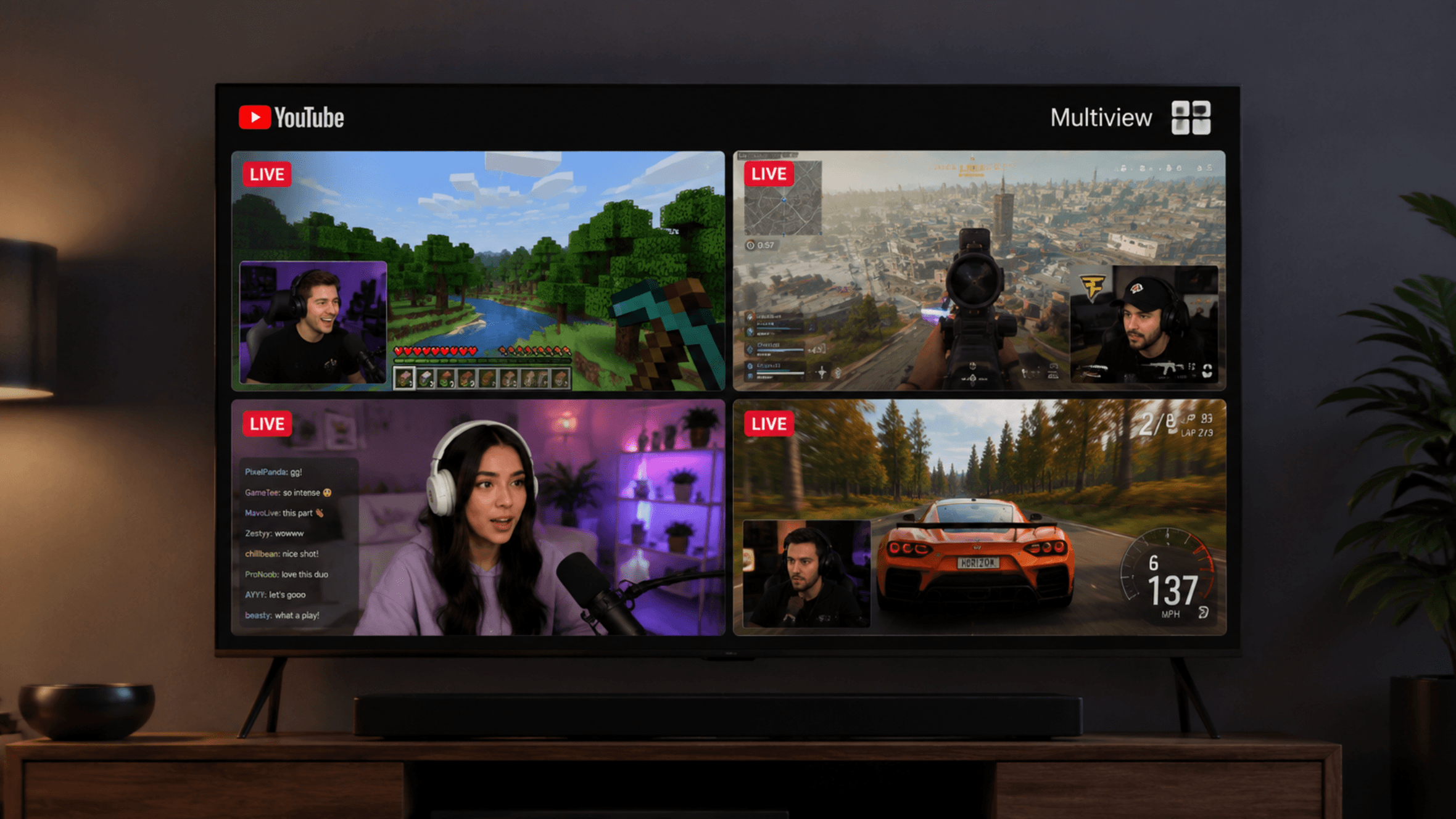
Google's Gemini AI is moving directly into YouTube's live chat experience, bringing real-time translation and automated moderation to broadcasts that used to split apart by language the second international viewers showed up.
The Trend: Gemini Goes Live Across Google's Ecosystem
This didn't come out of nowhere.
Google has spent the past several months pushing Gemini's real-time translation capabilities across nearly every major product it owns.
According to Google's official DeepMind announcement, Gemini 3.5 Live Translate launched on June 9, 2026, delivering near real-time speech-to-speech translation across more than 70 languages.
Quick facts on the underlying technology:
- Launched June 9, 2026
- Supports 70+ languages with automatic detection
- Preserves the original speaker's tone, pacing, and pitch
- Stays only a few seconds behind the original speaker
- Available through Google Translate, Gemini Live API, Google AI Studio, and Google Meet
That last point matters.
Meet already uses this exact translation engine for live business calls.
Bringing that same technology into YouTube's chat experience is a natural next step, not a completely new invention.
From Google Meet to Gaming Chat
Google didn't build Gemini's live translation for gaming streams specifically.
It built it as a general-purpose tool, then expanded it outward.
According to Android Authority's coverage of Gemini Live's translation rollout, the feature already lets users translate spoken conversations in real time, with captions appearing on screen as the conversation continues.
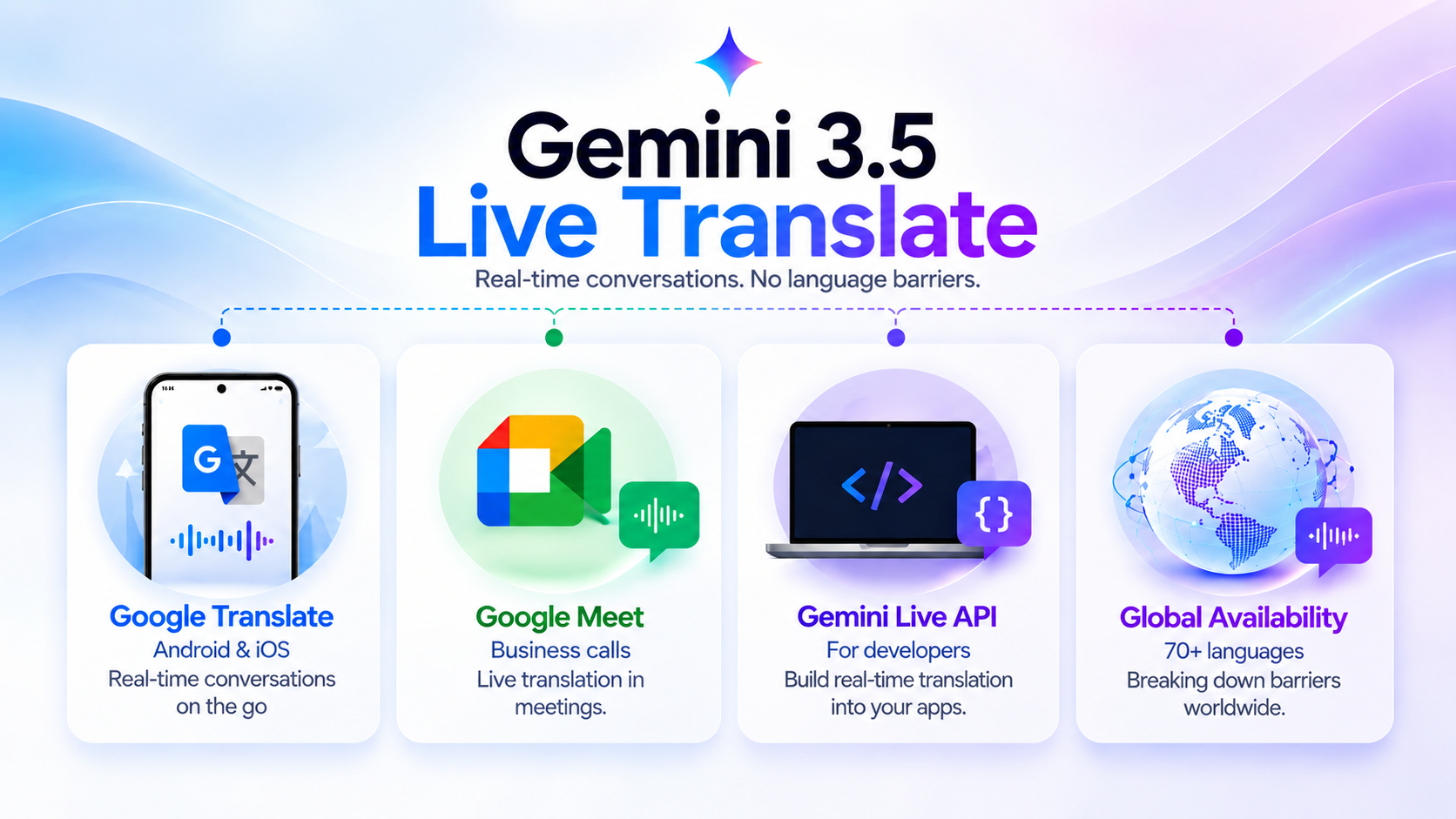
Where Gemini's live translation has already appeared:
- Google Translate app on Android and iOS
- Google Meet, in private preview for enterprise Workspace customers
- Gemini Live API and Google AI Studio, in public preview for developers
- Gemini Live's Android app, through a new "Turn on live translation" setting
That spread across products follows a consistent pattern.
Google tests a feature in a controlled environment, expands it to enterprise users, then rolls it out broadly once stability holds up.
Live chat on YouTube gaming streams fits naturally into that expansion path, since it's essentially the same real-time, multilingual conversation problem, just happening inside a chat box instead of a video call.
Why Gaming Chats Needed This the Most
Gaming livestreams have always had one of the most linguistically chaotic chat environments online.
A single popular stream can pull viewers from dozens of countries simultaneously, all typing in their native language at once.
Why this problem hit gaming chats especially hard:
- Large streamers often build genuinely global audiences within months of going viral
- Fast-paced chat makes manual translation completely impractical
- Non-English speaking viewers historically got ignored or overwhelmed by dominant language chat clusters
- Moderators couldn't realistically monitor multiple languages at once
That last point ties directly into the automated moderation side of this rollout.
Note: Real-time translation isn't just about making chat readable. It also gives automated moderation systems a genuine chance to catch harmful messages written in languages the streamer or existing moderation team doesn't speak. Without translation, non-English toxicity in chat has historically slipped through far more easily than English-language violations.
How the Integration Reportedly Works
Based on how Gemini's existing live translation systems function elsewhere, the YouTube chat integration follows a similar structure.
The core mechanics behind the feature:
- Messages typed in chat get automatically detected by source language
- Gemini translates the message in near real time
- Viewers see chat messages rendered in their own preferred language
- The original message remains available, typically through a toggle or hover state
- Automated moderation runs against the translated text, not just the original language
That moderation layer is the quieter, more important piece of this rollout.
Translation alone solves a communication problem.
Pairing it with moderation solves a safety problem that's existed on multilingual streams for years.
What Streamers Are Saying
Reaction from the streaming community has leaned heavily positive, especially among creators who've built large audiences outside English-speaking regions.
Chat fragmentation has long been a quiet frustration for internationally popular streamers, who often watch their chat split into separate language clusters that never actually interact with each other.
Common streamer reactions to the rollout:
- Excitement about finally having one unified chat experience instead of fractured language pockets
- Curiosity about how translation handles gaming slang, memes, and fast-paced abbreviations
- Some skepticism about translation accuracy during high-speed, chaotic chat moments
- Strong interest in the automated moderation angle, especially from larger channels dealing with chat volume no human team can fully monitor
That skepticism around slang and fast typing is a fair concern.
Gaming chat moves faster and uses far more shorthand than a business meeting on Google Meet, which is the environment Gemini's translation technology was originally built and tested around.
That gap between formal speech translation and rapid-fire chat culture is exactly the kind of edge case that tends to reveal itself only after a feature reaches real, chaotic, large-scale usage.
Early testers on other Gemini-powered translation surfaces have already flagged similar friction points, particularly around idioms, regional expressions, and words that carry different meaning depending entirely on context.
Gaming chat leans on all three constantly, which is exactly why this rollout will likely need several rounds of refinement before it feels fully reliable at scale.
The Bigger Picture: Killing the Language Barrier for Good
Step back from the feature itself, and this rollout represents something bigger than a single chat upgrade.
For as long as livestreaming has existed, language has quietly gatekept who gets to participate in a community, even when they're watching the exact same content as everyone else.
Why this shift matters beyond gaming specifically:
- It expands the realistic audience size for any creator, regardless of what language they speak on stream
- It normalizes multilingual communities existing inside a single shared chat, rather than splitting into separate spaces
- It pushes other platforms to respond with similar tools, since YouTube's chat reach puts pressure on competitors
- It continues Google's broader strategy of embedding Gemini directly into the products people already use daily, rather than requiring a separate app or tool
That competitive pressure point is worth watching closely.
Once one major platform normalizes real-time chat translation, viewers start expecting it everywhere, which puts real pressure on rival platforms to catch up quickly.
What Still Needs to Be Proven
None of this makes the rollout perfect on day one.
Real-time translation systems, even strong ones, tend to struggle with the specific texture of internet chat culture.
Open questions worth watching as this rolls out further:
- How well does it handle gaming-specific slang, abbreviations, and inside jokes that don't translate literally
- Whether moderation accuracy holds up consistently across all 70-plus supported languages, or favors more widely-used ones
- How streamers can customize or disable the feature if they prefer chat to stay in its original language
- Whether translation latency stays fast enough to keep up with genuinely high-speed chat during big moments
Google has been upfront elsewhere that Gemini 3.5 Live Translate remains a preview-stage technology in several of its existing deployments, without committed production-grade service guarantees yet.
That same caution likely applies here.
Early rollout phases tend to prioritize getting the feature in front of real users over locking in a fully polished, error-free experience from day one.
FAQ
What is powering YouTube's new chat translation feature? It's built on Gemini 3.5 Live Translate, Google's real-time speech and text translation model that already supports over 70 languages across other Google products.
Does this replace human chat moderators? No. It adds automated moderation on top of translated messages, helping catch harmful content across languages a human moderation team might not fully understand.
Can streamers turn this feature off? Streamers are expected to have some level of control over chat display settings, though the exact customization options are still becoming clear as the rollout continues.
Will translation handle gaming slang well? That remains one of the biggest open questions. Gemini's translation technology was primarily tested on conversational speech, not fast-paced gaming chat shorthand.
Is this available to every YouTube channel right now? Rollouts like this typically expand gradually, starting with a limited set of channels or regions before reaching everyone.