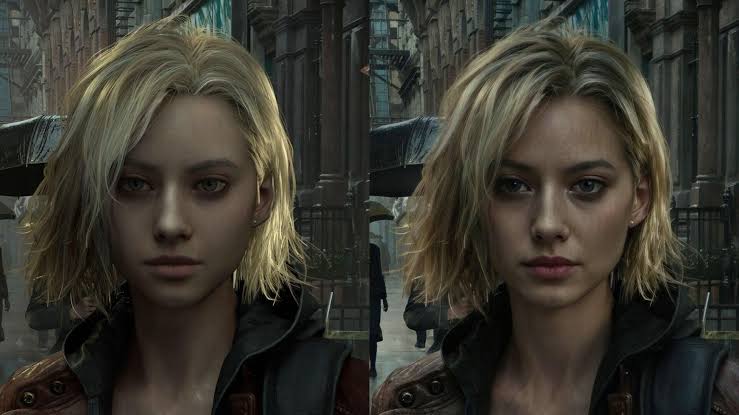

 echnology designed to showcase NVIDIA’s newest hardware, DLSS 5 has crossed an unexpected line.
It can now be recreated outside NVIDIA’s official software stack.
An open-source project called OpenDLSS-NR describes itself as a Vulkan reimplementation of NVIDIA’s DLSS 5 Neural Rendering network. The project aims to reproduce the neural-rendering pipeline at a remarkably low level rather than simply modifying NVIDIA’s original software.
And that is only half the story.
The same project contains an independent WebGPU implementation, meaning the neural network can run inside a web browser rather than requiring NVIDIA’s proprietary DLSS runtime.
That makes this less like a conventional graphics mod and more like an experiment in taking a normally closed graphics technology apart and rebuilding its computational core.
NVIDIA Built DLSS 5 for New Hardware. Modders Asked: Why?
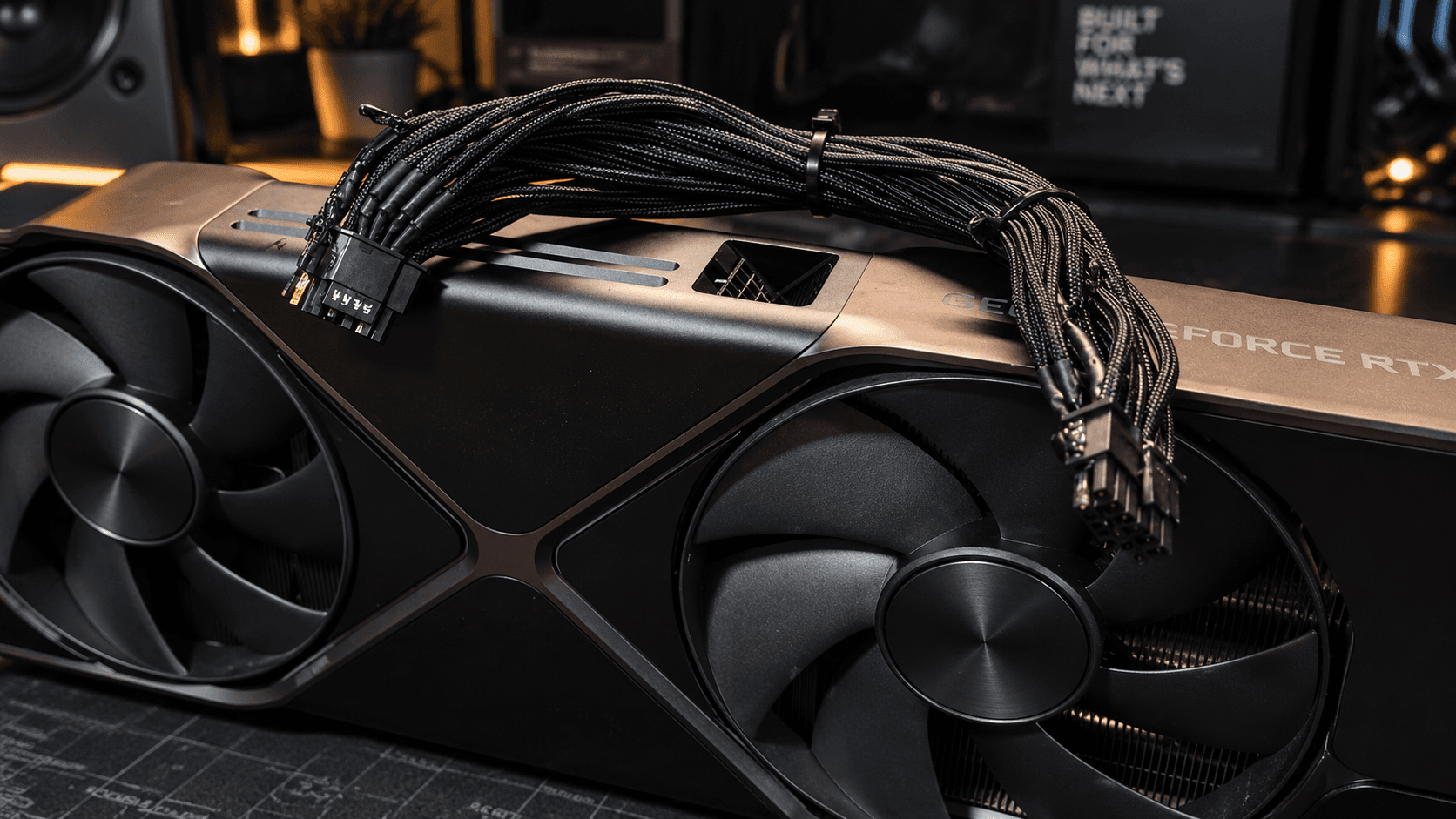
DLSS 5’s 3D-Guided Neural Rendering is positioned around NVIDIA’s newest generation of GeForce hardware.
The RTX 40 series already supports several generations of DLSS technology, including Super Resolution, Ray Reconstruction and Frame Generation. But DLSS 5 represents a significantly different approach to neural rendering.
That created an obvious question among enthusiasts:
If the underlying technology is a neural network, how dependent is it really on one generation of hardware?
Modders have been exploring that question by adapting the technology for older RTX hardware.
OpenDLSS-NR takes the idea considerably further.
Instead of simply modifying NVIDIA's binary, it attempts to reproduce the network itself.
Inside the Neural Network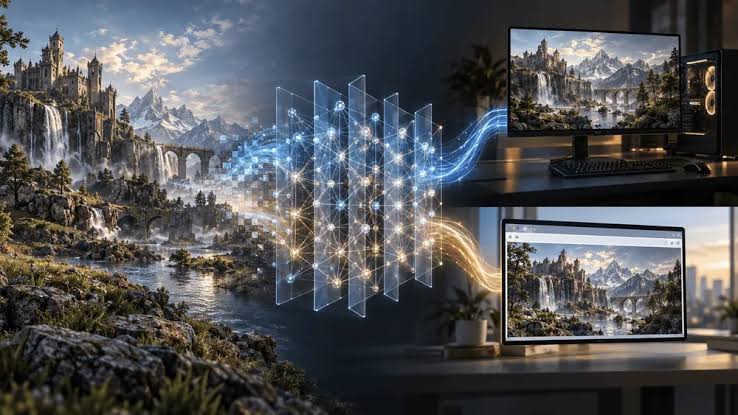
The fascinating part of OpenDLSS-NR is what it actually recreates.
The implementation reproduces the architecture of the referenced DLSS neural-rendering network, including its transformer-style processing stages and GPU compute operations.
That matters because neural-rendering software isn't just one clever shader.
It is a pipeline containing many operations that have to interact correctly.
The Vulkan implementation includes components such as:
FP8 matrix operations
Fused QKV and window attention
Global attention
Expert MLP operations
Element-wise operations
GPU synchronization
Model loading and weight transformation
In other words, the project isn't merely saying, "DLSS 5 looks similar when I run it."
It's attempting to reproduce the computational behavior of the neural network itself.
That is what makes the project so technically interesting.
And Then It Went Into a Browser
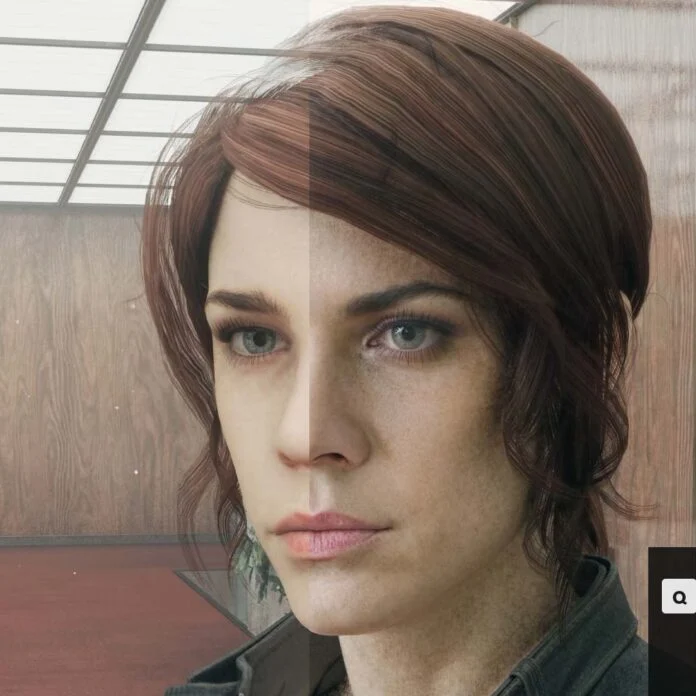
This is where the project gets genuinely strange.
The project also includes a separate WebGPU implementation of the neural network.
Unlike the high-performance Vulkan route, the browser implementation doesn't depend on NVIDIA Tensor Cores or the same specialized hardware path.
That means the concept can move beyond NVIDIA's normal ecosystem.
The model can theoretically be executed through a browser using WebGPU, allowing the neural-rendering computation to run across a much wider range of modern graphics hardware.
There is, however, a massive performance difference.
The optimized Vulkan implementation can operate in milliseconds on suitable RTX hardware, while the browser version is dramatically slower.
So this isn't suddenly turning Chrome into a high-performance DLSS gaming engine.
It's demonstrating something more fundamental:
the neural network isn't inherently locked to NVIDIA's official runtime.
Why This Is More Important Than a Mod
At first glance, this might sound like another enthusiast project designed to squeeze a new feature onto old hardware.
But the implications are broader.
Traditional GPU features are often tightly connected to a particular API, driver and hardware architecture.
DLSS has historically been part of NVIDIA's software ecosystem, with developers integrating it through NVIDIA-supported technologies.
An open implementation changes the conversation.
If researchers and developers can reproduce the computational behavior of a neural-rendering model through standard GPU APIs, then the model becomes considerably more portable.
That doesn't mean every GPU suddenly gets NVIDIA-level performance.
Hardware still matters enormously.
The Vulkan implementation benefits from specialized GPU capabilities, while the browser version demonstrates how the same basic computation can be expressed through a more general API at a much higher performance cost.
The distinction is crucial:
Portability is not the same as performance.
The Browser Demo Is the Real Plot Twist
The browser version may ultimately be more interesting than the RTX 40 achievement.
Why?
Because browsers are becoming increasingly capable GPU-compute platforms.
WebGPU gives developers access to modern GPU computation without requiring users to install a specialized graphics application.
If a neural-rendering model can be expressed through that interface, developers can experiment with sophisticated rendering techniques directly inside a webpage.
Imagine applications such as:
Interactive 3D model viewers
Architectural visualization
Browser-based CAD previews
Digital-twin demonstrations
Research tools for neural rendering
Cloud-rendered visual experiences
Experimental browser games
These applications don't necessarily require 60 FPS.
A slower render might be completely acceptable for a model preview or visualization tool where the alternative is running a heavyweight native application.
That makes the browser experiment less of a gaming replacement and more of a proof that neural rendering can escape its original software boundaries.
What Happens Next?
The most interesting question isn't whether modders can make DLSS 5 run on an RTX 40 GPU.
The bigger question is how far the reimplementation approach can go.
OpenDLSS-NR focuses on the neural-rendering network rather than reproducing every component of NVIDIA's DLSS technology.
DLSS Super Resolution, for example, is a separate part of NVIDIA's broader technology stack.
That means this shouldn't be interpreted as a complete open-source replacement for DLSS.
Instead, it represents something potentially more important for graphics researchers:
a demonstration that sophisticated proprietary neural-rendering workloads can be studied, reconstructed and expressed through more general GPU APIs.
Meanwhile, NVIDIA's official support strategy and community experimentation are moving along separate paths.
One comes from the company that created the technology.
The other comes from people trying to understand how the technology works well enough to rebuild it.
And the browser implementation makes the boundary even harder to ignore.
🎮 The Bottom Line
The remarkable part of the DLSS 5 story isn't simply that an RTX 40 GPU can now run technology designed around NVIDIA's newest generation.
It's that modders have demonstrated how far neural rendering can be separated from the hardware and software stack that originally delivered it.
OpenDLSS-NR shows how a complex neural-rendering network can be reconstructed using Vulkan, while its WebGPU implementation demonstrates that the same fundamental computation can be brought into a browser.
It isn't a replacement for NVIDIA's optimized implementation, and browser performance is nowhere near real-time gaming territory.
But as a technical demonstration, it's fascinating.
DLSS 5 may have started as an RTX 50 showcase. The modding community is turning it into an experiment in portable neural graphics.
What do you think? Could open implementations like this eventually make proprietary neural-rendering techniques much more portable across GPUs and platforms? Let us know in the comments.