
AMD Just Hit $1 Trillion: How Data Centers Became the Engine Behind Its Biggest Milestone
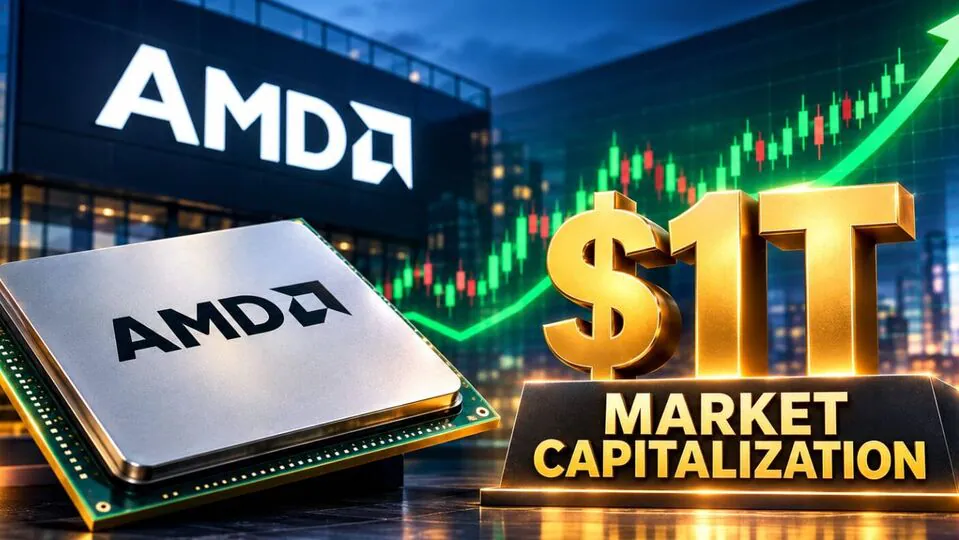
AMD has officially entered the $1 trillion market capitalization club.
On September 21, 2026, AMD shares surged to a record level and pushed the company's market value above $1 trillion for the first time. That made AMD only the fourth US chipmaker to cross the milestone, joining NVIDIA, Broadcom and Micron.
But the number itself is not the most interesting part.
The bigger story is where AMD's growth is coming from.
The company once best known for Ryzen processors and Radeon graphics is increasingly being valued around its data center business, with EPYC CPUs, Instinct AI accelerators and complete AI systems becoming central to its growth strategy.
AMD CPUs → EPYC → Instinct GPUs → AI Infrastructure → Data Center Growth → $1 Trillion Valuation
💰 The $1 Trillion Moment
AMD's stock rally has been extraordinary in 2026.
Reuters reported that AMD shares rose 9.6% to $613.31 on September 21, pushing the company past the $1 trillion valuation threshold. AMD's shares had gained roughly 185% during 2026 at that point.
The milestone also came during a broader semiconductor rally, meaning AMD's move was not happening in isolation.
But AMD's individual growth story is particularly tied to artificial intelligence and data center infrastructure.
For the full financial picture, AMD's official [Q2 2026 financial results] provide the underlying numbers.
🏢 Data Centers Are Driving the Transformation
AMD's latest financial results show why investors are paying so much attention to this segment.
In Q2 2026, AMD generated $11.5 billion in total revenue, up 50% year over year.
Data Center revenue reached $6.7 billion, up an extraordinary 107% year over year.
That means Data Center represented roughly 58% of AMD's total revenue during the quarter.
| AMD Q2 2026 | Result |
|---|---|
| Total Revenue | $11.5B |
| Data Center Revenue | $6.7B |
| Data Center Growth | 107% |
| Data Center Share | 58% |
| Data Center Operating Income | $2.1B |
AMD says the Data Center growth was driven by strong demand for EPYC processors and Instinct GPUs.
That is the fundamental shift.
AMD is no longer depending primarily on PC upgrades or gaming hardware.
The biggest growth engine is increasingly sitting inside massive AI data centers.
🚀 Lisa Su's Data Center Strategy
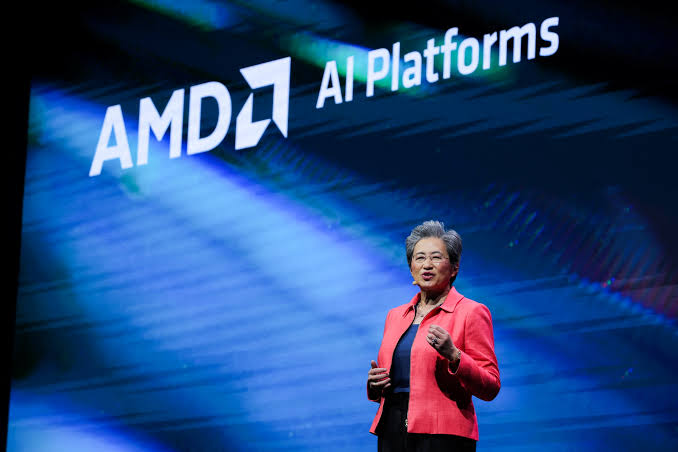
AMD CEO Lisa Su has been pushing the company deeper into AI infrastructure.
The strategy is not simply about selling another GPU.
AMD is building a broader portfolio that covers CPUs, accelerators, networking and complete rack scale systems.
AMD's Q2 results highlighted the company's Helios rack scale solution, sixth generation EPYC processors, Instinct accelerators and Pensando networking technology.
Reuters also reported in July that AMD's next generation AI server platform had entered full production, with shipments expected to begin within months.
The strategy can be visualized like this:
EPYC CPU → Instinct GPU → Networking → Rack Scale System → AI Data Center
That is a much bigger opportunity than simply selling individual chips.
🤖 The AI Boom Changed AMD's Equation
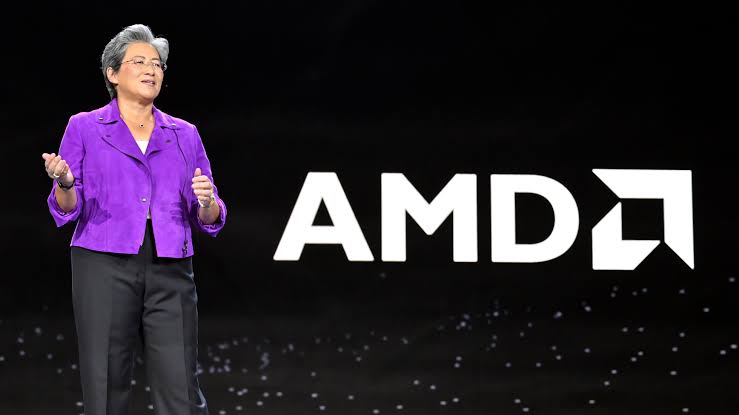
The AI infrastructure boom has created demand for almost every layer of modern computing.
AI servers need accelerators for training and inference.
They need CPUs to coordinate workloads.
They need high speed networking.
They need memory and storage.
And they increasingly need entire rack scale systems designed to operate as one massive computing platform.
AMD is positioning itself across several of those layers.
Its [official Data Center portfolio] shows how far the company has moved beyond traditional desktop and gaming processors.
🧠 Why EPYC Still Matters
The AI story often focuses on GPUs.
But CPUs remain critical.
Every AI server still needs processors to manage workloads, coordinate tasks and handle general purpose computing around the accelerators.
That is where AMD's EPYC business becomes extremely important.
AMD specifically attributed its Q2 Data Center growth to strong demand for EPYC processors and Instinct GPUs.
So AMD effectively has two major opportunities inside the same AI infrastructure buildout.
AI Accelerator Demand → Instinct
Server CPU Demand → EPYC
That combination gives AMD more exposure to the growth of AI data centers than a company focused exclusively on one type of processor.
⚔️ AMD vs NVIDIA Is Still a Different Story
AMD crossing $1 trillion does not mean it has overtaken NVIDIA.
The difference in valuation remains substantial.
Reuters reported that NVIDIA was already worth more than $5 trillion, making AMD's new milestone significant but still far smaller than the market leader.
The more accurate way to look at AMD's milestone is that the company has become a much larger participant in the AI infrastructure market.
AMD is attempting to compete through a broader platform rather than depending on one category of hardware.
📈 The Numbers Behind AMD's Transformation
The shift becomes even clearer when looking at the company's recent Data Center growth.
AMD's Q2 2026 Data Center revenue reached $6.7 billion, compared with $3.24 billion during the same quarter a year earlier. That represents 107% year over year growth.
Even more interesting is the profitability.
The Data Center segment generated approximately $2.1 billion in operating income during the quarter.
That means Data Center is not simply producing more revenue.
It is becoming one of AMD's most financially important businesses.
🌐 AMD Wants an Even Bigger Data Center Business
AMD has been setting aggressive targets for its Data Center business.
Recent reporting says AMD expects its Data Center business to double in 2027, as demand for AI GPUs and server CPUs continues to expand.
That is an ambitious target.
It also explains why investors are increasingly looking at AMD through the lens of AI infrastructure rather than traditional PC hardware.
If AMD can continue scaling EPYC, Instinct and its complete AI systems, Data Center could become an even larger percentage of the company's overall business.
🔥 The Bigger Shift: AMD Is Selling Systems
This may be the most important part of the story.
AMD is gradually moving from being a company that sells individual processors toward being a company that can supply much larger pieces of an AI computing system.
Reuters described the strategy as AMD moving beyond individual chips toward complete systems combining processors, networking equipment and related hardware.
That changes the competitive equation.
Instead of asking:
“Which GPU is faster?”
Customers can increasingly ask:
“Which company can provide the computing infrastructure we need?”
And AMD wants its answer to include the CPU, GPU, networking and rack.
🏁 AMD's $1 Trillion Milestone Is Really a Data Center Story
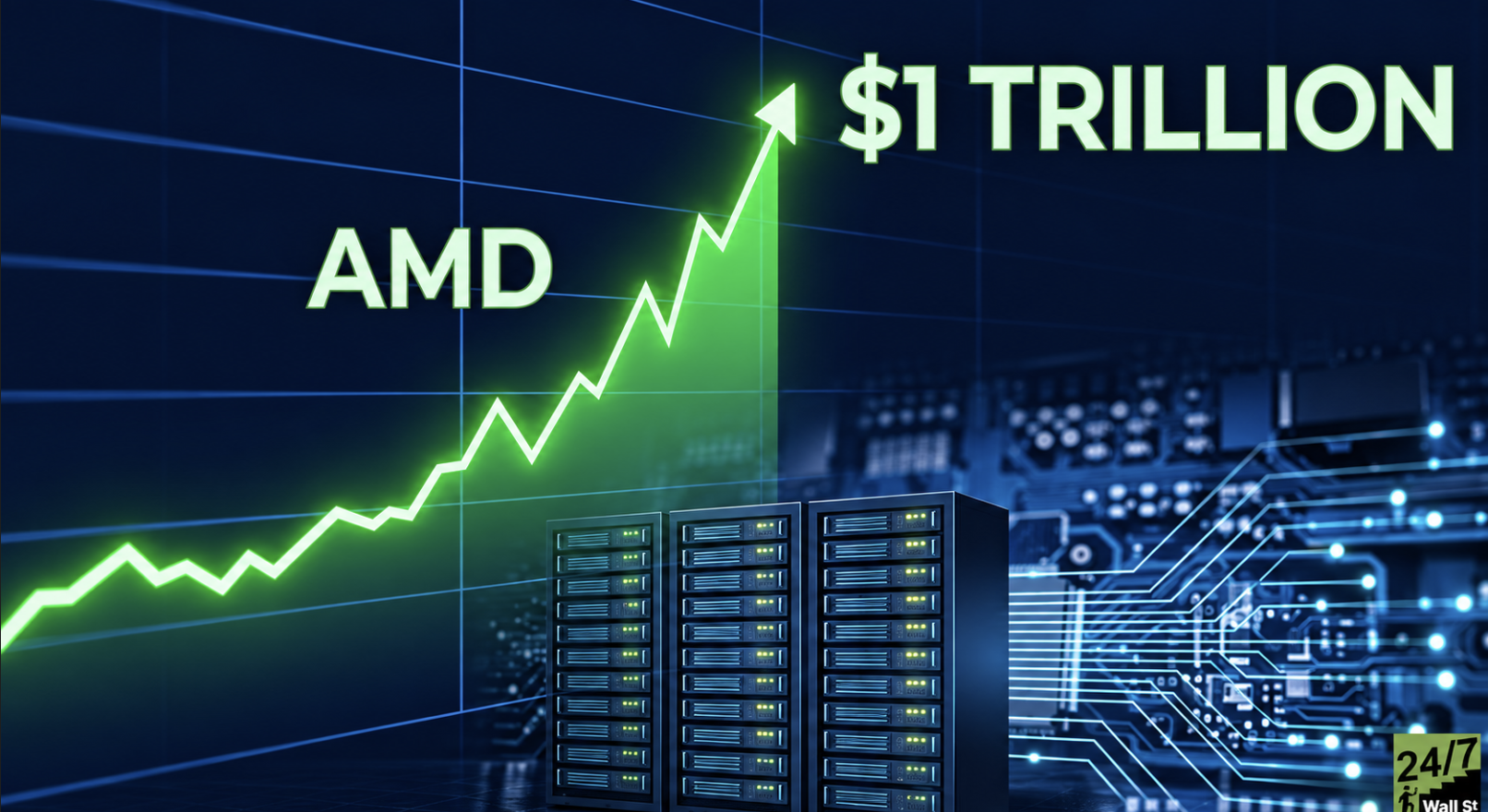
The headline is simple:
AMD is now worth more than $1 trillion.
But the story underneath is much more interesting.
AMD's center of gravity has shifted toward data centers.
EPYC is growing.
Instinct is scaling.
Helios is expanding AMD's ambitions toward complete AI infrastructure.
And Lisa Su's strategy is increasingly focused on capturing more of the rapidly expanding AI computing market.
AMD has not replaced NVIDIA, and the two companies remain dramatically different in scale. But AMD's $1 trillion milestone shows how far the company has moved from being primarily a PC and gaming chipmaker.
The trillion dollar valuation is the headline.
The data center business is the reason investors are watching what comes next.