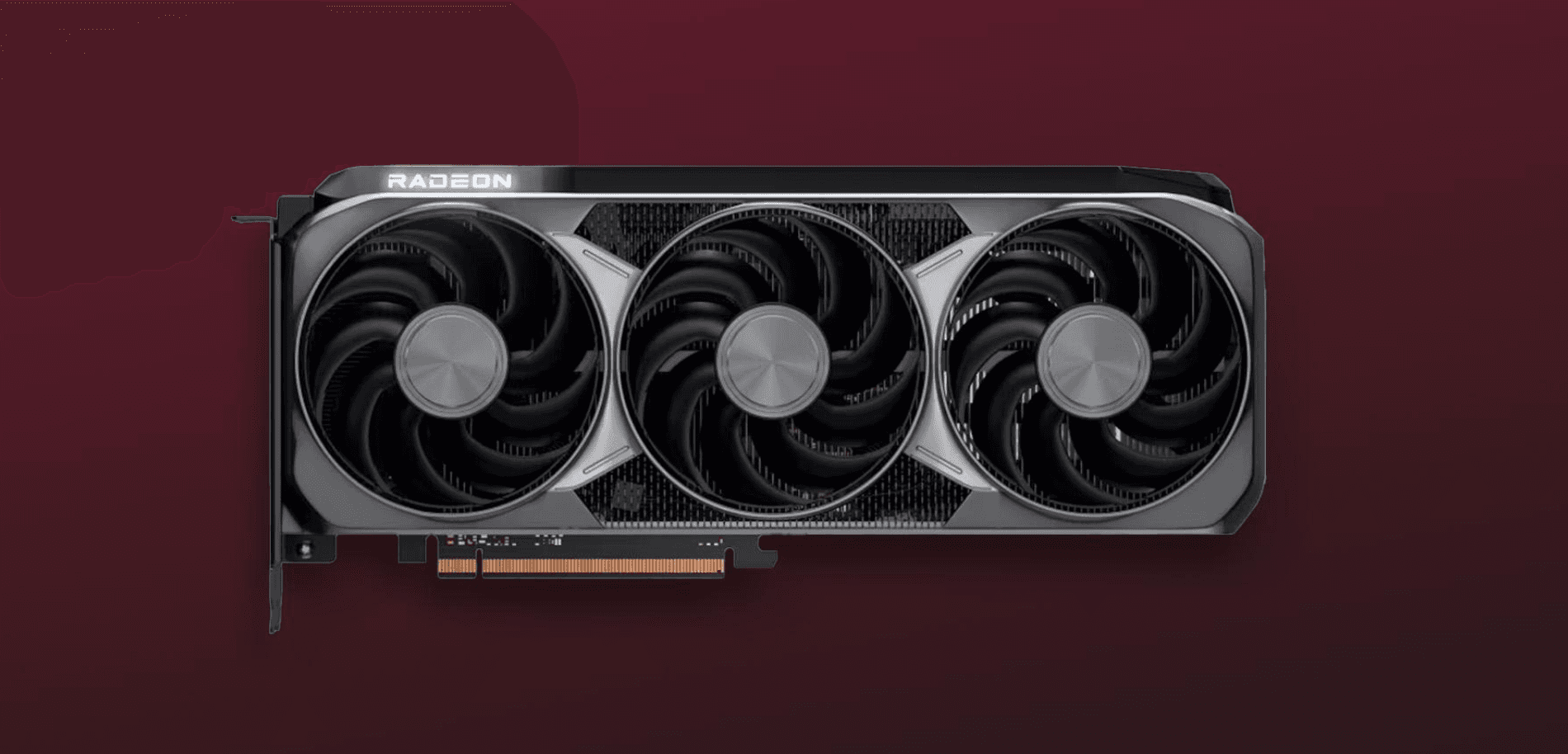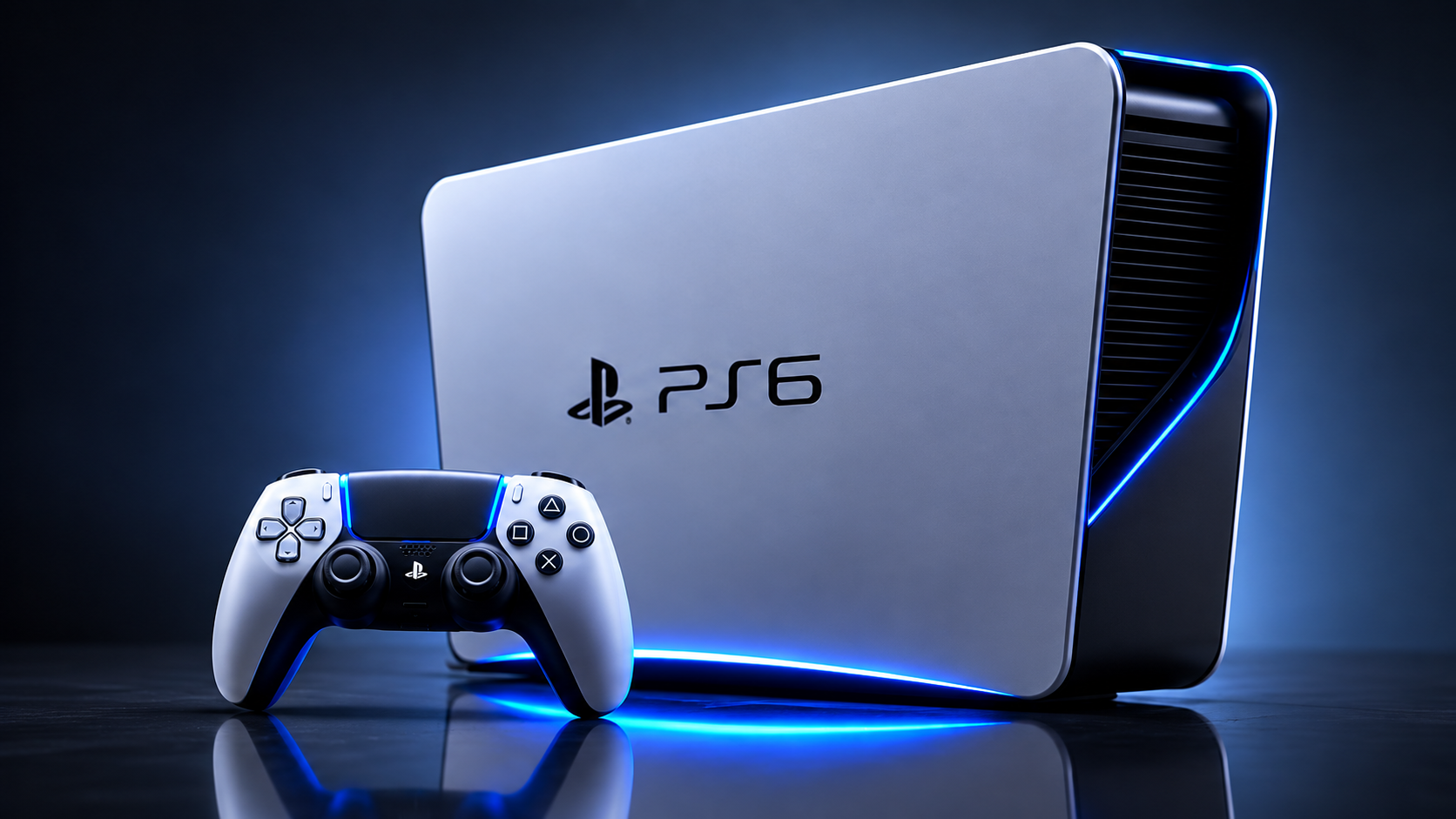

The PS6 AMD Contract Leak: Why Intel Lost the Bid for Sony's 2028 Console
Sony almost switched chip partners for the PlayStation 6.
It didn't happen.
A new wave of leaked documents and industry chatter now explains exactly why AMD kept its grip on Sony's next console, and why Intel walked away empty handed.
The story involves a 2023 internal contract, a manufacturing node fight, and a backward compatibility promise Sony wasn't willing to risk.
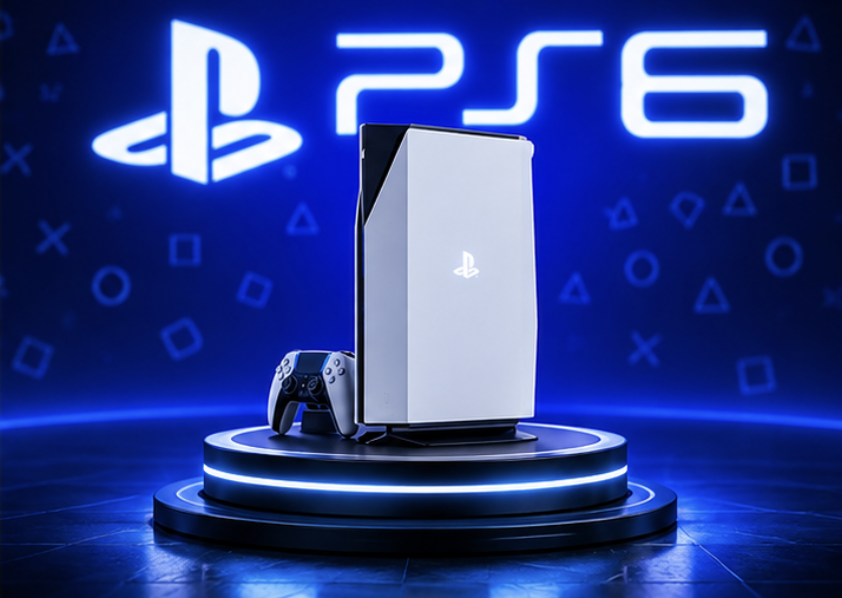
The Trend: Sony Almost Left AMD Behind
This rivalry goes back further than most people realize.
According to a 2024 Reuters report, Sony seriously considered partnering with Intel for the PlayStation 6.
The deal never happened.
Sony ultimately decided that switching chip manufacturers carried too much risk.
Specifically, moving away from AMD threatened to break backward compatibility with the massive PS5 game library Sony had already built.
That single decision shaped everything that followed.
Quick facts on how this played out:
- Sony considered Intel as a PS6 chip partner in 2024
- The switch was ultimately rejected over backward compatibility concerns
- AMD retained the contract to design the PS6's custom APU
- Internal Sony/AMD documents reportedly date back to 2023, predating the public Intel rumors
Backward compatibility wasn't a minor bullet point in this decision.
It was the deciding factor.
Confirming the AMD Contract
The clearest evidence of AMD's role comes from a leak shared by YouTuber Moore's Law Is Dead on the Broken Silicon podcast.
According to reporting from WCCFTech, the leak reveals contents from an internal AMD presentation slide explicitly built around PS6 development.
The document reportedly states backward compatibility plans in plain language.
What the leaked AMD document reportedly confirms:
- The PS6 home console is codenamed Orion
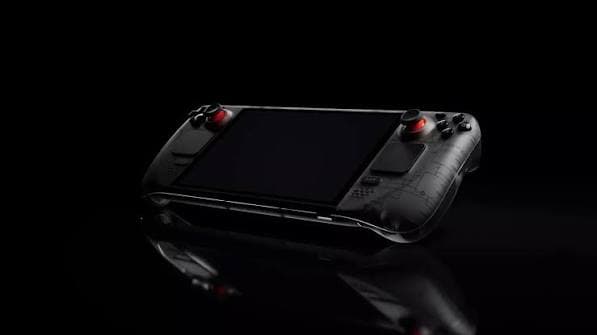
- A companion PS6 handheld is codenamed Canis
- Both devices are listed as backward compatible with PS4 and PS5 games
- PS3 compatibility is not mentioned anywhere in the document
That last point matters.
Sony has never offered native PS3 backward compatibility on any console since the PS3 itself, and this leak suggests that pattern isn't changing with the PS6 either.
TSMC's Node Fight: 2nm or 3nm
Here's where the leaks start disagreeing with each other.
Manufacturing node choice affects everything: cost, power efficiency, and how much performance Sony can squeeze into the console.
According to a detailed breakdown from TechNWZ, two different manufacturing paths have been reported by separate leakers.
The conflicting reports break down like this:
| Source | Reported Node | Chip Codename |
|---|---|---|
| WCCFTech and leaker KeplerL2 | TSMC N2 (2nm) | Orion |
| Moore's Law Is Dead | TSMC 3nm | Orion |
Both leaks agree on one thing: whichever node Sony picks, it's a major jump from the PS5's aging 7nm chip.
A separate report from Shattered.io adds more specific detail, describing the Orion APU as a monolithic die measuring 280mm², built on TSMC's 3nm process specifically.
That report also lists a thermal design power of up to 160W, roughly 60W higher than the PS5's current chip.
More power draw sounds counterintuitive for a "next-gen efficiency" story.
But it lines up with rumors of a significant performance leap, not just an efficiency refresh.
What's Actually Inside the Orion APU
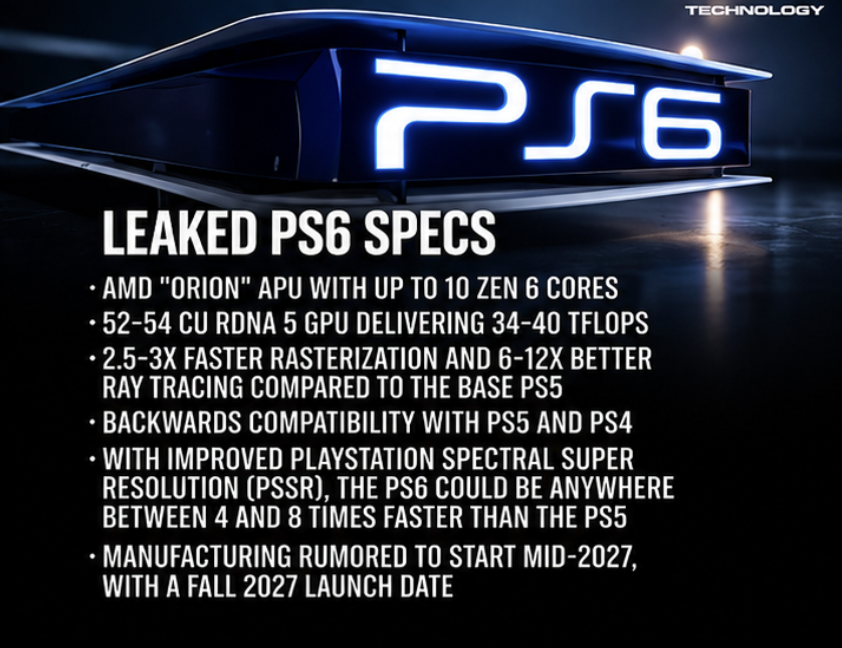
Beyond the manufacturing debate, several core specs have been consistently repeated across multiple leak sources.
According to TweakTown's spec rumor roundup, the Orion APU centers on AMD's next-generation architecture paired with a major memory upgrade.
Commonly repeated Orion APU specs across leaks:
- 8 AMD Zen 6 CPU cores
- Up to 48 RDNA 5 compute units for the GPU
- GDDR7 memory, a generational jump from the PS5's GDDR6
- A possible chiplet design, potentially borrowing from AMD's desktop Navi 5 chiplets
- Roughly 3x faster rasterization performance compared to the PS5
- Improved ray tracing performance across the board
That chiplet detail is worth pausing on.
If AMD genuinely reuses desktop-class Navi 5 chiplets inside a console APU, it would mark a notable shift in how Sony and AMD approach console chip design going forward.
Historically, PlayStation APUs have been fully custom monolithic designs, not chiplets borrowed from desktop GPU lineups.
Backward Compatibility Isn't Just a Feature, It's the Whole Strategy
Sony's backward compatibility push explains almost every other decision covered in these leaks.
According to TalkESport's coverage of the leaked document, the leaked material frames backward compatibility as an active engineering workstream tied directly into the RDNA 5 architecture itself.
It's not treated as an afterthought or a wishlist item.
Note: A leaker on the Broken Silicon podcast stated plainly, "The PS6, yes, it has backward compatibility to four and five. And even the handheld, they explicitly say it runs PS6, PS5, and PS4 games." That would make the PS6 the first PlayStation console to span backward compatibility across two entire previous generations.
That's a genuinely new milestone for the platform.
The PS5 was the first PlayStation to offer backward compatibility at all, and only covered the PS4 generation.
Why sticking with AMD made backward compatibility easier:
- AMD's architecture already powers the PS5 and PS5 Pro
- Keeping the same GPU architecture family reduces emulation and compatibility engineering work
- Switching to Intel would have meant rebuilding compatibility layers from scratch
- AMD's RDNA lineage gives Sony a more predictable upgrade path across generations
Reuters' original 2024 reporting specifically framed the Intel switch as "risking" that compatibility layer entirely.
Sony apparently wasn't willing to take that gamble, even with Intel reportedly offering a competitive bid.
The Canis Handheld Adds Another Layer
The PS6 story isn't just about a home console.
A companion handheld, codenamed Canis, is also part of these leaked AMD documents.
According to the same TalkESport report, Canis includes hardware support for ray tracing, which means any PS6 games that can't have ray tracing disabled will still technically run on the handheld.
Key details specific to the Canis handheld:
- Built around smaller Zen 6c CPU cores and RDNA 5 GPU cores
- Manufacturing reportedly planned on TSMC's 3nm process
- Performance targeted at roughly half of the standard PS5
- No disc drive, meaning backward compatibility applies to digital libraries only
- Thermal design power around 15W, dramatically lower than Orion's console-class power budget
That lack of a disc drive carries a real consequence.
Physical PS4 and PS5 game discs simply won't work on Canis, even though the digital versions of those same games will.
For collectors with large physical libraries, that's a meaningful limitation worth knowing about early.
Timeline and Price: The Part Nobody Wants to Hear
Here's the least exciting part of this leak for eager buyers.
Multiple reports now point to delays and rising costs, largely tied to external memory market pressure rather than the chip design itself.
According to Shattered.io's cost breakdown, AI-driven demand for memory chips has been squeezing supply across the entire tech industry, PlayStation included.
Where the current price and timeline estimates stand:
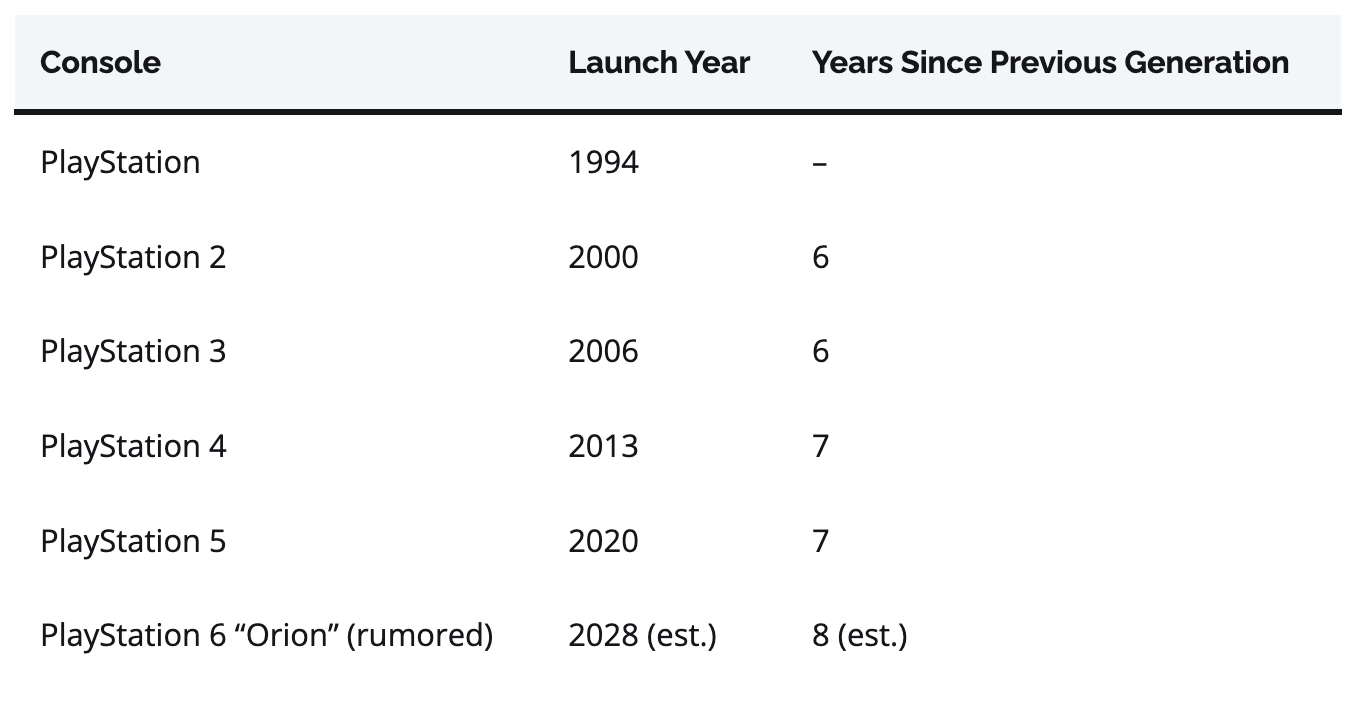
- Original target window: late 2027
- Current leaked estimate: early to mid 2028
- Rumored price could reach as high as $960 to $1,000
- Manufacturing of major components reportedly began as early as 2023
- AMD has already contracted TSMC for mid-2027 APU production
One leaker specifically noted that AMD's chip validation work won't expire even if Sony delays mass production further.
That means the underlying chip design work continuing right now doesn't guarantee a locked launch date.
Sony could technically sit on finished APU stock and wait for better market conditions before pushing full production forward.
Why This Matters Beyond Just Specs
This isn't only a story about transistors and node sizes.
It's a story about Sony protecting its single biggest competitive advantage: a massive, backward compatible game library players have built for over a decade.
Intel likely offered genuinely competitive pricing or performance promises. Otherwise Sony wouldn't have seriously considered the switch at all.
But no amount of raw performance was worth risking a broken compatibility chain across three console generations.
That's the real headline hiding underneath all the leaked spec sheets and manufacturing debates.
FAQ
Did Sony really consider Intel for the PS6? Yes. A 2024 Reuters report confirmed Sony seriously evaluated Intel before ultimately staying with AMD over backward compatibility concerns.
What is the PS6's codename? The home console is codenamed Orion. A companion handheld is codenamed Canis.
Will the PS6 play PS4 and PS5 games? Leaked internal documents strongly suggest yes, for both the main console and the Canis handheld, though only digitally on the handheld.
What TSMC node will the PS6 use? Reports conflict. Some leakers claim TSMC's 2nm N2 process, while others point to a 3nm process instead.
When will the PS6 actually release? Current leaks point to early or mid 2028, later than the originally rumored late 2027 window, partly due to memory chip supply issues.