
The 'Gainsborough' APU: Is AMD Secretly Testing the Steam Deck 2?
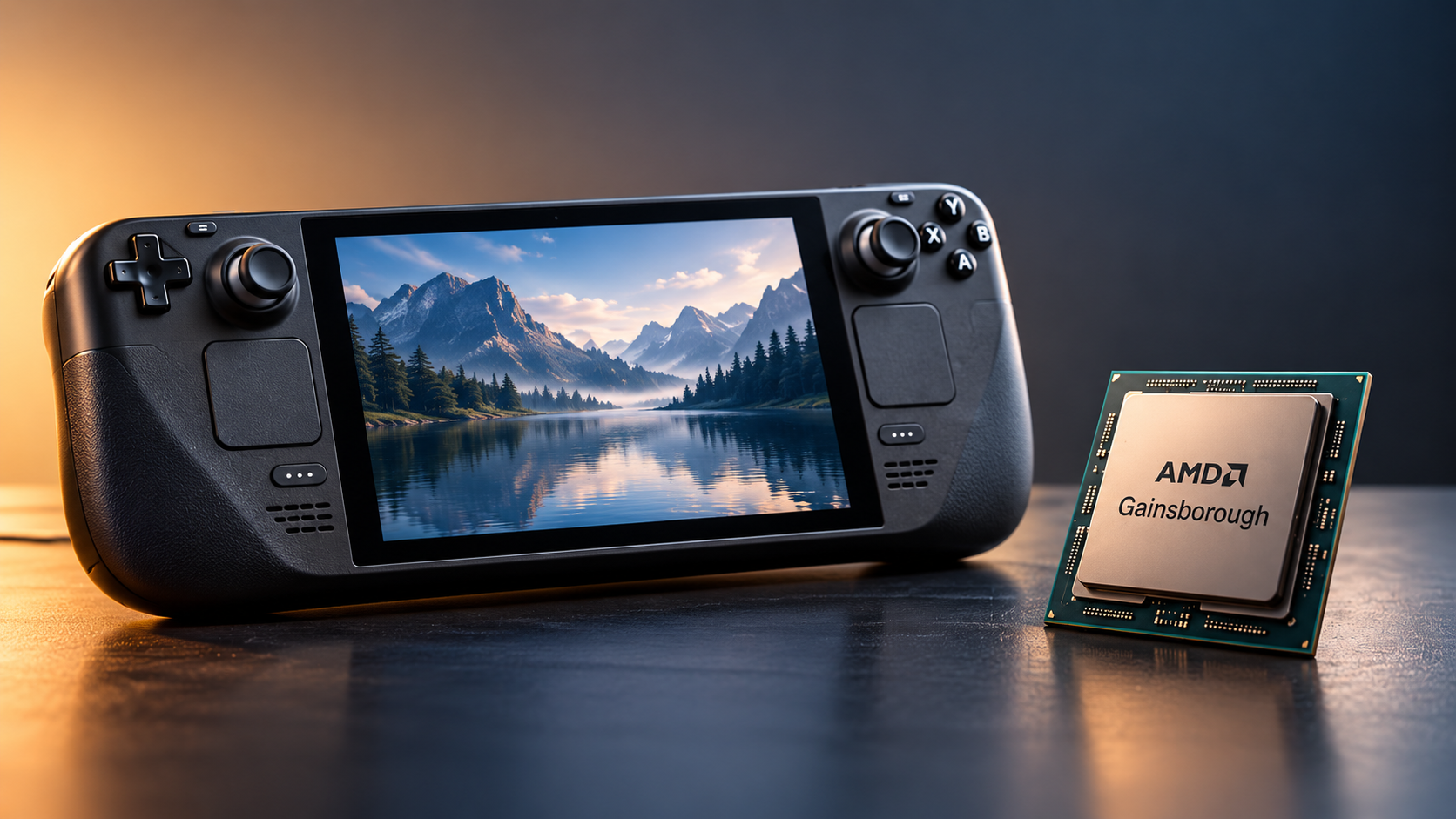
The AMD Gainsborough APU could be one of the most interesting hardware clues yet about Valve's next-generation handheld gaming PC. A previously unknown AMD chip codename has appeared in recent driver references, while shipping records reportedly point toward dedicated hardware validation. The most intriguing detail, however, is the name itself: Gainsborough is also the surname of Aerith, the Final Fantasy VII character whose first name inspired the original Steam Deck's Aerith processor codename.
That connection has sparked speculation that AMD may already be testing the silicon intended for Steam Deck 2. According to recent reporting based on industry leaks, Gainsborough could be a semi-custom APU built around AMD's future Zen 6 CPU architecture and RDNA 5 graphics, potentially manufactured using TSMC's N3P process.
There is an important distinction, though. No official announcement has confirmed that Gainsborough is a Valve product, and the rumored specifications remain unverified. The evidence makes the Steam Deck 2 connection plausible, but it does not establish that the chip is finalized or that a new handheld is about to launch.
If the reports prove accurate, however, AMD and Valve could be preparing a substantial upgrade rather than another small handheld refresh.
────────────────────────────────────────
────────────────────────────────────────
────────────────────────────────────────
1. What Is the AMD Gainsborough APU?
Gainsborough is the codename of an unreleased AMD processor that has reportedly surfaced in the company's Adrenalin 26.9.2 graphics driver and related industry reporting. The discovery has drawn attention because it does not appear to be a typical publicly announced Ryzen desktop or laptop processor.
According to recent reports, the chip may be a semi-custom design intended for a specific hardware partner rather than a conventional processor sold across multiple laptop and desktop manufacturers. That possibility is significant because AMD already has experience designing custom processors for gaming consoles and handheld devices.
The Steam Deck connection comes from several clues appearing together:
An unfamiliar AMD processor codename.
Reported shipping and import/export records connected to test equipment.
A reported FF6 BGA package with 1,179 contacts.
A name that closely matches the surname associated with the original Steam Deck's Aerith codename.
Rumors connecting the chip to Zen 6 CPU cores and RDNA 5 graphics.
Individually, these clues do not prove much. Together, they provide a reasonable basis for investigating whether Gainsborough could be designed for a future handheld.
But a processor appearing in a driver does not necessarily mean it is ready for retail products. Drivers often include references to hardware that is still being tested, revised or evaluated for potential use.
For now, Gainsborough is best understood as a reported, unannounced AMD chip with a possible handheld connection.
────────────────────────────────────────
2. The Final Fantasy VII Connection
The most memorable part of this story is the name.
The original Steam Deck's custom AMD APU is commonly known by the codename Aerith. Aerith Gainsborough is a major character in Final Fantasy VII, making the appearance of another AMD chip named Gainsborough particularly interesting.
That connection has become the centerpiece of the Steam Deck 2 theory.
The reasoning seems straightforward: if the first Steam Deck used an APU named after Aerith, a successor using the surname Gainsborough would fit the same naming pattern.
However, there is a crucial detail that changes how the clue should be interpreted.
Reporting from The Verge indicates that the Final Fantasy-related processor codenames were chosen by AMD rather than Valve. Valve designers reportedly did not particularly want those names used for their hardware. The original Steam Deck OLED also has a processor associated with the Sephiroth codename.
That means the naming pattern should not be treated as a secret announcement from Valve.
It is still interesting, but the connection may reflect AMD's internal naming practices rather than a deliberate message about a Steam Deck successor.
The theory becomes more convincing when the name is considered alongside the reported semi-custom design and shipping activity, rather than as standalone proof.
────────────────────────────────────────

────────────────────────────────────────
3. What the Shipping Records Actually Reveal
The hardware trail is not limited to the driver reference.
Recent reports have highlighted import/export records that reportedly associate Gainsborough with test equipment shipped for validation. The reported package designation is FF6, with 1,179 contacts and dimensions of approximately 25 by 25 millimeters.
These details suggest that engineering work may be underway.
In semiconductor development, prototype packages and validation hardware can move between manufacturing facilities, engineering partners and prospective customers well before a commercial launch. Testing may involve electrical validation, firmware development, power characteristics, thermal behavior and compatibility with the target system.
The important word here is validation.
A chip being shipped for testing does not automatically mean that the final consumer device has been approved for mass production. Manufacturers can test several possible designs, and the processor may change significantly before it reaches a finished product.
The package dimensions also need careful interpretation. A reported 25mm-by-25mm package does not tell us the exact die size, transistor count, performance or power consumption.
It does, however, provide another useful piece of information about the kind of hardware reportedly being investigated.
If Gainsborough is indeed intended for a handheld, the packaging and validation work would fit the long development process required to build a custom APU for a compact gaming system.
────────────────────────────────────────
4. Zen 6 and RDNA 5: The Rumored Architecture
The most ambitious part of the Gainsborough rumor is the proposed combination of Zen 6 CPU cores and RDNA 5 graphics.
These architectures have not been confirmed as the final specification for this chip. Nevertheless, the possibility explains why the leak has attracted so much attention.
Zen 6 CPU cores
Zen is AMD's CPU architecture family, used across desktop processors, laptop chips and various custom designs.
If Gainsborough uses Zen 6, it would represent a substantial architectural step beyond the Zen 2 CPU design found in the original Steam Deck.
Some reports suggest the APU could use between four and eight Zen 6C cores. Zen 6C is generally associated with a more compact core design, which could be attractive for a handheld processor where silicon area and power efficiency are important.
The exact configuration, clock speeds, cache arrangement and performance characteristics remain unknown.
RDNA 5 graphics
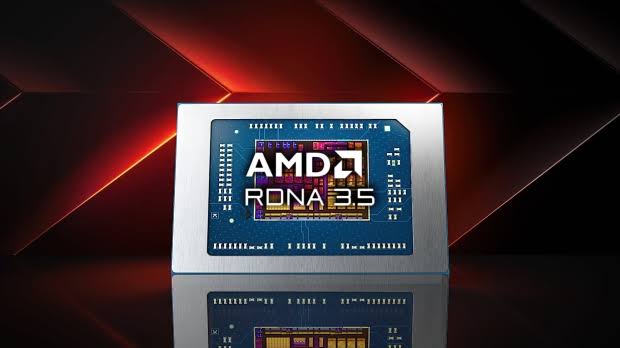
RDNA is AMD's graphics architecture family. The original Steam Deck uses an integrated GPU based on RDNA 2.
A future APU built around RDNA 5 would span several architectural generations from the original device. That could bring improvements in graphics efficiency, supported rendering techniques and performance per watt, depending on the final design.
Current reports have suggested a potential configuration ranging from 12 to 24 graphics compute units, but this should be treated as an unconfirmed estimate rather than a finalized specification.
More graphics compute units do not automatically guarantee better gaming performance. Memory bandwidth, power limits, thermal behavior, clock speeds and the games being played all affect the final result.
A handheld has a particularly difficult balancing act: it needs enough GPU power to produce a visible improvement without consuming so much electricity that battery life becomes unacceptable.
────────────────────────────────────────
────────────────────────────────────────
5. Why Valve Needs More Than a Faster Chip
Valve has repeatedly indicated that it does not want to release a Steam Deck successor simply because newer processors are available.
The original Steam Deck succeeded by balancing performance, battery life, price and a console-like experience built around SteamOS. A successor would need to preserve that balance while delivering a meaningful performance improvement.
That is a harder problem than it sounds.
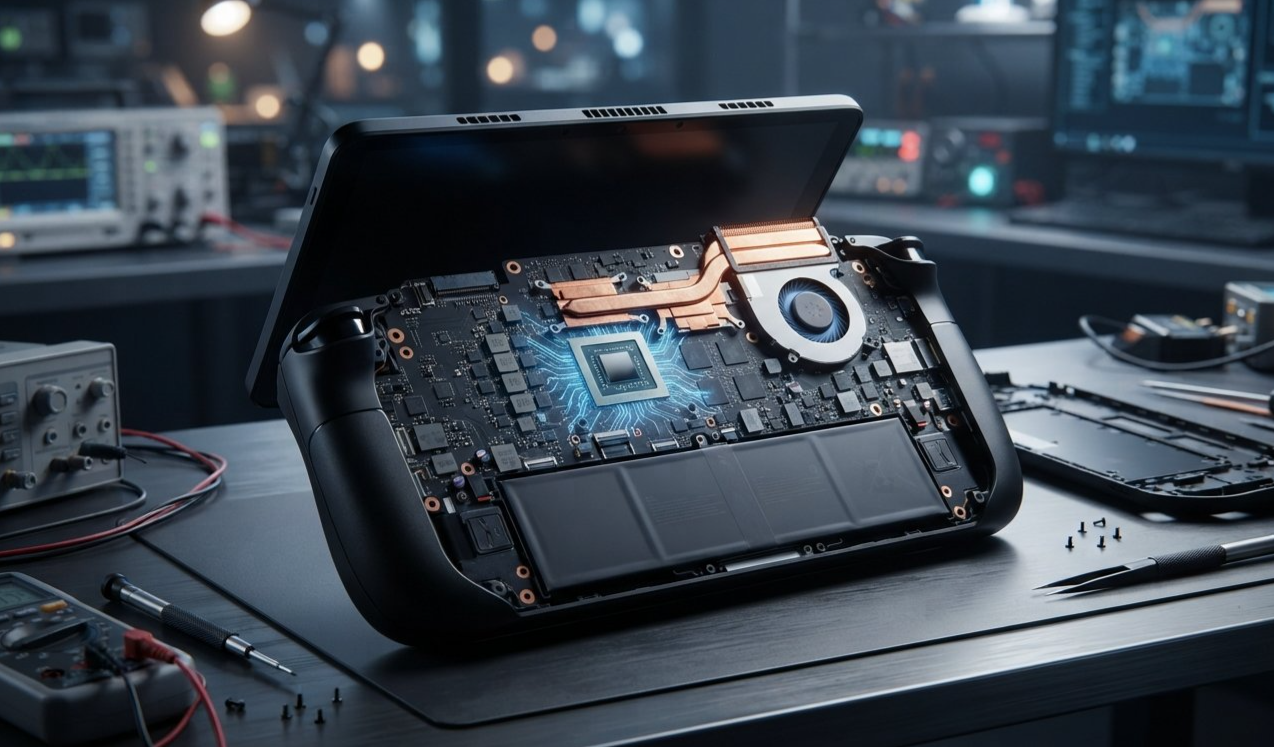
A handheld has limited space for cooling hardware. Its battery capacity is constrained by weight and physical dimensions. Its processor also needs to operate within a relatively tight power envelope while handling CPU-heavy simulation, GPU rendering and background system tasks.
A desktop processor can often rely on a large cooler and substantial power delivery. A handheld cannot use the same approach without sacrificing portability.
This is why a semi-custom APU could be important.
AMD and Valve would have the opportunity to tailor the processor around a specific target device rather than simply choosing a chip originally designed for a different type of system.
The goal would not necessarily be to maximize peak benchmark scores. It would be to deliver substantially better performance within a similar practical power budget.
That could mean improved frame rates at the same resolution, more stable performance in demanding games, better efficiency at lower settings or more headroom for future titles.
The real test will be whether a future Steam Deck can deliver that improvement without becoming significantly heavier, louder, more expensive or less portable.
────────────────────────────────────────
6. Steam Deck vs. a Potential Steam Deck 2
The original Steam Deck already demonstrates how much gaming performance can be delivered by a relatively low-power custom APU.
Valve's published specifications list the original processor as a four-core, eight-thread Zen 2 CPU paired with eight RDNA 2 compute units. The APU power range is listed at 4W to 15W. The system also uses 16GB of LPDDR5 memory.
The table below compares the confirmed original hardware with the currently rumored Gainsborough configuration.
| Feature | Original Steam Deck | Rumored Gainsborough |
|---|---|---|
| CPU architecture | Zen 2 | Possibly Zen 6 / Zen 6C |
| CPU core count | 4 cores / 8 threads | Rumored 4 to 8 cores |
| GPU architecture | RDNA 2 | Possibly RDNA 5 |
| GPU compute units | 8 | Rumored 12 to 24 |
| Manufacturing process | 7nm original model; 6nm OLED revision | Reportedly TSMC N3P |
| Memory | 16GB LPDDR5 | Unknown |
| Power target | 4W to 15W APU range | Unknown |
| Product status | Commercially available hardware | Unconfirmed chip under reported development |
The rumored configuration would represent a significant architectural change if it makes it into a final retail device.
However, the two products cannot be compared fairly using core counts alone. CPU architectures differ in performance per clock, while GPU compute units may differ in throughput and efficiency across generations.
Memory bandwidth could be equally important. Integrated graphics share system memory with the CPU, so a faster GPU may remain constrained if it cannot access data quickly enough.
The original Steam Deck's performance is also influenced by its 1280-by-800 display, which gives the GPU fewer pixels to render than a typical 1080p screen.
A future system could use that efficiency advantage to deliver higher frame rates, better image quality or improved battery life rather than simply pushing for the highest possible resolution.
────────────────────────────────────────
7. What a 3nm APU Could Mean for Battery Life
The reports surrounding Gainsborough point toward TSMC's N3P manufacturing process. If accurate, that would place the processor on a relatively advanced manufacturing node compared with the original Steam Deck's APU.
A newer process can potentially improve transistor density and power efficiency, but it does not guarantee a particular battery-life improvement.
Actual efficiency depends on the complete design: the CPU and GPU architectures, voltage, clock speeds, memory system, workload and power management.
A next-generation chip might deliver more performance at the same power level. Alternatively, the manufacturer could use the efficiency gains to lower power consumption during lighter games.
Both approaches could improve the handheld experience.
Consider three possible outcomes:
Higher performance at similar power: demanding games could run more smoothly without dramatically reducing battery life.
Similar performance at lower power: less demanding games could consume less energy and potentially last longer between charges.
A combination of both: the system could offer a performance boost while reducing power use in selected workloads.
These are possible design goals, not confirmed Gainsborough results.
A 3nm label should not be treated as a promise of doubled performance, dramatically longer battery life or a specific number of hours per charge.
────────────────────────────────────────
────────────────────────────────────────
8. Why the Custom Chip Matters
There is a meaningful difference between using an off-the-shelf processor and building a semi-custom APU for a particular device.
An off-the-shelf chip is designed for a broader range of systems. A semi-custom design can be adapted to a customer's requirements, potentially including core configuration, graphics resources, memory interfaces and other system-level features.
That flexibility could help Valve build a handheld around specific performance targets.
For example, Valve might prioritize GPU throughput for modern games, memory bandwidth for integrated graphics or lower idle power for battery life. It could also balance CPU resources against the physical and thermal constraints of the handheld enclosure.
None of these design choices has been confirmed for Gainsborough. They illustrate why the semi-custom designation matters if the reports are accurate.
There is also a practical caveat: custom silicon development takes time. It requires validation, firmware work, driver development, manufacturing planning and coordination between hardware and software teams.
Even a promising prototype does not mean a product is ready to ship.
────────────────────────────────────────
9. Could It Compete With Other Gaming Handhelds?
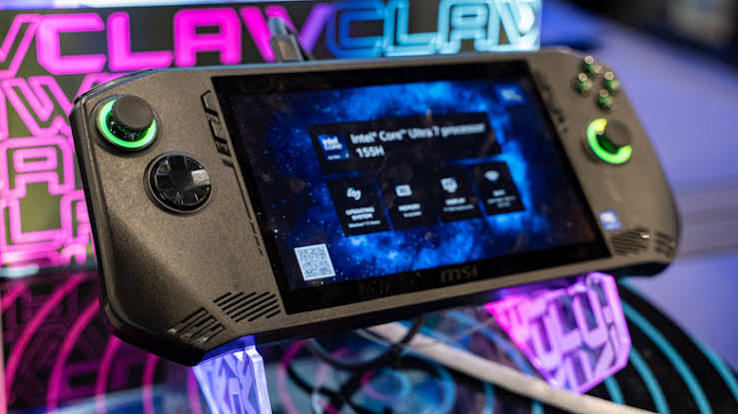
The handheld PC market has expanded beyond the original Steam Deck, with competing devices targeting different performance and price levels.
A future Steam Deck powered by Gainsborough would need to compete on more than raw GPU specifications.
SteamOS integration, compatibility with PC games, suspend and resume behavior, controller support, ergonomics and battery life all contribute to the overall experience.
A faster processor could make demanding games more comfortable to play, but it would not automatically solve every compatibility or optimization issue.
The operating system also matters. Valve's Linux-based SteamOS offers a different experience from Windows-based handhelds. Game compatibility depends on factors including Proton, anti-cheat support, launchers and individual developer decisions.
For some players, a well-integrated system with reliable controls and efficient power management may matter more than having the fastest available GPU.
For others, maximum performance and broader software compatibility could be the priorities.
If Gainsborough becomes a Steam Deck 2 processor, its success will depend on how well Valve balances those different requirements.
────────────────────────────────────────
────────────────────────────────────────
10. What We Still Do Not Know
Despite the growing interest, several of the most important details remain unresolved.
Is Gainsborough definitely for Valve?
No. Current reporting links the processor to a potential Steam Deck successor, but no official confirmation identifies Valve as the customer.
Are Zen 6 and RDNA 5 confirmed?
No. They are reported architectural possibilities, not a finalized public specification.
How many CPU cores and GPU compute units will it have?
Some reports suggest four to eight Zen 6C CPU cores and 12 to 24 RDNA 5 compute units. These numbers remain unconfirmed and could change during development.
Will the new handheld be more powerful than current competitors?
There is no reliable benchmark data yet. Architecture names and rumored compute-unit counts cannot establish real gaming performance.
Will it have a new screen, more memory or a bigger battery?
Those details remain unknown. The processor leak does not establish the specifications of the complete handheld.
Will the product definitely launch in 2027 or 2028?
No. Those dates have appeared in reporting and speculation, but Valve has not announced a release date for a Steam Deck successor.
The best way to understand the current evidence is to separate the reported chip from the rumored product. Gainsborough may be real hardware under development, but the exact customer, configuration and eventual destination are still uncertain.
────────────────────────────────────────
11. When Could Steam Deck 2 Arrive?
Recent coverage has discussed late 2027 or 2028 as a possible timeframe for a successor, but this is not a confirmed launch window.
There are several reasons a long development timeline would make sense.
First, a handheld requires more than a processor. Valve would need to finalize the motherboard, memory configuration, display, battery, cooling system, enclosure, controls and software experience.
Second, the company has historically emphasized meaningful generational improvements rather than releasing frequent hardware revisions.
Third, custom silicon must be validated and manufactured at scale. A working prototype is only one stage in that process.
Finally, component availability and cost can influence when a company chooses to launch a device. A powerful processor is not enough if the finished product cannot be manufactured at a price that makes sense for its target market.
For now, the sensible expectation is that Steam Deck 2 remains a future product without a confirmed launch date. The Gainsborough rumor may offer a clue about its potential processor, but it does not tell us when Valve will announce or release it.
────────────────────────────────────────
FAQ
What is the AMD Gainsborough APU?
Gainsborough is an unannounced AMD processor codename reportedly discovered in recent driver references and linked to shipping and validation records. Some reports suggest it could be a semi-custom APU intended for Valve's next handheld gaming PC, but that connection is unconfirmed.
Is Gainsborough confirmed as the Steam Deck 2 chip?
No. The Final Fantasy naming connection, reported semi-custom design and shipping records have fueled speculation, but neither AMD nor Valve has officially confirmed the processor's intended product.
Will Steam Deck 2 use Zen 6 and RDNA 5?
That is one of the leading rumors. Current reports suggest a possible Zen 6C CPU and RDNA 5 GPU combination, but the final architecture has not been confirmed.
Why is the name Gainsborough important?
Aerith Gainsborough is a character from Final Fantasy VII, and Aerith was the codename associated with the original Steam Deck's APU. The shared naming connection is intriguing, although reporting indicates AMD selected these processor codenames rather than Valve.
How powerful could the new APU be?
There is not enough reliable information to quantify its performance. Rumored core counts and manufacturing details do not substitute for independent gaming benchmarks, power measurements or confirmed specifications.
Will Steam Deck 2 launch in 2027?
Some reports have suggested late 2027 or 2028 as possibilities. Valve has not confirmed a release date, and the processor leak alone cannot establish the timing of a finished product.
Will it have better battery life?
That is a plausible development goal, but it is not guaranteed. Battery life will depend on the complete device, including its processor, display, battery capacity, cooling and power management.
────────────────────────────────────────
Final Take: An Intriguing Clue, Not a Confirmation
The AMD Gainsborough APU rumor is compelling because several details appear to line up: a new processor codename, reported hardware validation shipments, a semi-custom design and a Final Fantasy VII naming connection that recalls the original Steam Deck.
The reported Zen 6 and RDNA 5 combination could also offer the kind of architectural jump that a next-generation handheld would need. A more efficient CPU and substantially improved integrated graphics could help Valve deliver better performance without abandoning the portable design that made the Steam Deck successful.
But the distinction between a promising lead and a confirmed product remains important.
We do not yet know whether Valve is the customer, whether the rumored specifications are final or when a finished device might arrive. The name Gainsborough makes the story more interesting, but the strongest evidence will ultimately come from official announcements, confirmed hardware specifications and independent performance testing.
For now, the leak offers a fascinating glimpse into what AMD and Valve might be exploring. If Gainsborough really is the foundation of Steam Deck 2, the next generation of handheld PC gaming could be considerably more ambitious than a simple processor refresh.
────────────────────────────────────────
Sources and Further Reading
The Verge: Steam Deck 2: Is AMD Gainsborough the chip Valve's been waiting for?
Notebookcheck: Steam Deck 2 leak points to mysterious AMD Gainsborough APU on TSMC N3P
PC Gamer: AMD's new Gainsborough APU rumoured to be the chip that powers the long-awaited Steam Deck 2
ComputerBase: AMD Gainsborough could be the chip for Steam Deck 2
────────────────────────────────────────