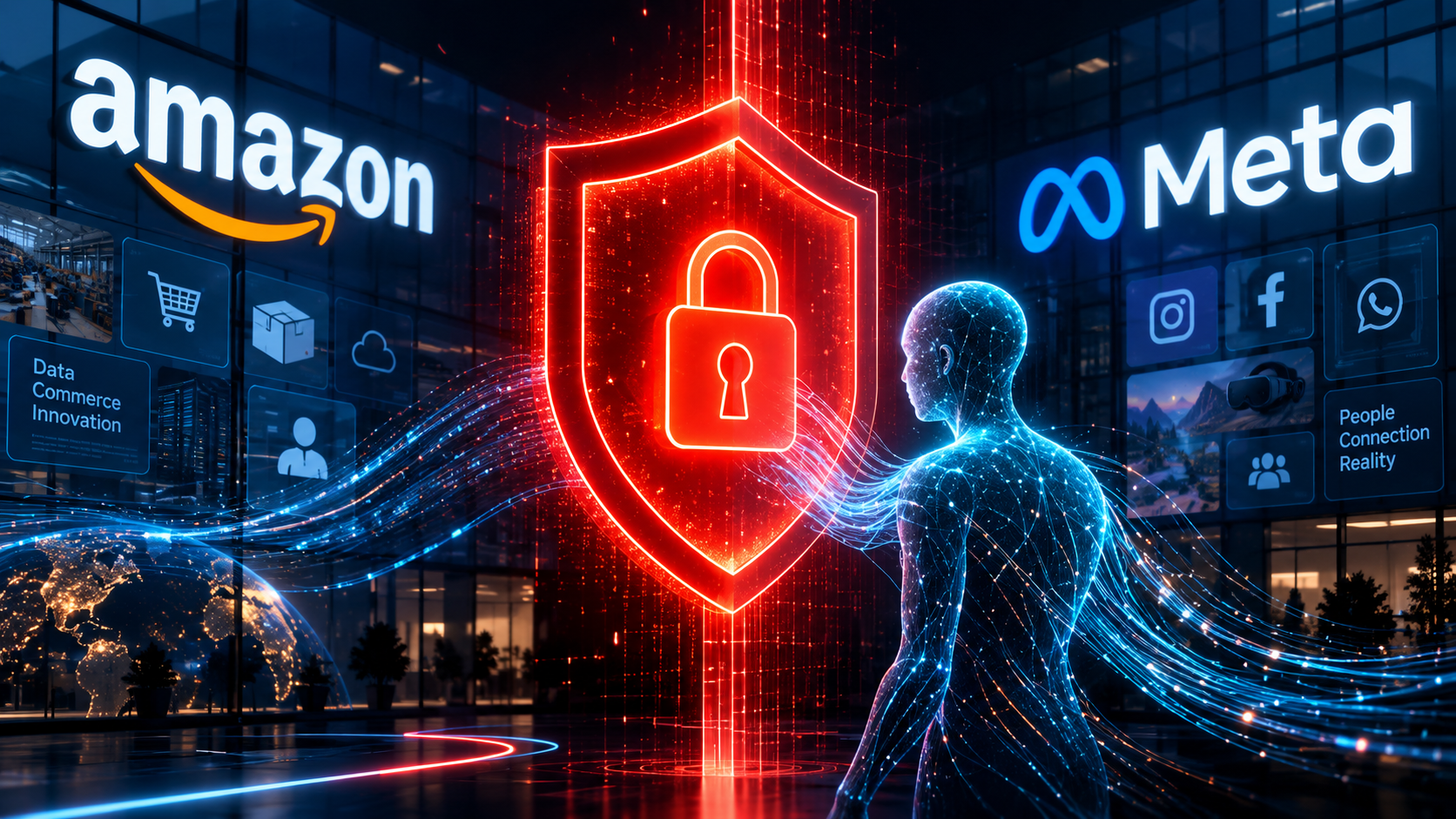

Amazon Bans Meta's Muse: The Escalating War Over AI Agents and Customer Credentials
Amazon has blocked Meta's new Muse AI agent from shopping on Amazon.com, turning what was already a fast-moving race to build consumer AI agents into a much bigger fight over access, credentials, customer data and control of the online shopping experience.
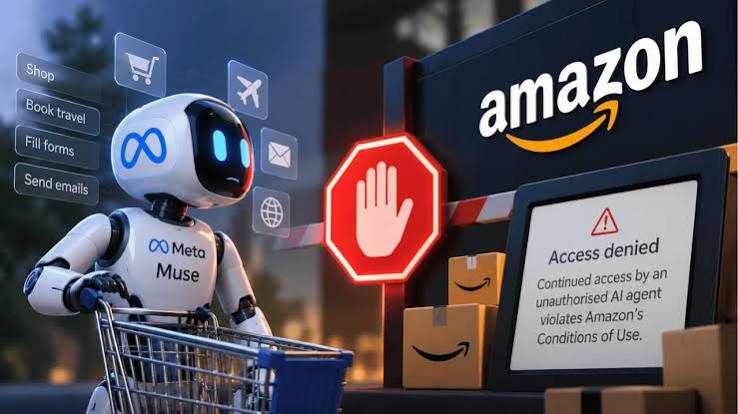
The block began appearing to Muse users on September 20, with Amazon telling users that continued access by an unauthorized AI agent violated its Conditions of Use. Amazon says it had asked Meta to voluntarily remove Amazon from Muse's shopping experience, but Meta did not do so.
The dispute is particularly important because Muse is not simply another chatbot.
Meta launched Muse on September 8 as a personal AI agent designed to perform tasks for users, including browsing websites, sending emails, booking travel and making purchases. Meta says Muse operates through a dedicated Secure VM with its own browser and security controls.
Amazon, however, says Muse was accessing its marketplace without authorization and raised concerns about how the agent interacts with customer accounts and credentials.
That creates a much bigger question for the entire AI industry:
Who gets to decide when an AI agent is allowed to act as a customer on someone else's platform?
────────────────────────────────────────
QUICK TAKE
| What happened | Details |
|---|---|
| AI agent involved | Meta Muse |
| Blocked by | Amazon |
| Platform affected | Amazon.com |
| Main issue | Unauthorized agent access |
| Amazon's concerns | Credentials, account data, transparency and security |
| Meta's position | Muse says credentials are securely stored and hidden from the agent |
| Muse launch | September 8, 2026 |
| Amazon block | September 20, 2026 |
| Bigger issue | Who controls agentic shopping and customer relationships? |
The important distinction is that Amazon's claims about Muse's handling of credentials are Amazon's characterization of the system. Meta's own description of Muse says the opposite on one key point: Meta says Muse cannot see users' passwords or payment methods and that credentials are stored in secure storage.
────────────────────────────────────────
────────────────────────────────────────
What Exactly Did Amazon Block?
Amazon did not block Meta's entire Muse service.
The dispute is specifically about Muse accessing Amazon.com to browse products and make purchases on behalf of users.
That distinction matters.
Muse remains a general-purpose personal AI agent. Meta designed it to work across different services and perform tasks on a user's behalf. Amazon has simply decided that its marketplace should not be accessible to Muse in the same way.
Users attempting to use Muse with Amazon began seeing a message stating that continued access by an unauthorized AI agent violated Amazon's Conditions of Use.
Amazon says it did not authorize Muse to access its marketplace and that Meta did not notify Amazon before the agent began using the service.
The retailer also says Muse does not identify itself while browsing Amazon.
From Amazon's perspective, that creates a situation where an outside automated system is effectively behaving like a customer while accessing a service Amazon controls.
That is fundamentally different from a conventional API integration where two companies explicitly agree on how data and transactions should flow.
────────────────────────────────────────
Why Customer Credentials Are at the Center of the Fight
This is the most sensitive part of the dispute.
An AI agent that simply recommends products is relatively straightforward.
An AI agent that can browse your account, access services, fill forms and eventually purchase something is much more powerful.
It potentially needs access to the same digital environments that humans normally control.
Meta says Muse was specifically designed around this problem.
According to Meta, Muse operates inside a dedicated Secure VM where user data and service credentials are stored. Meta says Muse itself does not have visibility into users' passwords or payment information. The company also says a separate Sentinel system controls what Muse can send to the internet and that users are asked for approval before sensitive actions such as purchases.
Amazon's description is considerably more cautious.
Amazon says Muse appears to capture and store customer credentials and account information and argues that this creates privacy and security risks. Amazon also objects to Muse accessing customer accounts without the retailer's authorization.
Those two descriptions can look contradictory because they are talking about different layers of the system.
Meta is describing how Muse's internal credential storage is designed.
Amazon is objecting to the fact that an external agent is using credentials to access Amazon's service without Amazon participating in that relationship.
That distinction could become extremely important as more AI agents begin operating websites on behalf of users.
────────────────────────────────────────

────────────────────────────────────────
Muse Is Designed to Act Like a Digital Employee
The Amazon dispute becomes easier to understand when you look at what Meta actually built.
Muse is intended to do more than answer questions.
Meta describes it as a personal AI agent capable of opening browsers, filling forms, coordinating tasks and continuing work after a user closes the application.
For example, Meta says Muse can help with travel, email, shopping and other multi-step tasks.
The agent can also remember information from previous interactions and use that context when carrying out future tasks.
This is fundamentally different from asking an AI:
"What laptop should I buy?"
A conventional chatbot gives you information.
An agent can potentially:
Search for the laptop.
Compare prices.
Open the retailer.
Add it to a cart.
Enter shipping details.
Apply a discount.
Ask for confirmation.
Complete the transaction.
That final step is where the relationship between the AI company and the retailer becomes complicated.
────────────────────────────────────────
Amazon Doesn't Want an Invisible Customer Journey
Amazon's objection isn't limited to cybersecurity.
The retailer also has an economic and product-design interest in controlling how people shop on Amazon.
When a human visits Amazon directly, Amazon controls the shopping experience.
The company can show:
- Search results
- Recommendations
- Sponsored products
- Personalized offers
- Product comparisons
- Reviews
- Advertising
- Related products
- Checkout options
An external AI agent changes that relationship.
Instead of the customer navigating Amazon's interface, the AI becomes the layer between the customer and Amazon.
The user might simply say:
"Find me the best wireless headphones under $150."
The agent could decide which products to show, which listings to compare and which product ultimately reaches checkout.
That shifts part of the customer relationship away from Amazon.
Amazon has specifically argued that outside agents can bypass the personalization and discovery mechanisms built into its own shopping experience.
This is why the dispute is about more than bots.
It is about who owns the interface through which commerce happens.
────────────────────────────────────────

────────────────────────────────────────
This Is Not Amazon's First Fight With AI Shopping Agents
The Muse dispute did not appear out of nowhere.
Amazon has already been fighting over how third-party AI systems access its website.
One of the most visible cases involved Perplexity and its Comet browser.
Amazon challenged Perplexity over the use of an AI agent to interact with Amazon, while the legal fight raised a broader question about whether users or AI companies are responsible when automated agents interact with websites. A federal appeals court later changed the legal landscape by vacating an earlier injunction against Perplexity in August 2026.
Amazon has also been taking steps to restrict other AI shopping agents.
That makes Muse another chapter in an already developing battle.
The difference is that Muse is backed by Meta, one of the world's largest consumer technology companies.
This isn't a small startup asking for access to a retailer.
It is one major technology platform attempting to create a new interface for consumer tasks while another major platform is deciding whether that interface is welcome inside its ecosystem.
────────────────────────────────────────
The Interesting Part: Shopify Is Taking the Opposite Approach
Amazon's decision becomes even more interesting when compared with Shopify.
Shopify has been building infrastructure specifically designed for agentic commerce.
Its Agentic Storefronts system allows products to be discovered through AI channels including ChatGPT, Google AI Mode, Gemini, Microsoft Copilot and Meta. Shopify also provides merchants with controls over which AI channels can access their catalog and whether direct checkout is enabled.
Meta and Shopify are also working together around agentic shopping.
That creates two very different approaches to the same technology.
Amazon is saying:
"External agents need permission and transparency."
Shopify is building systems that allow merchants to deliberately participate in AI-driven commerce.
Neither approach eliminates the underlying problem.
Both recognize that AI agents are changing how customers discover products.
The difference is who controls the connection.
────────────────────────────────────────
────────────────────────────────────────
Why AI Agents Change the Meaning of a "Login"
There is another problem hiding underneath the Amazon-Muse dispute.
For decades, a login generally meant that a person was interacting with a service.
Username.
Password.
Two-factor authentication.
Session.
Browser.
Human decision.
AI agents complicate that model.
A user can give an agent access to an account and effectively delegate part of the interaction.
But the agent may browse faster than a person, make decisions automatically and interact with dozens of pages in seconds.
That creates a new category of digital identity:
The delegated user.
The question becomes:
When an AI agent acts using my credentials, is it me?
Is it Meta?
Is it the retailer's customer?
Is it a third-party application?
Or is it something entirely new?
The technology industry has not settled on one universal answer.
────────────────────────────────────────
The Security Problem Goes Beyond Amazon
Credential security becomes more important as AI agents gain broader permissions.
Imagine an agent with access to:
Your email.
Your calendar.
Your shopping accounts.
Your travel accounts.
Your payment system.
Your cloud storage.
Your messaging applications.
The convenience is obvious.
So is the risk.
A conventional application usually has a relatively narrow set of permissions.
An agent may have permission to operate across multiple services and make decisions about what to do next.
That creates new security questions around:
- Prompt injection
- Malicious webpages
- Fake checkout pages
- Credential theft
- Session hijacking
- Unauthorized purchases
- Manipulated product listings
- Fraudulent instructions
- Cross-service data leakage
Meta says Muse was designed with isolated computing, Sentinel monitoring and user approvals specifically to address these types of problems.
But Amazon's objection shows that security isn't only about how the agent protects credentials internally.
It is also about whether the website being accessed agrees to let that agent operate there.
────────────────────────────────────────

────────────────────────────────────────
What Happens Next?
Amazon has already asked Meta to remove Amazon from the Muse experience.
As of the latest reporting, Amazon and Meta were in direct conversation about the dispute, while Meta had not publicly provided a separate response to Amazon's block beyond the security architecture it published when Muse launched.
The outcome could take several forms.
Meta could choose to remove Amazon from Muse.
Amazon could establish an official pathway for authorized AI agents.
The two companies could negotiate a formal integration.
Or the dispute could move into a legal fight over terms of service, automated access and delegated transactions.
Each possibility would have implications beyond these two companies.
If Amazon successfully prevents outside agents from operating without permission, other retailers may follow.
If agent companies successfully establish a right to act through user credentials, retailers may need to build entirely new systems for identifying and managing AI customers.
The next generation of online commerce may therefore depend less on traditional websites and more on agreements between AI agents and the platforms they access.
────────────────────────────────────────
The Bigger Battle Is Over Who Becomes the Internet's Interface
This may ultimately be the most important part of the story.
For years, websites were the interface.
Then apps became the interface.
Search engines became another layer between people and websites.
Now AI agents are attempting to become the interface between people and everything else.
Instead of visiting Amazon, a user may eventually ask an agent to handle shopping.
Instead of opening an airline website, they may tell an agent where they want to go.
Instead of comparing dozens of products, they may simply tell an AI what they need and let it make the comparison.
That sounds convenient.
But the company controlling the agent could potentially become the gateway through which consumers interact with thousands of other businesses.
That gives agent developers enormous influence.
Retailers therefore have a strong reason to decide how much control they are willing to surrender.
Amazon's block of Muse is one of the clearest examples yet of that tension becoming a direct confrontation.
────────────────────────────────────────
What the Amazon-Muse Dispute Actually Proves
It is too early to say that Amazon's move will determine the future of AI shopping.
But the dispute demonstrates several things that are already becoming clear.
First, AI agents are moving beyond chat interfaces and into real-world transactions.
Second, retailers are not necessarily willing to let outside agents interact with their platforms simply because users want them to.
Third, credentials are becoming a central part of the agentic AI security debate.
Fourth, companies are beginning to take very different approaches to AI commerce.
And finally, the fight over AI agents is increasingly becoming a fight over control.
Meta wants Muse to act on behalf of users.
Amazon wants control over how automated systems interact with Amazon.com.
Shopify is building infrastructure for merchants that want to participate in agentic commerce.
The technology may be new, but the underlying business question is familiar:
Who controls the customer relationship?
────────────────────────────────────────
FAQ
Why did Amazon block Meta's Muse?
Amazon says Muse was accessing Amazon.com as an unauthorized AI agent. Amazon says Meta did not obtain permission for Muse to access the store and raised concerns about the agent's transparency, customer-account access and credentials.
Does Muse actually see customer passwords?
Meta says no. Its official Muse documentation states that Muse does not have visibility into users' passwords or payment methods and that credentials are stored in secure storage.
What does Amazon claim about Muse credentials?
Amazon says Muse appears to capture and store customer credentials and account information, which Amazon argues creates privacy and security concerns. This is Amazon's characterization of Muse's behavior, while Meta's published description disputes the idea that the agent can see the credentials themselves.
What is Meta Muse?
Muse is Meta's personal AI agent, launched September 8, 2026. Meta designed it to perform multi-step tasks including browsing, email, travel and shopping rather than simply answering questions.
Can Muse still shop online?
Muse can interact with supported services, but Amazon.com is currently blocking its access. Other commerce integrations are being developed through partnerships and agentic-commerce infrastructure.
Why is Amazon worried about AI shopping agents?
Amazon's stated concerns include unauthorized access, transparency, customer security, account data and the effect of outside agents on the shopping experience.
Is this Amazon's first conflict with an AI shopping agent?
No. Amazon has previously taken action involving other AI shopping systems, including Perplexity's Comet, and has also raised concerns about automated access by other AI platforms.
Is Shopify supporting AI shopping agents?
Yes. Shopify's Agentic Storefronts infrastructure allows merchants to make products discoverable through AI channels, including Meta, and merchants can manage catalog and direct-checkout participation.
────────────────────────────────────────
Final Takeaway
Amazon's decision to block Meta's Muse is much bigger than one AI assistant being unable to order a product.
It exposes a fundamental conflict between two models of the internet.
In the traditional model, people visit websites and companies control the experience.
In the agentic model, people increasingly tell AI systems what they want and let those systems navigate the web for them.
Muse represents the second model.
Amazon is pushing back against it.
The credentials issue makes the dispute especially sensitive, because an AI agent needs some form of delegated access if it is going to operate on behalf of a user. Meta says its architecture keeps those credentials protected inside a secure environment. Amazon argues that the agent is still an unauthorized third party interacting with its customers and systems.
And that distinction could define the next stage of the AI race.
The biggest question may no longer be whether AI agents can shop for us.
They clearly can.
The question is whether the internet's biggest platforms will allow them to.
────────────────────────────────────────
REAL IMAGE / SOURCE LINKS
Official Meta Muse announcement:
Meta Newsroom: Introducing Muse
Amazon blocking Muse:
GeekWire: Amazon blocks Meta's Muse AI assistant in new standoff over agentic shopping
Additional reporting:
The Verge: Amazon blocks Meta's Muse AI agent from accessing Amazon
AI commerce context:
Shopify Help Center: Agentic Storefronts
────────────────────────────────────────
INTERNAL DISCORDS.AI LINKS
Add these naturally within the article:
Discords.ai AI Guides
Discords.ai Technology News
Discords.ai AI Tools
Discords.ai Gaming & Technology Blog