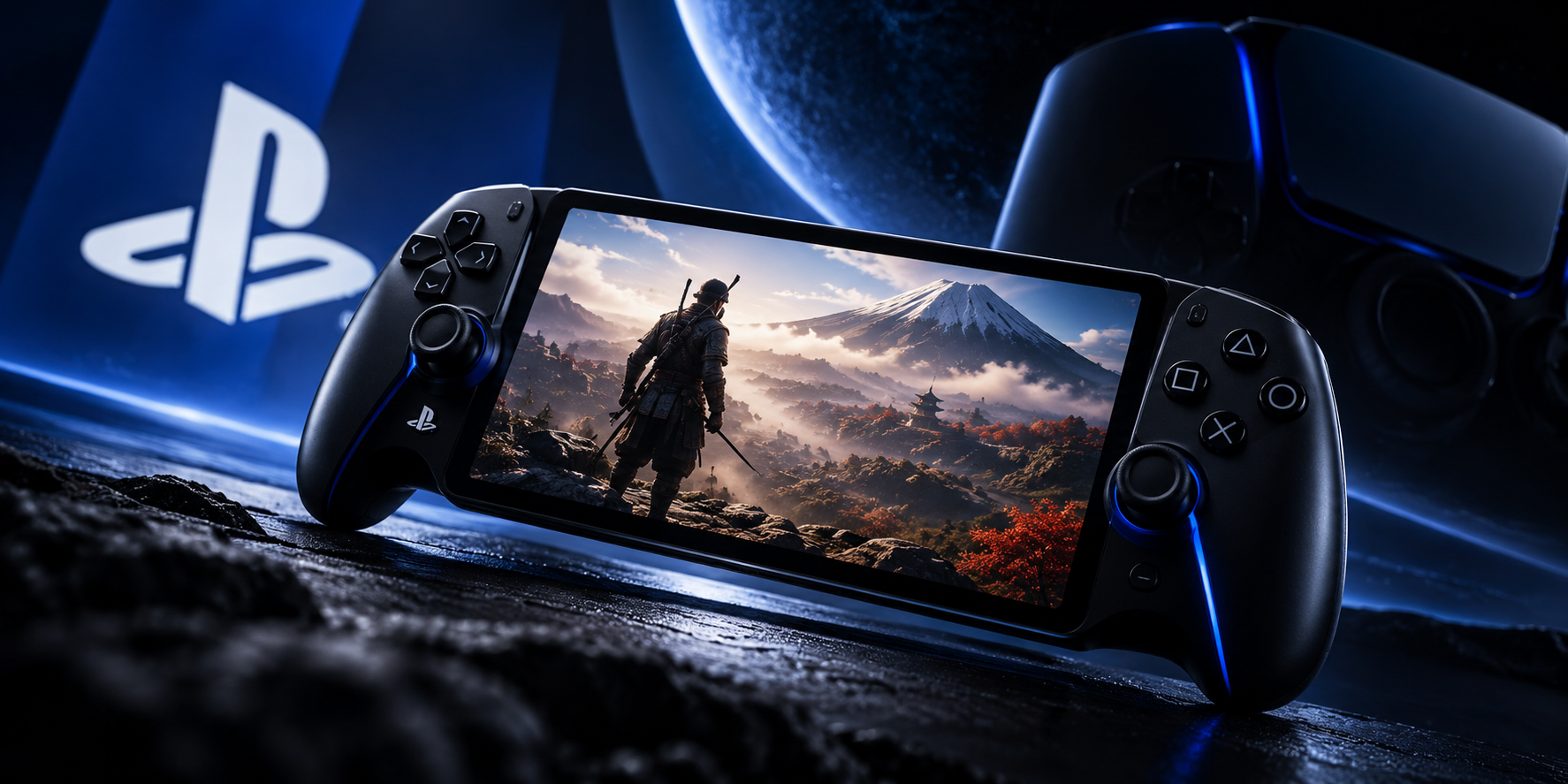

Sony's rumored return to dedicated handheld gaming has suddenly become much more interesting.
A new leak surrounding Project Canis, the alleged codename for Sony's next-generation PlayStation handheld, claims the device could render demanding games internally at just 540p.
That sounds terrible on paper.
But there's an important distinction: 540p would reportedly be the internal rendering resolution, not the final display resolution.
According to the latest reports, the handheld could use a future version of Sony's PSSR technology to reconstruct that image to 1080p. The rumored approach is designed around the realities of handheld hardware: limited power, limited cooling, and limited battery capacity.
And that's why the 540p number may not tell the whole story.
🚨 The 540p Controversy
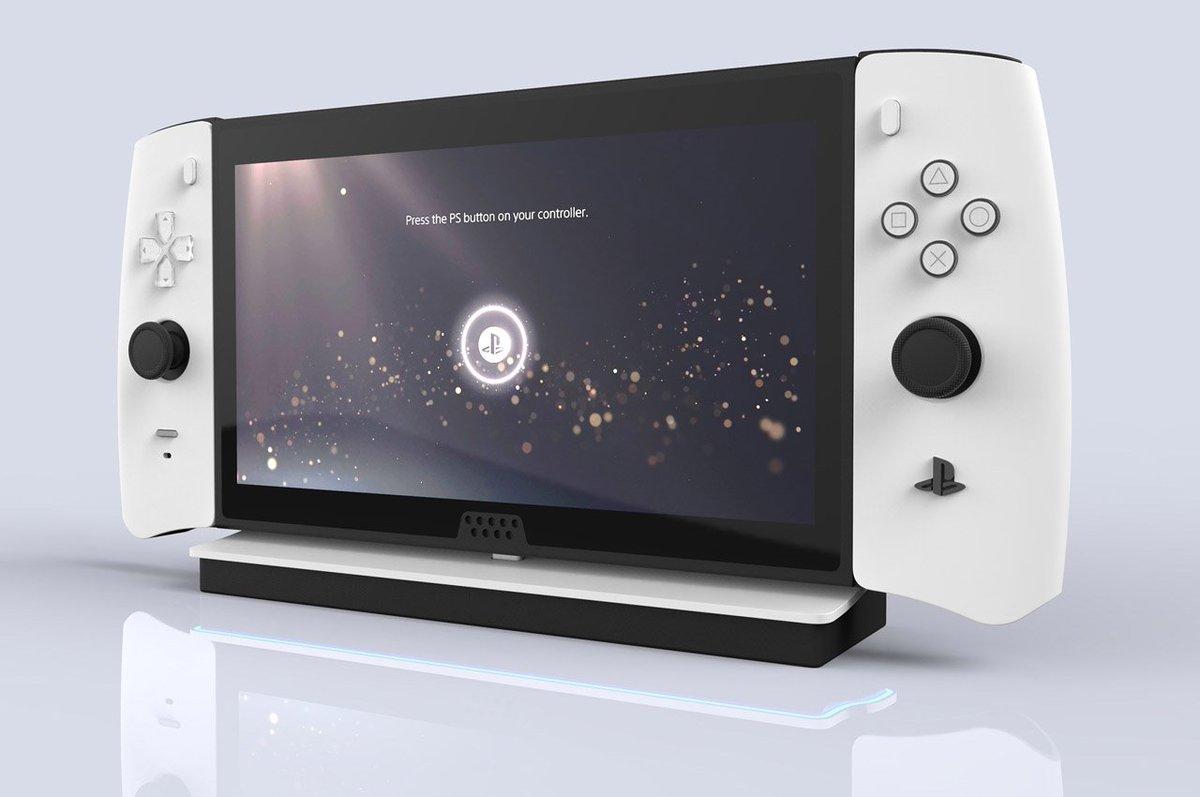
The latest Project Canis leak comes from GameGPU and has been widely reported across the gaming hardware press.
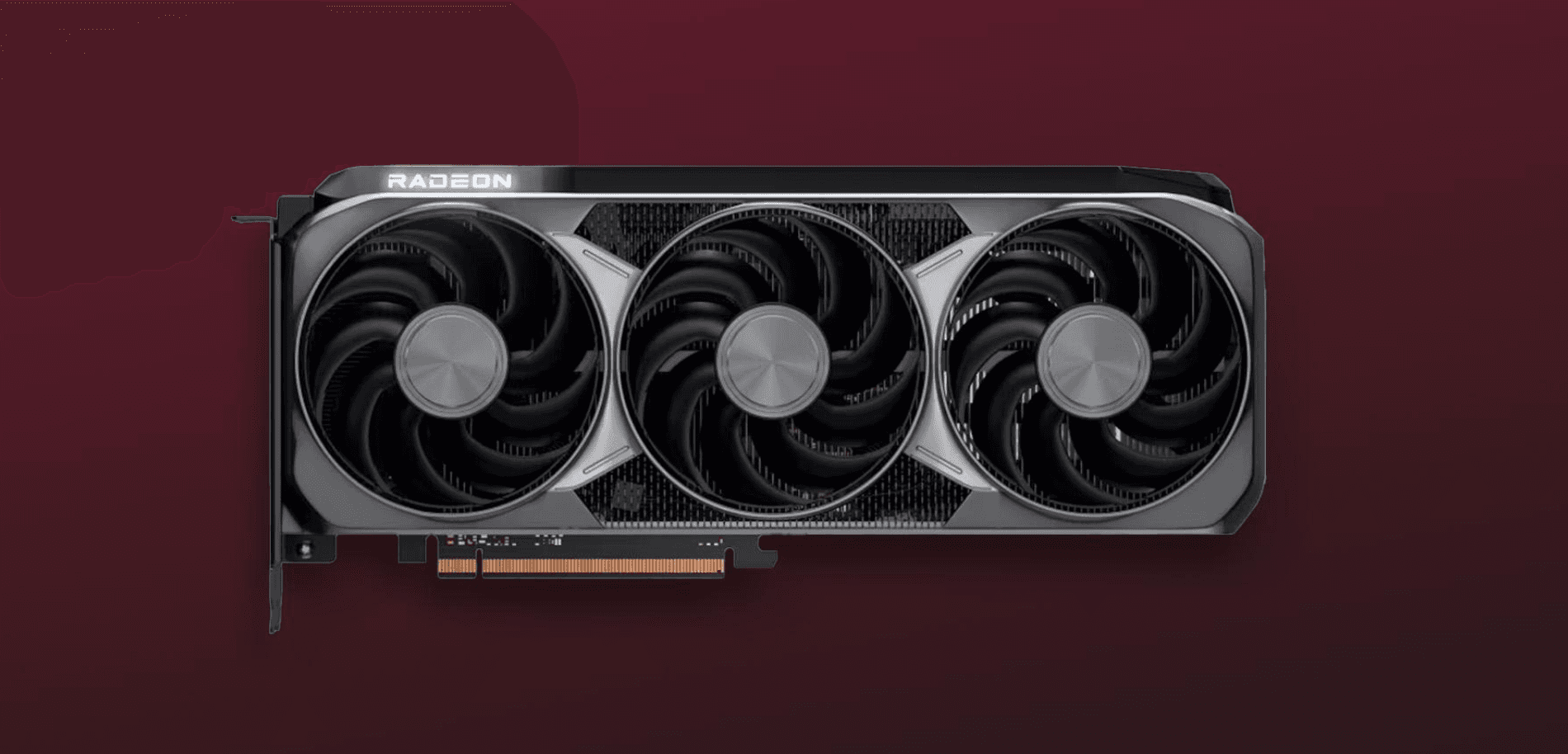
The rumored handheld is said to use a custom 3nm AMD chip, with four Zen 6c CPU cores, two low-power Zen 6 cores and a 16-CU RDNA 5 GPU.
The reported memory configuration is equally unusual for a handheld:
- 24GB LPDDR5X unified memory
- 192-bit memory bus
- 16 RDNA 5 compute units
- 15–25W reported power envelope
- Around 4.91 TFLOPS in handheld mode
- Around 6.75 TFLOPS when docked
None of these specifications have been confirmed by Sony. Even the Project Canis name remains unofficial.
The controversial part is the rendering target.
The leak claims demanding games could internally render at around 540p before being reconstructed to 1080p.
For a device supposedly positioned alongside the next PlayStation generation, that sounds surprisingly low.
But there's a reason Sony might deliberately choose it.
🧠 Enter PSSR 3.0
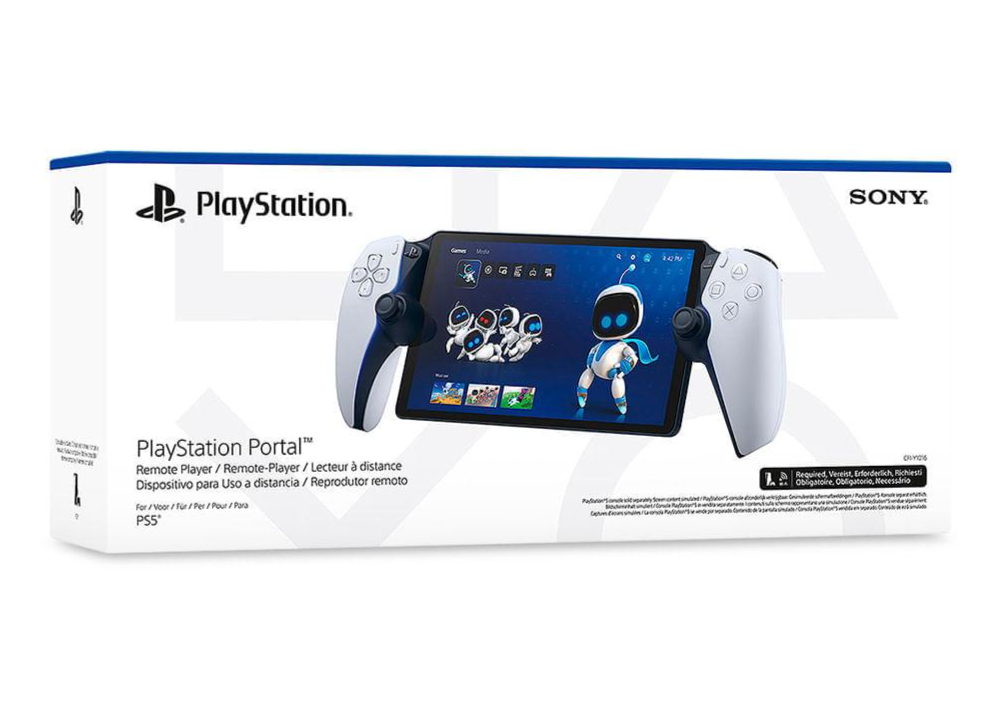
The centerpiece of the leak is PSSR 3.0, an alleged future version of PlayStation Spectral Super Resolution.
Sony already uses PSSR as an image-reconstruction technology on the PS5 Pro. Instead of requiring the GPU to render every pixel at the final output resolution, supported games can reconstruct a higher-resolution image from a lower-resolution internal render.
The rumored Project Canis implementation takes that idea much further.
Instead of spending precious handheld power trying to render a game natively at 1080p, the GPU could work with a much smaller internal image.
That means fewer pixels need to be produced traditionally.
The reconstruction system then attempts to rebuild the missing detail.
That's a completely different philosophy from simply making the handheld GPU bigger.
🔋 Why 540p Could Actually Make Sense
Rendering at 1080p requires processing four times as many pixels as 540p.
That doesn't mean the entire game becomes exactly four times more demanding, because CPU workloads, geometry, simulation and other GPU tasks still matter.
But reducing the rendering workload can give a handheld much more room to work with.
And handhelds have a problem desktop consoles don't face to the same degree.
Every watt matters.
A home console can pull considerably more power from a wall socket.
A handheld has to balance:
- Performance
- Battery life
- Heat
- Fan noise
- Device size
- Sustained performance
That makes efficiency arguably more important than raw GPU numbers.
The latest reports put Canis somewhere around a 15–25W power envelope, which would make aggressive reconstruction particularly relevant.
🖥️ 540p Doesn't Mean a 540p Display
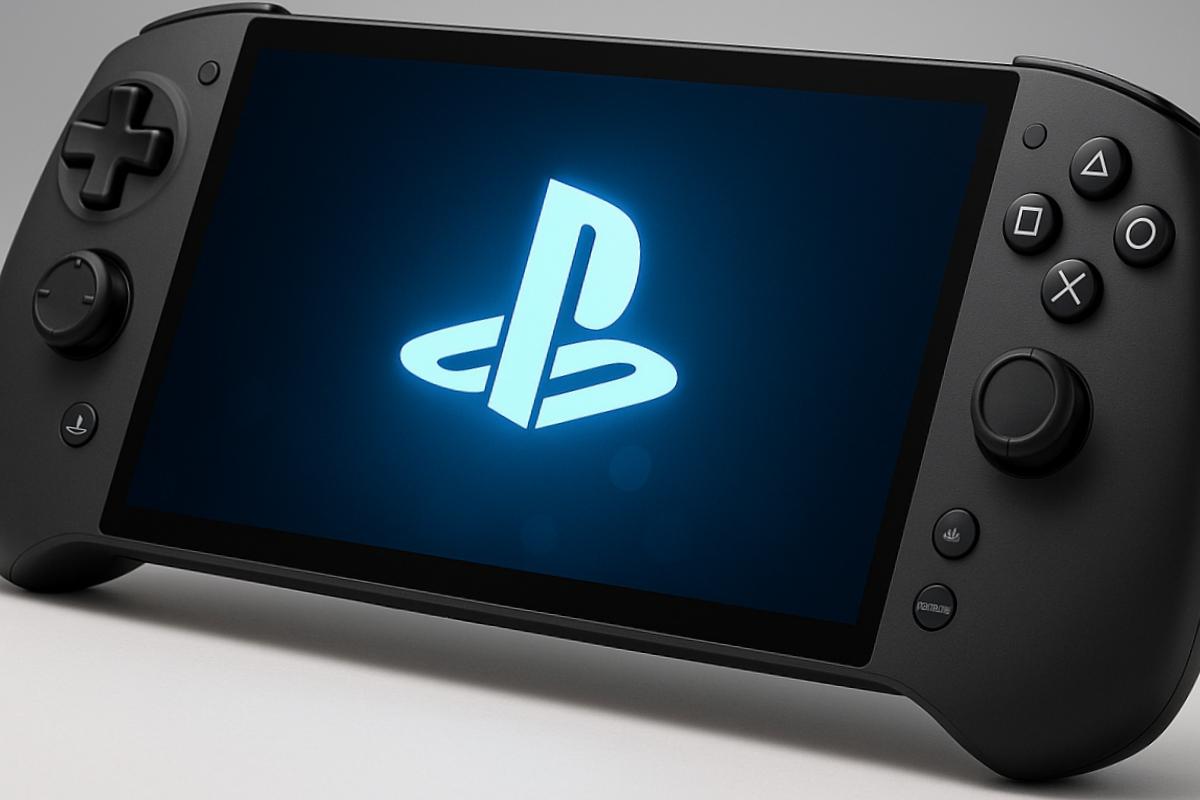
This is probably the most important clarification.
The leak does not currently suggest that Project Canis would have a 540p screen.
Instead, the claim is that games could render internally at 540p and then be reconstructed to a 1080p output.
That's a huge difference.
Think about the pipeline like this:
Game engine → 540p internal render → PSSR reconstruction → 1080p output
The player sees the final reconstructed image.
The 540p number describes what happens earlier in the rendering pipeline.
That distinction is easy to lose when the headline simply says:
"Sony handheld only renders at 540p."
The reality described by the leak is considerably more complicated.
⚙️ The Hardware Is Reportedly Built Around Efficiency
The rumored architecture is also interesting because Canis isn't simply described as a miniature PS5.
The reported chip combines Zen 6c and Zen 6 low power CPU cores with an RDNA 5 GPU.
That combination suggests a platform designed around different workloads and power requirements.
The reported 16-CU GPU would run at approximately 1.2GHz in handheld mode, with the clock potentially increasing to around 1.65GHz when docked.
That would reportedly produce:
| Mode | Reported GPU Clock | Reported Performance |
|---|---|---|
| Handheld | ~1.2GHz | ~4.91 TFLOPS |
| Docked | ~1.65GHz | ~6.75 TFLOPS |
These are leaked figures, not Sony specifications.
And TFLOPS alone shouldn't be treated as a direct measurement of real-world gaming performance.
Architecture, memory bandwidth, ray tracing, game optimization and reconstruction quality all matter.
🚀 Where the PS5 Pro Comparison Comes From
This is where some of the more dramatic headlines surrounding the leak come from.
GameGPU reportedly estimates that PSSR 3.0 could give Canis an "effective" performance level of roughly 10-11 TFLOPS in handheld mode and around 14 TFLOPS when docked.
The comparison is then made with the PS5 Pro's commonly cited 16.7 TFLOPS figure.
But there's an important caveat.
"Effective TFLOPS" isn't the same thing as actual GPU compute performance.
You can't simply take a 4.91-TFLOPS GPU and mathematically turn it into an 11-TFLOPS GPU through upscaling.
Reconstruction can reduce the amount of native rendering work required.
It doesn't magically give the GPU more raw compute units.
So the PS5 Pro comparison should be treated as an estimate of the overall rendering workload, rather than evidence that Canis is literally as powerful as a PS5 Pro.
🎮 This Is Where Handheld Gaming Is Heading
Project Canis isn't happening in isolation.
Modern handheld gaming is increasingly dependent on reconstruction technology.
Nintendo's Switch 2, for example, uses NVIDIA's DLSS technology to help achieve higher output resolutions without requiring the handheld to render everything natively.
PC handhelds are also increasingly relying on upscaling and frame-generation technologies.
That means the old question:
"How many pixels can the GPU render?"
is becoming less useful by itself.
The more important question is:
"How good does the final image look for the amount of power being consumed?"
That's the real opportunity for Canis.
🧩 The Biggest Unknown: Image Quality
There's one major problem with getting too excited about the leak.
We haven't seen the actual technology running on the alleged hardware.
That's critical.
A reconstruction system can look excellent in one game and struggle in another.
Fast movement, foliage, particle effects, thin geometry, reflections and rapidly changing scenes can all create difficult reconstruction scenarios.
So claims that PSSR 3.0 will produce a "flawless" or artifact-free 1080p image should not be treated as established facts.
There simply isn't public hardware footage demonstrating that yet.
The technology could be impressive.
But until developers actually show it running, image quality remains one of the biggest unanswered questions.
🔥 The Real Innovation May Be the Power Budget
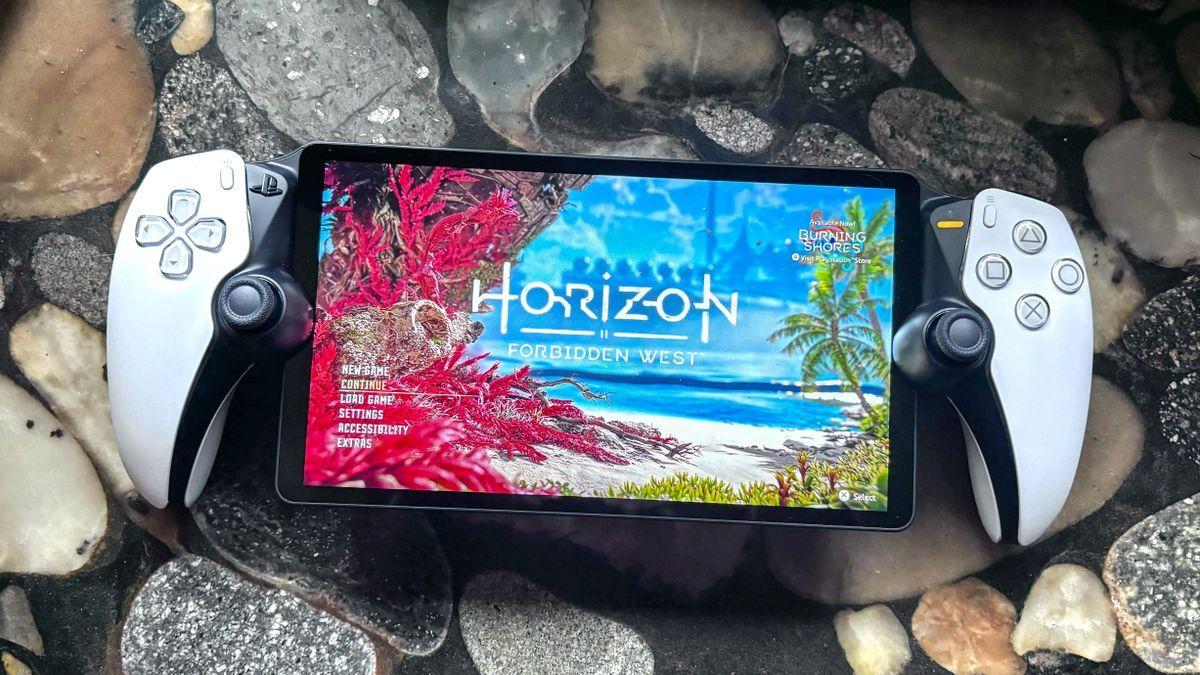
The most interesting part of Project Canis might therefore have nothing to do with its headline TFLOPS number.
It's the possibility of combining:
Low-power hardware + aggressive reconstruction + dedicated AI acceleration.
That combination could allow Sony to target games that would otherwise be impractical on a battery-powered device.
And Sony wouldn't necessarily need to build a handheld with enormous raw performance.
Instead, it could build hardware specifically designed to avoid doing unnecessary work.
That's a much more sustainable approach to portable AAA gaming.
🔗 Related Reading
If you're interested in where this technology fits into the wider gaming hardware landscape, check out:
- The 2026 Handheld Gaming War how handheld hardware is changing the gaming market.
- The Switch 2 Hardware Breakdown how DLSS and dedicated hardware help Nintendo's handheld.
- Frame Generation in 2026 why reconstruction and frame generation are changing GPU performance.
- PS5 Pro Enhanced Games in 2026 a deeper look at PSSR and Sony's current image-reconstruction strategy.
🔮 What Happens Next?
The biggest question isn't whether 540p sounds low.
It's whether Sony can make 540p to 1080p reconstruction look good enough that players stop caring about the internal resolution.
If it can, Project Canis could represent a very different philosophy for PlayStation hardware.
Instead of competing through brute-force performance, Sony could optimize the entire rendering pipeline around efficiency.
The leaked hardware suggests that possibility.
But there are still plenty of unanswered questions:
- What will the final display actually be?
- How good will PSSR 3.0 look in real games?
- How much battery life will Canis deliver?
- How well will demanding PS5 class games run?
- Will frame generation be available across the library?
- How much will the device cost?
- When will Sony officially reveal it?
For now, Project Canis remains an unconfirmed project based on leaks and reports.
Sony has not officially announced the handheld, its specifications, PSSR 3.0, or its reported 2027 launch target.
🎮 The Bottom Line
The 540p figure isn't necessarily the disaster it sounds like.
If the latest reports are accurate, Sony's strategy is to render demanding games at a much lower internal resolution and let reconstruction technology handle the final image.
That could save power, reduce heat and give the GPU more room for the parts of rendering that actually matter.
But there's an important distinction between an interesting engineering strategy and a proven product.
Until Sony confirms Project Canis and we see PSSR 3.0 running on real hardware, the PS5 Pro comparisons and image quality claims remain speculative.
Still, the leak raises an interesting question for the next generation of handhelds:
Could smarter rendering matter more than raw GPU power?