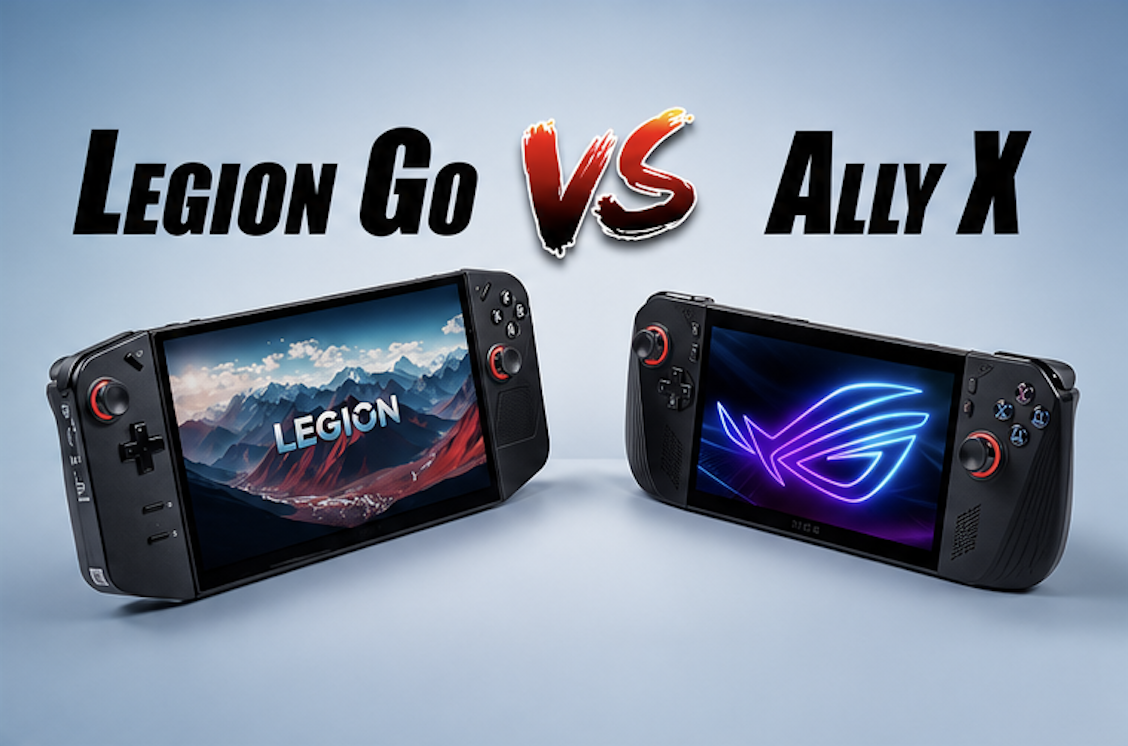

🎮 Asus ROG Xbox Ally X vs. Lenovo Legion Go S: Which Handheld Wins 2026?
The handheld gaming PC market has quietly turned into one of the most competitive corners of the entire hardware industry, and 2026 is shaping up to be the year that competition finally gets serious. Two devices sit at very different ends of that fight: the powerhouse ASUS ROG Xbox Ally X and the budget friendly Lenovo Legion Go S.
They are not really competing for the same buyer, and that is exactly what makes this comparison interesting. One is built to be the fastest, most capable handheld money can buy. The other is built to prove you do not need to spend a fortune to get a genuinely good portable PC gaming experience.
Here is exactly how they stack up once the marketing language gets stripped away.
🚀 The Trend: Two Very Different Philosophies
ASUS's approach with the Xbox Ally X has been to go all in on raw power and ecosystem integration. According to detailed specs compiled in Tech Insider's full handheld comparison, the Ally X launched on October 16, 2025, co-developed with Microsoft and priced at $999.99, positioning it firmly as the flagship of ASUS's handheld lineup.
Lenovo took the opposite path with the Legion Go S. Rather than chasing the top of the performance charts, the device leans into affordability and flexibility, arriving in two separate waves, a Windows 11 version in January 2025, followed by a SteamOS version in May 2025, the first non-Valve device ever to ship with Valve's operating system pre-installed at the factory.
That single decision, offering a genuine choice between operating systems, is one of the biggest differentiators in this entire comparison, and it shapes almost everything else about how each device actually feels to use day to day.
⚙️ Specs Compared: Where the Real Gap Shows Up
Looking at the raw spec sheets side by side makes the philosophy difference obvious immediately.
ROG Xbox Ally X:
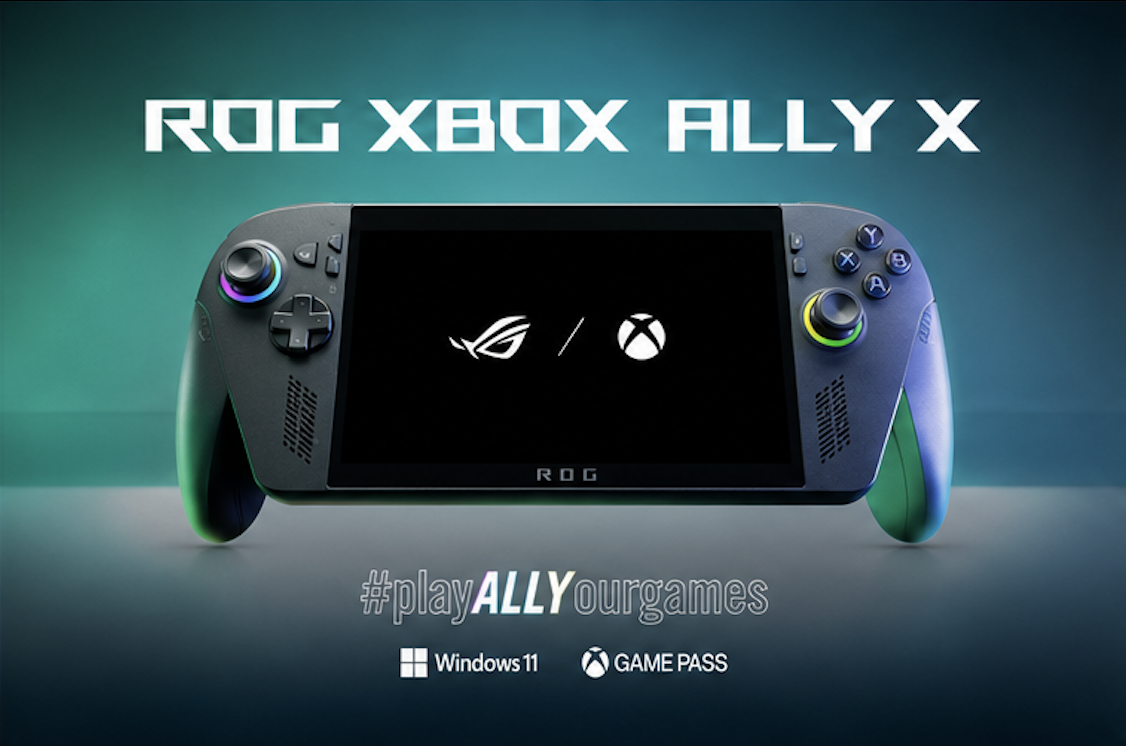
- 🧠 CPU: AMD Ryzen AI Z2 Extreme, Zen 5, 8-core/16-thread
- 🎮 GPU: RDNA 3.5, 16 compute units
- 💾 RAM: 24GB LPDDR5X-8000
- 📦 Storage: 1TB PCIe 4.0 NVMe, with microSD support
- 🖥️ Display: 7-inch IPS LCD, 1920x1080, 120Hz with FreeSync Premium
- 🔋 Battery: 80Wh
- ⚖️ Weight: Approximately 715 grams
- 💰 Price: $999.99
Legion Go S:
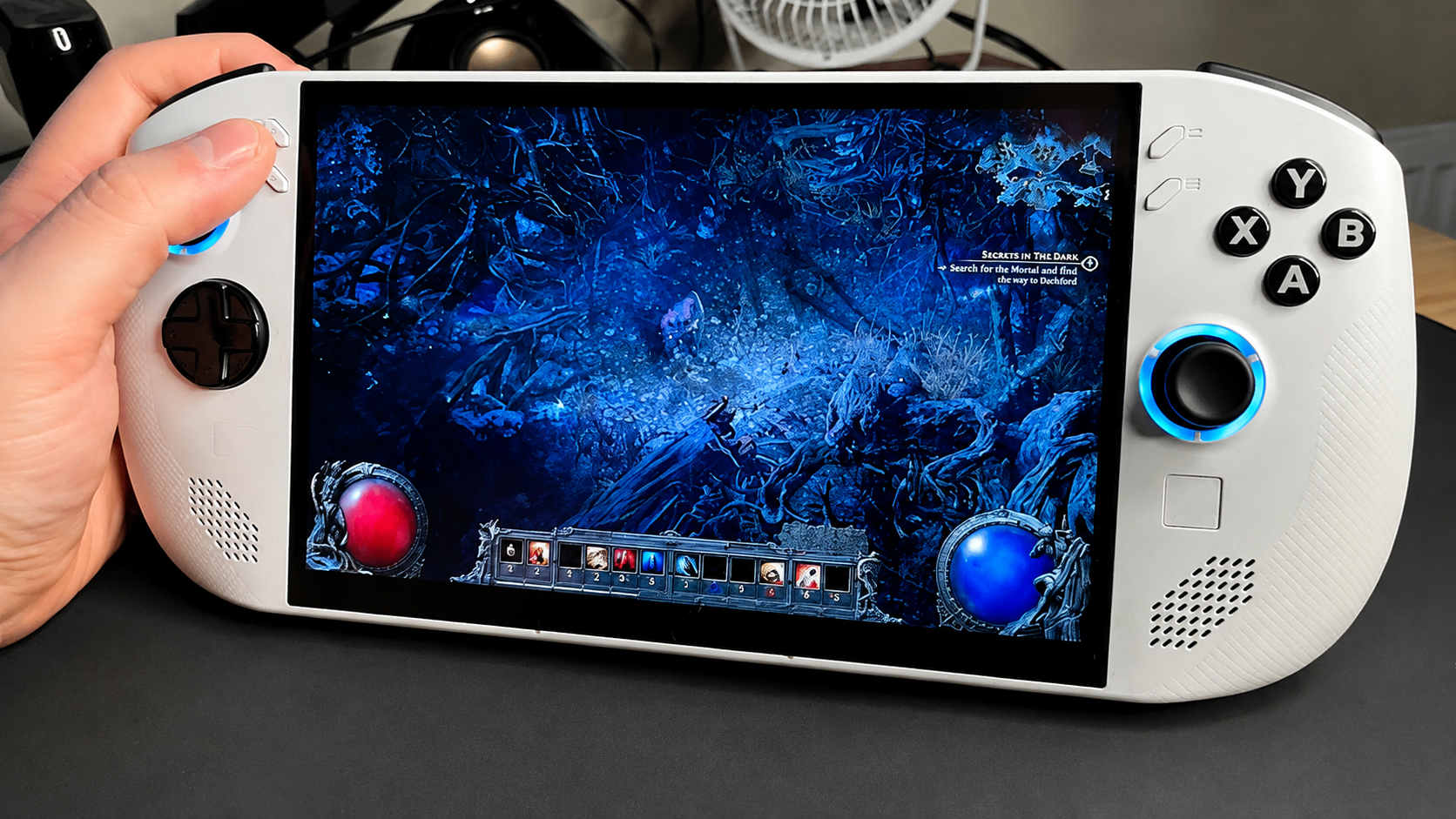
- 🧠 CPU: AMD Ryzen Z2 Go, 4-core, up to 4.3GHz
- 🎮 GPU: RDNA 3.5, 12 compute units
- 💾 RAM: 16GB or 32GB LPDDR5X, depending on configuration
- 📦 Storage: 512GB or 1TB PCIe Gen4 SSD
- 🖥️ Display: 8-inch IPS LCD, 1920x1200, 120Hz with VRR
- 🔋 Battery: 55.5Wh
- ⚖️ Weight: 730 grams
- 💰 Price: Starting at $549.99 for the SteamOS configuration
The gap in raw silicon is not subtle. The Ally X's eight-core Zen 5 chip and 24GB of RAM sit a full processor generation ahead of the Legion Go S's four-core Ryzen Z2 Go, and that difference shows up directly in every benchmark that actually pushes a system under load.
🧪 Performance: The Numbers Don't Lie
When it comes to raw compute power, this comparison isn't particularly close. Independent testing referenced in the same Tech Insider report found the Ryzen AI Z2 Extreme inside the Ally X scored 2,807 single-core and 12,797 multi-core in Geekbench 6, numbers that reflect just how much horsepower ASUS packed into this device.
Quick note: A bigger chip does not automatically mean a dramatically better gaming experience for every player. Many current handheld games are still bottlenecked by their engines or by the display's own refresh rate ceiling, not by raw CPU or GPU headroom, so the Ally X's advantage matters most in newer, more demanding AAA titles rather than older or lighter games.
The Legion Go S posts respectable numbers for its price bracket, but they land clearly below flagship territory. A 3DMark Time Spy score of 2,369 and a Cinebench R20 multi-threaded score of 2,215 confirm what the spec sheet already suggested: this is a chip built around efficiency and affordability, not chasing benchmark records.
Real world gameplay testing tells a similar story. Cyberpunk 2077 running on the Legion Go S swings anywhere from 35 to 45 FPS depending heavily on settings and whether you're running SteamOS or Windows with upscaling enabled. The Ally X, by comparison, held 41 FPS in Cyberpunk 2077 at 1080p using its Turbo performance mode, and pushed even further in lighter titles like Indiana Jones and the Great Circle, hitting 61 FPS under the same Turbo settings.
🔋 Battery Life: Capacity Doesn't Always Win
This is where the story gets genuinely more interesting than a simple spec sheet comparison would suggest. The Ally X's 80Wh battery is roughly 44% larger than the Legion Go S's 55.5Wh cell, and on paper that should translate into a clear, decisive advantage.
In practice, battery capacity and real gaming runtime are two very different numbers, and that gap matters a lot for anyone planning to actually use one of these devices away from a wall outlet. The Legion Go S struggles noticeably under demanding gaming loads, with independent testing measuring roughly 1.5 hours of runtime in graphically intensive titles, a number that reflects just how much power a handheld chip has to draw to keep frame rates playable.
No independent outlet had published verified hour by hour gaming runtime figures for the Ally X specifically at the time this comparison was compiled, so ASUS's own marketing claim of roughly double the base model's battery life should be treated as a manufacturer estimate rather than a confirmed lab result. Still, given the sheer size difference in battery capacity between the two devices, the Ally X almost certainly holds a meaningful real world advantage here, even if the exact multiplier remains unverified.
🖥️ Display: Bigger Isn't Always Sharper, But Here It Actually Is
Screen quality is one area where the Legion Go S genuinely claws back ground against its pricier rival. Its 8-inch panel running at 1920x1200 resolution is both physically larger and sharper on paper than the Ally X's 7-inch, 1920x1080 display, giving it a real edge for anyone who prioritizes screen real estate during long gaming sessions.
Both devices rely on IPS LCD panels rather than OLED, which puts them on relatively even footing when it comes to raw panel technology, though the Ally X adds Corning Gorilla Glass Victus+DXC coating for scratch resistance, a detail Lenovo does not appear to match on the Legion Go S. Refresh rate is a dead heat as well, with both devices supporting a smooth 120Hz alongside variable refresh rate technology, FreeSync Premium on the Ally X and standard VRR on the Legion Go S.
For anyone who spends a lot of time reading on-screen text, checking inventory menus, or playing strategy games with dense UI elements, the Legion Go S's larger canvas and higher resolution genuinely make a practical difference that a spec sheet alone doesn't fully capture.
💻 Software: Windows Power vs. SteamOS Simplicity
The operating system decision might matter more than any individual hardware spec in this entire comparison. The Ally X ships with Windows 11 Home layered under an Xbox branded full-screen interface, giving it access to every storefront and launcher a normal gaming PC can run, Epic Games Store, Battle.net, EA app, and full Xbox Game Pass integration included right out of the box.
The Legion Go S takes the opposite approach by giving buyers an actual choice at checkout. The SteamOS configuration boots straight into Steam's console-like interface, handles suspend and resume almost instantly, and skips the background update prompts and antivirus interruptions that Windows handhelds are still known for. Buyers who specifically want that experience but prefer the Ally X's hardware now have another option too, since Valve's SteamOS 3.9 update in April 2026 added official support for AMD based handhelds beyond Valve's own devices, including the Ally X itself.
That flexibility genuinely changes the calculus for some buyers. Someone who wants SteamOS's polish but also wants the Ally X's superior chip and battery no longer has to choose one or the other, provided they're comfortable installing it themselves rather than relying on a factory preset.
💰 Price and Value: The $450 Question
At the end of the day, price is often the deciding factor for most buyers, and the gap here is substantial. The Ally X's $999.99 price tag sits $450 above the Legion Go S's $549.99 SteamOS starting configuration, a difference large enough to buy an entirely separate piece of hardware on its own.
That premium buys real, measurable advantages: a faster chip, more RAM, a bigger battery, and deeper Windows and Xbox ecosystem integration. Whether those advantages are worth $450 to any individual buyer depends entirely on how they plan to actually use the device day to day, and how much they value raw performance headroom versus getting a genuinely usable handheld for nearly half the price.
It's also worth remembering that neither device is competing in a vacuum. Valve's Steam Deck still commands a dominant share of the handheld gaming PC market, with IDC data cited by PC Gamer showing the Steam Deck accounted for more than half of all handheld gaming PC hardware sales as recently as 2023. More recent tracking reported by The Verge put Valve's share closer to 48% in 2024, meaning both the Ally X and Legion Go S are fighting for a slice of a market Valve's own hardware still leads by a wide margin.
🏁 Final Takeaway
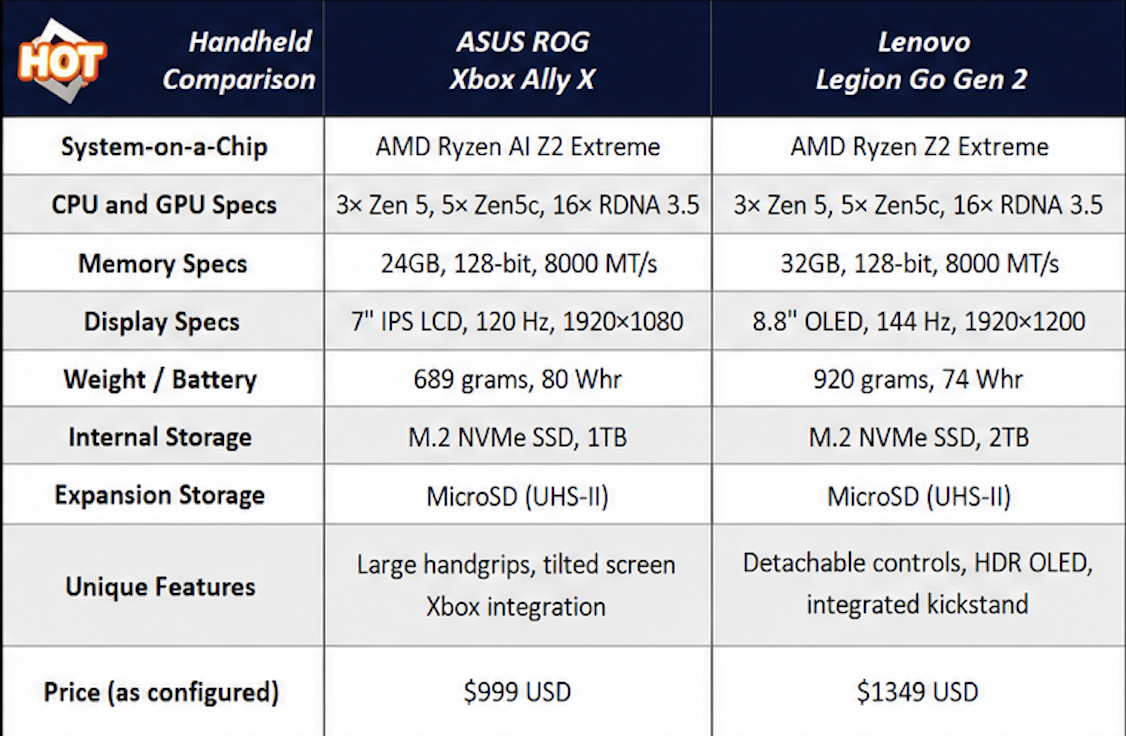
Neither device wins outright. The Ally X is the clear choice for power users and Xbox ecosystem buyers who want the fastest chip and biggest battery available. The Legion Go S is the smarter pick for anyone who wants a real handheld PC gaming experience without paying flagship pricing.


Comments
Sign in to join the conversation
Sign inNo comments yet
Be the first to share your thoughts!