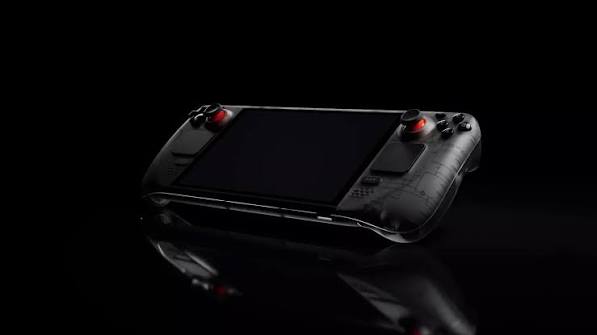

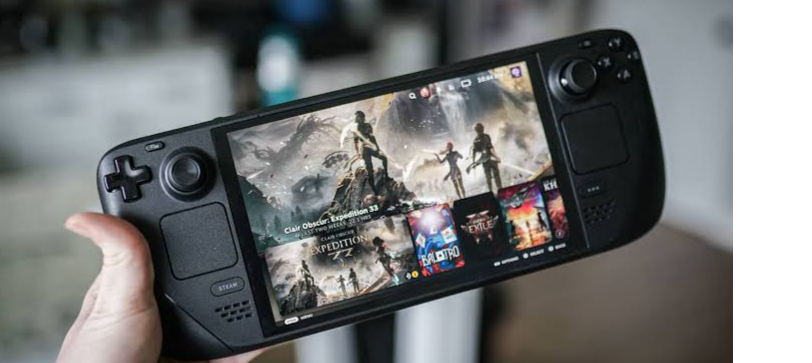
What if Valve doesn't build a slightly faster Steam Deck?
What if it skips the usual incremental upgrade entirely?
That's the question surrounding the latest Steam Deck 2 rumors.
Late night supply chain chatter is pointing toward a next generation Steam Deck built around a dramatically more powerful AMD APU, potentially based on the Z2 Extreme platform rather than another custom chip derived from the original Aerith design.
If true, this would represent a major change in Valve's handheld strategy.
The original Steam Deck was built around a custom AMD APU known internally as Aerith. The later Steam Deck OLED kept essentially the same performance architecture while improving efficiency, battery life and the display.
Steam Deck 2 could be different.
Instead of simply shrinking Aerith or giving it a modest upgrade, Valve may be preparing to jump into a completely different performance class.
And that could explain why Valve has been unusually quiet about its next handheld.
The Aerith Era May Be Coming to an End
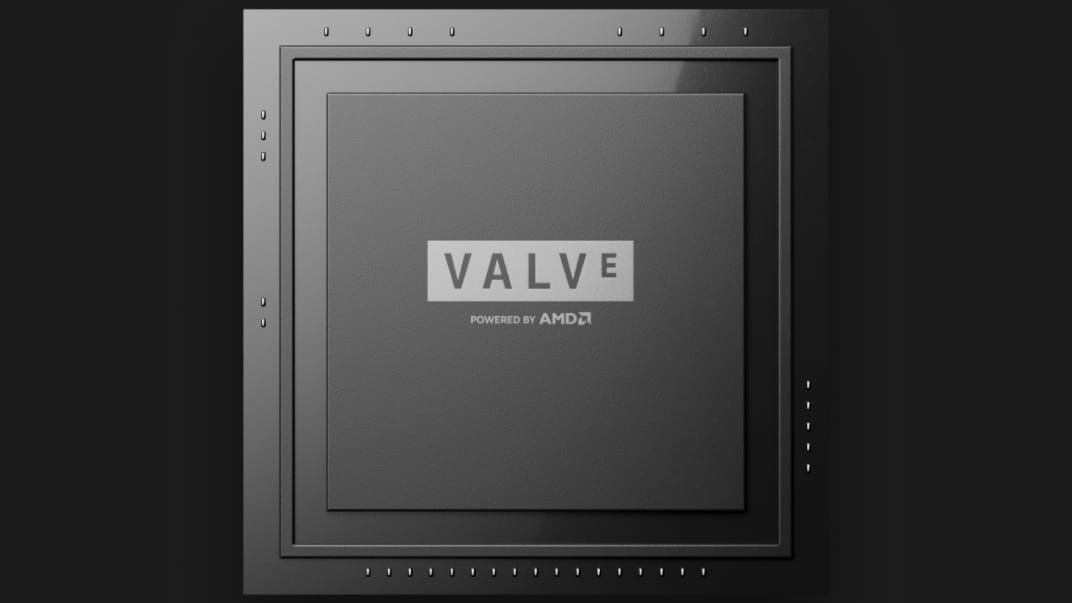
The original Steam Deck's biggest achievement wasn't raw performance.
It was balance.
Valve worked with AMD to create a custom APU that combined Zen 2 CPU cores with RDNA 2 graphics in a package designed specifically for a handheld.
The result wasn't the fastest gaming hardware on the market.
It didn't need to be.
It needed to be efficient, affordable and capable of running a huge PC game library.
That formula worked.
Valve therefore has a decision to make.
Keep improving the existing architecture.
Or start over.
The leaks suggest Valve has chosen the second option.
Why the Z2 Extreme Makes So Much Sense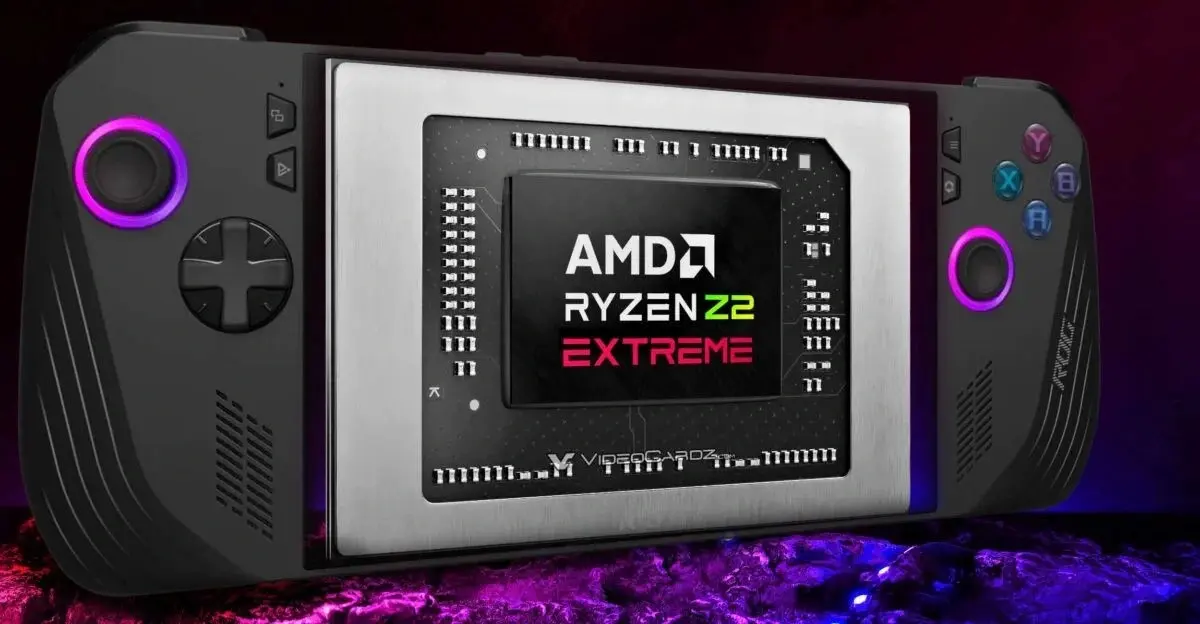
AMD's Ryzen Z2 Extreme is designed specifically for high performance handheld gaming.
It combines a modern Zen 5 CPU architecture with a significantly more capable RDNA 3.5 graphics configuration.
That's a completely different class of silicon from the original Steam Deck's Aerith APU.
And that's precisely why the rumored upgrade is so interesting.
But that's where Valve's engineering becomes important.
Valve Doesn't Need Maximum Performance
This is the part that's easy to miss.
Valve doesn't have to run a Z2 Extreme at its maximum possible power.
That's probably the last thing it would want to do.
The Steam Deck's biggest advantage has always been efficiency.
Valve could take a much more powerful APU and deliberately operate it at a lower power envelope.
Imagine having significantly more performance available but only using what you need.
At 15 watts, a next generation chip could potentially offer a substantial improvement over Aerith while retaining the handheld characteristics that made the Steam Deck successful.
At higher power levels, Valve could give users additional performance when connected to a charger or dock.
That flexibility could be the entire point.
Steam Deck 2 wouldn't necessarily need to be the fastest handheld.
It needs to be the best balanced one.
OLED Could Become More Than a Display Upgrade
The word "OLED" in the leak is also worth examining.
Valve already released the Steam Deck OLED, but that machine wasn't a true performance successor.
It was effectively a refinement of the original.
The OLED model brought a better display, improved battery life, faster memory and a more efficient manufacturing process.
A Steam Deck 2 OLED could therefore represent the combination Valve couldn't deliver previously.
A fundamentally new APU.
And a premium OLED display.
That would make the distinction between the two generations much clearer.
The original Steam Deck OLED was about refinement.
Steam Deck 2 could be about reinvention.
The Biggest Upgrade Would Be Graphics
The CPU improvements would be significant.
But gaming performance would probably be determined primarily by the GPU.
Aerith uses eight RDNA 2 compute units.
A Z2 Extreme class design can offer a much larger graphics configuration alongside newer RDNA technology.
That's important for modern games.
The Steam Deck's biggest limitation today isn't necessarily whether its CPU can launch a game.
It's whether its GPU can render increasingly demanding environments at an acceptable resolution and frame rate.
Modern games are becoming heavier.
Higher quality assets require more memory bandwidth.
Ray tracing is becoming increasingly common.
Upscaling technologies are becoming standard.
And developers are increasingly building games around hardware more powerful than the Steam Deck.
A new GPU architecture could give Valve breathing room.
The 30 FPS Problem Could Finally Change
One of the defining compromises of the Steam Deck has been the 30 FPS target.
For many games, 30 FPS is perfectly playable.
For others, it isn't.
A more powerful APU could change that equation.
Games that currently require aggressive settings reductions just to maintain 30 FPS could potentially target 40 or 60 FPS.
Older AAA games could run at higher settings.
Indie games could become almost effortless to run.
And newer releases could remain playable for significantly longer.
That last point may actually matter most.
Valve doesn't need Steam Deck 2 to dominate games released today.
It needs Steam Deck 2 to remain relevant several years from now.
The Real Competition Isn't the ROG Ally
It's tempting to compare Steam Deck 2 with existing Windows handhelds.
Devices from ASUS, Lenovo and other manufacturers already use significantly more powerful AMD chips than Aerith.
But Valve's advantage isn't simply hardware.
It's SteamOS.
That's the secret weapon.
Steam Deck works because the hardware and software feel like one product.
You turn it on.
You see your library.
You launch a game.
You suspend it.
You continue later.
There is no Windows desktop getting in the way.
A more powerful APU combined with SteamOS could therefore be more meaningful than another 20 percent benchmark improvement.
Valve controls the entire experience.
Why Valve Might Be Waiting
If the supply chain rumors are accurate, Valve's timing could be deliberate.
The company has repeatedly indicated that it doesn't want to release a Steam Deck 2 simply for the sake of having a newer product.
That's important.
Valve isn't competing with smartphone manufacturers that need an annual hardware refresh.
It can wait.
It can watch AMD's roadmap.
It can wait for better efficiency.
It can wait for memory prices to become reasonable.
And it can wait until the performance increase is large enough to justify a new generation.
That's exactly what makes the Z2 Extreme rumor plausible.
The jump from Aerith to modern AMD handheld silicon is substantial enough to create a genuinely different Steam Deck.
But There's a Big Catch
There is one obvious problem.
Power.
More CPU cores and a larger GPU don't magically become free.
A Z2 Extreme class APU operating at its full potential can consume considerably more power than the original Steam Deck's chip.
That creates a chain reaction.
More power means more heat.
More heat requires better cooling.
Better cooling requires more internal space.
More power consumption requires a larger battery or shorter battery life.
And all of those changes affect weight and price.
Valve therefore has to resist the temptation to simply turn Steam Deck 2 into a portable gaming PC monster.
That's not what made the first Steam Deck successful.
Valve's Real Target Could Be Efficiency
The ideal Steam Deck 2 might actually be a machine that looks conservative on paper.
Valve could take a powerful modern AMD APU and tune it aggressively for efficiency.
Instead of asking:
"How fast can this chip run?"
Valve can ask:
"How much performance can we get at 15 watts?"
That's a much more interesting question.
A handheld doesn't need desktop level power.
It needs desktop class efficiency.
And that's where newer AMD architectures could give Valve a major advantage.
What About Backward Compatibility?
This is another reason Valve's decision matters.
Steam Deck 2 wouldn't need a new game library.
That's one of the advantages of using PC hardware.
Your existing Steam library comes with you.
The better hardware simply gives those games more room to breathe.
Games that struggled on the original could receive higher settings.
Games that ran at 30 FPS could potentially target higher frame rates.
And future titles could be developed with a significantly more capable Steam Deck target in mind.
That's a much easier upgrade proposition than asking consumers to abandon their existing library.
The Supply Chain Leak Question
Of course, there's an important word attached to all of this:
Rumor.
Supply chain leaks can reveal fascinating information, but they can also be incomplete, outdated or based on prototype hardware that never reaches consumers.
A component appearing in a supply chain doesn't automatically mean Valve will ship it.
There could be multiple prototypes.
There could be multiple APU configurations.
There could even be a completely different final design.
So the Z2 Extreme theory should be treated as an indication of where Valve might be heading rather than confirmation of a finished Steam Deck 2.
That's especially important with a product as closely guarded as Valve hardware.
What a Steam Deck 2 Could Actually Look Like
If Valve really does move to a Z2 Extreme class APU, the most interesting Steam Deck 2 would probably focus on balance rather than benchmark bragging rights.
A sensible configuration could include:
A modern AMD APU tuned for handheld power limits.
A larger and faster memory subsystem.
An OLED display with a higher refresh rate.
Improved cooling without dramatically increasing chassis size.
But it could produce a much better product.
The OLED Model Could Become the Premium Tier
Valve could also use the OLED display to create a clear product hierarchy.
A cheaper LCD model could target players who simply want access to the Steam library.
A premium OLED model could offer the faster APU, better display and larger storage.
That would give Valve something it didn't really have with the original generation.
A genuine high end Steam Deck.
And that could put serious pressure on competing handheld PCs.
What Happens Next?
The next few months could tell us a lot.
Watch for three things.
AMD supply chain activity: If more reports connect Valve hardware with a Z2 Extreme class APU, the rumor becomes increasingly difficult to dismiss.
SteamOS development: Major performance or graphics changes in SteamOS could provide clues about the hardware Valve is preparing for.
Valve hardware announcements: Ultimately, only Valve can confirm whether this architecture is actually coming.
Until then, the most interesting possibility is not that Valve is building a faster Steam Deck.
It's that Valve may finally believe the performance gap is large enough to justify calling something Steam Deck 2.
🎮 The Bottom Line
The Steam Deck didn't need to win the benchmark charts.
It needed to make PC gaming work in your hands.
Aerith was the chip that made that possible.
But several years later, the architecture is beginning to show its age.
A move to AMD's Z2 Extreme class silicon would represent a completely different approach.
More CPU performance.
If these leaks are accurate, Steam Deck 2 could finally be the moment Valve stops refining the Aerith formula and starts building its next generation of handheld gaming from the ground up.
And if it really does arrive with a Z2 Extreme class APU and OLED display, the handheld PC market could be about to get very interesting.
What do you think? Should Valve prioritize maximum performance with Steam Deck 2, or should it focus on efficiency, battery life and keeping the price close to the original? Let us know in the comments.