
The 2026 Memory Shortage: Why Acer's CEO Says the Panic is Overblown
The 2026 memory shortage has become one of the biggest headaches for PC buyers, laptop manufacturers and gaming hardware companies. RAM and storage prices have climbed sharply, while the explosive demand created by AI data centers has redirected enormous amounts of memory production toward servers and specialized workloads.
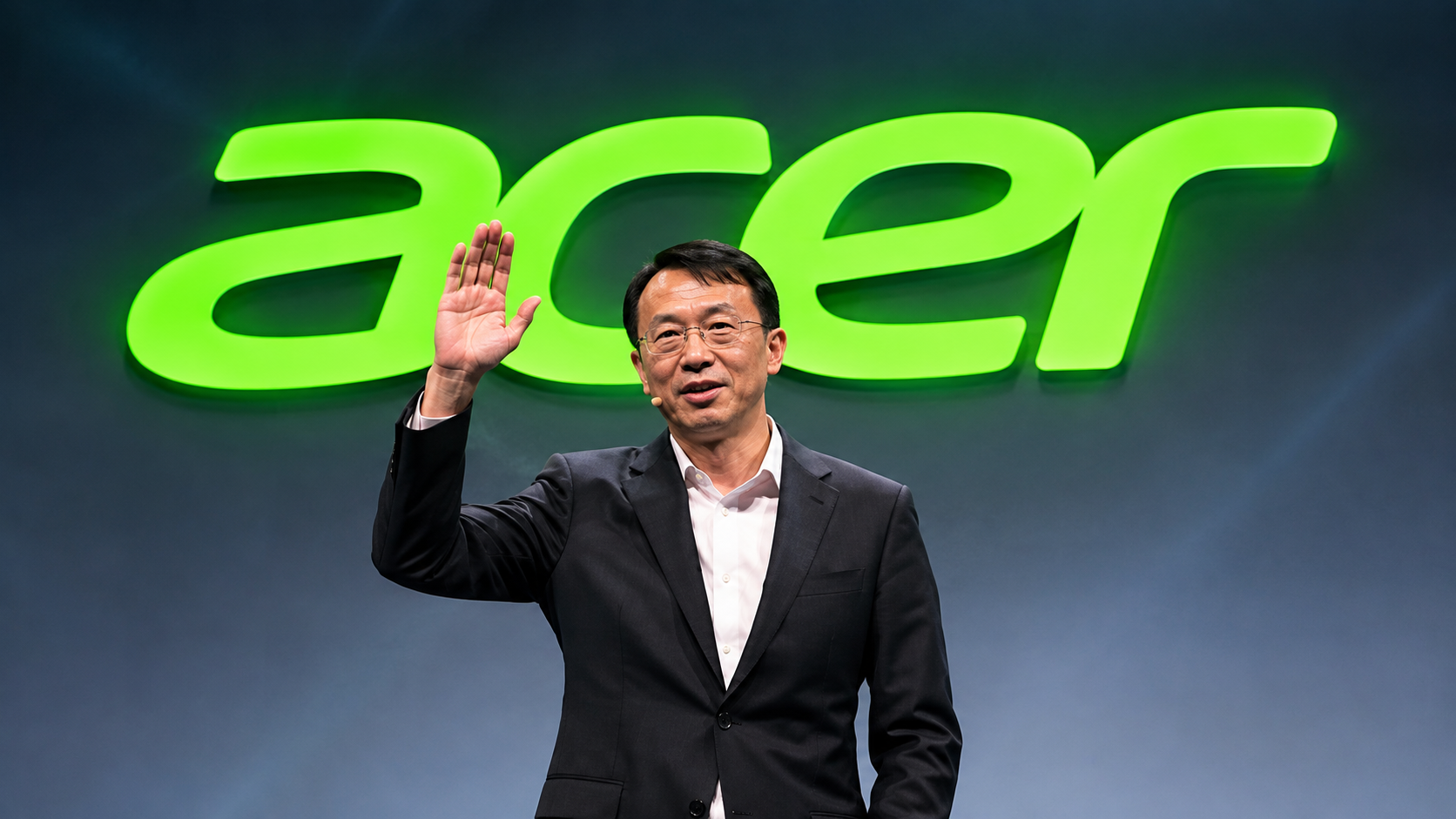
Now Acer CEO and Chairman Jason Chen is pushing back against some of the industry's most pessimistic forecasts.
Chen says it is "impossible" for the current memory shortage to continue until 2030. He also argues that supply conditions for mainstream memory are better than some of the headlines suggest, although he does not expect PC prices to fall immediately.
That creates a strange situation for consumers.
The shortage may not last as long as some memory executives have suggested, but PCs can still become more expensive before the market starts moving in the opposite direction.
Acer expects PC prices to rise by roughly 5% to 20% during the fourth quarter of 2026, with prices potentially reaching a high point around the first half of 2027 before declining later in the year.
So is the 2026 memory shortage actually nearing its end?
The answer depends on which part of the memory market you are looking at.
────────────────────────────────────────
────────────────────────────────────────
QUICK TAKE
| Issue | Current picture |
|---|---|
| Acer's position | Jason Chen says a shortage lasting until 2030 is impossible |
| PC prices | Acer expects another 5% to 20% increase in Q4 2026 |
| Expected price peak | Around the first half of 2027, according to Chen |
| Expected improvement | Chen sees prices declining from the second half of 2027 |
| Main pressure | AI infrastructure and high-demand memory products |
| Main uncertainty | Industry forecasts differ significantly |
| Chinese supply | Acer points to increasing production from Chinese memory makers |
| Consumer impact | High RAM and SSD costs can continue even if physical supply improves |
────────────────────────────────────────
────────────────────────────────────────
What Acer's CEO Actually Said
Acer chairman and CEO Jason Chen recently offered a much more optimistic view of the memory market than some forecasts coming from memory manufacturers.
His central argument is simple: the current shortage cannot realistically continue all the way to 2030.
Chen says DDR4 and DDR5 supply is not universally constrained in the way the broader headlines might suggest. According to reports of his comments, Acer is seeing more suppliers looking to sell memory while demand from buyers is comparatively weaker in some segments.
The situation is different for specific high-performance components.
High-end DDR5 remains tighter, while certain processors and specialized components can still face availability problems.
That means the phrase "memory shortage" can hide several different market conditions.
There may be enough ordinary memory entering the market while manufacturers and consumers still struggle to secure the fastest and most desirable products.
Chen's prediction is therefore less about saying the entire crisis has already ended and more about arguing that today's conditions should not automatically be extrapolated through the end of the decade.
────────────────────────────────────────
Why the 2030 Forecast Is Being Challenged
The most controversial part of the debate is the timeline.
Several industry executives have warned that AI demand could keep memory markets tight for years.
SK hynix CEO Kwak Noh-jung has previously described 2027 as potentially the most difficult year for memory availability and expects tight conditions to continue toward 2030.
Deloitte reached a similarly cautious conclusion in a July 2026 analysis. The consultancy said the memory crunch could persist until 2029 or even 2030 under continued hyperscaler demand, while noting that new production capacity takes years to arrive.
That makes Chen's forecast notably different.
His argument is that supply is already changing and additional capacity will continue coming online.
In particular, he points toward expanding production from Chinese memory manufacturers as one factor that could alter the supply balance.
This is why the disagreement is not simply about whether RAM is expensive today.
It is about how quickly new supply can catch up with AI-driven demand.
────────────────────────────────────────
────────────────────────────────────────
AI Is Changing the Memory Market
The reason the 2026 memory shortage has become so unusual is the scale of AI infrastructure spending.
Traditional PC demand is no longer the only major force competing for memory.
Cloud companies and AI infrastructure providers are building enormous numbers of servers designed around accelerated computing. Those systems require substantial quantities of DRAM, high-bandwidth memory and storage.
This has changed the economics of memory manufacturing.
Memory producers have incentives to prioritize products with strong demand and attractive margins. At the same time, expanding fabrication capacity is not something that can happen overnight.
New facilities require enormous investment, specialized equipment and lengthy qualification processes.
That is one reason forecasts extending into 2029 or 2030 cannot simply be dismissed.
But it also explains Acer's argument.
If additional capacity arrives faster than expected, or if demand growth slows, the balance can change quickly.
Memory markets have historically been cyclical.
Periods of extreme shortage can eventually transition into periods of oversupply.
The difficult part is predicting exactly when that turning point arrives.
────────────────────────────────────────
DDR4 and DDR5 Are Not Equally Affected
Another important detail is that not all RAM is experiencing the same conditions.
DDR4 and DDR5 serve different generations of hardware, and demand is increasingly concentrated around newer products.
For PC enthusiasts, the most important pressure point is often high-performance DDR5.
Gaming systems using modern processors increasingly depend on DDR5, particularly at higher capacities and speeds.
That means a shortage of premium DDR5 can have a much larger impact on enthusiasts than the availability of older or lower-demand memory.
Chen's comments suggest that some parts of the market already have considerably more supply than the most alarming shortage narratives imply.
This is why a statement such as "RAM is available" does not necessarily mean a gamer will immediately see cheap 64GB or high-speed DDR5 kits on store shelves.
Supply, price and product segmentation are three different variables.
────────────────────────────────────────
Why PC Prices Can Still Rise
This is perhaps the most important part of Acer's forecast for ordinary buyers.
Even if memory supply improves, PC prices do not necessarily fall immediately.
Manufacturers purchase components ahead of time.
They sign contracts.
They hold inventory.
They manufacture systems months before consumers buy them.
And they have to account for transportation, assembly, distribution and retailer margins.
That creates a delay between falling component costs and falling retail prices.
Acer therefore expects PC prices to rise another 5% to 20% during Q4 2026, despite Chen's more optimistic view of longer-term memory availability.
This creates a potential timeline that looks something like this:
| Period | Acer's reported outlook |
|---|---|
| Q4 2026 | PC prices continue increasing |
| Early 2027 | Elevated prices remain |
| Mid-2027 | Potential price peak |
| Second half of 2027 | Prices could begin declining |
| 2028 onward | Greater uncertainty depending on supply and AI demand |
This is a forecast, not a guaranteed market schedule.
────────────────────────────────────────
────────────────────────────────────────
The Role of Chinese Memory Production
One of the most interesting elements of Chen's argument is the role of Chinese memory manufacturers.
Acer expects additional Chinese production to contribute to the eventual easing of supply conditions.
ChangXin Memory Technologies, commonly known as CXMT, has also been making headlines with advances in DRAM manufacturing.
Recent reporting said CXMT had entered mass production with a fifth-generation DRAM platform and claimed process capabilities comparable to leading mass-produced technologies. Those claims come from CXMT and should be treated as company statements rather than independent confirmation of complete parity across every metric.
For the global memory market, additional production capacity can matter even if the new supplier does not immediately dominate premium products.
More mainstream supply can reduce pressure elsewhere in the market.
It can also change pricing dynamics.
That is one reason Acer's forecast focuses heavily on new capacity rather than simply today's inventory levels.
────────────────────────────────────────
Why Other Industry Executives Disagree
There is no single industry consensus on how long the current memory crunch will last.
That is important because Acer's forecast is only one view.
Deloitte's analysis suggests that tight supply and elevated prices could persist toward 2029 or 2030 if hyperscaler demand remains strong.
SK hynix's leadership has also offered a much more cautious outlook, with 2027 expected to remain a particularly difficult period.
Other reports have similarly described continuing pressure from AI infrastructure.
The difference comes down to assumptions about:
- AI data-center expansion
- Memory production capacity
- High-bandwidth memory demand
- Conventional DRAM demand
- New manufacturing capacity
- Inventory levels
- PC and smartphone demand
- Long-term supply contracts
- Regional manufacturing expansion
If AI spending continues accelerating, the pessimistic scenarios become easier to understand.
If supply expands faster than demand, Chen's more optimistic scenario becomes more plausible.
The market has not yet provided a definitive answer.
────────────────────────────────────────
What This Means for Gaming PCs
For gamers, the memory shortage is not an abstract semiconductor-industry story.
RAM is one of the components directly affecting the cost of a gaming PC.
The same applies to SSD storage.
A modern gaming system might need 32GB of RAM, while higher-end machines increasingly use 48GB, 64GB or more.
Add a large NVMe SSD and the memory and storage bill can become a significant part of the system's total cost.
If Acer's forecast is correct, gamers could still face elevated system prices through the first half of 2027 before the situation improves.
However, the most important variable is not simply whether there is "a shortage."
It is the price of the exact memory configuration used in the machine.
A mainstream 16GB or 32GB system may experience a different pricing effect from a premium workstation with large amounts of high-speed DDR5.
────────────────────────────────────────
────────────────────────────────────────
What Happens to Laptops and Consoles?
The impact goes beyond desktop PCs.
Laptops use DRAM and SSD storage too, meaning higher component prices can eventually affect notebook pricing.
The same principle applies to other consumer electronics.
However, manufacturers do not all respond to component inflation in exactly the same way.
Some may increase prices.
Some may reduce configurations.
Others may absorb part of the cost to protect market share.
This means consumers may see unusual product configurations during a prolonged component shortage.
A laptop that previously shipped with a larger SSD or more memory might be redesigned around a cheaper configuration.
For gaming hardware, manufacturers may also prioritize flagship products or adjust launch schedules depending on component availability.
The memory market therefore has consequences across the entire hardware ecosystem.
────────────────────────────────────────
Is the Memory Shortage Really Ending?
There is not enough evidence to say that the 2026 memory shortage is definitively over.
There is evidence that the market is changing.
There is also evidence pointing in opposite directions.
Acer's CEO says mainstream supply is improving and that a shortage lasting until 2030 is impossible.
Other industry executives and analysts expect tight conditions to persist much longer.
The safest interpretation is that the market is entering a period of uncertainty rather than a confirmed end to the crisis.
The key question is no longer simply:
"Will RAM become available?"
It is:
"When will supply growth become large enough to outweigh AI-driven demand?"
That is a much harder question.
────────────────────────────────────────
What Buyers Should Watch
For anyone planning a gaming PC or laptop purchase, several indicators will be more useful than dramatic shortage headlines.
Watch DDR5 retail pricing
If mainstream DDR5 kits begin falling consistently, that would indicate that supply pressure is easing at the consumer level.
Watch SSD pricing
NAND flash markets can move differently from DRAM, so SSD prices provide another useful indicator.
Watch AI infrastructure spending
If hyperscalers continue aggressively expanding AI infrastructure, memory demand could remain elevated.
Watch new DRAM capacity
New production from established and emerging suppliers could change the supply equation.
Watch OEM pricing
Acer's own PC pricing guidance provides a useful real-world indicator of how component costs are reaching consumers.
The important point is to watch actual market data rather than rely on a single forecast.
────────────────────────────────────────
────────────────────────────────────────
FAQ
What did Acer CEO Jason Chen say about the memory shortage?
Jason Chen said it is impossible for the current memory shortage to continue until 2030. He expects supply conditions to improve and PC prices to begin declining after a potential peak around mid-2027.
Will PC prices rise in 2026?
Acer expects average PC prices to increase by roughly 5% to 20% in Q4 2026, although the exact impact will vary by product and configuration.
Why are RAM prices so high?
AI infrastructure has created substantial demand for memory, while manufacturing capacity cannot be expanded instantly. High-performance memory is particularly important for AI systems and modern computing.
Does Acer think RAM prices will fall in 2027?
Chen expects PC prices to reach a peak around the first half of 2027 and begin declining during the second half, although this remains a forecast rather than a guaranteed outcome.
Are other companies predicting a shortage until 2030?
Yes. Some memory-industry executives have offered significantly longer timelines. SK hynix's CEO has discussed severe conditions extending toward 2030, while Deloitte has estimated that tightness could persist until 2029 or 2030 under continued strong AI demand.
Does this mean DDR5 will become cheap soon?
Not necessarily. Chen's forecast suggests improvement later in 2027, but high-end DDR5 can remain constrained even if broader memory supply improves.
Is the 2030 shortage prediction definitely wrong?
No. Acer's CEO strongly disputes that timeline, but other industry forecasts point toward continued tightness. The outcome depends heavily on AI demand, new manufacturing capacity and inventory conditions.
────────────────────────────────────────
Final Takeaway
The 2026 memory shortage has reached an unusual point where even the industry's forecasts disagree dramatically about what comes next.
Acer CEO Jason Chen says a shortage lasting until 2030 is impossible and expects the PC market to eventually move toward lower prices. At the same time, Acer expects consumers to face another round of PC price increases during Q4 2026, potentially reaching 5% to 20%.
That apparent contradiction actually explains the situation.
A supply problem can begin improving without prices immediately falling.
Manufacturers still have elevated component costs. Existing inventory takes time to move through the supply chain. And AI infrastructure continues to create enormous demand for memory.
The most important question is therefore not whether one executive or another is correct about 2030.
It is whether new memory production can eventually outpace the demand created by AI.
If supply expands faster than demand, the market could move toward oversupply and lower prices.
If AI infrastructure continues absorbing capacity faster than manufacturers can add it, the shortage could remain painful for considerably longer.
For PC gamers, the next several quarters will therefore be less about a dramatic "RAM crisis ending" moment and more about watching the gradual balance between production, demand and retail pricing.
The 2026 memory shortage is changing.
Exactly how quickly it changes remains the billion-dollar question.
────────────────────────────────────────
Source Notes
Primary reporting referenced for this article includes recent reporting from TechRadar, Tom's Hardware, TechSpot, ComputerBase, GamesRadar, DigitalToday and Deloitte Insights.
The Acer statements were reported as comments by Acer Chairman and CEO Jason Chen, with the original reporting attributed to Taiwan's Economic Daily News and DigiTimes.
The competing longer-term outlooks are included to distinguish Acer's forecast from broader industry expectations.