
The Complete Wiki to the Tesla Cybercab Specs
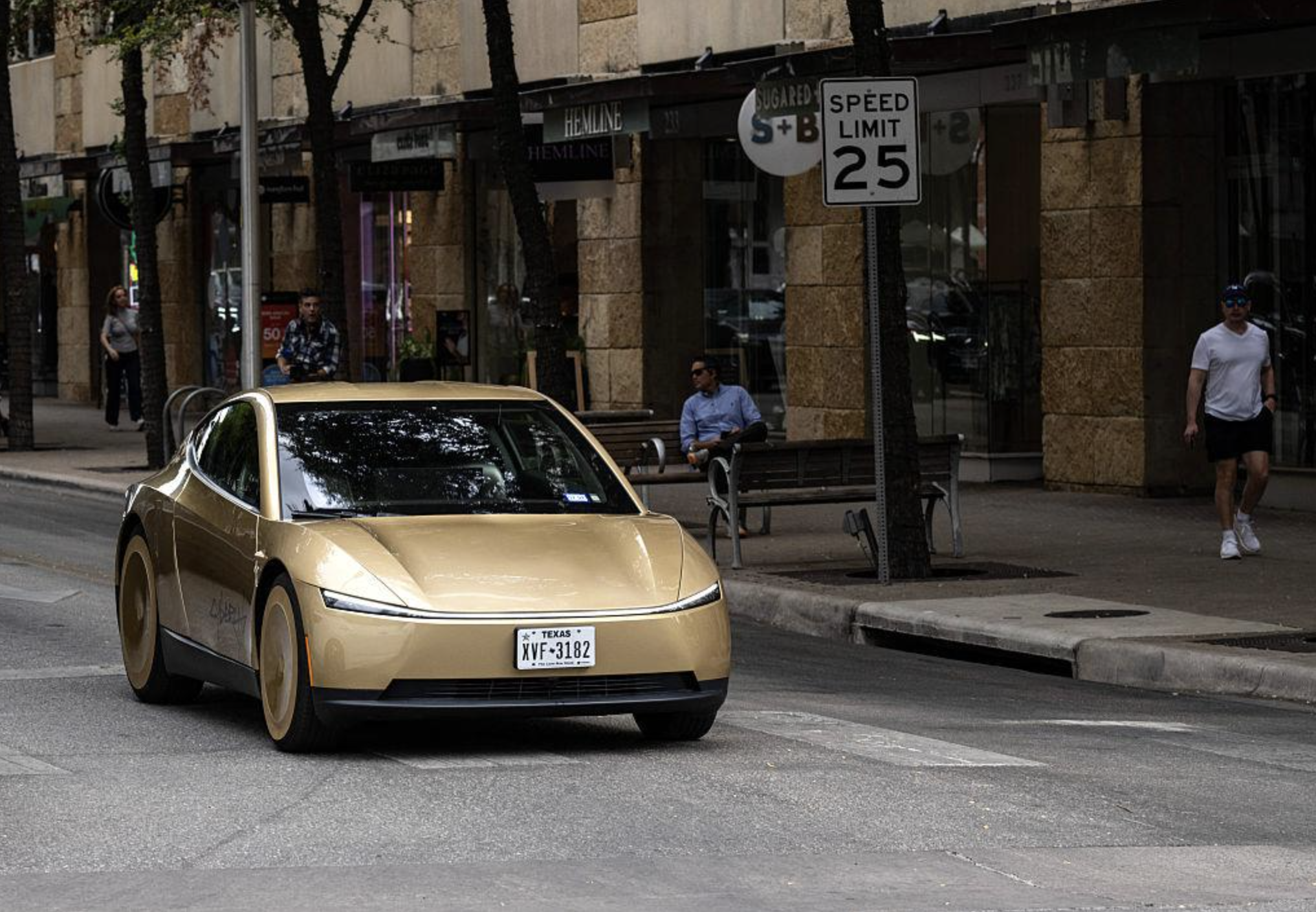
The Tesla Cybercab is Tesla's purpose-built autonomous electric vehicle for its Robotaxi service. Unlike Tesla's existing cars, the Cybercab was designed from the beginning without a steering wheel, accelerator pedal or brake pedal.
The production Cybercab is now being built and is already being used in limited Robotaxi service in Austin, Texas. Tesla describes it as a two-seat autonomous vehicle with a central touchscreen, bench-style seating and a 20.2-cubic-foot rear trunk. Tesla
Tesla Cybercab Quick Facts
| Specification | Cybercab |
|---|---|
| Type | Autonomous electric robotaxi |
| Seating | 2 passengers |
| Drive | Front-wheel drive |
| Motor | 163 kW / 219 hp |
| Battery | Approx. 48 kWh |
| Curb Weight | 3,113 lb / ~1,412 kg |
| Ground Clearance | 5.7 in / 144 mm |
| Overall Width | 69 in / 1,754 mm |
| Overall Height | 55.4 in / 1,408 mm |
| Trunk | 20.2 cu ft / 572 L |
| Steering Wheel | None |
| Pedals | None |
| Doors | Butterfly-style |
| Autonomy | Tesla's autonomous driving system |
| Connectivity | GPS, LTE/5G and integrated Starlink |
| Production | Gigafactory Texas |
| Current service | Limited Austin Robotaxi service |
The motor, drivetrain, battery and weight figures come from 2026 EPA certification documentation, while Tesla's current Rider Guide provides the official dimensions and passenger/cargo information. EPA Document Index
Powertrain and Battery
The Cybercab uses a front-mounted electric motor producing 163 kW, or about 219 horsepower.
It is also unusual for a Tesla because the certified configuration uses front-wheel drive rather than the rear-wheel-drive or all-wheel-drive layouts seen across much of Tesla's lineup.
The EPA certification data lists a battery capacity of approximately 48 kWh and an operating voltage of around 326 volts. Electrek
The relatively small battery is part of the Cybercab's efficiency-focused design. Tesla is building it specifically for high-utilization Robotaxi work rather than as a conventional long-range passenger car.
Range
EPA documentation and reporting around the certification indicate a range of roughly 280 miles depending on the test configuration. This figure should be treated as an EPA-certified estimate rather than a universal real-world range figure. Car and Driver
Dimensions and Storage
Tesla's current Rider Guide lists the Cybercab at:
- Width: 69 inches / 1,754 mm
- Height: 55.4 inches / 1,408 mm
- Ground clearance: 5.7 inches / 144 mm
- Step-in height: 16.3 inches / 414 mm
- Headroom: 38.3 inches / 972 mm
- Legroom: 43.4 inches / 1,103 mm
- Shoulder room: 51.8 inches / 1,317 mm
- Hip room: 50.1 inches / 1,273 mm
- Rear trunk: 20.2 cu ft / 572 L Tesla
The trunk is large enough for two checked suitcases and two carry-ons, according to Tesla. It can also accommodate items such as golf bags and some mobility equipment. Tesla
Two Seats, No Steering Wheel
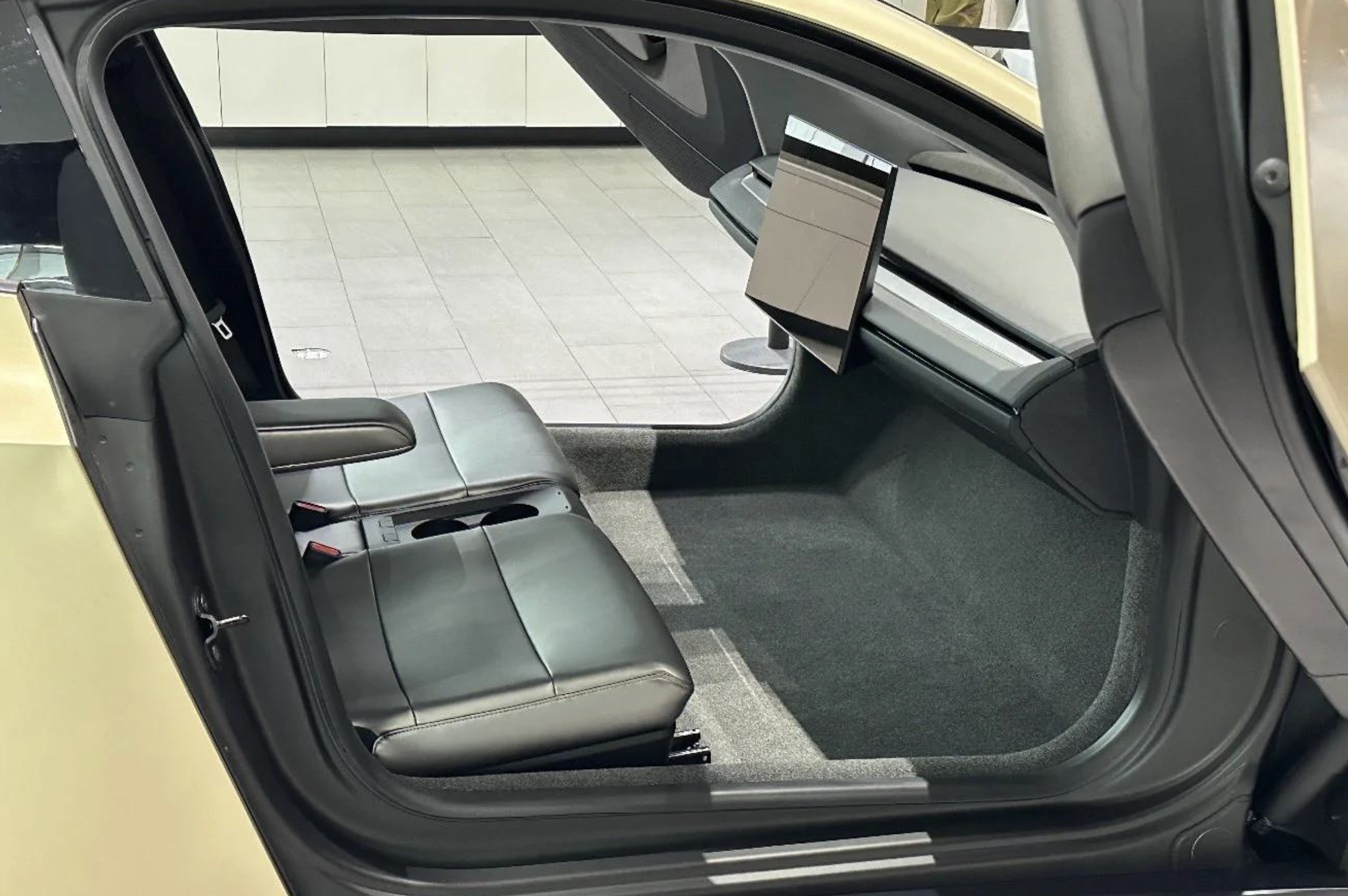
The most obvious Cybercab specification is also its most unusual one.
There is no steering wheel, accelerator pedal or brake pedal.
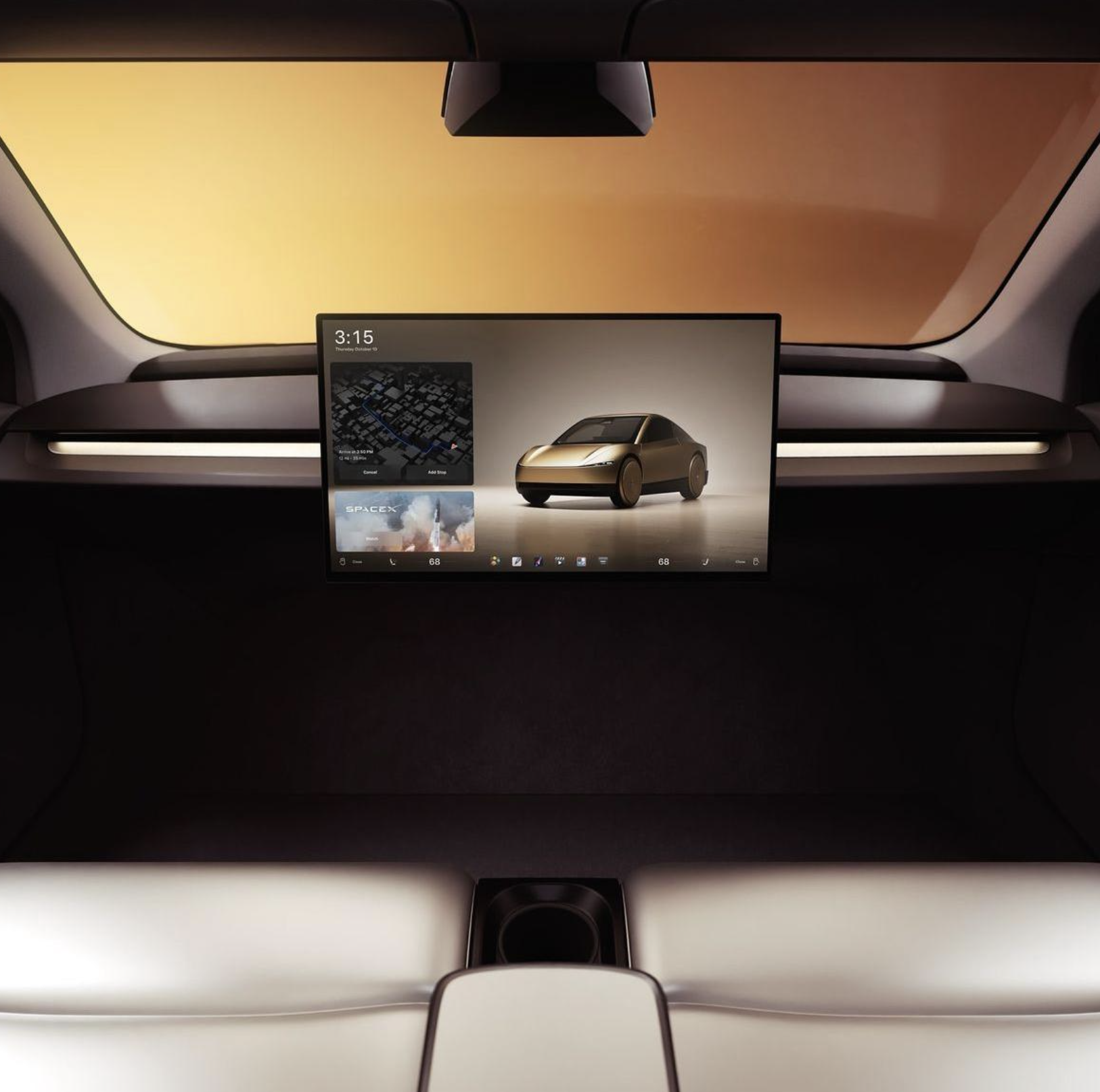
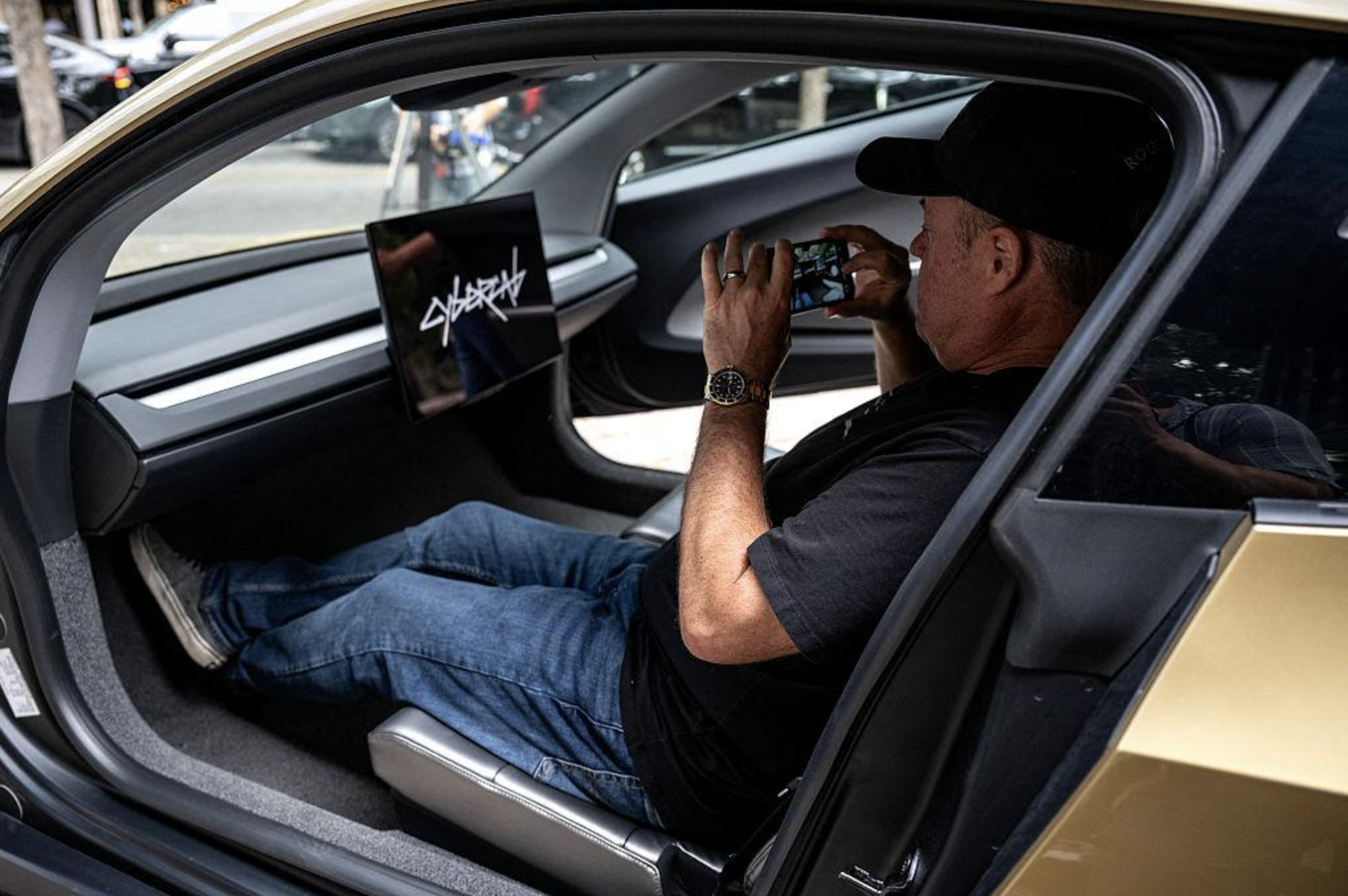
Tesla designed the cabin entirely around passengers. Both seats are available for riders, with a central touchscreen controlling important functions such as the doors, climate, seats and entertainment. Tesla
The vehicle uses a bench-style seating arrangement and can carry up to two passengers. Tesla
Butterfly Doors and Exterior Design
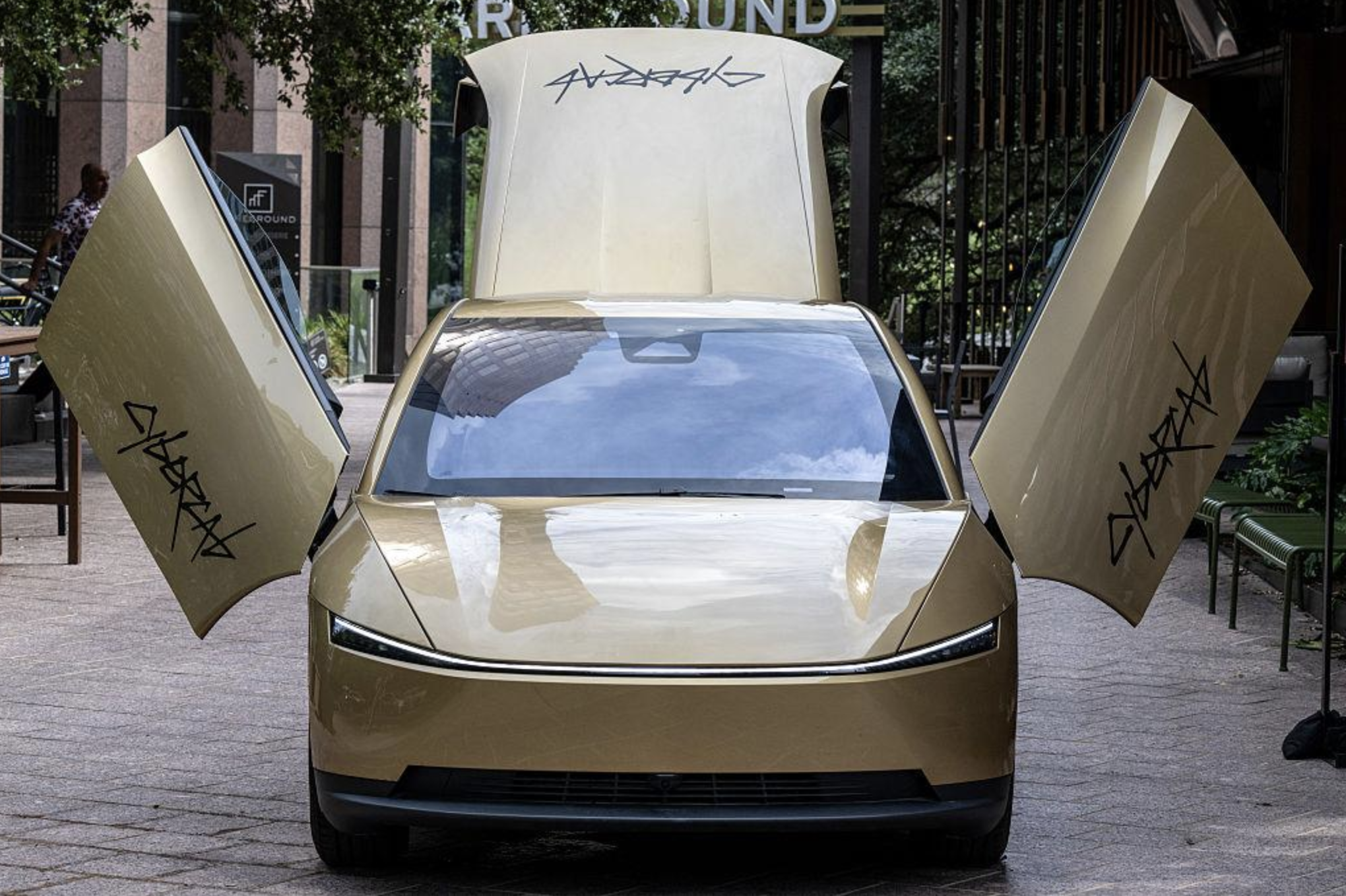
The Cybercab uses large doors that open outward and upward, giving the vehicle its distinctive butterfly-style appearance.
The doors can be opened through the Robotaxi app, touchscreen or exterior button. Tesla also designed the system to automatically open the appropriate door when the rider approaches the vehicle. Tesla
The exterior also features front and rear lightbars that help identify the Cybercab during pickup and drop-off.
Autonomous Driving Hardware
The Cybercab was designed specifically for autonomous operation.
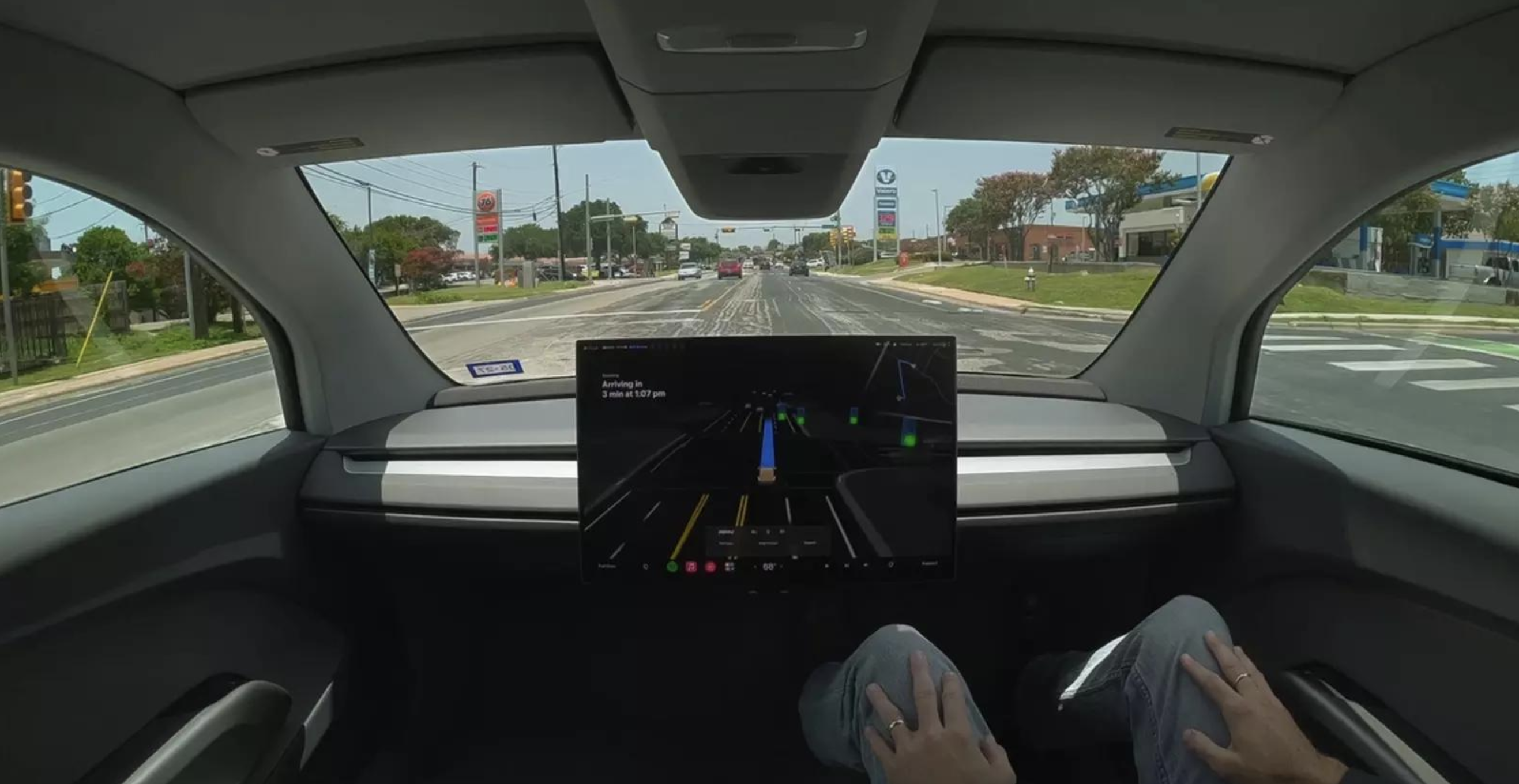
Tesla says the vehicle uses camera vision and sensors to navigate city streets, highways, intersections and parking areas. The production hardware also includes multiple exterior cameras and an FSD computer. Tesla
The important distinction is that the Cybercab is not simply a normal Tesla with an autonomous-driving package added later.
Its entire interior and vehicle architecture are built around the assumption that there is no human driver.
Starlink Connectivity
One of the more unusual additions to the production Cybercab is integrated Starlink hardware.
Tesla and Starlink revealed a diagram showing a Starlink V5 integration inside the vehicle alongside the cameras, FSD computer and GPS/LTE hardware. Electrek
Starlink isn't what physically makes the Cybercab drive itself. The onboard autonomous computer handles the driving.
Instead, satellite connectivity gives Tesla another communication option when conventional cellular coverage is unavailable or unreliable.
That could become particularly useful when Tesla operates large fleets of autonomous vehicles that need to remain connected to their service infrastructure.
Passenger Technology
The Cybercab isn't just designed to take passengers from one location to another.
Its central touchscreen allows passengers to control:
- Climate settings
- Seat position
- Doors
- Music
- Podcasts
- Games
- Other media
- Robotaxi support
Tesla's current Rider Guide also says passenger data from media services is removed from the Cybercab when the trip ends. Tesla
Passengers can also request a destination change through the Robotaxi app during a ride. Tesla
Safety and Emergency Features
Despite having no conventional driving controls, the Cybercab includes several passenger safety systems.
A STOP button inside the cabin can initiate a pull-over request, while passengers can also request assistance through the touchscreen or Robotaxi app. Tesla
The vehicle also has mechanical emergency door releases in case the Cybercab loses power.
Tesla's first-responder documentation provides additional information for emergency personnel dealing with autonomous Cybercab vehicles. Tesla
Where Is the Cybercab Available?
Cybercab rides are currently available in limited areas of Austin, Texas.
Tesla's wider Robotaxi network also operates Model Y vehicles in cities including Austin, Dallas, Houston, Miami, Orlando and Tampa, but that does not mean Cybercab is currently available across all of those locations. Tesla
Tesla has already started Cybercab production and public-road engineering testing as it works toward expanding the Robotaxi fleet. Tesla Investor Relations
Why the Cybercab Specs Matter
The Cybercab is interesting because almost every major specification serves the same purpose: lower-cost, high-utilization autonomous transportation.
A two-seat cabin means Tesla isn't carrying unnecessary passenger capacity.
A relatively small battery helps reduce weight and cost.
The lack of pedals and a steering wheel removes equipment that a conventional car needs.
The large trunk gives a small vehicle enough practical storage for everyday trips.
And integrated connectivity gives Tesla another way to keep autonomous vehicles connected to its fleet infrastructure.
The Cybercab isn't simply a smaller Tesla.
It is Tesla's attempt to build a vehicle specifically around the Robotaxi business model.
🎮 The Bottom Line
The Cybercab's most important specification isn't its horsepower or battery size.
It's the fact that Tesla built the entire vehicle around autonomous operation.
Two seats, no steering wheel, no pedals, a compact battery, a large trunk, onboard cameras, an FSD computer and even integrated Starlink all serve the same larger goal: creating a vehicle that can spend much of its life operating as part of an autonomous taxi fleet.
The real test now is whether Tesla can scale that concept from limited Austin rides into a reliable, large-scale Robotaxi network.
Comments
Sign in to join the conversation
Sign inNo comments yet
Be the first to share your thoughts!