
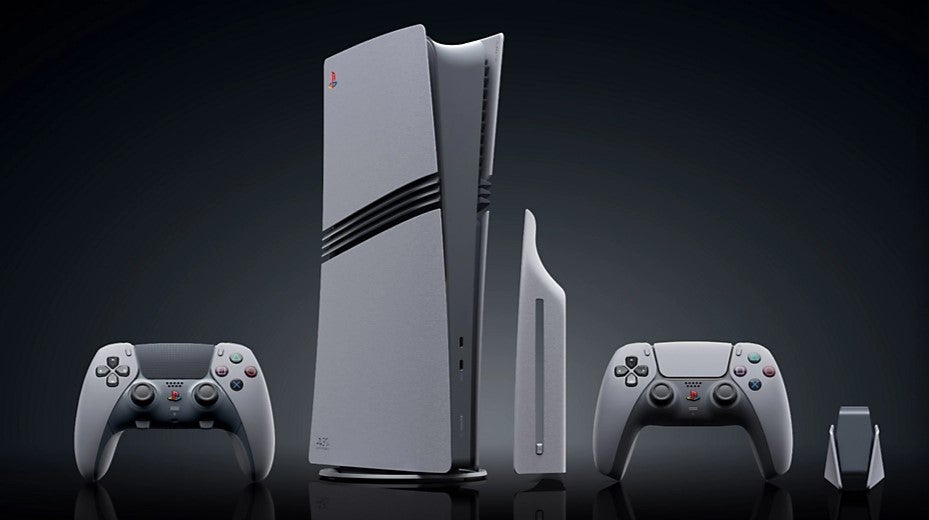
The PlayStation 5 Pro is built around significantly higher graphical performance than the standard PlayStation 5, making thermal management an important part of its hardware design.
Its cooling architecture combines a custom vapor chamber, large heatsink, high airflow fan, and liquid metal thermal interface to move heat away from the system's main processor.
Understanding this architecture helps explain why cooling performance matters and why questions surrounding liquid metal application and vertical versus horizontal placement have attracted attention.
The PlayStation 5 Pro Cooling Architecture
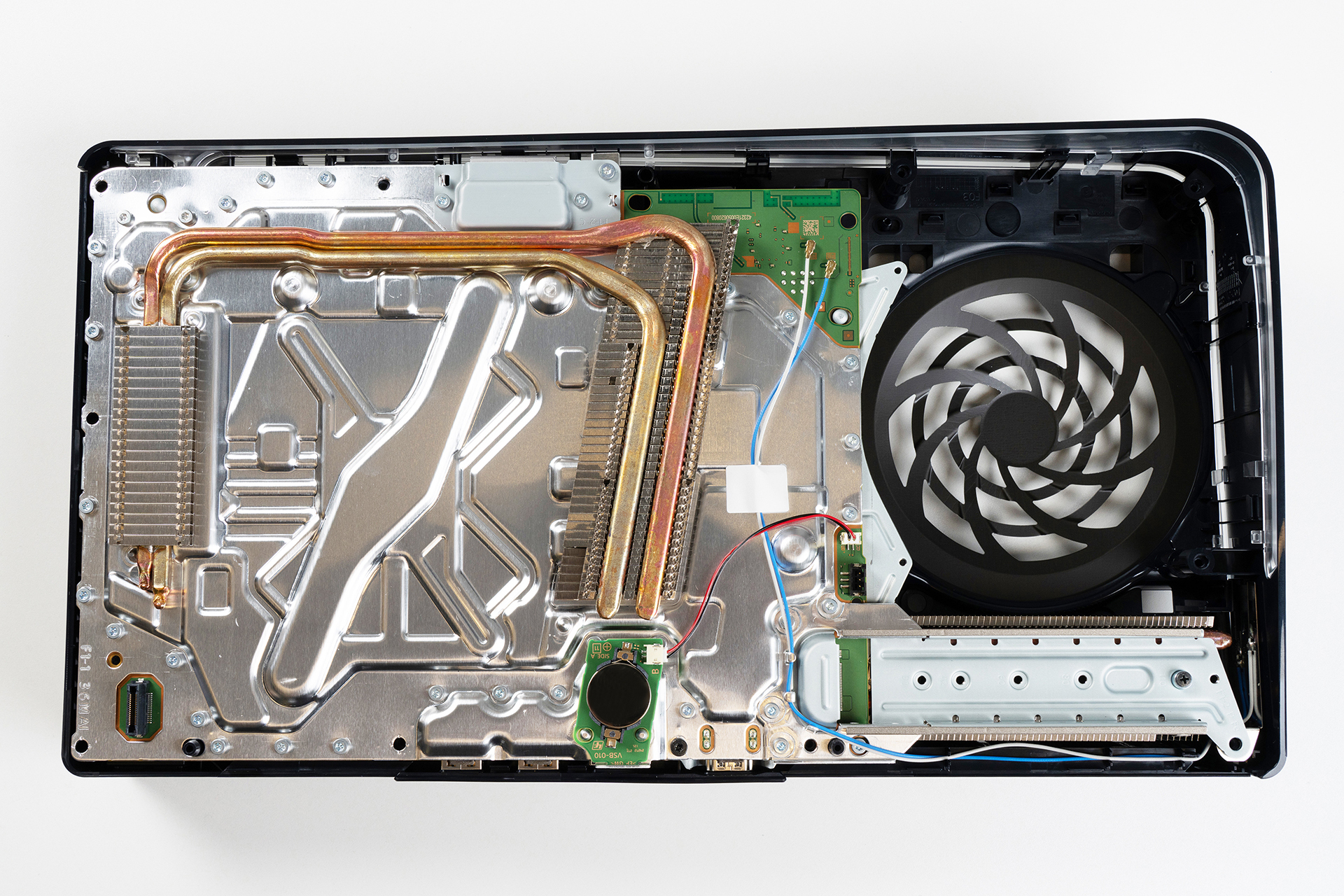
The PlayStation 5 Pro's cooling system is designed to remove heat generated by its custom system on chip during demanding workloads.
The basic process is straightforward.
The processor generates heat while rendering games. Thermal material transfers that heat into the cooling assembly, where the vapor chamber and heatsink distribute it. The fan then pushes air through the heatsink and out of the console.
The challenge is maintaining this process consistently while the hardware operates at higher performance levels.
The Pro's cooling design therefore focuses on improving heat distribution rather than relying on a single component.
The Vapor Chamber Redesign
One of the important elements of the PlayStation 5 Pro cooling architecture is its vapor chamber.
A vapor chamber is a sealed thermal component containing a small amount of working fluid. When heat reaches the chamber, the fluid changes phase and moves thermal energy across the chamber. It then condenses and returns through an internal structure, creating a continuous heat transfer cycle.
This allows heat to spread across a larger surface area before reaching the heatsink.
For the PS5 Pro, the redesigned thermal system is particularly important because the console's more powerful graphics hardware can generate substantial heat during intensive workloads.
A larger or more effectively designed vapor chamber can help prevent individual areas of the processor from becoming concentrated hotspots.
That matters because thermal performance is not simply about the average temperature of the console.
How evenly heat is distributed can be just as important.
Liquid Metal Application
The processor's connection to the cooling system is another critical part of the architecture.
The PS5 Pro uses liquid metal as its thermal interface material. Liquid metal has extremely high thermal conductivity compared with conventional thermal compounds, allowing heat to move efficiently from the processor into the cooling assembly.
However, liquid metal also requires careful application.
Unlike ordinary thermal paste, it is electrically conductive and must remain properly contained. The interface must provide consistent coverage across the relevant processor surface.
This has led to discussion about whether application quality, distribution, or long term movement could influence thermal performance.
It is important to distinguish between potential engineering concerns and confirmed widespread failures. A theoretical concern about liquid metal behavior does not automatically establish that the PS5 Pro has a systemic cooling defect.
Vertical vs. Horizontal Thermal Performance
Console orientation is one of the most discussed aspects of PlayStation 5 cooling.
The PS5 Pro can be positioned horizontally or vertically, with an optional vertical stand used for upright placement.
The key question is whether orientation significantly changes temperatures.
In a properly functioning system, the cooling architecture should be designed to operate within expected thermal limits regardless of normal supported positioning.
However, orientation can potentially influence how a thermal interface behaves over long periods, particularly when a material is affected by gravity or imperfect application.
This is why meaningful benchmarks need to compare both positions under identical conditions.
A useful thermal benchmark should measure:
• Idle temperature: The system's thermal behavior when performing minimal work.
• Gaming temperature: Temperatures during sustained gameplay.
• Peak temperature: The highest recorded temperature during demanding workloads.
• Fan behavior: How aggressively the cooling system responds as temperatures rise.
• Performance stability: Whether clock speeds or rendering performance change as the system heats up.
Simply reporting that one orientation feels warmer is not enough to establish a hardware problem.
What Thermal Benchmarks Can Actually Tell Us
Thermal benchmarking becomes useful when testing conditions remain consistent.
The same game should ideally be tested for the same amount of time, using the same room temperature, display configuration, system software, and ventilation conditions.
The console should also have adequate clearance around its ventilation openings.
A horizontal and vertical test performed under different environmental conditions could produce misleading results.
Another important consideration is that temperature alone does not determine whether a console is operating correctly.
A system may run at a relatively high temperature while remaining completely stable because its cooling system and processor were designed to operate within that range.
The more meaningful warning signs are sustained thermal throttling, repeated overheating warnings, instability, or unexpected shutdowns.
Cooling Technology and Hardware Design
The PS5 Pro's cooling architecture is part of a larger hardware redesign.
The console increases graphics performance while maintaining the compact form factor expected from a modern PlayStation system. Achieving that balance requires careful management of heat, airflow, power consumption, and acoustic performance.
The vapor chamber helps spread thermal energy.
The liquid metal interface helps transfer heat from the processor.
The heatsink provides a large surface area for heat dissipation.
The fan supplies the airflow necessary to move that heat away from the internal assembly.
These components work as a single thermal system.
A weakness in any one part can potentially affect the performance of the entire chain.
Quick Facts
| Detail | Information |
|---|---|
| Product | PlayStation 5 Pro |
| Manufacturer | Sony Interactive Entertainment |
| Category | Gaming Console |
| Cooling System | Vapor chamber, heatsink and fan |
| Thermal Interface | Liquid metal |
| Supported Orientation | Horizontal and vertical |
| Primary Goal | Managing increased performance and heat output |
Why the Cooling Architecture Matters
The cooling system is particularly important because the PS5 Pro is designed to deliver more graphical performance than the original PlayStation 5.
Higher performance creates additional thermal demands.
That means Sony has to balance several competing goals: keeping temperatures controlled, maintaining consistent performance, limiting fan noise, and fitting the cooling hardware inside the console's physical design.
The vapor chamber and liquid metal interface are therefore not minor technical details.
They are central to keeping the PS5 Pro operating reliably under sustained workloads.
The discussion around vertical and horizontal placement also demonstrates why long term hardware testing matters. A meaningful conclusion requires repeatable measurements rather than isolated anecdotes.
🎮 The Bottom Line
The PlayStation 5 Pro's cooling architecture combines a redesigned vapor chamber, liquid metal thermal interface, heatsink, and high airflow cooling system to manage the demands of its more powerful hardware.
Liquid metal provides efficient thermal transfer, while the vapor chamber helps distribute heat across the cooling assembly. Vertical and horizontal positioning can be compared through controlled thermal benchmarks, but isolated temperature reports are not enough to establish a widespread design problem.
For PS5 Pro owners, adequate ventilation and consistent airflow remain essential, while independent long term testing will provide the clearest picture of how the cooling architecture performs in different orientations.