
The 2026 Streamer Olympics took the idea of a creator competition far beyond a typical livestream.
Ludwig's third annual Streamer Games brought 40 creators from nine countries together for a two-day, Olympics-style competition at the University of Southern California's track-and-field stadium. The event combined real athletic challenges with the personalities, rivalries and unpredictable moments that define livestreaming.
The competition also represented a major jump in scale from earlier editions, moving into USC's 2,100-capacity track-and-field venue and selling out both days.
Here's everything you need to know about the 2026 Streamer Olympics.
The Event: Streamer Games 2026
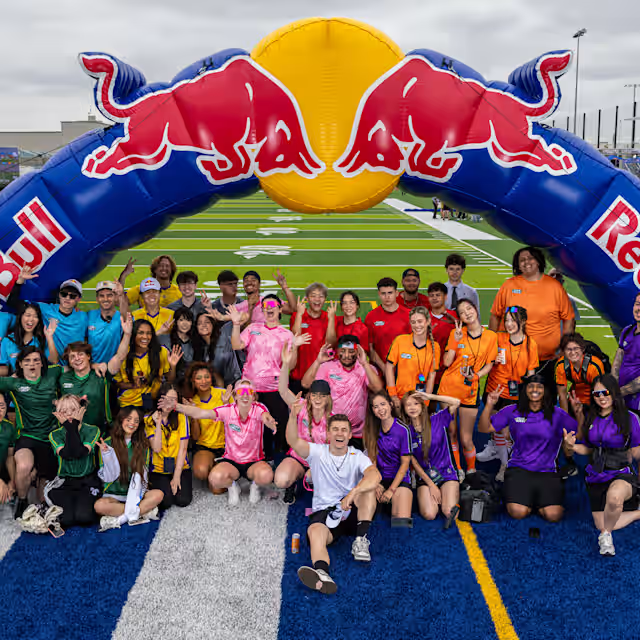
The Streamer Games is Ludwig's creator-focused sports competition.
Rather than keeping creators behind gaming PCs, the event places them directly into physical competitions.
The 2026 edition featured:
- 40 creators
- 9 countries
- 8 teams
- Two days of competition
- Track-and-field events
- Team and individual challenges
- Live streaming coverage
- A sold-out physical venue
The event was designed to combine legitimate competition with entertainment, creating an experience that works both inside the stadium and for viewers watching online.
The Creator Roster
The 2026 competition featured an international group of creators rather than being limited to one streaming platform.
Reported members of the winning Team Worldwide included:
- Cellbit
- RayAsianBoy
- T10nat
- Develique
- Rynenzo
Team Worldwide ultimately finished at the top of the overall standings with 72 points.
The wider event roster represented creators from different streaming communities and countries, reinforcing the international direction of the competition.
That diversity is important.
The Streamer Games isn't simply a Twitch event.
It brings together creators whose audiences can span Twitch, YouTube, TikTok and other social platforms.
The Teams
The competition used an eight-team format, allowing individual creators to compete for both personal results and their team's overall score.
This structure adds another layer to the event.
A creator can perform well individually while still needing teammates to accumulate enough points to win the competition.
That makes the Streamer Games closer to a traditional multi-event sporting competition than a collection of unrelated creator challenges.
IRL Track-and-Field Events
The biggest difference between the Streamer Games and normal creator competitions is the physical environment.
Creators actually compete on a professional track-and-field venue.
The 2026 event featured athletic and entertainment-focused challenges designed around speed, coordination, strength and general physical ability.
Track-based competitions are particularly effective for livestreaming because viewers immediately understand the objective.
Run faster.
Jump farther.
Score more points.
Beat the other team.
There is very little explanation required.
The 100-Meter Dash
Speed-based events became some of the most heavily discussed moments from the competition.
One particularly viral moment involved Nando's dash, which generated widespread discussion among viewers and social media users.
The appeal is obvious.
A 100-meter-style race can turn a streamer who normally sits at a computer into a completely different kind of competitor.
Viewers suddenly aren't judging aim, game knowledge or mechanical skill.
They're watching raw athletic performance.
Other Competitive Challenges
The Streamer Games format extends beyond traditional track races.
The competition mixes athletic events with creator-friendly challenges, allowing different types of personalities and physical abilities to contribute points.
That variety is important because the participants aren't professional athletes.
They're creators.
The objective is therefore not simply to identify the fastest person.
It's to create a competition where different skills can produce entertaining moments.
The Stadium: USC Track and Field
The 2026 Streamer Games took place at the University of Southern California's track-and-field stadium.
The move represented a significant upgrade from the event's earlier scale.
According to reporting on the competition, organizers moved from a high-school track to USC's 2,100-capacity venue, with both days selling out.
That change matters because the physical venue increasingly resembles a traditional sporting event.
There is a real track.
There are spectators.
There are production crews.
There are commentators and cameras.
And there is an audience watching the competition live online.
The result is something closer to a creator sports broadcast than a conventional livestream.
Live Production
The Streamer Games is designed for both the stadium audience and the online audience.
That requires a different production approach from a normal creator stream.
Multiple cameras can follow races and challenges while the broadcast can cut between competitors, commentators and audience reactions.
The physical environment also creates moments that are difficult to reproduce inside a gaming studio.
A creator crossing a finish line in front of a crowd simply feels different from completing a challenge on a livestream.
The Viewership Record
The biggest headline from the 2026 event was its online audience.
The competition reportedly reached approximately 500,000 concurrent viewers on Ludwig's primary channel and generated more than six million hours watched on that channel.
That represents a major increase from previous Streamer Games editions.
The event's growth reportedly went from around 175,000 peak viewers in its first year to approximately 330,000 in its second year, before reaching roughly 500,000 in 2026.
The numbers demonstrate how quickly creator-led physical events can scale.
Why the Streamer Olympics Matter
The importance of the 2026 Streamer Games isn't just the view count.
It demonstrates that livestream audiences are willing to watch creators participate in real-world entertainment formats.
Traditional streaming often revolves around:
- Gaming
- Just Chatting
- Reactions
- Podcasts
- Challenges
The Streamer Games adds another category:
Live creator sports.
The concept combines the personality-driven nature of streaming with the immediacy of sports broadcasting.
That creates opportunities for larger venues, sponsors, professional production and international creator participation.
The Creator Sports Economy
The event also shows how the creator economy is expanding beyond digital screens.
A successful creator competition can now involve:
- Stadiums
- Ticket sales
- Sponsorships
- Merchandise
- Live broadcasts
- Multiple creators
- Social media coverage
- International audiences
That makes the event commercially different from a normal livestream.
The creator is no longer simply producing content.
They are effectively producing a live sports property.
What Happens Next?
The biggest question is how far the Streamer Games can grow.
The jump from a high-school track to a professional university stadium already demonstrates rapid expansion.
If the audience continues increasing, future editions could potentially introduce:
- Larger stadiums
- More international teams
- Additional sports
- More professional production
- Expanded sponsorships
- Larger live audiences
- More creator platforms
- International editions
The 2026 event has also established a useful benchmark.
If another edition is announced, viewers will immediately compare its venue, roster and audience numbers with the 2026 edition.
What to Know at a Glance
| Detail | Information |
|---|---|
| Event | Ludwig's Streamer Games 2026 |
| Common Description | 2026 Streamer Olympics |
| Edition | Third annual Streamer Games |
| Participants | 40 creators |
| Countries Represented | 9 |
| Teams | 8 |
| Venue | USC track-and-field stadium |
| Venue Capacity | Approximately 2,100 |
| Format | IRL creator competition |
| Events | Track-and-field and multi-sport challenges |
| Winner | Team Worldwide |
| Winning Score | 72 points |
| Peak Viewership | Approximately 500,000 on Ludwig's primary channel |
| Hours Watched | More than 6 million on Ludwig's primary channel |
| Event Length | Two days |
Viewership figures are reported figures for Ludwig's primary channel rather than a combined total across every creator's simultaneous streams.
🎮 The Bottom Line
The 2026 Streamer Olympics showed how far creator competitions have moved beyond the traditional livestream.
Ludwig's Streamer Games combined 40 international creators, real athletic competition, a sold-out USC venue and a peak online audience of roughly 500,000 into a single creator-driven sporting event.
Its biggest significance is the format itself.
Streamers aren't just competing inside games anymore.
They're becoming the athletes, commentators and entertainment brands behind their own live sporting events.
Comments
Sign in to join the conversation
Sign inNo comments yet
Be the first to share your thoughts!