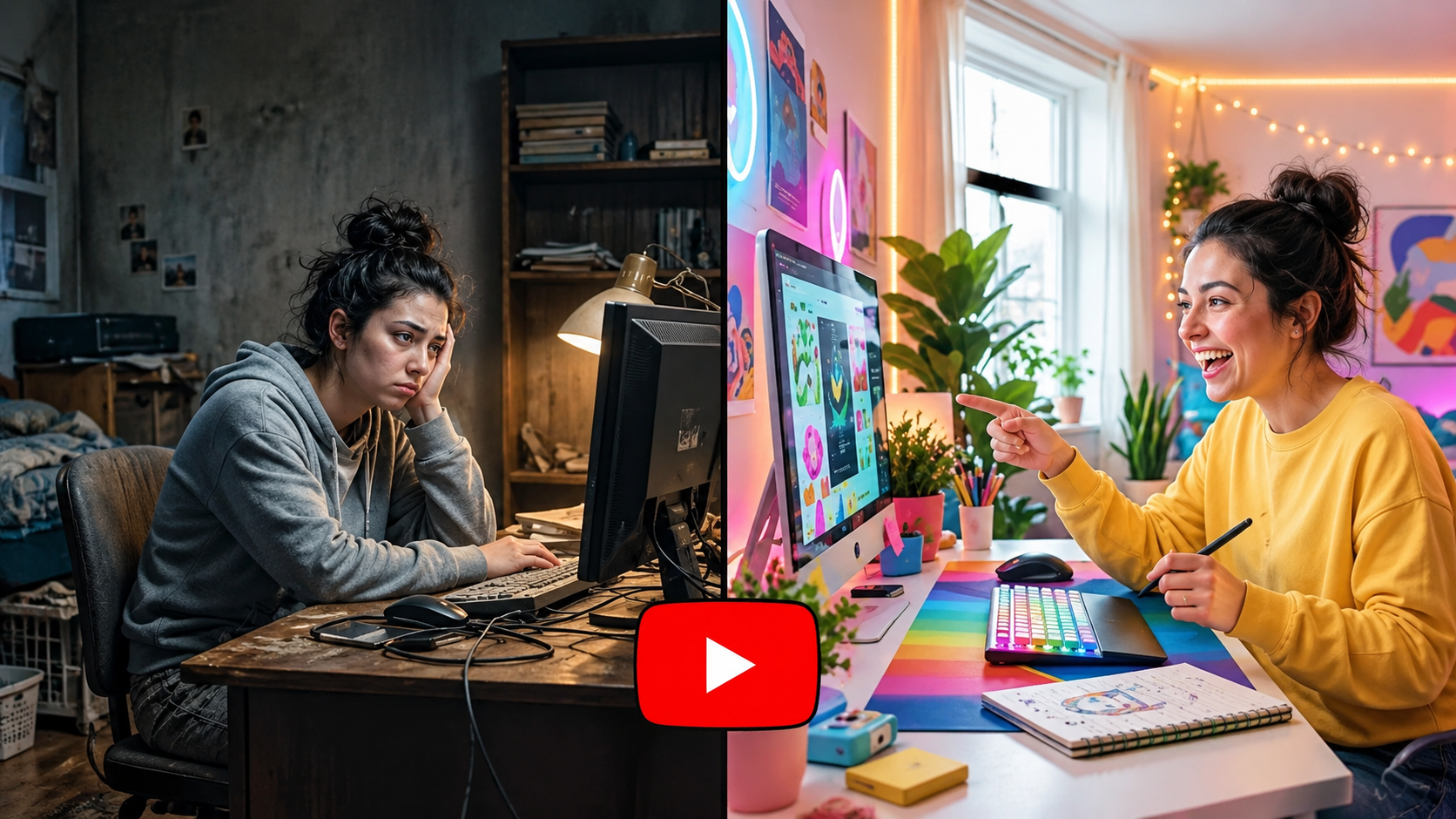

The 'Dynamic Thumbnail' Controversy: Is YouTube AI Homogenizing Creator Content?
YouTube Dynamic Thumbnails are about to make one of the most important creative decisions on the platform less manual. Instead of relying on a creator to decide which thumbnail should represent a video, YouTube is introducing a system that can recommend different thumbnail options to different audience segments and determine which version performs best.
The feature was announced at Made on YouTube in September 2026 as part of a much larger expansion of AI-powered tools inside YouTube Studio. YouTube says Dynamic Thumbnails can recommend the best of three thumbnail options to different segments of an audience, while its broader AI tools can also generate channel-matched thumbnails and help creators analyze their content.
On paper, this sounds like another useful optimization feature.
But there is a bigger question underneath it.
If thousands or millions of creators start letting the same platform decide which visual style performs best, will YouTube become more effective at matching videos with viewers, or will creator thumbnails slowly start looking more alike?
That is the real controversy surrounding YouTube Dynamic Thumbnails.
────────────────────────────────────────
────────────────────────────────────────
What Are YouTube Dynamic Thumbnails?
YouTube Dynamic Thumbnails are part of YouTube Studio's expanding AI toolkit.
The basic concept is straightforward. Instead of selecting one thumbnail and leaving it visible to everyone, a creator can provide multiple thumbnail options. YouTube can then recommend different options to different segments of viewers based on which version is most likely to perform well.
YouTube specifically describes the feature as recommending the best of three thumbnail options to different audience segments.
That is different from the traditional approach where one thumbnail becomes the public face of a video for everyone.
It is also connected to YouTube's existing investment in A/B testing.
According to YouTube, creators have already conducted more than 40 million title and thumbnail experiments since its A/B testing feature officially launched in 2024.
Dynamic Thumbnails essentially push that philosophy further.
The platform is moving from:
"Creator chooses the thumbnail."
to:
"Creator provides the options, and YouTube helps determine which option works for which audience."
That distinction could become increasingly important as AI becomes embedded into the publishing workflow.
────────────────────────────────────────
How YouTube's New Thumbnail System Works
The important thing to understand is that Dynamic Thumbnails are not simply an AI image generator.
YouTube is also introducing tools that can generate thumbnails designed to match a creator's existing channel style. Dynamic Thumbnails then introduce an additional layer of optimization by allowing different thumbnail options to be recommended to different audience segments.
The simplified workflow looks like this:
| Stage | Traditional Workflow | AI-Assisted Workflow |
|---|---|---|
| Video creation | Creator makes video | Creator makes video with AI assistance |
| Thumbnail design | Creator chooses one | Creator can generate or upload multiple |
| Testing | Manual or A/B testing | AI-assisted testing and recommendations |
| Audience targeting | Same thumbnail for everyone | Different options can be recommended to audience segments |
| Optimization | Creator monitors results | YouTube increasingly automates analysis |
| Older videos | Manual thumbnail changes | Ask Studio can suggest and test refreshed thumbnails |
The idea is not necessarily to remove creators from the process.
Instead, YouTube is trying to make the optimization process happen with less manual work.
That distinction matters because the biggest debate is not really about whether AI can create thumbnails.
It is about who ultimately controls the visual packaging of a creator's content.
────────────────────────────────────────
────────────────────────────────────────
Why YouTube Is Pushing AI Optimization
YouTube is dealing with an enormous amount of content.
The company says more than 20 million videos are uploaded to the platform every day.
For creators, that creates an increasingly difficult discovery problem. Making a good video is only one part of the job. The thumbnail, title, opening hook, pacing and audience targeting can all influence how that video performs.
YouTube's new AI tools are designed to attack those problems from multiple directions.
Ask Studio can provide personalized feedback on drafts, suggest alternative titles and thumbnails, analyze channel performance and help creators understand what might be working.
The company is also introducing video A/B testing that allows creators to test up to three different cuts of a video to see which version holds audience attention best.
There is another interesting development.
Ask Studio can eventually work in the background on older videos, identifying opportunities to refresh thumbnails and test new versions.
That means YouTube's AI strategy isn't only about helping creators make their next video.
It is increasingly about managing the entire lifecycle of a channel's existing library.
────────────────────────────────────────
The Case for Dynamic Thumbnails
There is a strong argument in favor of the feature.
Most creators are not professional graphic designers or data scientists.
A small gaming channel might spend hours creating a thumbnail and still have no idea whether another visual approach would have performed better.
Dynamic testing can reduce some of that uncertainty.
1. Smaller creators get better experimentation tools
A major channel can hire designers, editors and analysts.
A solo creator usually cannot.
Automated experimentation could give smaller channels access to optimization techniques that previously required additional people or expensive software.
2. Older videos can get another chance
A video does not necessarily become bad because its original thumbnail stopped attracting viewers.
A stronger thumbnail could potentially help an older video reach people who never clicked on it the first time.
YouTube's plans to let Ask Studio suggest and test refreshed thumbnails for older content could make this particularly useful for large libraries.
3. Different audiences can react differently
A thumbnail that works for an existing subscriber may not work as well for someone discovering a channel for the first time.
Dynamic recommendations allow YouTube to experiment with that difference instead of assuming that every viewer should see exactly the same packaging.
4. Testing can move beyond clicks
YouTube's existing A/B testing system emphasizes watch time rather than simply choosing the thumbnail with the highest click-through rate.
That is important.
A thumbnail can generate curiosity without accurately representing the video.
If viewers click and immediately leave, a high click-through rate does not necessarily mean the thumbnail was successful.
────────────────────────────────────────
The Homogenization Problem
This is where the controversy becomes more interesting.
Imagine thousands of creators using AI optimization.
The system examines which visual characteristics produce strong results.
Creators follow those recommendations.
The next generation of thumbnails therefore becomes increasingly influenced by the same optimization logic.
Over time, certain patterns could become more common:
- Large expressive faces
- Extremely strong contrast
- Minimal backgrounds
- Bright visual subjects
- Oversized objects
- Highly recognizable emotional expressions
- Short visual messages
- Dramatic lighting
- Before-and-after compositions
- Gaming characters facing toward the center
- Strong foreground/background separation
- None of these techniques are new.
The concern is what happens when an algorithm continuously reinforces them across millions of channels.
The result could be a platform where thumbnails are individually optimized but collectively less distinctive.
That is the paradox.
An AI system can make one thumbnail more effective while potentially making the entire platform's visual language more repetitive.
────────────────────────────────────────
────────────────────────────────────────
Will AI Destroy a Creator's Visual Identity?
Not necessarily.
But it changes the balance between creative instinct and performance optimization.
A creator's visual identity is more than a thumbnail.
It includes:
- Color choices
- Typography
- Composition
- Character design
- Editing style
- Recurring visual elements
- Humor
- Photography
- Illustration
- Subject matter
- Personality
A thumbnail can be optimized without completely abandoning those characteristics.
YouTube itself says creators can generate thumbnails that match their channel's style.
That is an important detail.
The platform is not presenting the feature as "make every channel look identical."
The intended idea is closer to:
"Help each creator optimize within their existing style."
Whether that actually happens at scale is something that will only become clearer as the tools are used more widely.
There is also a practical limit to algorithmic optimization.
If every creator follows the same recommendation, the competitive advantage of that recommendation eventually disappears.
A visual pattern works partly because it stands out.
If everyone adopts it, it becomes normal.
That means creators may eventually have to do the opposite of what the algorithm expects to regain differentiation.
────────────────────────────────────────
Dynamic Thumbnails vs Traditional A/B Testing
YouTube already has an A/B testing system for titles and thumbnails.
Creators can test up to three different titles and thumbnails.
At the end of an experiment, YouTube can select the option that generates the strongest watch-time performance.
Dynamic Thumbnails add another layer because the system can recommend different thumbnail options to different audience segments.
| Feature | Traditional A/B Testing | Dynamic Thumbnails |
|---|---|---|
| Multiple thumbnails | Yes | Yes |
| Up to three options | Yes | Yes |
| Performance comparison | Yes | Yes |
| Watch-time consideration | Yes | Yes |
| Different audience segments | More limited | Central to the concept |
| AI recommendation | Increasingly involved | Core feature |
| Creator provides options | Yes | Yes |
| Platform optimization | Test-based | More automated |
The larger trend is clear.
YouTube is turning the thumbnail from a static creative asset into something closer to a continuously optimized interface element.
That is a major philosophical shift.
────────────────────────────────────────
────────────────────────────────────────
YouTube's Bigger AI Creator Strategy
Dynamic Thumbnails are only one piece of YouTube's broader AI push.
At Made on YouTube 2026, the company announced tools covering almost the entire creator workflow.
Ask Studio
Ask Studio can analyze creator content and provide personalized feedback based on a channel's previous videos and audience information.
AI Thumbnail Generation
Creators can generate thumbnails designed to match the visual style of their channel.
Dynamic Thumbnails
Multiple thumbnail options can be recommended to different audience segments.
Video A/B Testing
Creators will be able to test up to three different cuts of a video to see which version holds attention best.
Conversational Editing
YouTube is also integrating Gemini-powered conversational editing into Shorts and the YouTube Create app, allowing creators to describe edits and receive automated suggestions.
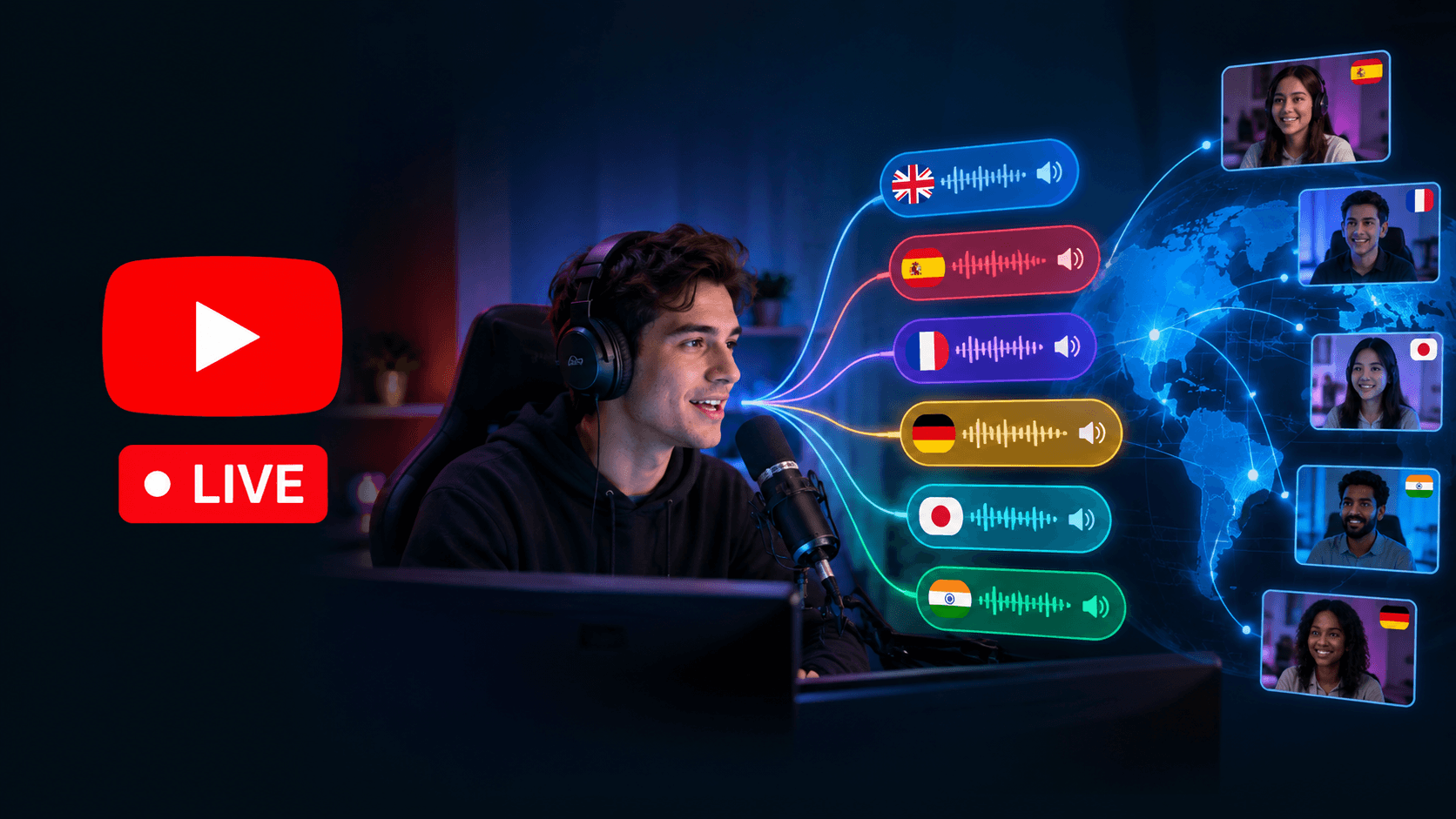
Live Auto-Dubbing
YouTube is also developing real-time dubbing for livestreams, potentially allowing creators to reach viewers who speak other languages.
The pattern is difficult to miss.
YouTube isn't simply adding an AI image generator.
It is building AI into the decision-making layer around content creation.
The platform increasingly wants to help decide what creators make, how they package it, how audiences experience it and which version performs best.
────────────────────────────────────────
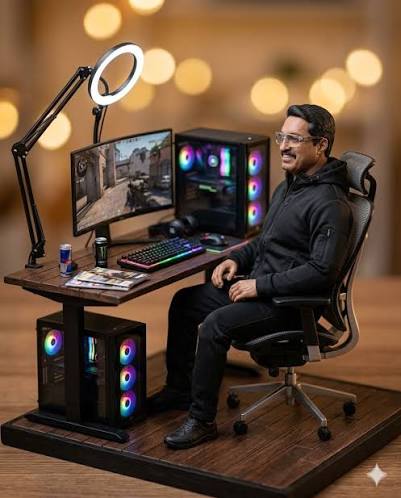
What This Means for Gaming and Streaming Channels
Gaming creators may be among the channels most affected by this shift.
Gaming thumbnails already rely heavily on recognizable visual formulas.
A typical gaming thumbnail might feature a character, weapon, boss, reaction face, dramatic background and a few words.
That makes gaming a natural environment for automated experimentation.
For example, a creator could provide three versions of a new game review:
Version A: Character-focused composition
Version B: Creator reaction with gameplay background
Version C: Large gameplay moment with minimal visual clutter
YouTube could then determine which presentation performs better with different viewer groups.
That could save creators significant time.
But gaming channels also have something valuable to protect: recognizable branding.
A viewer should ideally be able to scroll through a recommendation feed and recognize a favorite creator before reading the channel name.
If automated optimization slowly replaces that recognizable style with generic high-performing compositions, the channel could become harder to distinguish.
That is why creators should treat AI as a testing assistant rather than automatically surrendering the creative process.
────────────────────────────────────────
────────────────────────────────────────
Should Creators Use Dynamic Thumbnails?
There is no universal answer.
For creators who are already comfortable experimenting, Dynamic Thumbnails could become another useful optimization tool.
But there is a difference between optimization and creative direction.
Creators should consider keeping certain elements consistent:
Keep a recognizable color system
If every thumbnail suddenly uses whatever colors perform best, the channel may lose visual continuity.
Keep recurring design elements
A recognizable border, character treatment, illustration style or composition can help viewers identify a channel.
Test within the brand
Three radically different thumbnails can reveal performance differences, but testing three variations that still look unmistakably like the same creator may provide more useful information.
Don't optimize only for clicks
A thumbnail should accurately represent the video.
The strongest possible click is not necessarily the strongest possible viewer relationship.
Review what the AI is teaching you
The most interesting data may not be which thumbnail wins.
It may be why.
If a particular visual pattern repeatedly performs well, creators can learn from the audience without permanently handing their design decisions to an algorithm.
────────────────────────────────────────
The Bigger Question: Who Owns the Creative Decision?
YouTube's AI tools raise a broader question about modern content creation.
For decades, creators have been responsible for decisions such as:
"What should my thumbnail look like?"
"How should I edit this video?"
"Which title feels like me?"
"How should I present my personality?"
AI changes those questions into:
"What does the data say will work?"
That can be incredibly useful.
But the two questions are not identical.
A creator might intentionally choose a thumbnail that is unusual because it represents their personality.
An algorithm may see that unusual design as underperforming compared with a more familiar visual formula.
From a pure optimization perspective, changing it makes sense.
From a branding perspective, the decision may be more complicated.
That tension is unlikely to disappear.
In fact, as AI becomes better at optimization, human creative decisions may become more valuable precisely because they are not perfectly optimized.
────────────────────────────────────────
Is YouTube Actually Homogenizing Creator Content?
There is currently no evidence proving that Dynamic Thumbnails will make YouTube creators visually identical.
That claim would be premature.
What can be observed is a clear change in direction.
YouTube is giving AI a larger role in thumbnail creation, testing, audience segmentation, video editing and content analysis.
The company says these tools are intended to help creators work more efficiently and make better decisions.
The potential homogenization effect is therefore a question about what happens at scale rather than an established result.
If millions of creators independently use the same optimization systems, certain successful visual patterns could become more common.
But creators can also use the technology differently.
They can test unconventional ideas.
They can use AI-generated suggestions as a starting point.
They can preserve their own design language while using performance data to refine it.
The technology itself does not determine the outcome.
How creators use it will matter.
────────────────────────────────────────
FAQ
What are YouTube Dynamic Thumbnails?
YouTube Dynamic Thumbnails are a new YouTube Studio feature that can recommend different thumbnail options to different audience segments. Creators can provide multiple thumbnail choices while YouTube helps determine which option works best for different viewers.
How many thumbnails can creators use?
YouTube says Dynamic Thumbnails can work with three thumbnail options. This builds on the platform's existing A/B testing capabilities.
Are Dynamic Thumbnails completely AI-generated?
No. The feature is not simply an automatic thumbnail generator. Creators can provide thumbnail options, while YouTube's system helps determine which option to recommend to different audience segments.
Does YouTube already have thumbnail A/B testing?
Yes. YouTube already supports A/B testing of titles and thumbnails, with up to three options. The platform says watch time is used to evaluate the results rather than relying only on clicks.
Will YouTube Dynamic Thumbnails make every channel look the same?
There is currently no evidence that this will happen. However, widespread use of the same AI optimization systems could encourage certain successful visual patterns to become more common. Whether that produces meaningful homogenization remains an open question.
Can creators maintain their own visual style?
Yes. YouTube is also introducing tools designed to generate thumbnails that match a creator's existing channel style. Creators can also continue designing their own thumbnail options.
Are YouTube's new AI tools available to everyone?
Availability varies by feature and rollout. Some tools are being introduced gradually, so creators may not see every feature in YouTube Studio immediately.
────────────────────────────────────────
Final Take
YouTube Dynamic Thumbnails are not necessarily the end of creative thumbnails.
They are something more subtle.
They represent YouTube's transition from a platform where creators make individual publishing decisions toward a platform where AI increasingly participates in those decisions.
That could be extremely useful for creators who want better testing, stronger audience matching and less manual work.
But there is a legitimate creative question underneath it.
If every creator uses AI to discover what works, and the same system keeps identifying similar visual patterns as successful, will the platform eventually become optimized for performance at the expense of personality?
We don't know yet.
What is clear is that the thumbnail is becoming less of a static image and more of a continuously optimized part of YouTube's recommendation system.
For creators, the challenge may not be choosing between AI and creativity.
It may be learning how to use AI for the data while keeping the creative identity human.
────────────────────────────────────────