
A new member joins your Discord server.
They look around.
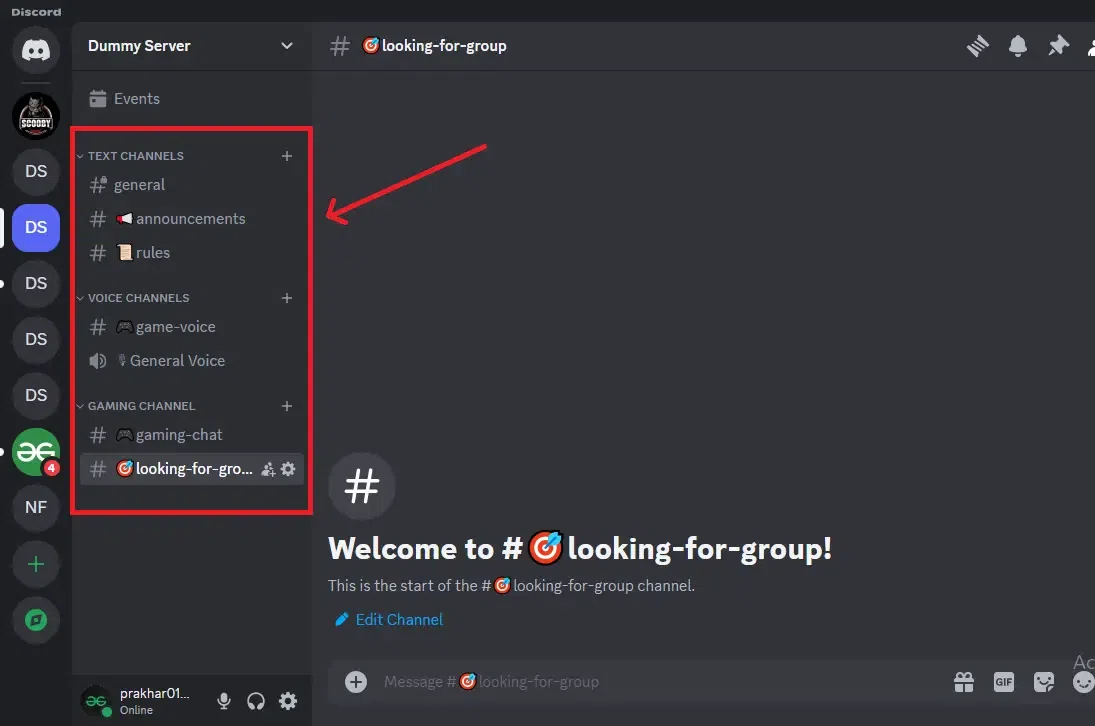
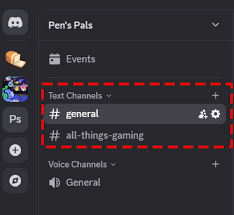
#general. #general-2. #gaming. #gaming-chat. #memes. #memes-2. #suggestions. #off-topic. #clips. #music. #movies. #anime. #events.
Then they notice something worse.
Most of them are completely silent.
That first impression can be enough to make someone leave before they ever send a message.
In 2026, community growth is increasingly about reducing friction rather than adding features. A server can have hundreds of channels, sophisticated bots, elaborate role systems and endless categories, but if a new member cannot immediately figure out where the active community is, all that complexity works against you.
The problem isn't simply having too many channels.
It's having too many dead channels.
When More Channels Start Hurting
There's an obvious temptation when building a Discord server: create a channel for everything.
A channel for every game.
A channel for every interest.
A channel for every possible conversation.
A channel for suggestions, feedback, clips, screenshots, announcements, introductions, questions and random thoughts.
At first, this feels organized.
Eventually, it can make the server feel empty.
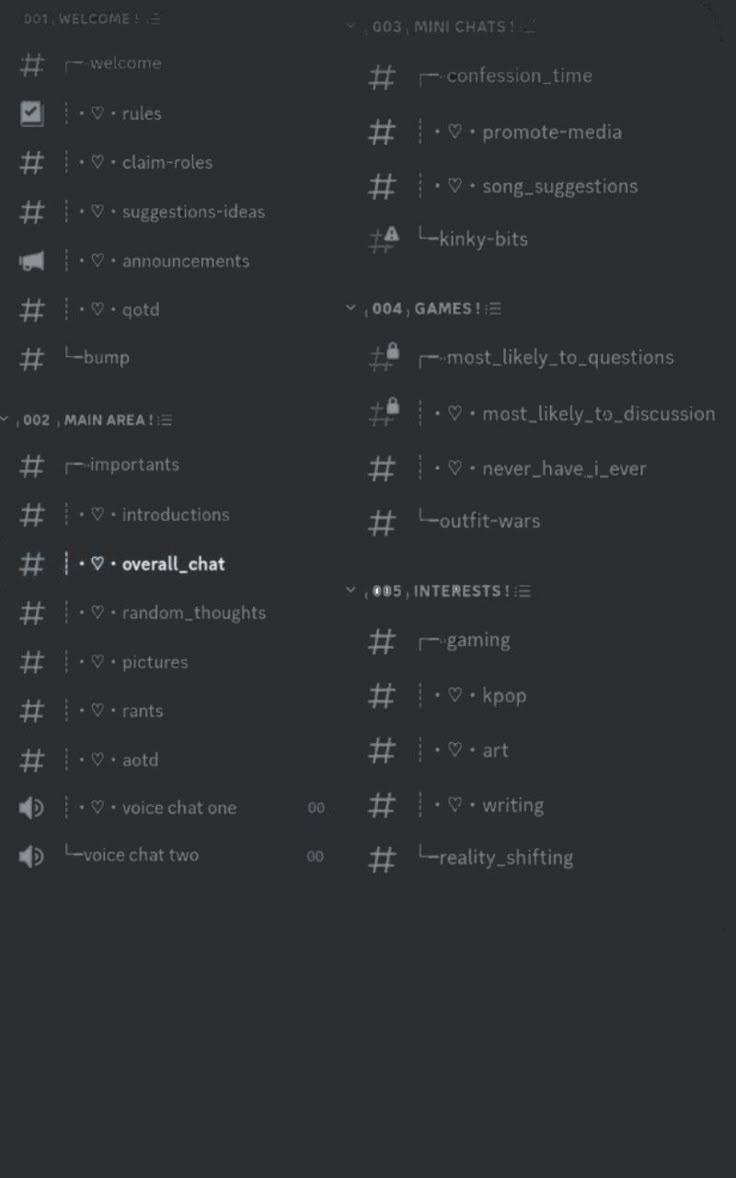
Imagine joining a server and seeing 40 text channels. You click through five of them and find the latest message was posted three weeks ago.
Then another.
Nothing.
Another.
Silence.
The server may have thousands of members, but it suddenly feels abandoned.
That's the psychological problem with dead channels. Members don't necessarily interpret inactivity as "this channel isn't important."
They can interpret it as "nobody is here."
And that's a much bigger problem for a community trying to grow.
The First Five Minutes Matter More Than You Think

The beginning of a member's experience is incredibly important.
A new member doesn't know your community yet. They don't understand your inside jokes, regular members, events or culture.
They're looking for signals.
Where do people talk?
What's happening right now?
Where should I introduce myself?
Is anyone actually active here?
Every extra channel adds another decision.
If the answer isn't obvious, the member has to explore.
And exploration sounds harmless until you realize that most people don't join a Discord server because they want to navigate a complicated information architecture.
They join because they want to find people and participate.
A strong onboarding experience should therefore make the next action almost automatic.
See an active conversation?
Join it.
See a question?
Answer it.
See a meme?
React to it.
See an event?
Check it out.
The fewer obstacles between joining and participating, the better.
Dead Channels Create an Illusion of an Empty Community
This is where the problem gets particularly interesting.
A server doesn't have to actually be inactive to look inactive.
Suppose a community has 5,000 members but only six channels receive regular conversations.
If those six channels are buried underneath 40 inactive channels, a new member may never reach them.
Instead, they see dozens of channels with little or no activity.
The server's actual engagement becomes hidden behind its structure.
It's similar to walking into a huge restaurant with 50 tables and seeing only three occupied.
You don't immediately think, "Wow, this restaurant has lots of capacity."
You probably think:
"Why is nobody here?"
Discord communities work in a surprisingly similar way.
Visible activity creates social proof.
Silence does the opposite.
The Better Strategy: Fewer Channels, More Activity
The solution isn't to delete half your server overnight.
It's to make every visible channel earn its place.
Before keeping a channel, ask:
- Does this channel receive regular messages?
- Does it serve a clearly different purpose?
- Do members actually ask for it?
- Would removing it make navigation easier?
- Could this conversation happen somewhere else?
- Does a new member need to see it immediately?
If the answer is mostly no, the channel probably doesn't need to be sitting in the main navigation.
You can start by creating a much smaller core.
For example:
START HERE
👋・welcome
📢・announcements
📜・rules
COMMUNITY
💬・general
🎮・gaming
😂・memes
🖼️・media
COMMUNITY TOOLS
💡・suggestions
🎉・events
That's already enough for many communities.
Instead of giving new members 30 places to go, you're giving them five or six obvious places to participate.
What About Niche Interests?
This doesn't mean every specialized conversation should disappear.
If your community genuinely has enough people discussing something, give it a dedicated space.
The key distinction is demand versus possibility.
Don't create a channel because someone might eventually use it.
Create it because people are already trying to have that conversation.
For example, a server might have:
#valorant
#fortnite
#minecraft
#apex
#cs2
But if only #valorant and #minecraft are active, keeping all five permanently visible can make the community appear less active than it really is.
A better approach could be consolidating smaller conversations into something like:
#gaming
Then creating dedicated channels when specific communities actually grow.
Let activity earn complexity.
What Happens Next?
Discord communities are likely to become increasingly focused on retention rather than raw member counts.
A server with 10,000 members means very little if most newcomers join, look around and disappear.
The more useful question is:
How many people who join actually stick around?
That changes how server owners should think about growth.
Instead of asking, "What other channel should we create?"
Ask:
"What can we remove to make this place easier to understand?"
Audit your server regularly.
Look at channels that haven't received meaningful activity in weeks.
Archive them.
Merge overlapping discussions.
Move specialized conversations behind roles when necessary.
And most importantly, make sure the channels a new member sees first are alive.
The goal isn't to make your Discord look bigger.
It's to make it feel alive.
🎮 The Bottom Line
A giant Discord server isn't automatically a successful Discord server.
Sometimes, 50 channels make a community look smaller instead of bigger.
When newcomers encounter walls of inactive channels during their first few minutes, they don't see your server's potential. They see silence.
That's why killing dead channels can actually help your server grow.
Give members fewer places to look, make those places genuinely active, and turn the first five minutes from a confusing tour into an invitation to participate.
Because when it comes to community building, a small room full of people feels far more alive than a giant building full of empty rooms.
How many channels do you think is too many for a Discord server? Would you rather have 10 highly active channels or 50 channels for every possible interest?


Comments
Sign in to join the conversation
Sign inNo comments yet
Be the first to share your thoughts!