
20 Ways to Grow Your Discord Server in 2026

Growing a Discord server in 2026 is harder than it used to be.
There are more servers, more communities, more creators, and far more noise. Most servers do not fail because the owner is lazy. They fail because they are too broad, poorly structured, inactive, hard to join, or forgettable after the first visit.
If you want real growth, you need more than random promotion. You need a server that people can discover, understand, join, enjoy, and return to.
That is the difference between a server that gets a quick spike in members and a server that actually builds momentum.
This guide breaks down 20 practical ways to grow your Discord server in 2026, grouped into four areas:
Foundation so your server is worth joining
Discovery so people can actually find it
Conversion so visitors become active members
Retention so people stay and invite others
If you apply even half of these properly, your server will be in a much stronger position than the average Discord community.
Quick Summary Table

Foundation
1. Define your niche clearly
One of the biggest mistakes server owners make is trying to appeal to everyone.
A server that is "for gaming, chatting, making friends, memes, art, anime, music, and business" usually ends up standing for nothing. People join communities that feel specific.
Ask yourself:
Who is this server for?
What problem does it solve?
Why should someone join this instead of a larger general server?
A niche does not have to be tiny. It just has to be clear.
Bad example:
A general hangout server for everyone.
Better example:
A Discord community for small creators who want feedback, networking, and growth support.
If a new visitor can understand your server's purpose in five seconds, you are already ahead of many communities.
2. Create a simple server structure
A cluttered server kills momentum fast.
If people join and see 40 confusing channels, they often leave without saying anything. Most growing servers do better with a clean, focused structure than a bloated one.
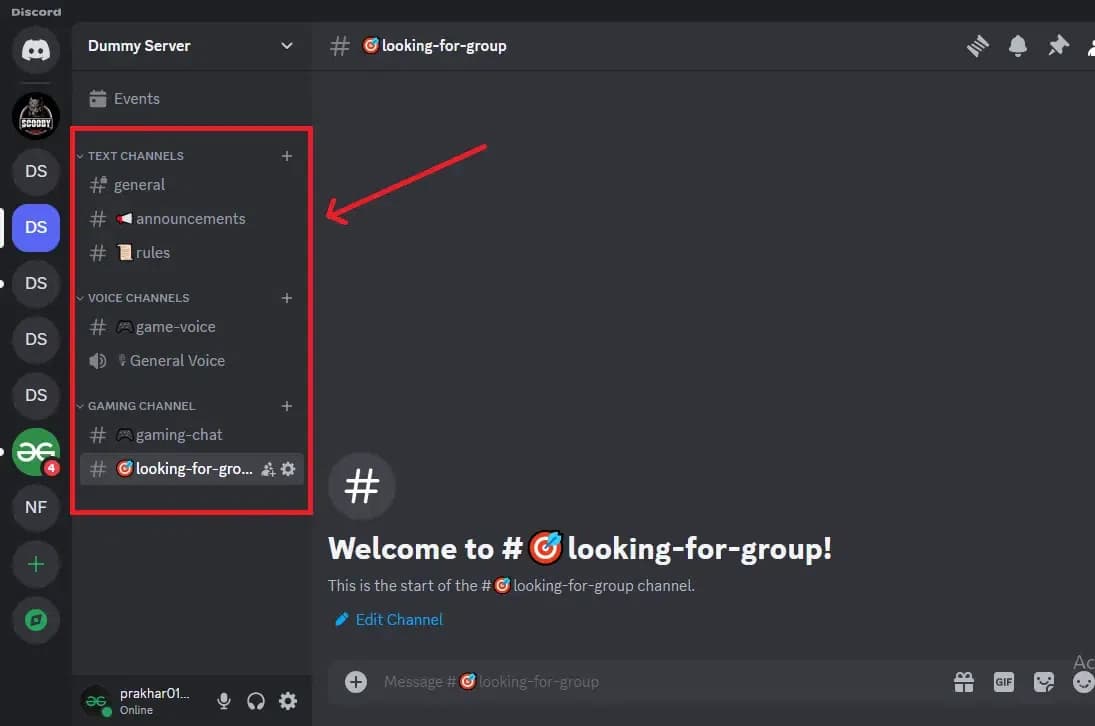
A strong starter setup might include:
#welcome#rules#announcements#introductions#general-chat#mediaor#showcase#events1 to 3 niche-specific channels
1 to 2 voice channels
Every channel should have a purpose. If a channel rarely gets used, remove it or merge it.
Less clutter usually means more activity per channel, and that makes the server feel more alive.
3. Improve your branding
People judge communities quickly.
Your server icon, name, banner, description, and first impression all shape whether someone thinks your server is worth their time.
Good branding does not need to be expensive. It just needs to feel intentional.
Focus on:
A clean server icon
A memorable server name
A consistent theme
A short description that explains the value
A welcome experience that feels polished
If your server looks half-finished, people assume the community is half-finished too.
4. Set clear roles and channels
Good communities reduce confusion.
Members should know:
where to chat
where to post content
what each role means
how to get access to extra sections
where to ask for help
Avoid overcomplicated role systems early on. Most smaller or mid-sized servers do not need 25 decorative roles and 10 hidden role pathways.
Instead, use roles for things that matter:
identity
interest categories
notifications
access
recognition
Clarity increases participation because people do not have to guess how the server works.
5. Build a proper welcome flow
Many servers spend lots of time trying to get invites, then waste those invites with a weak onboarding experience.
The first few minutes after joining matter a lot.
A strong welcome flow should:
explain what the server is about
show where to start
make the first action obvious
reduce overwhelm
A good example might be:
member joins
sees a short welcome message
picks interest roles
gets directed to
#introductionsreceives a prompt like "Tell us what brought you here"
This is much better than dropping people into a giant server and hoping they figure it out.
Discovery
6. List your server on directories
Many communities ignore one of the easiest growth channels.
Submit your server to relevant directories and server discovery platforms. If your server is public and well-presented, these platforms can bring a steady flow of targeted users.
Make sure your listing includes:
a clear title
a concise description
relevant tags
a good icon
an invite that works
a reason to join now
Do not just list the server once and forget it. Update your listing, improve your copy, and test different descriptions.
7. Optimise your server description
Your server description is one of your strongest conversion tools.
Whether it appears on a directory, landing page, social media post, or invite page, it needs to answer one key question:
Why should someone join this server?
A good description should include:
who it is for
what members can expect
what makes it different
a light reason to act now
Weak description:
Join our fun Discord server!
Better description:
Join a fast-growing community for Discord owners, creators, and online community builders. Get feedback, promotion opportunities, growth tips, and active discussions every day.
Specificity beats vagueness almost every time.
8. Create content outside Discord
If nobody knows you exist, your server will not grow.
One of the best ways to grow in 2026 is to use content as the top of your funnel. Short-form content, blog posts, videos, clips, X posts, Reddit posts, and carousels can all bring targeted people into your community.
You do not need to be everywhere. Choose one or two channels and stay consistent.
Examples:
Post tips on TikTok or Instagram Reels
Share niche threads on X
Write blog content targeting search traffic
Make YouTube videos that naturally lead into your server
Post helpful answers in Reddit communities where allowed
Content works because it builds trust before the join.
People are much more likely to join a server after seeing useful content from the owner.
9. Partner with aligned communities

A lot of server owners either ignore partnerships or do them badly.
The goal is not to spam random servers with partnership requests. The goal is to find communities with a similar audience but a different purpose.
For example:
a fitness server could partner with a nutrition-focused server
an entrepreneurship server could partner with a design or productivity community
a gaming server could partner with a clips or tournament community
Good partnerships can include:
announcement swaps
shared events
collab content
giveaways
community shoutouts
The best partnerships help both sides grow.
10. Use social proof in your promotion
People trust communities that already feel active and real.
When promoting your server, highlight proof like:
active discussions
successful events
member testimonials
screenshots of activity
milestones
collaboration wins
Social proof reduces hesitation.
Someone is much more likely to join a server if they see:
real conversations
regular events
happy members
visible momentum
Do not fake activity. But do showcase the best parts of your community.
Conversion
11. Reduce friction when people join
Every extra step loses people.
If your joining process is too long, too confusing, or too restrictive, fewer new members will convert into active users.
Check your experience for friction points:
Is the verification process too annoying?
Are people stuck not knowing where to go?
Are too many channels hidden too early?
Is the rules page too long?
Are instructions clear?
Keep essential moderation and safety in place, but avoid making the join feel like paperwork.
The easier it is to get into the right part of the community, the better your conversion rate.
12. Make first interaction easy
Lurkers are normal. Many people want to observe before speaking.
Your job is to lower the energy required for a first message.
Simple prompts help a lot:
"What brought you here?"
"What game are you currently playing?"
"What is your biggest goal this month?"
"Rate your setup out of 10"
"What are you working on today?"
This is why intro channels, daily question channels, and polls work so well.
Do not wait for members to magically break the ice. Make it easy for them.
13. Start conversations proactively
Dead silence kills growth.
Even good servers can feel abandoned if nobody is actively leading conversation. In the early stages especially, community owners and moderators often need to seed discussions intentionally.
Ways to do that:
ask open-ended questions
comment on member posts
tag members when relevant
share timely news in your niche
post mini challenges
create "hot take" or opinion threads
The goal is not just activity for the sake of it. The goal is to create reasons for people to reply.
Activity attracts activity.
14. Use events to turn lurkers into members
Events are one of the strongest tools for growth because they create urgency, interaction, and habit.
Examples:
Q&A sessions
game nights
voice hangouts
feedback sessions
workshops
live watch parties
weekly community challenges
debates or themed discussions
Why events work:
they give people a reason to show up at a specific time
they create shared experiences
they make the server feel alive
they give lurkers a low-pressure way to join in
A server with events feels like a community. A server without them often feels like a waiting room.
15. Reward participation, not just presence
Many communities only reward time spent in the server. That often leads to passive member counts and low-quality engagement.
A better system rewards actual participation.
Examples:
shoutouts for helpful members
badges for contributors
access to bonus channels
spotlight posts
event winner roles
leaderboard-style recognition
community member of the week
Recognition matters because it makes people feel seen.
If active members feel appreciated, they are far more likely to keep contributing.
Retention
16. Create recurring events
One-off events are helpful, but recurring events build habit.
If your members know that every week there is something happening, your server becomes part of their routine.
Examples:
Monday goal check-ins
Wednesday game night
Friday voice chat
monthly showcase
monthly community awards
monthly server review
seasonal challenges
Recurring events reduce the chance that members forget about your server.
Consistency often beats intensity.
17. Build identity and belonging
People stay where they feel like they belong.
This is why the strongest servers develop inside jokes, traditions, recognisable members, and a shared culture.
You can build that by:
giving your community a name
celebrating milestones publicly
creating recurring memes or traditions
spotlighting members
making achievements visible
encouraging shared ownership
Growth is not just about getting more members. It is about making members feel like this is their place.
That sense of identity is what turns casual users into loyal members.
18. Give members a reason to come back
Ask yourself honestly:
Why would someone come back tomorrow?
If the answer is vague, that is a problem.
People return for:
active conversation
useful information
events
friendships
recognition
updates
content
opportunities
If nothing changes in your server and nothing happens regularly, people have no reason to revisit it.
Create loops that pull people back in:
daily prompts
weekly updates
exclusive resources
recurring discussions
rotating themes
event announcements
progress check-ins
A sticky server gives people something to look forward to.
19. Collect feedback and adapt
Many server owners guess what members want. The best ones ask.
You can collect feedback through:
polls
suggestion channels
anonymous forms
feedback threads
moderator discussions
member interviews
Look for patterns like:
channels people ignore
events people enjoy most
confusion during onboarding
common complaints
requests for new features or changes
Your community will change as it grows. Good community builders adapt with it.
20. Track what actually drives growth
If you are serious about growth, measure it.
Do not just look at member count. Member count alone can be misleading.
Track things like:
joins per week
messages per day
returning active members
event participation
intro channel activity
invite sources
partnership results
content-driven joins
retention after 7 days
retention after 30 days
This helps you answer questions like:
Which promotion channel works best?
Which event gets the strongest turnout?
Are new members becoming active?
Is growth improving or only membership count?
What gets measured gets improved.
Common Mistakes That Stop Discord Growth
Even good communities can stall if they fall into these traps:
Being too broad
If your positioning is unclear, fewer people will feel strongly drawn to it.
Overbuilding too early
Too many channels, too many roles, and too many systems can make a small server feel empty.
Ignoring onboarding
A bad first impression wastes traffic.
Promoting before fixing the server
Do not pour water into a bucket with holes.
Chasing member count over community quality
A smaller active server is more valuable than a larger dead one.
Inconsistent leadership
Communities usually reflect the energy of their owners and moderators.
A Simple 30-Day Growth Plan
If you want to apply this quickly, here is a practical 30-day plan.
Week 1: Fix the foundation
define your niche clearly
clean up channels
improve the branding
rewrite the description
simplify onboarding
Week 2: Improve discoverability
list the server on directories
start posting content outside Discord
prepare a partnership list
gather social proof screenshots
Week 3: Improve conversion
add easy first-message prompts
schedule one event
seed more conversations
review friction in the joining process
Week 4: Improve retention
launch a recurring event
create a recognition system
ask members for feedback
track joins, activity, and retention
This alone can create a big difference in how your server performs.
Final Thoughts
The best way to grow your Discord server in 2026 is not to rely on one trick.
It is to build a server that is:
clear
easy to join
worth talking in
active
memorable
consistent
Growth usually comes from the combination of better structure, better positioning, better onboarding, better activity, and better retention.
If you only focus on promotion, you might get more joins, but not more community.
If you focus on building a genuinely valuable place that people want to return to, growth becomes much easier and much more sustainable.
That is the real goal.
Not just a bigger server.
A better one.
FAQ
How do I grow my Discord server fast?
The fastest way is usually a combination of better positioning, strong onboarding, content promotion, events, and partnerships. Growth is much easier when the server is already clear and active.
What is the best way to get more Discord members?
The best long-term method is to make your server discoverable and worth staying in. Server directories, content marketing, community partnerships, and recurring events all help bring and keep members.
Why do people join my Discord server and leave?
This often happens because the server feels confusing, inactive, too broad, or overwhelming. Poor onboarding and lack of conversation are also common reasons.
Do Discord server partnerships still work in 2026?
Yes, but only when they are relevant and mutually beneficial. Random partnership spam is ineffective. Strategic partnerships with aligned communities still work well.
What matters more, members or activity?
Activity. A smaller server with active conversations and loyal members is usually healthier and easier to grow than a larger server full of inactive users.
How often should I host events?
At least one recurring event per week is a strong starting point for most communities. Consistency matters more than scale.
Quick Reference Checklist
Define a clear niche
Simplify channel structure
Improve server branding
Set clear roles and channel purposes
Build a better welcome flow
List on server directories
Rewrite your server description
Create content outside Discord
Build relevant partnerships
Use social proof in promotion
Reduce join friction
Make first interaction easy
Seed conversations consistently
Run community events
Reward participation
Create recurring event cycles
Build identity and belonging
Give members reasons to return
Collect feedback
Track what actually drives growth


Comments
3Sign in to join the conversation
Sign in