
What if an open-world RPG didn't want you to see everything?
What if the game actively encouraged you to miss quests, abandon opportunities, and accept that some characters might simply disappear from your story?
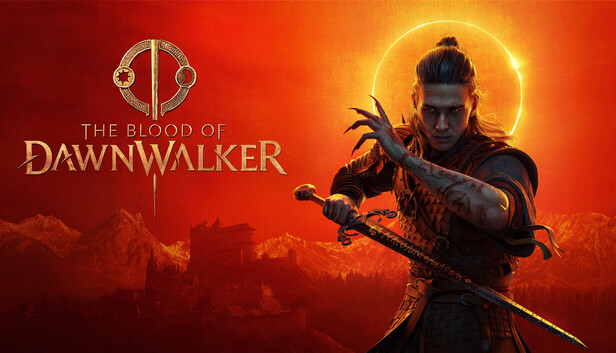
That's the fascinating question at the heart of The Blood of Dawnwalker, the debut action-RPG from Rebel Wolves.
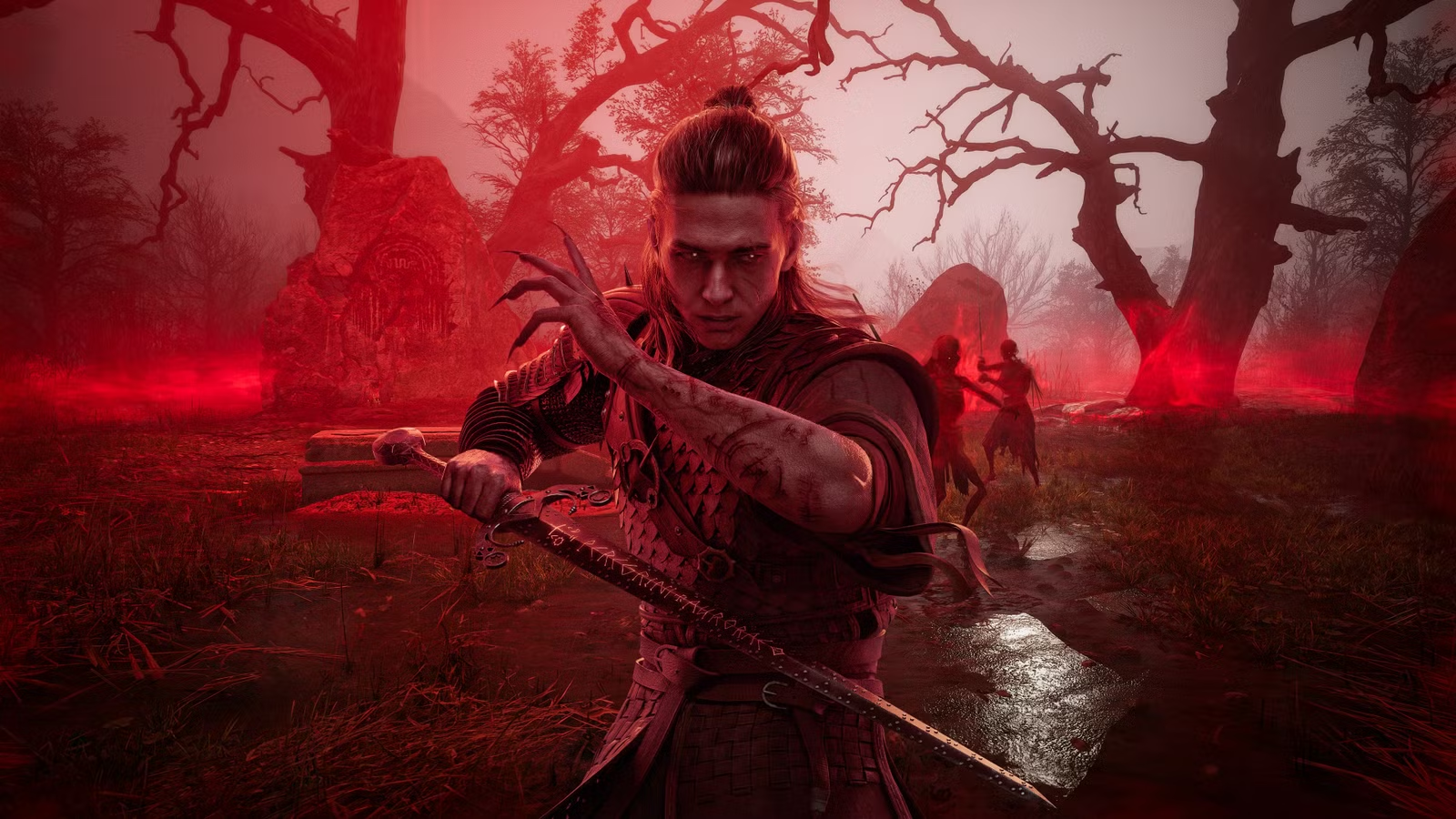
The game drops players into a brutal alternate version of 14th-century Europe, where vampires have emerged from the shadows amid war and the devastation of the Black Death. You play as Coen, a young man transformed into a Dawnwalker—human during the day and vampire at night.
But there's a catch.
Coen has only 30 days and 30 nights to save his family.
That single idea changes almost everything about how you approach the RPG.
Instead of asking, "How much can I complete?"
The Blood of Dawnwalker asks:
"What is worth my time?"
And that's what makes it so compelling.
The 30-Day Clock Changes the Open-World Formula
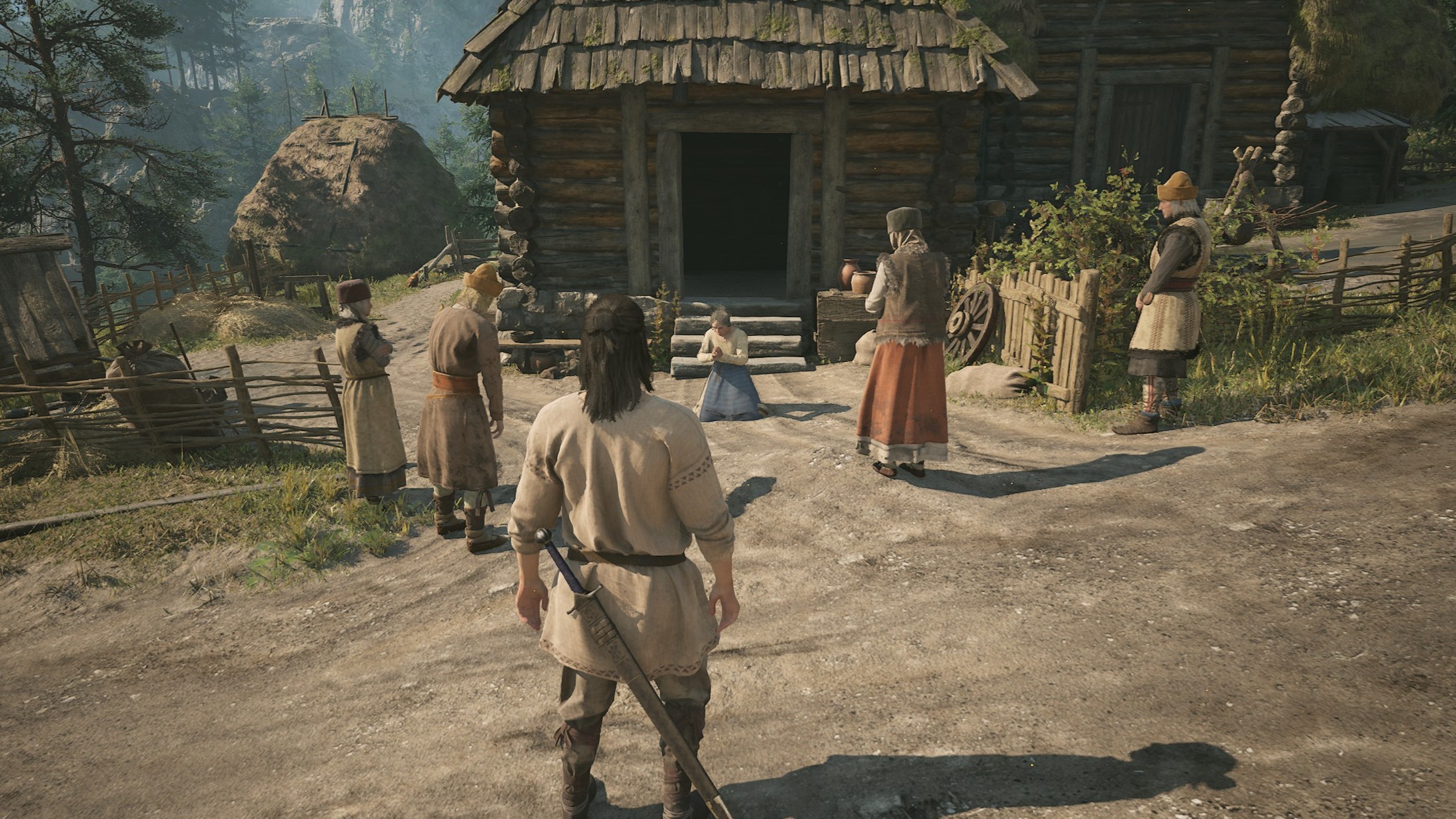
Most open-world RPGs reward you for doing everything.
See a question mark?
Investigate it.
NPC needs help?
Accept the quest.
Bandit camp?
Clear it.
Random cave?
Explore it.
Finally, Ignoring a Quest Can Be the Right Choice
This may be the most refreshing part of Dawnwalker.
In most RPGs, ignoring a quest feels like playing incorrectly.
The game has given you content, so you're expected to consume it.
Dawnwalker flips that relationship.
If you don't have enough time to help someone, leaving them behind can actually make sense within the story.
That creates a strange but powerful psychological effect.
When an NPC offers you a quest, you're not automatically thinking about rewards.
Day and Night Aren't Just Visual Changes
The other major idea holding The Blood of Dawnwalker together is its day/night system.
Coen isn't simply a vampire with a cool transformation animation.
His entire approach to the game changes depending on the time of day.
During daylight, Coen operates primarily as a human.
At night, his vampiric abilities become available.
That distinction fundamentally changes exploration, combat and even how you approach certain situations.
This creates something unusual for an action RPG.
Instead of having one character build that works everywhere, Dawnwalker effectively gives players two complementary identities.
Human Coen: Technique, Steel and Magic
The human side of Coen feels closer to the traditional action-RPG hero.
Swordplay becomes the foundation.
Blocking matters. Perfect blocks can create openings, stamina needs to be managed and weapon abilities add additional options to combat. Coen can also develop Witchcraft and Swordmastery abilities, giving the human side considerably more depth than simply being "the weaker form."
This is important because the human form isn't supposed to feel like something you tolerate until sunset.
It has its own strengths.
During the day, Coen can also move through certain human-controlled locations more naturally. A vampire might need to sneak around or approach an area differently, while human Coen can sometimes simply walk through the front door and start asking questions.
That's where the day/night system becomes more than combat.
It becomes a role-playing system.
Vampire Coen: Speed, Hunger and Violence
Then the sun goes down.
And everything changes.
Vampire Coen is faster, more mobile and significantly more dangerous.
He can use supernatural abilities that simply aren't available during daylight, including powerful movement and combat techniques. Vampire powers can allow Coen to rapidly close distance, reposition around enemies and feed on them to sustain himself.
But being a vampire isn't simply an upgrade.
It's a temptation.
It's making you experience that conflict through gameplay.
Two Classes, One Character
Calling the human and vampire forms "classes" doesn't quite capture what Rebel Wolves is doing.
They're more like two different philosophies of play.
Human Coen encourages preparation, technique and conventional combat.
Vampire Coen encourages aggression, mobility, supernatural abilities and blood management.
It's a surprisingly elegant solution to a common RPG problem: how do you give players multiple playstyles without forcing them into a permanent build?
Dawnwalker simply makes the world decide.
The Witcher 3 Influence Is Obvious
Rebel Wolves was founded by veterans associated with CD Projekt Red, and the influence of The Witcher 3 is impossible to miss.
The open world.
The morally complicated characters.
The emphasis on quests.
The dark historical fantasy setting.
The idea that decisions can produce consequences long after the original choice.
That is a significant philosophical difference.
The Clock Creates a Different Kind of RPG Anxiety
There's something uncomfortable about realizing that you can't do everything.
And that's exactly why the 30-day system works.
You're constantly aware that time is finite.
You might discover a fascinating location and immediately wonder whether exploring it is worth consuming another time segment.
It's almost like the RPG is asking you to role-play someone who genuinely has somewhere to be.
That sounds obvious.
But very few open-world games actually make time feel valuable.
The System Isn't Perfect
The 30-day mechanic is also one of the game's most controversial ideas.
Some players may find the pressure restrictive, particularly if they approach RPGs with a completionist mindset.
That's understandable.
If you're accustomed to clearing every side quest, collecting every item and exploring every corner of a map at your own pace, Dawnwalker's philosophy can feel almost hostile.
The game wants you to leave things unfinished.
But ambition doesn't guarantee that every player will enjoy the result.
Combat Is Better When You're a Vampire
The human combat is solid.
But the vampire combat is where Dawnwalker develops its own personality.
There's something inherently satisfying about suddenly gaining supernatural movement after spending time fighting conventionally.
You can close distances almost instantly.
You can reposition around enemies.
You can use blood-based abilities.
You can feed.
Dawnwalker largely succeeds at that.
The World Has Teeth of Its Own
Vale Sangora is another major strength.
The setting combines medieval European history with supernatural horror, creating a world where human conflict, disease, religious tension and vampiric domination overlap.
The result is a setting that feels appropriately miserable.
And that's a compliment.
That gives the world more texture than a simple humans-versus-monsters narrative.
Choice Matters Because Failure Is Allowed
Another strength of Dawnwalker is its willingness to let things go wrong.
You can fail quests.
You can make bad decisions.
Characters can die.
You can miss opportunities.
Different relationships.
Different regrets.
That's exactly what a choice-driven RPG should aim for.
Where The Blood of Dawnwalker Really Succeeds
The biggest achievement here isn't any individual mechanic.
It's how the mechanics reinforce the same central theme.
Time is running out.
The 30-day system reinforces urgency.
The day/night cycle reinforces Coen's dual identity.
The human/vampire systems reinforce his internal conflict.
What Could Be Better?
Dawnwalker isn't flawless.
Some combat encounters can feel more conventional than the game's premise suggests, particularly when you're fighting groups of enemies in traditional sword-fighting scenarios.
The time system also doesn't always feel as transformative as its premise suggests.
In theory, 30 days should create constant panic.
In practice, the generous structure and segmented time system can make the pressure feel more manageable than expected.
Why The Blood of Dawnwalker Matters
Rebel Wolves has done something impressive with its first game.
It hasn't simply created another open-world RPG.
It has identified some of the biggest conventions of the genre and asked what happens when you deliberately undermine them.
Open worlds usually encourage completionism.
Dawnwalker encourages prioritization.
RPGs usually let you spend as much time as you want.
Dawnwalker gives you a deadline.
🎮 The Bottom Line
The Blood of Dawnwalker is one of the most interesting dark fantasy RPGs to arrive in 2026.
It isn't perfect.
Its conventional combat can occasionally expose the influence of other action RPGs, and the 30-day clock may frustrate players who want unlimited time to explore every corner of the world.
But when its systems come together, Dawnwalker becomes something genuinely special.
The 30-day deadline makes every decision feel more personal.
The day/night cycle turns time into a gameplay mechanic.
And in The Blood of Dawnwalker, you don't have forever to figure out the answer.
You have 30 days.
Use them wisely.
What do you think of The Blood of Dawnwalker? Does the 30-day limit make the RPG more immersive, or would you rather have unlimited time to explore Vale Sangora? Let us know in the comments.