
Minecraft Beats Itself: The Simulation That Took 2 Billion Years to Slay the Ender Dragon
A good speedrunner can kill the Ender Dragon in under seven minutes. Minecraft, left completely alone with no player at all, needs about 1.975 billion years.
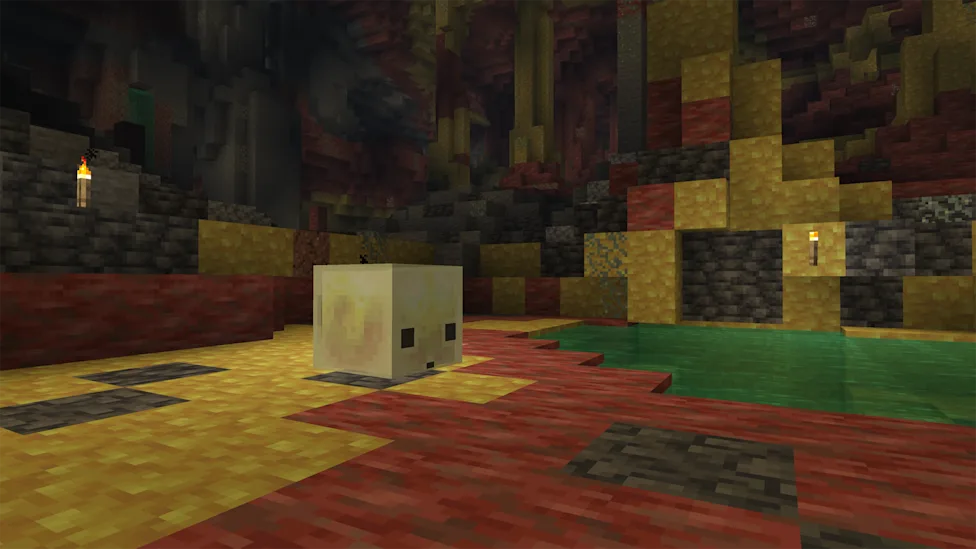
That is the headline result of a strange, brilliant experiment that has taken over gaming feeds this week. And the real star is not an AI model or a pro player. It is a lonely snow golem that wandered The End for 18 million years.
🔥 Main Story: Minecraft Beats Itself Without a Player
YouTuber RedLogic set out to answer a question that sounds like a joke: can Minecraft beat itself?
In his video "Running Minecraft Until It Beats Itself," he modeled a world with no player input and tracked whether random mob behavior could ever lead to the Ender Dragon's death and the end credits.

The answer was yes. As Dexerto's breakdown of the experiment explains, the dragon finally fell in year 1.975 billion, long after the world's villagers had gone extinct and Creeper craters had scarred the snowy biomes.
The story spread fast. Dexerto's post about it on X crossed 2.9 million views within days.
🎮 What Happened
The idea did not start with RedLogic. He was testing a theory from fellow YouTuber RetroGamingNow, who suggested a chain of accidents that could, in principle, carry a world all the way to the finale.
The chain works like this:
Enderman places pumpkin → Snow golem forms → Creepers blast a path → Golem breaks End Crystals → Creepers damage the dragon → Credits roll
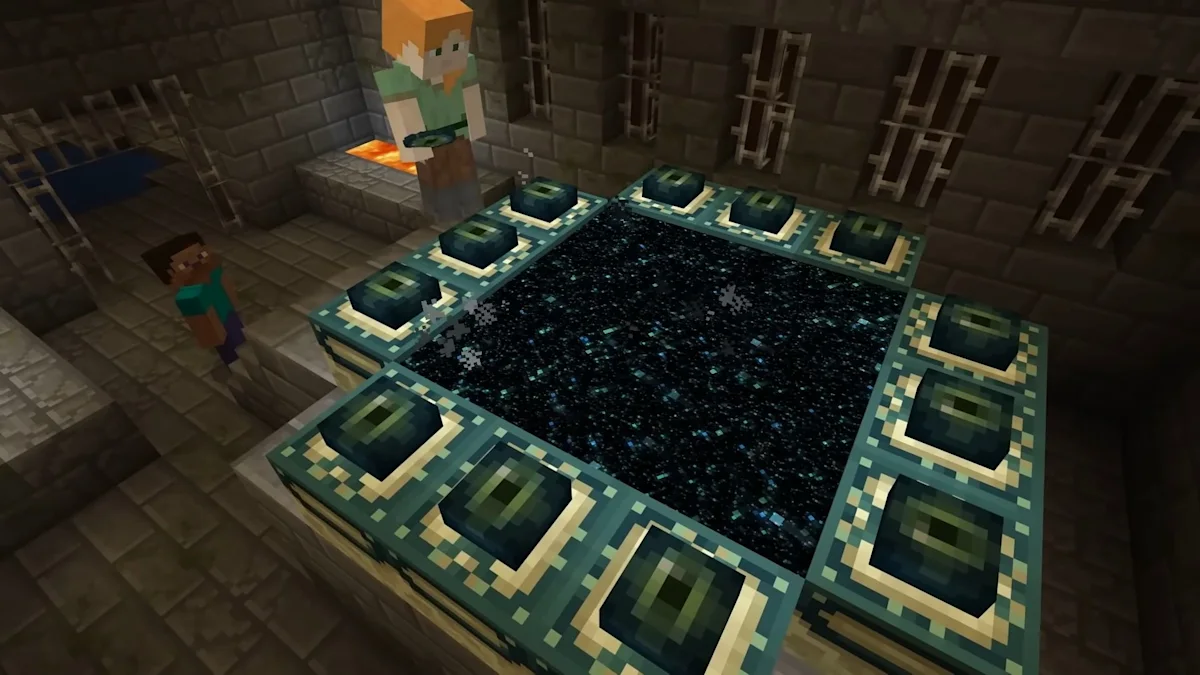
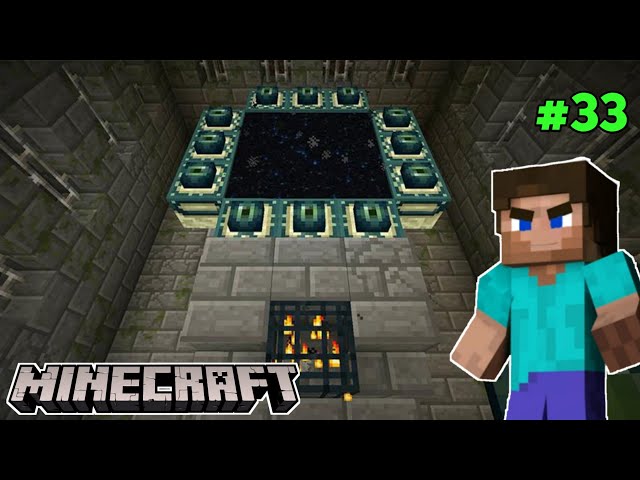
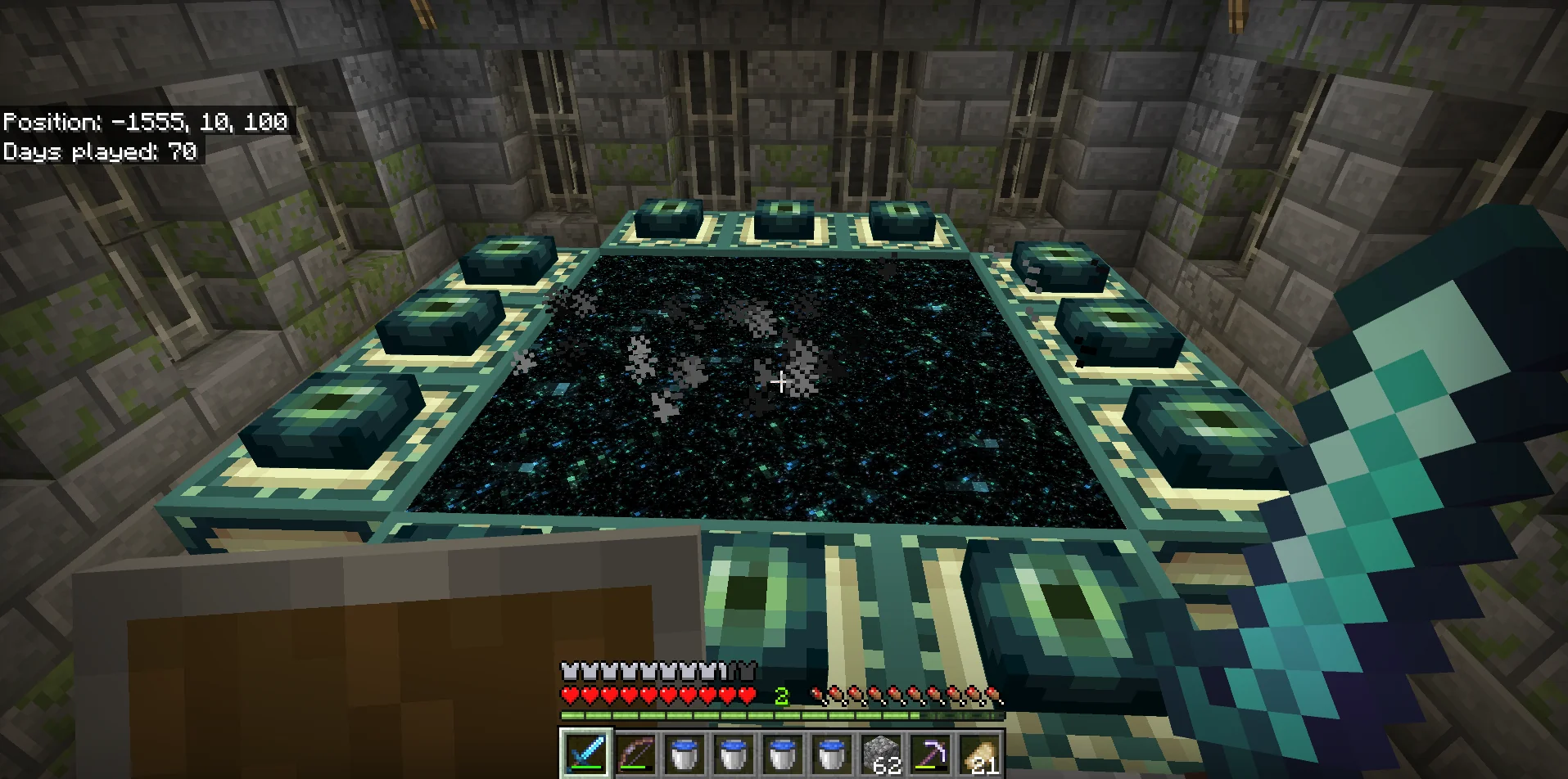
There was one big obstacle. Mobs cannot craft Eyes of Ender or place them in a portal frame. So RedLogic found a seed where the End portal generates with all 12 eyes already filled, buried beneath an ice spikes biome.
That detail matters. In normal Minecraft, each portal frame has a small chance of spawning with an eye, so a fully complete portal is roughly a one in a trillion event. The world also needed a snowy biome, because without it the snow golem part of the chain never starts.
🧠 Why It Matters
On the surface, this is a meme. Underneath, it is a clever piece of probability modeling wrapped in a game almost everyone understands.
Nobody can actually run a Minecraft world for two billion years. So RedLogic built a Monte Carlo simulation that compressed billions of ordinary game ticks into statistically sampled waiting times, while tracking only the rare events that could push the chain forward or break it.
That approach is the same basic idea researchers use to model rare events in physics, finance and engineering. RedLogic just pointed it at Creepers.
It is also a reminder of why Minecraft has lasted. Its systems are simple enough to explain in one sentence, yet deep enough that they can, given absurd amounts of time, produce a full playthrough on their own.
⚡ Key Details
| Detail | Information |
|---|---|
| Creator | RedLogic (YouTube) |
| Original Theory | RetroGamingNow |
| Method | Monte Carlo simulation |
| Player Input | None |
| Key Requirement | Seed with a fully activated 12 eye End portal |
| Biome | Portal under an ice spikes biome |
| Total Time | About 1.975 billion simulated years |
| Video Published | September 21, 2026 |
🔍 Deeper Breakdown
The Timeline of a Very Slow Speedrun
The milestones read like a geology textbook. According to Dexerto, an Enderman grabbed the crucial pumpkin in year 33,477, and Creepers opened the route to the portal a few thousand years later.
Then things slowed down dramatically. A snow golem needed nearly 3 million years to destroy its first End Crystal, and it only did so because it missed a snowball it had aimed at an Enderman.
| Milestone | Approximate Simulated Year |
|---|---|
| Enderman grabs the key pumpkin | 33,477 |
| Route to the portal opens | A few thousand years later |
| First End Crystal destroyed | Nearly 3 million |
| Ninth crystal destroyed | 181 million |
| Dragon at 98% health | Almost 250 million |
| Ender Dragon dies | 1.975 billion |
The Golem That Refused to Quit
The breakout character of the experiment is one snow golem. After taking out the ninth crystal in year 181 million, it roamed The End for 18 million years before hitting the last one.
Even after almost a quarter of a billion years, the dragon had lost only about 2 percent of its health, according to VGTimes' summary. The rest of the damage had to come from Creepers exploding at exactly the right moments, which is why the final stretch took so long.
What We Know
Confirmed by the creator's video and multiple reports: the simulation used no player input, depended on a special seed with a completed portal, and reached the dragon kill at roughly 1.975 billion years.
Less clear: the full technical details. As GamesRadar's report on Yahoo points out, the inner workings of the simulation sit behind RedLogic's Patreon, so outside observers cannot fully audit every assumption. Treat the exact number as the output of one model, not a law of nature.
What It Is Not
Some viral posts describe this as an AI beating Minecraft. That is not accurate. No machine learning model played the game. The mobs follow Minecraft's normal behavior, and the simulation simply estimated how long rare combinations of that behavior would take.
Funny enough, actual AI has had a rougher time. Earlier this month, Dexerto reported that OpenAI's GPT 6 Astra lost its chest and bed to a Creeper and spent hours farming potatoes afterward.
📊 Quick Comparison
| Run | Who Plays | Time to Kill the Dragon |
|---|---|---|
| Speedrun world record (random seed) | Skilled human | 6 minutes 39 seconds |
| Typical first playthrough | Average player | Days to months |
| RedLogic's simulation | Nobody at all | About 1.975 billion years |
The random seed record belongs to Skycrab, per the Minecraft speedrunning records. The gap between that and the simulation says everything about how much a player actually does.
💡 Creator Note
This experiment is a masterclass in format for YouTubers and Discord communities.
- Ask an absurd but simple question. "Can Minecraft beat itself?" needs zero explanation, which is exactly why it spreads.
- Borrow good ideas and credit them. RedLogic built on RetroGamingNow's theory, and the collaboration made the story stronger.
- Give the data a character. The 18 million year golem turned a spreadsheet into a story people wanted to share.
- Build community discussion around it. Servers can run debates on which mob deserves MVP, or challenge members to find other "impossible" chains the game could complete alone.
For educators, this is also a surprisingly good way to introduce probability and simulation to students who would never read a statistics textbook.
🚨 What Happens Next
A few things are worth watching.
- Follow up experiments. Viral hits in this genre often spawn copycats testing other games or other versions of Minecraft.
- Community verification. Technical players may try to reproduce parts of the chain in real worlds to test the model's assumptions.
- Version changes. Any future Mojang update that tweaks mob behavior could change the math entirely, for better or worse.
Final Takeaway
There is something oddly moving about this experiment. Minecraft is famous for what players build in it, yet here is proof that its world, left alone, still carries a faint path to the ending.
It just walks that path at the speed of continents drifting. Two billion years, one stubborn golem, and a lot of very lucky Creepers.
Next time you die to the Ender Dragon, take comfort. The game itself needed a head start from the universe to pull it off.