
The Kick “Fence Jump” Disaster: Why IRL Stunts Are Crossing the Line
IRL streaming has always depended on unpredictability. A creator walks through a crowded city, attends a festival, interviews strangers, or broadcasts from an event where anything can happen.
But there is a growing difference between documenting an unpredictable moment and deliberately creating a dangerous one.
That distinction came into sharp focus after Brazilian streamer Adalton Rodrigues, known online as Lodk, reportedly suffered a serious finger injury while attempting to jump a fence at Rock in Rio. The streamer already had a ticket to the festival, but reportedly wanted to test whether the event’s security could be bypassed. During the stunt, his ring became caught on the fence, causing a devastating injury.
The incident was not reported as a Kick-specific event. It was broadcast on Twitch, making the story relevant to the wider livestreaming industry rather than one platform alone.
The bigger question is not simply why someone attempted the stunt. It is why dangerous behaviour continues to become more attractive when a camera, a live audience, and the possibility of viral attention are involved.
────────────────────────────────────────
What Happened During the Fence Jump?
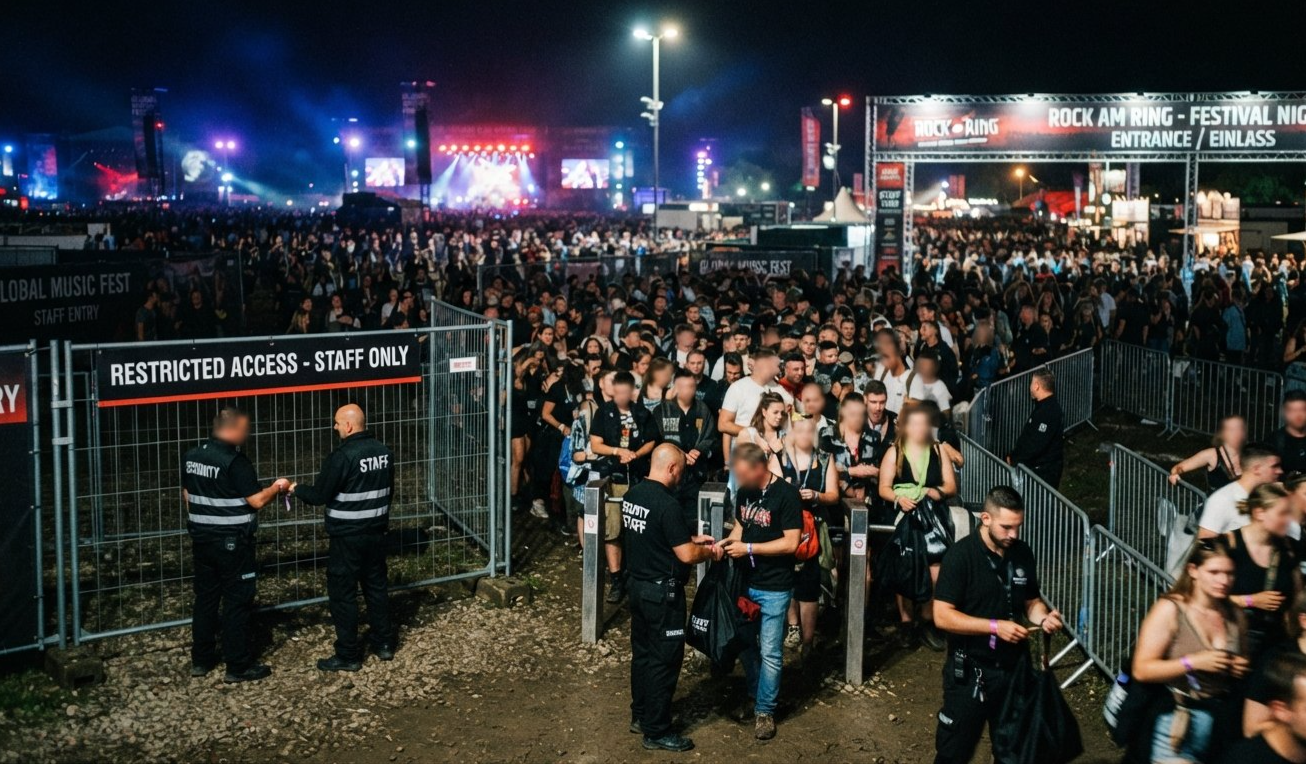
According to reports, Lodk was attending Rock in Rio and attempted to climb or jump a restricted fence while a friend filmed the incident for a livestream.
The streamer reportedly wanted to expose weaknesses in the festival’s security system. However, the attempt went badly when his ring caught on the fence. Reports described extensive damage to the finger, with the injury requiring hospital treatment.
The detail that makes the incident especially difficult to justify is that the streamer reportedly already possessed a valid ticket for the event.
That means the stunt was not apparently driven by a lack of access. It was performed to test security, create content, or demonstrate that a restricted area could be breached.
Those goals may sound different, but they share the same problem: the creator turned a real-world safety barrier into a prop.
────────────────────────────────────────
The Difference Between Investigative Content and Reckless Content
There is a legitimate role for creators who investigate event security.
A streamer might document:
- Confusing entry procedures
- Poorly marked exits
- Overcrowded checkpoints
- Inconsistent bag searches
- Accessibility problems
- Weak communication from event staff
- Long queues and unsafe crowd movement
That kind of reporting can be useful. It gives audiences a view of how large events operate and may help organisers identify problems.
However, there is a major difference between documenting a weakness and physically exploiting it.
An investigation should ideally observe, record, ask questions, and present evidence. A stunt crosses into reckless territory when the creator deliberately climbs barriers, enters restricted zones, interferes with staff, or places themselves and others in danger.
The fence incident illustrates how quickly the pursuit of a dramatic “proof” moment can overwhelm the original journalistic purpose.
A creator may begin by claiming to test security, but the resulting content can become less about public safety and more about the spectacle of someone taking a risk.
────────────────────────────────────────
Why IRL Streaming Encourages Riskier Decisions
Traditional video production usually has a gap between an event and publication. A crew can stop recording, review footage, remove dangerous material, and decide whether the story is worth publishing.
Live streaming removes much of that distance.
The audience is present while the decision is being made. Viewers can react instantly, encourage the creator, donate money, or challenge them to go further. The streamer may feel pressure to keep the broadcast exciting, especially if the stream has become quiet or engagement is falling.
This creates a dangerous feedback loop:
Audience pressure → Riskier stunt → More attention → Greater pressure to repeat the behaviour
The problem is not that every viewer wants someone to get hurt. Many viewers may be watching out of curiosity or concern. But livestreaming rewards attention in real time, and dangerous moments often produce the strongest immediate reactions.
A creator can therefore begin to associate risk with performance.
The “One More Step” Problem
Most dangerous IRL incidents do not begin with a plan to suffer a serious injury.
They often begin with a sequence of smaller decisions:
- Walk toward a restricted area.
- Notice that staff are not immediately present.
- Decide to move closer.
- Start filming the attempt.
- Continue because viewers are watching.
- Take one final step that cannot be safely reversed.
The final action may look sudden on camera, but the risk usually develops over several smaller choices.
────────────────────────────────────────
Why Platform TOS Matters
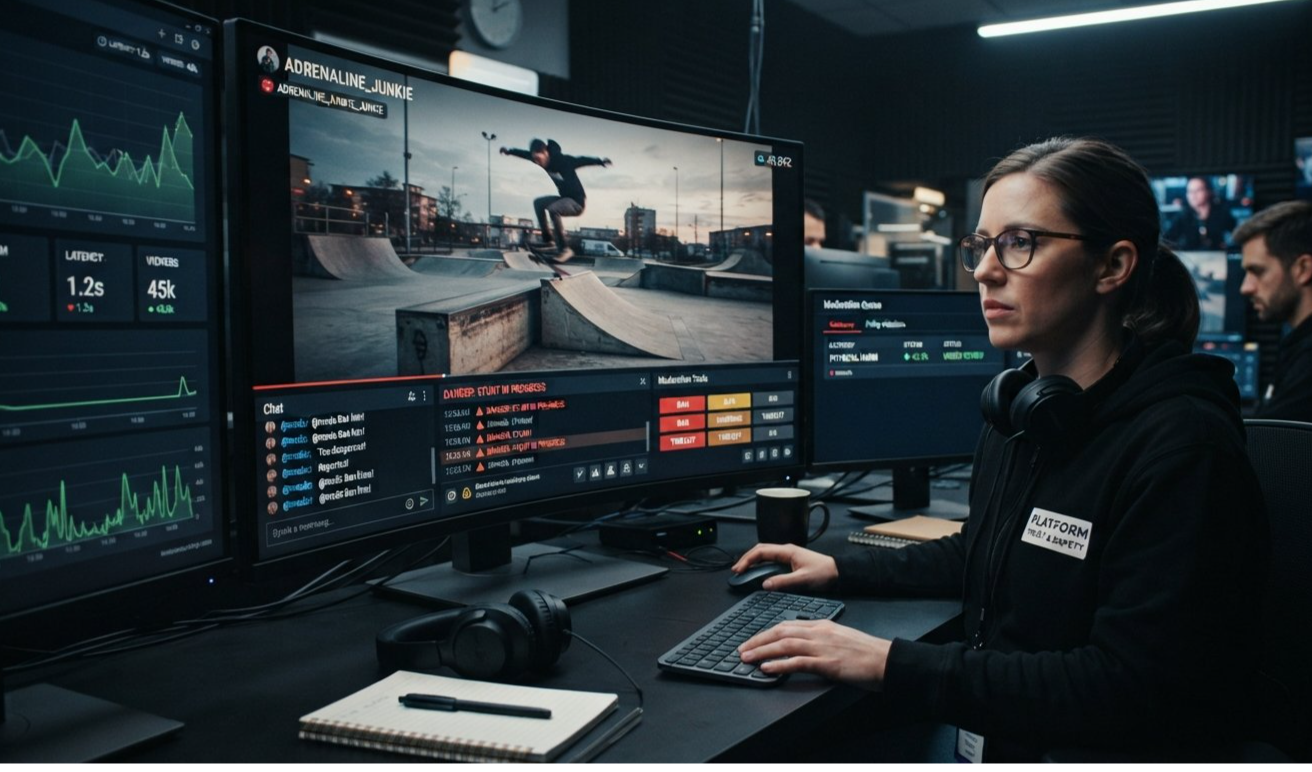
The incident also raises questions about how streaming platforms handle dangerous real-world behaviour.
A platform’s rules are not simply about whether a creator breaks a law. They may also address dangerous acts, harassment, trespassing, public disruption, threats, or content that encourages viewers to imitate harmful behaviour.
The precise response depends on the platform’s current rules, the circumstances of the broadcast, and whether the conduct created a credible risk to the creator, event staff, or members of the public.
Possible Platform Concerns
Behaviour | Why it may create a TOS issue |
|---|---|
Climbing a restricted fence | May involve trespassing or unsafe conduct |
Evading event security | Can interfere with venue operations |
Encouraging viewers to copy the stunt | May promote dangerous imitation |
Entering restricted areas while live | Can create security and public-safety risks |
Ignoring staff instructions | May escalate into harassment or disruption |
Continuing after an injury | Can create further medical danger |
A platform does not necessarily need to wait until someone is seriously injured before reviewing the content.
The central issue is foreseeable harm. If a creator knowingly performs a dangerous stunt for attention, the platform may reasonably consider whether the broadcast violated rules concerning unsafe or disruptive behaviour.
────────────────────────────────────────
Is This a Kick Problem or a Livestreaming Problem?
The title of this story points toward Kick because the platform has become closely associated with high-risk IRL content and controversial creator behaviour.
However, this particular fence incident was reported as a Twitch livestream. That distinction matters.
It would be inaccurate to describe the injury as proof that Kick caused the incident or that Kick introduced a specific new rule because of it. The available reporting does not establish a platform-wide Kick policy change connected to the event.
Instead, the incident exposes a broader problem shared by livestreaming platforms:
- Twitch
- Kick
- YouTube Live
- TikTok LIVE
- Other emerging streaming services
Each platform competes for creators and viewers. Each also has to decide how far it will allow real-world content to go before entertainment becomes a public-safety concern.
The competitive pressure can be complicated. A platform may want energetic, unpredictable streams because they generate engagement. At the same time, it cannot ignore conduct that creates serious risks for venues, bystanders, emergency responders, or the creators themselves.
────────────────────────────────────────
Why “I Was Testing Security” Is Not a Complete Defence
Claiming to test security can provide context, but it does not automatically make a stunt responsible.
A proper security test normally requires permission, a defined scope, safety controls, and coordination with the organisation being assessed.
A person climbing a fence without permission is not conducting a controlled penetration test. They are attempting to bypass a barrier in a live environment.
There are several reasons this distinction matters.
1. Concerts Are High-Pressure Environments
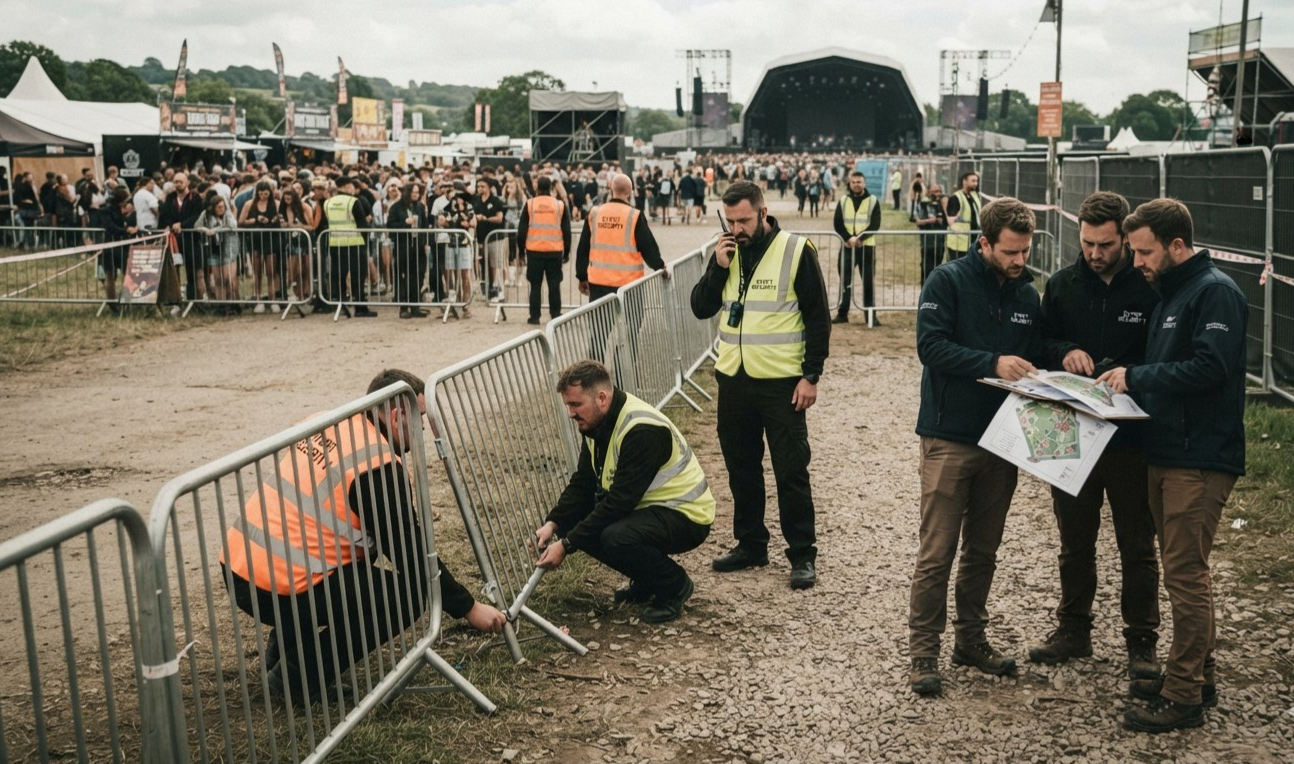
Large festivals contain dense crowds, temporary structures, cables, lighting equipment, security checkpoints, and restricted operational areas. A seemingly minor breach can cause confusion or force staff to redirect people unexpectedly.
2. Security Staff Have Limited Information
A guard may not know whether a person climbing a fence is a streamer, a ticket holder, a trespasser, or someone attempting to cause harm.
3. Dangerous Stunts Can Trigger Copycat Behaviour
Once a stunt becomes viral, other creators may attempt similar actions at different venues. The next attempt may involve a higher fence, a moving vehicle, electrical equipment, or a more crowded area.
4. The Camera Changes the Incentive
A person might reconsider a risky decision when nobody is watching. A live audience can make stopping feel like failure.
────────────────────────────────────────
The Real Cost of Viral IRL Content
The immediate cost of the fence incident was physical injury. But the wider consequences can extend beyond the creator.
For the streamer
- Medical treatment
- Permanent loss of function
- Lost work or streaming time
- Emotional distress
- Possible legal or venue-related consequences
- Damage to long-term credibility
For the event
- Additional security concerns
- Negative publicity
- Questions about barrier design
- Possible disruption to festival operations
- Increased pressure to tighten access controls
For the platform
- Moderation scrutiny
- Advertiser concerns
- Calls for stronger safety rules
- More difficult decisions around dangerous content
- Increased responsibility for creator conduct
For viewers
- Exposure to traumatic footage
- Normalisation of reckless behaviour
- Pressure to imitate dangerous stunts
- Confusion about what is acceptable in public spaces
────────────────────────────────────────
How Platforms Could Respond
A blanket ban on all risky IRL content would be difficult to enforce and could also punish legitimate journalism, travel streams, protest coverage, or public-interest reporting.
A more effective approach would distinguish between accidental danger, responsible reporting, and deliberate reckless conduct.
A More Practical Safety Framework
Content type | Suggested platform response |
|---|---|
Accidental incident during normal streaming | Review context and provide safety guidance |
Documentary coverage of venue security | Generally allowed if conducted lawfully |
Staged stunt with controlled conditions | Require clear safety standards |
Unauthorised barrier climbing | Warning, removal, or account action depending on severity |
Repeated dangerous behaviour | Stronger penalties or suspension |
Content encouraging viewers to imitate harm | Removal and possible account escalation |
Deliberate interference with emergency or security staff | Serious enforcement review |
Platforms could also consider adding stronger warnings for live content involving:
- Trespassing
- Rooftop climbing
- Traffic interference
- Train or railway stunts
- Fireworks
- Weapons
- Dangerous driving
- Unauthorised access to public events
The goal should not be to make IRL streaming boring. It should be to make sure creators understand that live entertainment does not exempt them from ordinary safety responsibilities.
────────────────────────────────────────
What Creators Should Do Instead
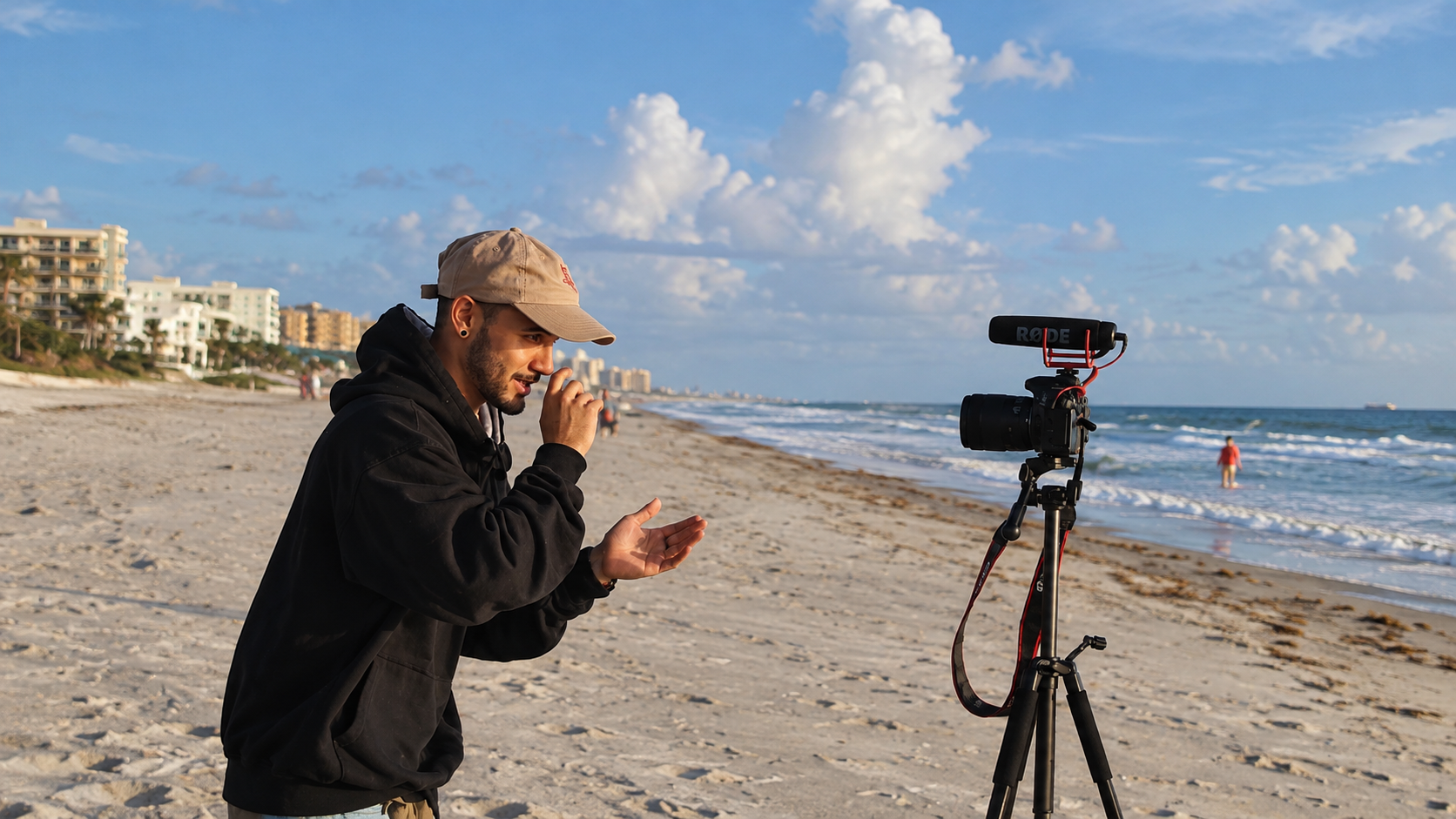
Creators who want to investigate event security can produce compelling content without physically risking their bodies.
A safer investigation might include:
Recording the official entrance process.
Interviewing attendees about confusing security procedures.
Asking organisers for comment.
Documenting signage and queue management.
Comparing official rules with the visitor experience.
Reporting problems without entering restricted areas.
Requesting permission for any formal security test.
Blurring private information and avoiding sensitive security details.
This approach may not produce the same instant shock as a dangerous stunt, but it creates stronger journalism.
It also protects the creator’s credibility. A report based on observation, interviews, and evidence is easier to defend than a stunt that appears designed primarily to generate a viral clip.
────────────────────────────────────────
Will This Change Streaming Platform Rules?
There is no verified evidence that this single incident has already triggered a new Kick or Twitch policy update.
However, incidents like this can influence how platforms, event organisers, advertisers, and viewers think about IRL content.
The pressure on platforms is likely to increase as livestreaming becomes more mobile and more creators broadcast directly from crowded public spaces. The most difficult cases will involve content that is technically spontaneous but clearly involves preventable risk.
The industry may eventually move toward more explicit rules around:
- Dangerous stunts
- Trespassing
- Event security interference
- Public disruption
- Repeated reckless behaviour
- Viewer challenges involving physical risk
- Monetisation of harmful actions
The key issue is enforcement. Rules only matter if platforms apply them consistently, including when dangerous content attracts high viewership.
────────────────────────────────────────
The Line Between Adventure and Recklessness
IRL streaming works because it captures real life without the polish of a studio. Viewers enjoy the uncertainty, the awkward conversations, the unexpected encounters, and the feeling that anything could happen.
But “anything could happen” cannot become an excuse for deliberately creating preventable danger.
The fence incident at Rock in Rio is a warning about what happens when the search for proof, attention, or viral impact overtakes basic judgement. The injury was not simply an unfortunate moment on camera. It was the result of turning a security barrier into a challenge.
For creators, the lesson is straightforward: investigate problems without becoming the problem.
For platforms, the lesson is more complicated: high engagement should never be treated as evidence that dangerous content is acceptable.
And for viewers, the most important response may be to stop rewarding reckless behaviour with attention.
────────────────────────────────────────
Final Takeaway
The Rock in Rio fence incident was reported as a Twitch livestream, not a confirmed Kick-specific controversy. But its implications reach across the entire IRL streaming industry.
A streamer reportedly lost a finger while attempting to test festival security despite already having a ticket. The event shows how quickly a supposedly investigative stunt can become a serious personal and public-safety risk.
The future of IRL streaming should not be about removing spontaneity. It should be about drawing a clearer line between genuine reporting and reckless performance.
Because once a stunt requires an ambulance, the content has already gone too far.
────────────────────────────────────────