

Monetizing a Discord community isn't just about how much you charge.
It's also about how much money survives the journey from member → payment → payout.
Discord's native Server Subscriptions make that process extremely simple. Members can subscribe without leaving Discord, while creators can manage paid tiers and perks directly inside their communities. Discord Support
External membership platforms take the opposite approach.
They add another step to the customer journey, but can give creators more control over their broader business.
So which model actually makes more sense?
💳 The In-App Checkout Advantage
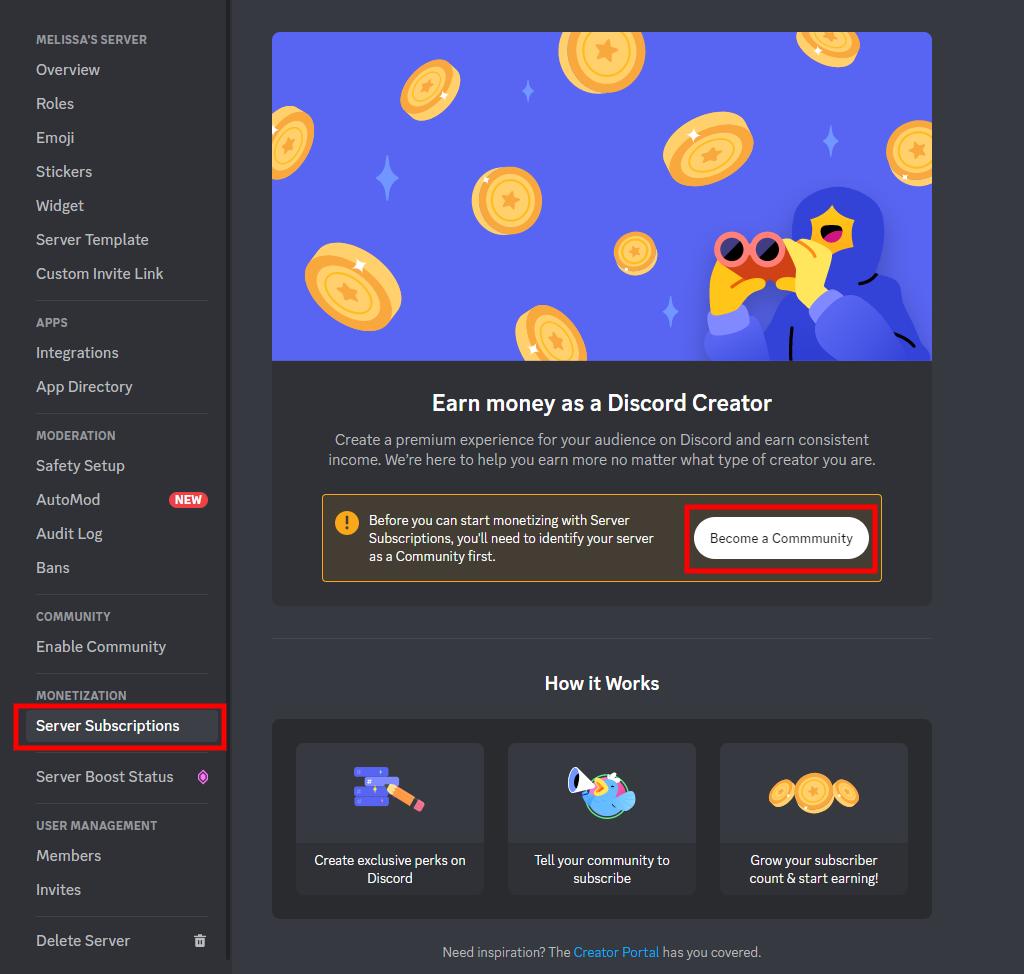
The biggest advantage of Discord Server Subscriptions is convenience.
A member can discover a paid tier inside your server, choose their subscription, and receive the associated benefits without being sent through a completely separate membership system. Discord also provides subscription management inside the platform. Discord Support
That simplicity can be valuable for communities selling relatively inexpensive perks.
Think:
- Subscriber roles
- Private channels
- Exclusive chats
- Custom community perks
- Supporter badges
- Member-only events
The fewer steps between “I want this” and “I'm subscribed,” the less opportunity there is for someone to abandon the purchase.
💰 What Does Discord Actually Take?
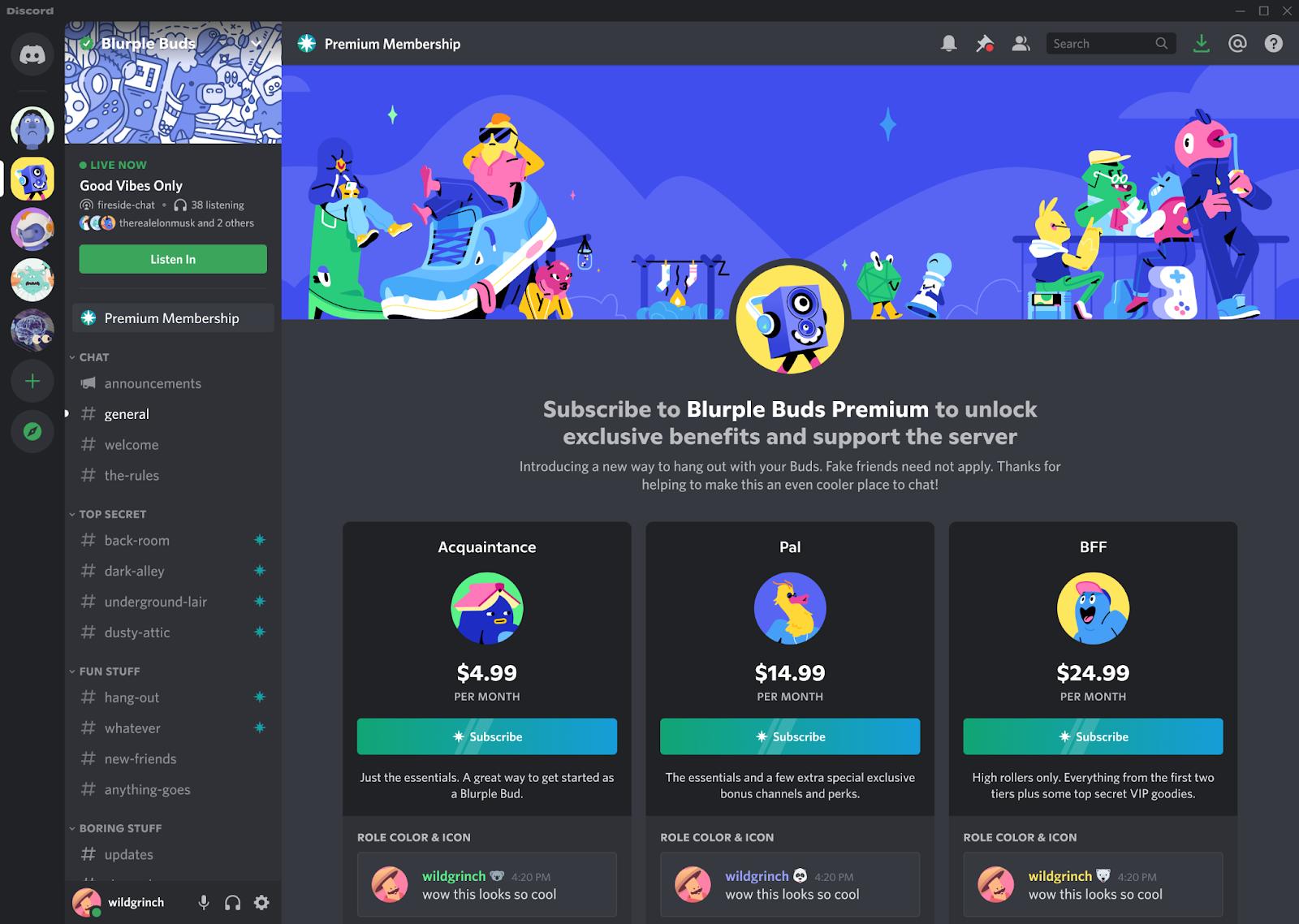
This is where the original 10% claim needs some clarification.
Discord's current Monetization Terms list a 10% platform fee for Server Subscriptions, but that's not the only potential deduction. Desktop and browser purchases also have a 6% payment-processing fee, plus applicable transaction fees. Discord Support
So, for a typical desktop/browser transaction, creators should think beyond simply:
100% − 10% = 90%
There can be additional payment-processing and transaction costs.
Mobile purchases can also have different economics. Discord says iOS purchases can involve Apple's 30% App Store fee, with the subscription price adjusted to account for that fee. Discord Support
That makes the checkout route an important part of your monetization strategy.
🌐 The Case for External Platforms
Third-party membership platforms introduce more friction.
A member may need to:
Leave Discord → visit another website → create an account → pay → return to Discord.
That's not ideal for impulse purchases.
But external platforms can provide something Discord doesn't necessarily give you in the same way: a broader customer relationship outside your server.
Depending on the service you choose, you may get tools for:
- Email communication
- Digital products
- Courses
- Newsletters
- Customer management
- Broader payment options
- Multiple communities
- Independent membership websites
That can become extremely valuable once your Discord community turns into a serious business.
🔐 Don't Build Your Entire Business on One Platform
There's another consideration that has nothing to do with fees.
Platform dependency.
If Discord is the only place where your paid customer relationship exists, your business becomes heavily dependent on Discord's rules, availability, policies, and account systems.
An external platform can diversify that infrastructure.
For example, a creator selling a course could use Discord for community interaction while keeping the course, customer communication, and payments elsewhere.
That creates a more resilient business model.
⚖️ Native vs External: Which One Wins?
| Factor | Discord Server Subscriptions | External Platform |
|---|---|---|
| Checkout friction | Very low | Higher |
| Discord integration | Excellent | Usually requires integration |
| Setup simplicity | High | Varies |
| Customer relationship | Discord-centered | More independent |
| Digital products | Limited compared with dedicated platforms | Usually stronger |
| Community perks | Excellent | Strong with integrations |
| Platform dependency | Higher | Lower |
| Fee structure | Discord + processing/app-store fees | Depends on provider |
There isn't one universal winner.
The right choice depends on what you're actually selling.
🔄 The Blended Monetization Model
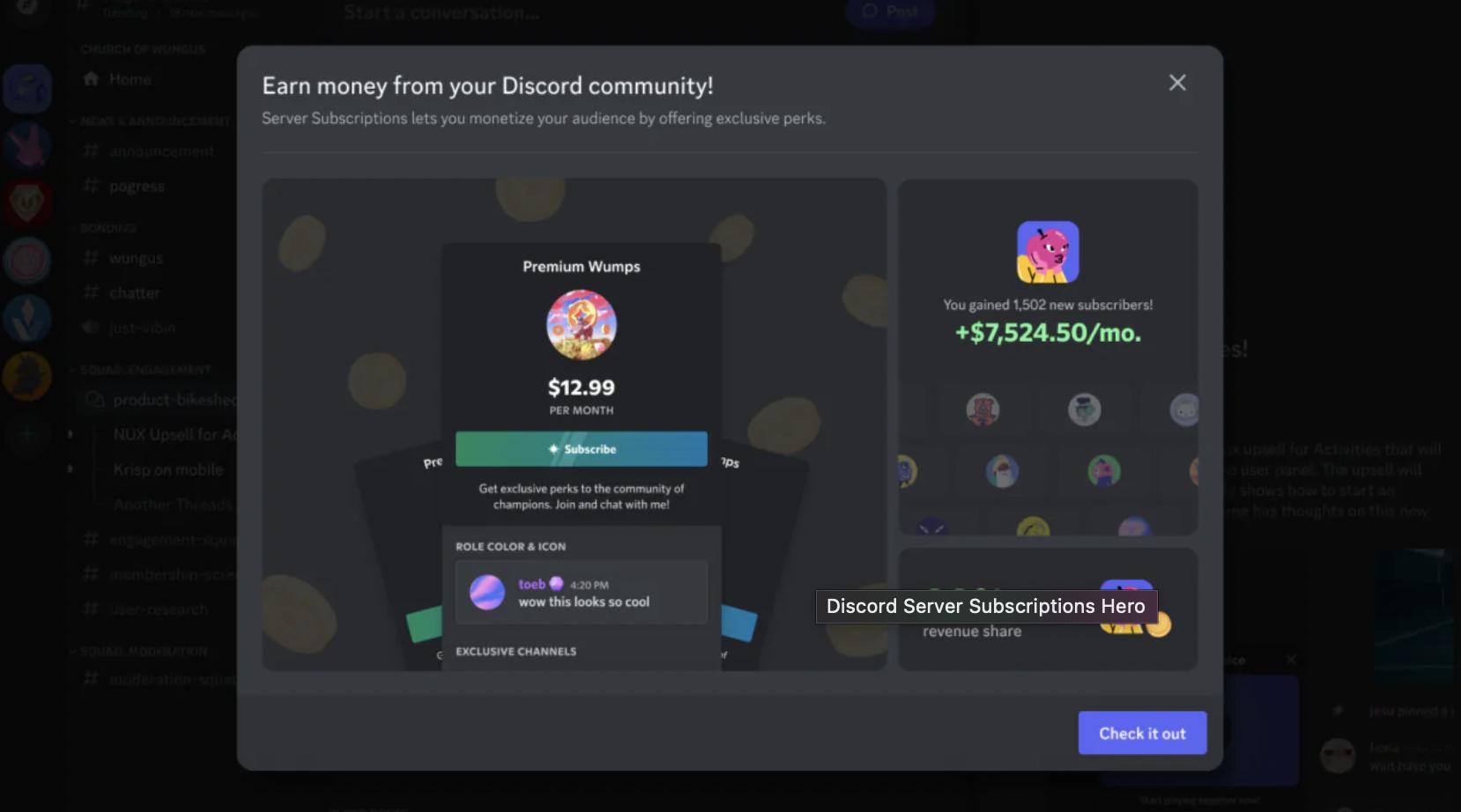
For many creators, the smartest approach isn't choosing one platform.
It's using both.
Discord can handle low-cost community memberships where convenience matters most.
External platforms can handle products or services where ownership and flexibility matter more.
For example:
$3–$10 community membership → Discord Server Subscription
$30 course → External checkout
$100 consultation → External platform
Free community → Discord
This lets each system do what it does best.
Discord handles the community experience.
The external platform handles the business infrastructure.
📈 Focus on Revenue Per Member, Not Just Fees
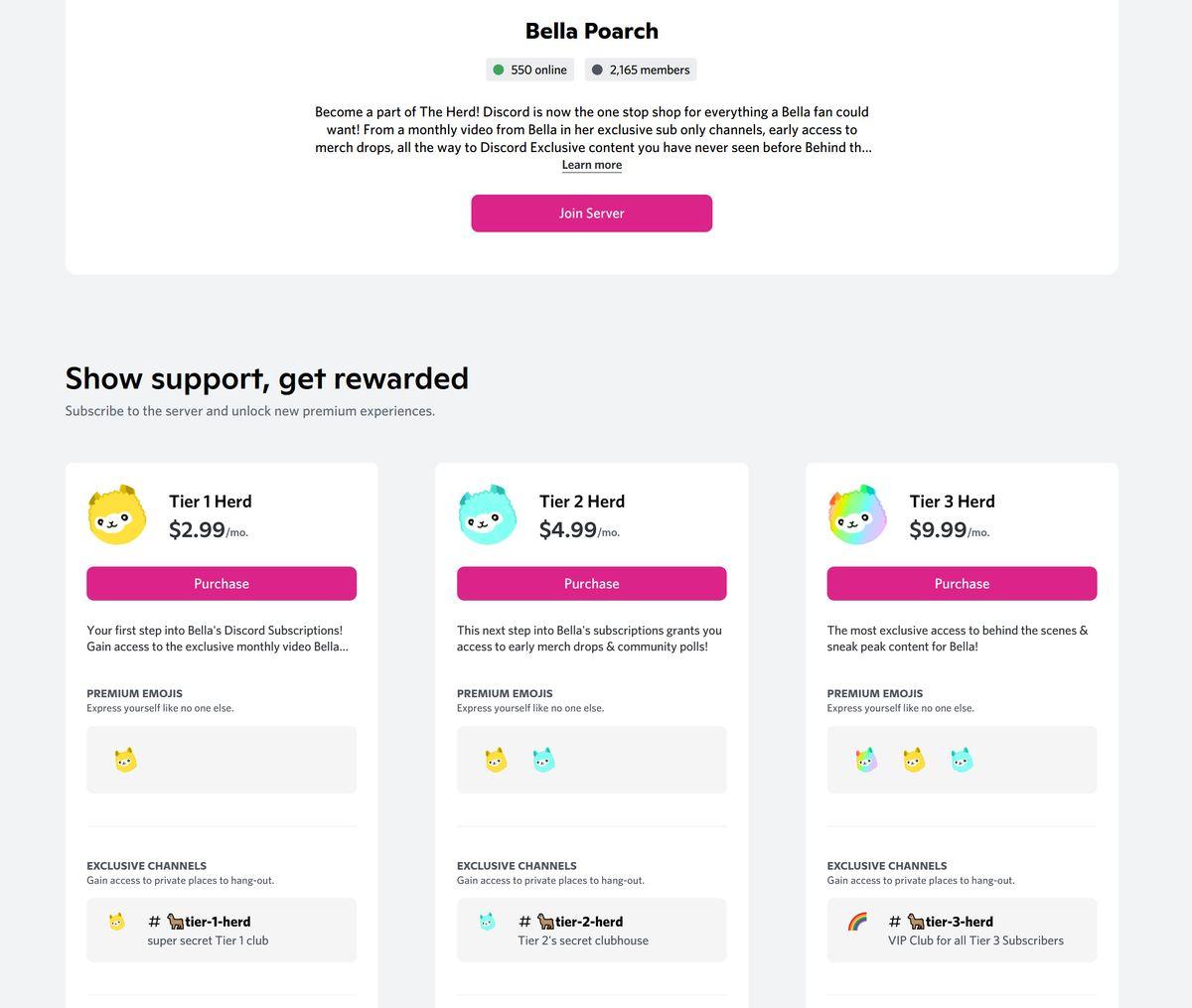
It's easy to obsess over whether a platform takes 10%, 8%, or 5%.
But that's only part of the equation.
Suppose an external platform technically gives you a higher percentage per sale, but its additional checkout steps reduce the number of people who actually purchase.
You could end up earning less total revenue despite keeping more per transaction.
That's why creators should track:
- Visitor-to-purchase conversion
- Average subscription value
- Subscriber churn
- Lifetime customer value
- Payment-processing costs
- Refunds and chargebacks
- Support workload
The cheapest platform isn't automatically the most profitable.
🔗 Related Discord Guides
If you're building a monetized community, our Discord Server Monetization Guide covers the wider revenue ecosystem.
You can also explore the Discord Server Subscriptions & Monetization Guide for subscription tiers, perks, eligibility, and retention strategies.
🎯 The Bottom Line
Discord Server Subscriptions win on convenience. External platforms win on flexibility and independence.
For inexpensive community perks, keeping the checkout inside Discord can make a lot of sense.
For courses, consulting, digital products, or a larger creator business, an external platform can provide infrastructure that extends beyond Discord.
For many creators, however, the best answer isn't Discord vs external.
It's:
Discord for the community. External tools for the business.
Comments
Sign in to join the conversation
Sign inNo comments yet
Be the first to share your thoughts!