
Sid Meier's Civilization VII is the latest entry in Firaxis Games' long-running 4X strategy franchise.
Released on February 11, 2025, Civilization VII introduces major changes to the traditional Civilization formula, including a new Ages system, evolving civilizations, independent leader selection, expanded diplomacy, and redesigned progression.
The game lets players guide societies through different periods of history while managing exploration, warfare, diplomacy, technology and culture.
Here's everything you need to know about Civilization VII.
The Core Concept: Build a Civilization Through History
Like previous Civilization games, Civilization VII asks players to build a civilization from the ground up.
Players expand across a procedurally generated map, establish settlements, research technologies, develop culture, negotiate with other leaders and compete for different paths to victory.
The major difference is how the game handles historical progression.
Rather than playing through one uninterrupted timeline, Civilization VII divides a campaign into distinct Ages.
Each Age introduces new civilizations, mechanics, technologies and strategic priorities.
This creates a more structured historical journey while allowing civilizations to change as the game progresses.
The Ages System: A New Way to Play History
The Ages system is one of the defining changes in Civilization VII.
A standard campaign is divided into three major historical periods:
- Antiquity Age
- Exploration Age
- Modern Age
Each Age represents a significant stage in the development of civilizations.
At the beginning of a new Age, players encounter new gameplay conditions and can transition into a different civilization.
This means your civilization's identity isn't necessarily locked for the entire campaign.
A player might begin with one civilization during Antiquity, develop a different identity during Exploration and eventually evolve again during the Modern Age.
The system is designed to make historical development feel less like a straight line and more like an evolving process.
Cultural Evolution and Civilization Choices
Civilization VII separates leaders from civilizations more clearly than previous entries.
Leaders have their own abilities and progression, while civilizations are tied more closely to particular historical periods.
This allows players to create combinations that weren't possible in earlier games.
Your choices during one Age can also influence what becomes available later.
That makes cultural development an important strategic consideration.
Instead of simply asking:
“Which civilization do I want to play?”
Civilization VII encourages players to consider:
“What civilization should I become next?”
This creates a new layer of strategy around historical evolution.
Leaders and Skill Trees
Leaders remain central to the Civilization experience, but Civilization VII expands their progression through leader skill trees.
As a leader develops, players can invest in different abilities and bonuses that complement their preferred strategy.
A leader can therefore be developed toward different approaches, including:
- Military expansion
- Economic development
- Diplomacy
- Science
- Culture
- Religious or ideological strategies
This makes leader progression more flexible than simply selecting a civilization bonus at the start of a game.
The system also gives players more control over how their chosen leader develops throughout a campaign.
Gameplay and Mechanics
Exploration
Exploration remains fundamental to Civilization.
Players begin with limited knowledge of the map and gradually discover new territories, resources, civilizations and natural features.
The Exploration Age places particular emphasis on discovering new parts of the world and establishing connections between distant regions.
Settlement and Expansion
Players establish settlements, develop cities and expand their territory.
Settlements can grow into more developed urban centers, while the game's redesigned systems encourage players to think about how different locations specialize.
Strategic positioning remains important because resources, terrain and neighboring civilizations can dramatically affect development.
Combat
Military strategy continues to be a major component of Civilization VII.
Players can build armies, defend territory and wage wars against rival civilizations.
The game also introduces changes to how military units interact with settlements and one another, helping make large-scale conflicts easier to manage.
Diplomacy
Diplomacy allows civilizations to negotiate, establish relationships and pursue different strategic interests.
Players must balance cooperation with competition as alliances, conflicts and geopolitical relationships evolve throughout each Age.
Technology and Culture
Technology and culture remain two of the most important progression systems.
Technology unlocks new capabilities and improvements, while cultural development expands the civilization's social and political possibilities.
The two systems work alongside the Ages structure to encourage players to develop civilizations in different directions.
Graphics and Presentation
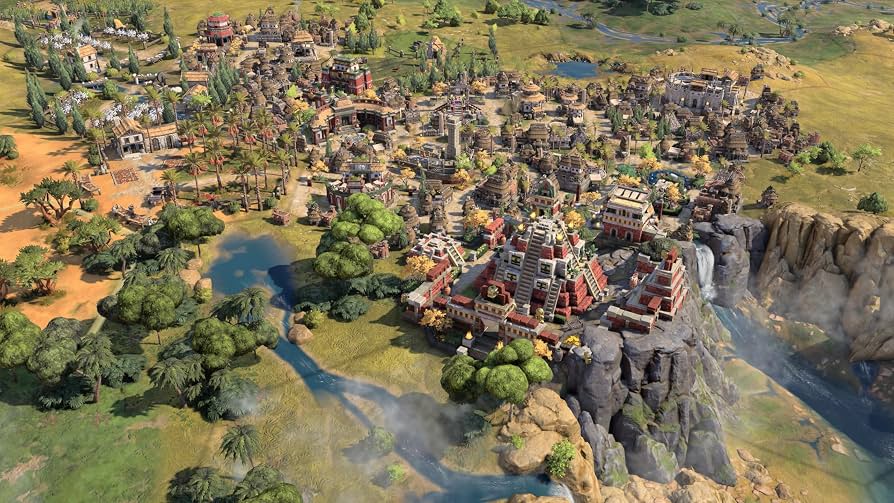
Civilization VII also delivers a noticeable visual upgrade.
Firaxis redesigned the game's presentation with more detailed environments, improved terrain and more expressive leaders.
Maps feature greater visual detail, while cities and landscapes change as civilizations progress.
The graphical improvements are especially noticeable when comparing different historical periods.
The goal isn't photorealism.
Instead, Civilization VII maintains the series' stylized visual identity while making the world feel more alive and detailed.
Leaders and Historical Figures
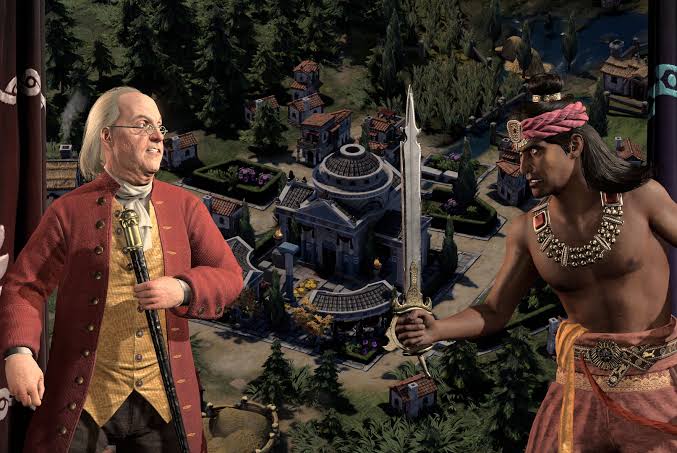
The game features a broad selection of historical leaders, each with different abilities and playstyles.
Leaders can include figures associated with:
- Military power
- Scientific advancement
- Cultural development
- Economic growth
- Diplomacy
- Political influence
The separation between leaders and civilizations gives players greater freedom when creating their strategy.
Rather than having every leader permanently tied to one civilization, Civilization VII allows the leader system to play a more independent role.
Platforms and Availability
Sid Meier's Civilization VII is available on:
- PC
- PlayStation 4
- PlayStation 5
- Xbox One
- Xbox Series X|S
- Nintendo Switch
- Nintendo Switch 2
The game supports single-player campaigns as well as multiplayer experiences.
Availability and features can vary depending on platform and edition.
4. Why It Matters
Civilization VII is significant because Firaxis isn't simply adding another historical period to the traditional formula.
The Ages system changes how an entire campaign is structured.
Civilizations can evolve between historical periods, while leaders have more independent progression and skill customization.
That creates a different approach to the classic Civilization question of how a society develops over thousands of years.
The game also modernizes the series visually and mechanically while retaining the core 4X formula that has defined Civilization for decades.
For long-time players, the biggest attraction is therefore not simply new content.
It's the possibility of playing Civilization in a fundamentally different way.
5. What to Know at a Glance
Quick Facts
| Detail | Information |
|---|---|
| Developer | Firaxis Games |
| Publisher | 2K |
| Release Date | February 11, 2025 |
| Genre | 4X Turn-Based Strategy |
| Ages | Antiquity, Exploration, Modern |
| Mode | Single-player / Multiplayer |
| Platforms | PC, PS4, PS5, Xbox One, Xbox Series X|S, Nintendo Switch, Nintendo Switch 2 |
| Major New System | Ages and civilization evolution |
| Leader Progression | Leader skill trees |
| Setting | Human history |
6. The Bottom Line
🎮 The Bottom Line
Sid Meier's Civilization VII brings the classic historical sandbox into a new era with its Ages system, evolving civilizations, independent leaders and expanded progression mechanics.
The graphical improvements modernize the presentation, while leader skill trees and greater civilization flexibility give players more control over how their empires develop.
For strategy fans, the biggest change is the way Civilization VII treats history itself: your civilization isn't simply moving forward through time—it is constantly changing along the way.