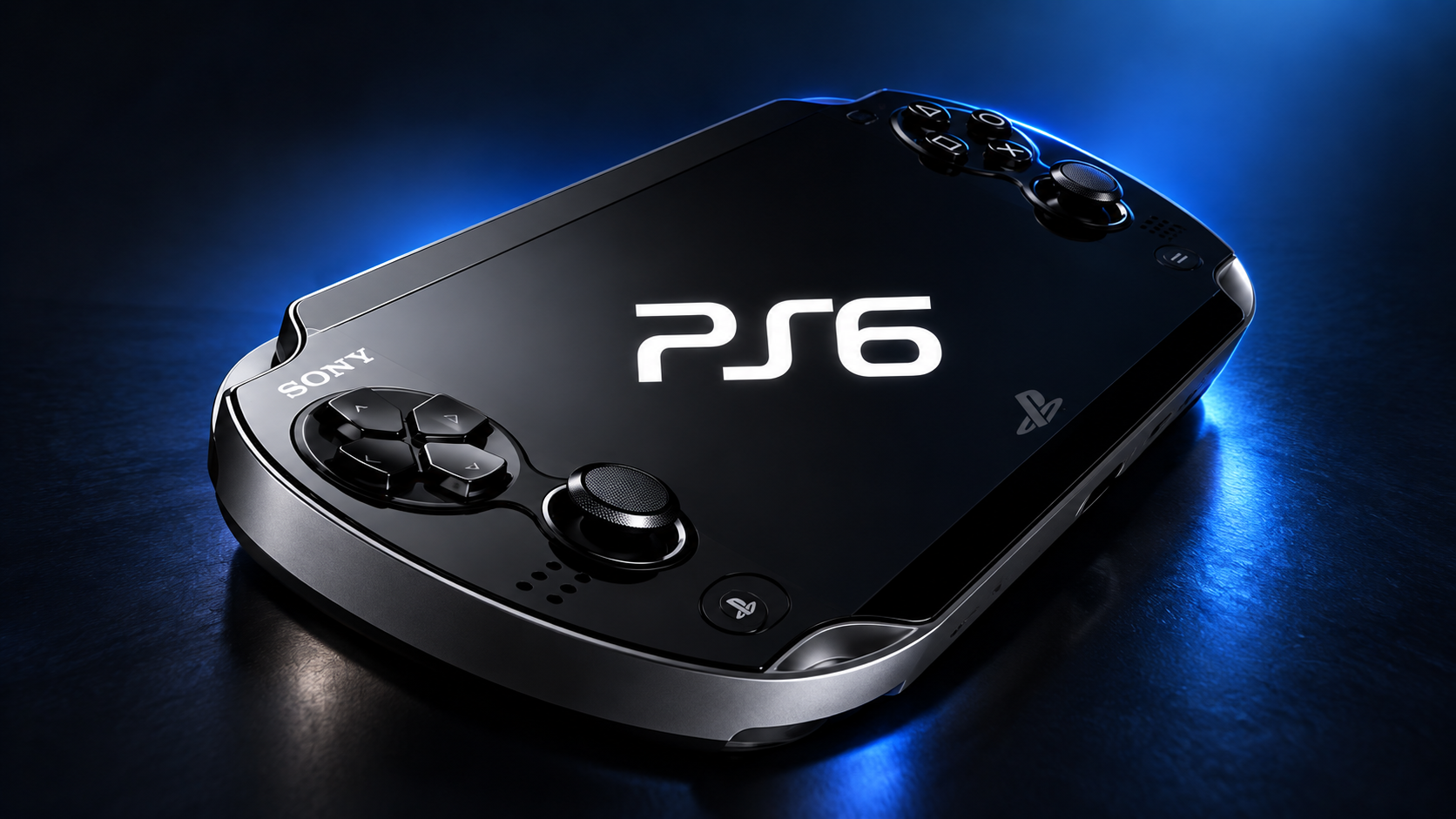

The Complete Wiki to the PlayStation 6 Handheld Leak
Sony's rumored PlayStation 6 handheld is becoming one of the more closely watched pieces of next-generation gaming hardware.
The latest leak centers on an alleged AMD APU codenamed Canis, which is reportedly being manufactured using TSMC's N3P process. The claim is significant because N3P is associated with improved power efficiency, an important characteristic for a battery-powered gaming device.
The reported strategy is different from simply putting a desktop-class APU inside a large handheld. According to the latest reporting, Sony may be targeting a device that is genuinely portable, with conservative clock speeds and a power profile designed around battery life, thermals and a smaller chassis.
There is an important distinction, however: Sony has not officially announced a PlayStation 6 handheld, and the Canis specifications remain leak-based information rather than confirmed PlayStation hardware.
Quick Facts
| Feature | Reported Information |
|---|---|
| Device | PlayStation 6 handheld / portable |
| Internal codename | Canis |
| Manufacturer | Sony Interactive Entertainment, reportedly with AMD |
| APU | Custom AMD design, according to leaks |
| Process node | TSMC N3P, reportedly |
| CPU architecture | Zen 6 family, according to leaks |
| Reported CPU layout | 4 Zen 6C cores + 2 low-power Zen 6 cores |
| GPU architecture | RDNA 5, according to current rumors |
| Reported GPU | 16 Compute Units |
| Memory | 24 GB LPDDR5X has been reported |
| Memory bus | 192-bit, according to one leak |
| Reported power range | Around 15 W to 25 W |
| Docking | Previously reported as a possibility |
| Relationship to PS6 | Reported companion device |
| Officially confirmed by Sony | No |
| Expected timing | Rumored next-generation timeframe |
The CPU, GPU, memory and power specifications above are rumored specifications, not official Sony specifications.
What Is the PlayStation 6 Handheld Leak?
The PlayStation 6 handheld is the name commonly used for a rumored portable PlayStation system that could launch alongside or around the same generation as Sony's next home console.
The strongest recent leak concerns an internal codename, Canis.
According to reporting based on information from Moore's Law Is Dead, Canis is allegedly the APU designed for Sony's portable PlayStation hardware. A newer report says documentation seen by the leaker lists Canis on TSMC N3P, while the rumored home-console silicon is associated with N3C.
That distinction matters because the two products would have very different power requirements.
A home console can rely on continuous wall power and a much larger cooling system. A handheld has to operate from a battery while keeping heat, fan noise, weight and physical dimensions under control.
Why the N3P Node Matters
TSMC N3P is an advanced version of TSMC's 3nm manufacturing technology.
For a handheld, manufacturing efficiency can be just as important as raw performance.
A more efficient process can potentially allow a chip to:
- Consume less power for a given workload
- Produce less heat
- Maintain performance within a smaller thermal envelope
- Reduce cooling requirements
- Improve battery endurance
- Enable a smaller device design
The Canis rumor therefore fits the broader idea of Sony targeting a more conventional portable experience instead of simply building an extremely powerful but heavy handheld.
The latest report specifically connects N3P with Sony's alleged goal of avoiding a high-power design. The source argues that conservative clocks combined with the more efficient process could allow the system to remain relatively compact.
N3P vs N3C in the PS6 Rumors
One of the interesting aspects of the latest leak is the reported separation between Sony's portable and home-console silicon.
| Reported Chip | Rumored Product | Reported Process |
|---|---|---|
| Canis | PS6 handheld | N3P |
| Magnus | PS6 home console-related design | N3C |
| Helix | Another rumored home-console component/design | N3C |
These names and process assignments are not official Sony product specifications.
The theory is that N3P would make more sense for the handheld because power efficiency has a direct impact on battery life and thermal design, while a home console can prioritize other factors because it is permanently connected to power.
The reported use of N3C for the home console is therefore presented as a cost and manufacturing tradeoff rather than evidence that one chip is inherently better than the other.
Project Canis: The Reported PS6 Portable APU
Canis is currently the most important codename associated with the rumored PlayStation handheld.
Earlier reports described a configuration containing:
- 4 Zen 6C CPU cores
- 2 low-power Zen 6 cores
- 16 RDNA 5 Compute Units
- A reported 192-bit memory interface
- Approximately 24 GB of LPDDR5X memory
- A rumored 15 W to 25 W power envelope
These specifications come from leaks and should not be treated as final hardware specifications.
The unusual CPU configuration is particularly interesting because it suggests Sony could be separating high-performance game workloads from lower-power system tasks.
Why Six CPU Cores Could Make Sense
The rumored Canis configuration reportedly uses four standard Zen 6C cores alongside two low-power cores.
That would allow Sony to potentially divide workloads between performance-oriented and efficiency-oriented CPU resources.
The low-power cores could theoretically handle background operating-system tasks, networking, downloads and other lightweight workloads while the main CPU cores focus on the game.
However, Sony has not confirmed this architecture, so the precise purpose of the reported low-power cores remains speculative.
The Rumored RDNA 5 GPU
The graphics side of Canis is reportedly based on RDNA 5, with approximately 16 Compute Units.
This is another reason the rumored handheld is interesting.
Raw Compute Unit counts cannot be directly compared across different AMD GPU generations because architectural improvements can change how much work each CU can perform.
The reported 16 RDNA 5 CUs therefore cannot simply be compared with a 16-CU RDNA 2 or RDNA 3 design and assumed to have identical performance.
The newer architecture, clock speeds, memory bandwidth and Sony's graphics technologies would all influence the final result.
From 540p Rendering to Higher Output Resolutions
One September leak claimed that the PS6 handheld could use a relatively low internal rendering resolution, reportedly around 540p, while relying on advanced reconstruction technology to produce a much higher-quality output.
That approach would be logical for a portable system.
Instead of rendering every pixel at the display's native resolution, the GPU could render at a lower internal resolution and reconstruct additional detail.
The same leak connected the system with a future version of PlayStation Spectral Super Resolution, or PSSR. These details remain unconfirmed.
What Is PSSR?
PSSR is Sony's AI-assisted image reconstruction technology used in its modern PlayStation hardware strategy.
The basic concept is straightforward:
- The game renders internally at a lower resolution.
- The reconstruction system analyzes the rendered image.
- Additional detail is generated from available visual information.
- The final image is presented at a higher output resolution.
For a handheld, this could be particularly useful.
A lower internal resolution can reduce GPU workload and power consumption, while reconstruction technology can help maintain a sharper image.
Why Sony Could Prefer Efficiency Over Maximum Power
The most important idea behind the Canis rumor is not simply the N3P node.
It is the combination of:
N3P + conservative clocks + lower power + reconstruction technology.
This could allow Sony to build a system that prioritizes portable performance per watt rather than maximum performance regardless of size.
That is important because many high-performance PC handhelds have to balance significant heat output with battery capacity and cooling hardware.
The latest Canis reporting specifically argues that Sony may be avoiding a roughly 30 W-class handheld design in favor of a more restrained power target.
What Does "True Portability" Mean Here?
The phrase true portability is being used in reporting to distinguish the rumored PlayStation handheld from devices that are technically portable but become physically large because of their cooling and battery requirements.
A true portable design would ideally offer:
- A manageable weight
- Smaller overall dimensions
- Comfortable handheld ergonomics
- Reasonable battery life
- Controlled heat
- Lower fan noise
- No oversized cooling system
- Performance specifically designed around mobile power limits
The reported N3P approach could support those goals, but it does not guarantee them.
A chip's manufacturing process is only one part of a handheld's design.
Battery capacity, screen technology, cooling, memory configuration, clocks and software efficiency would all affect the final product.
The Reported 15 W to 25 W Power Envelope
One leak has placed the Canis handheld in a reported 15 W to 25 W range.
If accurate, this would put the design firmly in the territory of a power-constrained gaming system rather than a miniature desktop PC.
The lower end could potentially be useful for handheld operation, while the higher end might be available when connected to external power or a dock.
But there is currently no official Sony documentation confirming these power limits.
Could the PS6 Handheld Be Dockable?
Reports going back to 2025 have described the rumored system as potentially dockable, with a Nintendo Switch-style ability to connect to a television.
The earlier leak claimed that the system could operate at different performance levels when handheld and docked. It also suggested that the portable could potentially exceed the base PS5's performance in certain docked scenarios.
This remains unconfirmed.
If Sony does pursue docking, it could make the handheld more than a secondary portable device. It could potentially function as a flexible PlayStation platform with two operating modes.
Handheld Mode vs Docked Mode
A theoretical Canis design could work something like this:
| Mode | Design Priority |
|---|---|
| Handheld | Battery efficiency and thermals |
| Docked | Higher sustained performance |
| Sleep/Standby | Low-power system operation |
| External Display | Higher output resolution |
| Portable Gaming | Balanced CPU/GPU performance |
The exact implementation is unknown.
Sony could also decide that the handheld is primarily a portable device and offer limited docking functionality rather than trying to make it a complete home-console replacement.
How Could It Work With PlayStation 6?
The rumored handheld is frequently described as a companion to the PS6 home console rather than simply a replacement for it.
That distinction is important.
Sony could potentially use the handheld as another endpoint within the PlayStation ecosystem.
The company's official strategy already emphasizes expanding the PlayStation experience beyond a single console. Sony has said it wants to make its platform more accessible and reach players across different experiences and devices.
That does not confirm the rumored handheld, but it provides relevant context for why a portable PlayStation device could fit into Sony's broader platform strategy.
Sony Has Not Officially Announced the PS6 Handheld
This is the most important disclaimer in the entire leak.
Sony has not officially announced Project Canis or a PlayStation 6 handheld.
Sony has officially discussed investment in its next-generation platform, but its public materials do not provide confirmation of a Canis handheld, N3P manufacturing, Zen 6, RDNA 5 or the rumored specifications.
Therefore, all Canis hardware information should currently be categorized as rumor or leak.
What Sony Has Officially Said About the Next Generation
Sony's June 2026 Game & Network Services meeting stated that the company is continuing to invest in the future of the PlayStation experience, including the next generation of the platform and related content.
Sony also said it wants to anticipate changes in how players play and make the PlayStation ecosystem more accessible to a broader range of players.
That is meaningful because it confirms that Sony is actively working on next-generation PlayStation technology.
It does not, however, confirm that the next-generation platform includes a handheld.
The AMD Connection
AMD is already closely associated with Sony's PlayStation hardware.
AMD created the custom silicon used in the PS5 family, making a future AMD-designed PlayStation APU a plausible technical scenario.
Previous reporting has also connected AMD with Sony's next-generation PlayStation silicon. VGC reported that AMD was contracted to work on the PlayStation 6 chip and noted AMD's existing relationship with Sony on PS5 and PS5 Pro.
The specific Canis designation remains leak-based.
Why N3P Could Be More Important Than Raw Performance
For a home console, a small increase in efficiency may be useful.
For a handheld, it can fundamentally affect the product.
Consider two hypothetical chips with similar performance:
Chip A
- Higher power consumption
- Higher heat output
- Larger cooling system
- Larger battery requirement
Chip B
- Lower power consumption
- Lower heat output
- Smaller cooling requirement
- More manageable battery requirements
The second chip could potentially enable a thinner and lighter handheld even if both deliver similar gaming performance.
This is why the alleged N3P Canis design is arguably more interesting from a product-design perspective than simply hearing another rumored CPU or GPU specification.
The Biggest Difference From PlayStation Portal
Sony already has a portable PlayStation-branded device in the PlayStation Portal, but its role is fundamentally different.
PlayStation Portal was designed around remote play and cloud streaming rather than running PS5-class games locally.
The rumored PS6 handheld would represent a completely different concept if it actually includes a dedicated gaming APU capable of running games locally.
That would make it closer to Sony's traditional portable systems such as the PSP and PS Vita in terms of hardware philosophy.
PS Vita vs PS6 Handheld
| Feature | PS Vita | Rumored PS6 Handheld |
|---|---|---|
| Era | 2011 generation | Next-generation |
| Local games | Yes | Reportedly yes |
| Architecture | Sony custom hardware | Reportedly AMD custom APU |
| Cloud/remote features | Limited compared with modern ecosystem | Potentially major ecosystem feature |
| GPU generation | Vita-era architecture | Rumored RDNA 5 |
| Process technology | Older semiconductor process | Reported TSMC N3P |
| PS5/PS6 ecosystem | No | Reportedly designed around next-gen PlayStation |
The comparison is conceptual because Sony has not confirmed the rumored new handheld.
Could It Replace the PlayStation Vita?
That depends on Sony's strategy.
A modern PlayStation handheld could benefit from a much stronger ecosystem than Vita had, including:
- PlayStation Network
- Digital game libraries
- Cloud services
- Remote Play
- Cross-platform development
- Modern PlayStation Studios technology
- A large existing PlayStation user base
Sony's official strategy emphasizes extending the PlayStation experience beyond a single device and reaching more players.
A new handheld could therefore be positioned as another part of the PlayStation platform rather than as an isolated portable console.
Potential Battery-Life Implications
Battery life is one of the biggest unknowns.
Using N3P does not automatically mean long battery life.
The final result would depend on:
- Battery capacity
- Screen size
- Screen resolution
- Display refresh rate
- CPU clocks
- GPU clocks
- Memory power consumption
- Cooling
- Operating-system efficiency
- Game workload
- Reconstruction technology
If the reported 15 W to 25 W power range is accurate, battery performance would still depend heavily on how the device is configured and how Sony balances performance against endurance.
Why Sony Might Avoid a 30 W-Class Handheld
A high-power handheld can deliver more performance, but it also creates several design challenges.
Higher sustained power generally means more heat that has to be removed.
That can require:
- Larger fans
- Larger heat pipes
- More substantial cooling assemblies
- Greater battery capacity
- Heavier chassis materials
- More aggressive power management
Sony reportedly wants to avoid this direction for Canis.
The latest leak specifically argues that the combination of N3P and conservative clocks suggests Sony is prioritizing portability rather than simply pushing the handheld toward desktop-class power consumption.
The Price Question
Pricing is another major unknown.
A high-end custom APU, advanced semiconductor manufacturing, fast LPDDR5X memory and Sony's premium hardware positioning could make the device expensive.
One report suggested that a price around $600 could be difficult depending on memory and component costs, but this is an external estimate rather than Sony pricing information.
There is currently no official PS6 handheld price.
What Could Make Canis Different From PC Handhelds?
If the rumors are accurate, Sony could have several advantages over conventional PC handhelds.
Hardware Optimization
Sony could design the operating system and hardware around a fixed configuration.
Game Optimization
Developers could target a known CPU, GPU and memory configuration instead of supporting a broad range of PC hardware.
Reconstruction Technology
PSSR could allow games to use lower internal resolutions while targeting higher-quality output.
PlayStation Ecosystem
The device could potentially connect directly to the existing PlayStation account, store and services ecosystem.
Docking
If the reports are accurate, a dock could provide another operating mode.
None of these features are confirmed for Canis.
The Most Important Leak: N3P + Conservative Clocks
The most interesting part of the current reporting is not any single rumored specification.
It is the design philosophy.
The leaks suggest Sony may be combining:
Advanced manufacturing
- Moderate clock speeds
- 15 W to 25 W-class power
- Advanced image reconstruction
- Custom AMD silicon
- Portable-focused thermal design
That combination would represent a different approach from simply taking a powerful PC APU and putting it into a handheld chassis.
What Is Confirmed vs Rumored?
Reported but Unconfirmed
- Project Canis codename
- TSMC N3P
- Zen 6 CPU
- RDNA 5 GPU
- 16 GPU CUs
- Six-core CPU configuration
- 24 GB LPDDR5X
- 192-bit memory bus
- 15 W to 25 W power target
- 540p-class internal rendering
- Future PSSR implementation
- Docking capability
- PS6 companion positioning
Officially Confirmed by Sony
- Sony is investing in its next-generation PlayStation platform.
- Sony is exploring ways to broaden the PlayStation experience.
- Sony continues to invest in technology, AI and the future of its platform.
- Sony has not publicly confirmed a PS6 handheld called Canis.
This distinction is essential when discussing the current leak.
PlayStation 6 Handheld Leak Timeline
August 2025
Reports emerged claiming Sony was developing a Nintendo Switch-style PlayStation portable capable of docking with a television.
September 2026
Further leaks reportedly described Project Canis, including possible Zen 6 and RDNA 5 hardware, LPDDR5X memory and a low-power design.
October 2026
New reporting connected Canis with TSMC N3P, strengthening the theory that Sony may be prioritizing power efficiency and a smaller portable form factor.
Current Status
Sony has confirmed work on the next generation of the PlayStation platform but has not officially announced the Canis handheld.
FAQ
Is the PlayStation 6 handheld officially confirmed?
No. Sony has confirmed that it is investing in the next generation of the PlayStation platform, but it has not officially announced a PS6 handheld or Project Canis.
What is Project Canis?
Canis is the reported codename for the AMD APU allegedly intended for Sony's next-generation portable PlayStation hardware.
Will the PS6 handheld use N3P?
Current reporting claims that Canis uses TSMC N3P, but Sony has not confirmed the process node.
What CPU will the PS6 handheld use?
Leaks point toward a Zen 6-based AMD design, reportedly using four Zen 6C cores and two low-power Zen 6 cores. This remains unconfirmed.
What GPU will it use?
Current rumors point toward RDNA 5 with approximately 16 Compute Units. Sony has not confirmed this specification.
Will the PS6 handheld be more portable than a Steam Deck?
That is reportedly one of Sony's goals, but it cannot currently be confirmed. The N3P and conservative-clock rumors have been interpreted as evidence of a portability-focused design.
Will it connect to a TV?
Previous reports have claimed that the device could be dockable, but Sony has not confirmed docking functionality.
Will it run PS6 games?
The leaks describe it as a companion to the next PlayStation generation, but Sony has not explained how a future handheld would share games with a PS6 home console.
Is Canis the same as Sony's PS6 home-console APU?
No. Current leaks describe Canis as the portable APU, while separate codenames have been associated with the rumored home-console hardware. None of these names have been officially confirmed by Sony.
Current Status
The PlayStation 6 handheld remains an unconfirmed Sony hardware project, but the latest leaks have added a more specific technical theory around it.
The key claim is that the alleged Canis APU could use TSMC's N3P process, paired with conservative clocks and a relatively restrained power target. If accurate, that would suggest Sony is designing around efficiency, thermals and portability, rather than simply maximizing handheld performance.
The reported hardware, including Zen 6, RDNA 5, 16 Compute Units, 24 GB LPDDR5X and a 15 W to 25 W power range, should still be treated as leaked information rather than final specifications.
What is officially established is narrower: Sony says it is investing in the next generation of the PlayStation platform and wants to anticipate changing player needs while making the PlayStation ecosystem more accessible.
If the Canis reports eventually prove accurate, the most significant part of Sony's approach may not be raw teraflops. It could be the attempt to make a power-efficient, genuinely portable PlayStation system that fits into the same broader ecosystem as the next-generation home console.
For now, Canis, N3P, Zen 6 and RDNA 5 remain leak territory, and the final design, price, release date and software strategy are still unknown.
Go deeper into the PS6 handheld leak