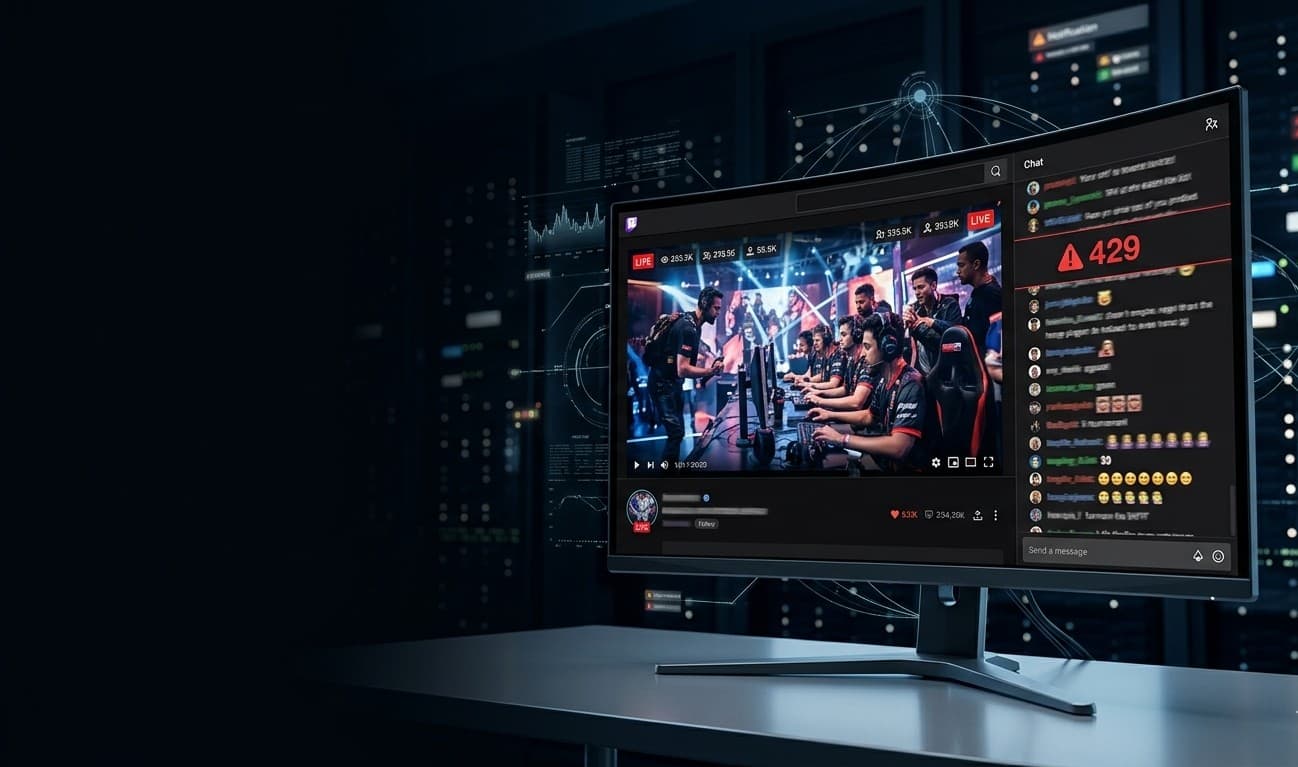

What if your biggest problem as a small streamer wasn't making content but everything you have to do after you press “End Stream”?
A two-hour broadcast can contain dozens of moments worth sharing. But finding them, clipping them, captioning them, writing descriptions, moderating chat, and turning one livestream into content for other platforms can take hours.
That's where Twitch's AI strategy gets interesting.
The platform is introducing AI-powered features designed to make streams easier to follow and content easier to create. Among them are stream summaries and Auto Clips, which can identify important moments from a broadcast and turn them into shareable content.
The bigger story isn't one individual feature.
It's Twitch moving toward an environment where AI quietly works alongside the creator.
From Livestream to Content Machine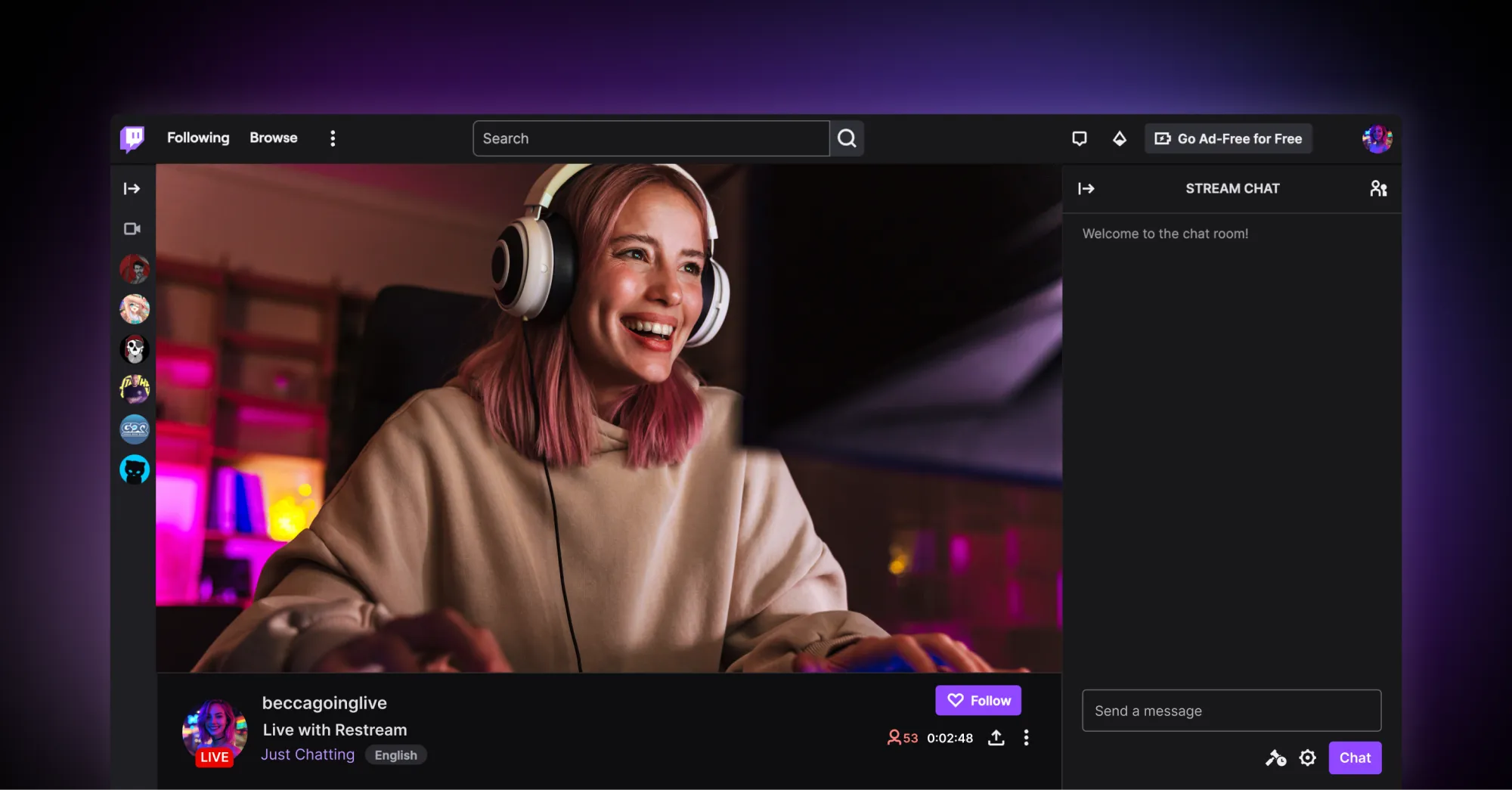
For established streamers, content production can be supported by editors, social-media managers, moderators, and other staff.
Small creators usually don't have that luxury.
That's where Twitch's AI strategy becomes particularly interesting.
Its Auto Clips feature is designed to identify potential highlights by looking at signals such as chat activity, vocal inflection, and what's happening on screen. It can then generate captioned clips from those moments.
There's already an intriguing gap between creators who consistently produce clips and those who don't.
Twitch has said that only around half of streamers have a clip to share after a given stream. During testing, the platform reported that the percentage of streamers producing clips increased substantially when Auto Clips was available.
That matters because a livestream doesn't necessarily grow while it's live.
A funny reaction, clutch gaming moment, surprising guest appearance, or chaotic chat interaction can become a discovery mechanism hours or days after the original broadcast.
AI could make finding those moments much less manual.
The “Co-Pilot” Is Bigger Than Clips
Calling these features an AI co-pilot makes sense because Twitch isn't limiting AI to content generation.
The platform is also using AI to improve the viewer experience.
Stream summaries can provide viewers with a quick synopsis of what's happened so far, allowing someone who joins halfway through a broadcast to understand the context without asking the chat, “What did I miss?”
That's a deceptively important feature.
Small channels often struggle when new viewers arrive in the middle of an ongoing stream. A viewer who doesn't understand the conversation or activity may simply leave.
A summary gives that viewer a shortcut into the moment.
Twitch is also improving its automated moderation capabilities, using AI to better understand context and nuance when helping moderate communities.
Put those pieces together and the emerging model looks something like this:
AI finds the important moments.
AI helps turn them into clips.
AI explains what's happening to late-arriving viewers.
AI assists with moderation.
The creator still decides what gets published and how the community operates.
That's much closer to an assistant than a traditional editing tool.
Why Small Creators Have the Most to Gain
The economics of streaming have always created a frustrating problem: creators need an audience to justify investing more time, but they often need more time and resources to build that audience.
AI doesn't eliminate that problem.
It can, however, reduce some of the work surrounding it.
Twitch has also been expanding monetization opportunities and lowering some barriers for smaller creators, giving more streamers access to tools such as subscriptions, Bits, emotes, badges, and Channel Points.
That creates an interesting bigger picture.
Twitch isn't only trying to help creators stream. It's trying to help them operate like creators.
AI fits naturally into that strategy because a creator's workload extends far beyond the livestream itself.
A streamer might finish a three-hour broadcast and still have hours of work ahead: reviewing footage, finding highlights, creating short-form videos, writing captions, moderating the community, and deciding what to post next.
If AI can handle even part of that workload, the creator gets something extremely valuable back.
Time.
AI Could Change What “Good at Twitch” Means
For years, successful streaming has rewarded a particular combination of skills: entertaining live, building community, understanding trends, and maintaining a consistent schedule.
The next version could add another skill: knowing how to work with AI-powered creator tools.
That doesn't necessarily mean every streamer will need to generate an AI avatar or have a chatbot run their channel.
The more practical future may be much less flashy.
Imagine finishing a four-hour stream and having Twitch immediately surface ten potential highlights, generate captions, summarize the broadcast, identify recurring topics, and give you several pieces of content to review.
The creator's job shifts from finding everything to choosing what matters.
That's a meaningful change.
It also raises questions.
If AI increasingly decides which moments deserve attention, creators may need to think carefully about what algorithms consider “interesting.” A loud reaction or spike in chat activity isn't always the moment that best represents a creator's community.
So the human editorial layer still matters.
What Happens Next?
Twitch's AI strategy is still developing, and many of these features are being introduced progressively rather than arriving as one finished creator suite.
That means the next phase will be less about whether AI appears on Twitch, it already is and more about how deeply it becomes integrated into the streaming workflow.
Creators will likely watch several things closely:
How accurate are automatically generated clips?
Can AI understand context rather than simply identify high-energy moments?
Will automated tools save meaningful amounts of time?
How much control will creators have over AI-generated content?
Will AI-assisted channels become noticeably different from traditional channels?
There's also a larger question around creator ownership and AI.
Creators may welcome AI that works for them while having very different opinions about AI that learns from their content.
Those are two separate questions, and the distinction could become increasingly important as platforms build more AI features.
🎮 The Bottom Line
Twitch's AI push isn't really about replacing the streamer.
It's about removing some of the invisible work that happens around the stream.
For a major creator with a production team, automatic clips and summaries might simply save time. For a small creator doing everything alone, they could remove an entire layer of friction between “I streamed something great” and “people actually discovered it.”
That makes AI less of a flashy add-on and more like infrastructure for the next generation of streaming.
The real test will be whether these tools help creators express what makes their channels unique or gradually make every channel look the same.
What do you think? Would you use an AI co-pilot to find clips, summarize streams, and manage repetitive creator tasks, or would you rather keep that work entirely human?