


A premium Discord server doesn't need thousands of paying members to generate serious money.
At $10 per month, 1,000 paying members equals $10,000 in monthly recurring revenue.
But getting 1,000 people to pay simply for a different-colored username isn't going to happen.
The real opportunity is much more interesting.
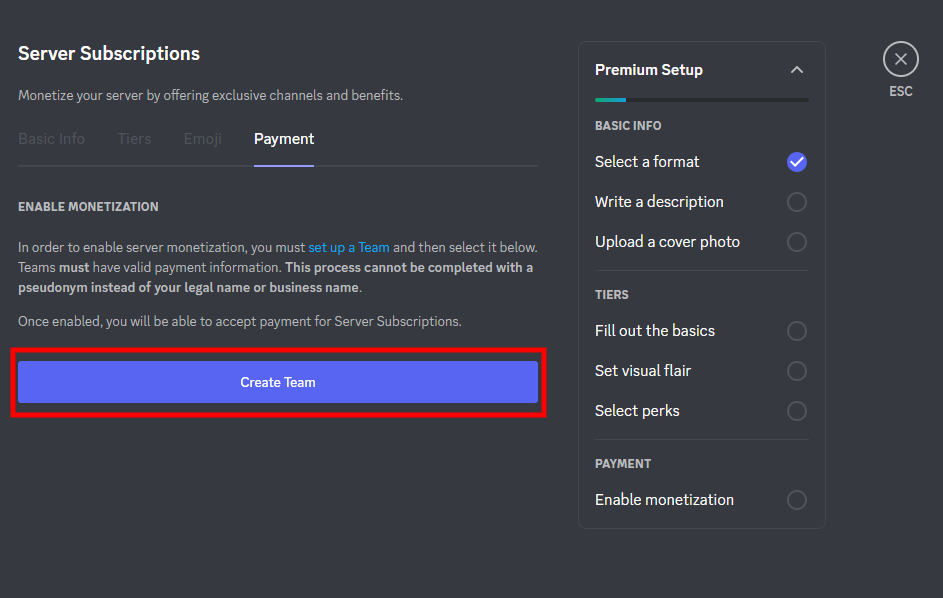
Discord's role and permission system allows creators to build different levels of access inside the same community. Instead of creating completely separate servers for different customers, you can use roles to determine exactly which channels, conversations and experiences each member can access.
That means a single Discord server can effectively become several different products.
Someone paying $10 might receive access to premium discussions and resources.
Someone paying $25 could unlock the entire premium community, private events and direct access to the creator.
The important distinction is simple:
You're not selling a role. You're selling what the role unlocks.
🏗️ Build the Server Around Value, Not Access
The biggest mistake creators make with premium Discord communities is starting with the price.
They ask:
"What should I charge for VIP?"
The better question is:
"What problem am I solving for someone who pays me?"
If your community is about gaming, perhaps premium members receive strategy sessions, tournament discussions, team-building advice or early access to community events.
If it's focused on education, premium members might receive deeper resources, study sessions, expert discussions or private Q&As.
If it's a creator community, paying members might receive networking opportunities, feedback sessions, resources and direct interaction.
The role itself isn't valuable.
The experience behind the role is valuable.
This is where Discord's permissions become powerful.
You can create a free community where everyone can participate in general discussions while restricting specific channels to premium roles.
For example:
Free Member
General chat
Community announcements
Public events
Basic resources
$10 Premium
Everything in Free
Premium discussions
Exclusive resources
Private events
Member-only channels
$25 VIP
Everything in Premium
VIP-only channels
Direct creator access
Advanced resources
Private calls or sessions
Early access to new content
Now the tiers actually mean something.
💎 The $10 Tier Should Feel Worth $10
Your first paid tier should usually be the easiest upgrade to understand.
Think of it as the "I want more" membership.
A $10 member shouldn't simply see a new role color.
They should immediately notice that their Discord experience has changed.
You might create channels such as:
#premium-chat
A quieter conversation space where paying members can discuss topics without the noise of the public community.
#premium-resources
A library of guides, templates, downloads, tutorials or other useful material.
#premium-events
A dedicated place for private events, discussions and scheduled community sessions.
#premium-feedback
A channel where members can ask questions, submit work or receive feedback.
The goal is to create a clear difference between free and paid membership.
But there's an important balance.
👑 The $25 Tier Needs a Different Reason to Exist
The biggest mistake with multiple tiers is making them almost identical.
If your $10 member gets five premium channels and your $25 member gets six, people will naturally ask:
Why am I paying another $15?
The higher tier needs a different kind of value.
That value could come from access, exclusivity, convenience or direct interaction.
For example:
$10 Premium
Premium discussion
Private resources
Member events
Special guides
$25 VIP
Everything in Premium
VIP-only discussions
Direct creator Q&As
Monthly private session
Early access
Priority feedback
The difference isn't simply more channels.
🔐 Discord Roles Are Your Access System
The technical foundation behind this strategy is Discord's role-permission system.
A role can be assigned to a member and then used to determine what that member can see or do within the server.
That means you can structure your server around permission-based experiences.
For example:
@Free
Public channels only.
@Premium
Public channels + premium channels.
@VIP
Public channels + premium channels + VIP channels.
This structure allows you to keep everything inside one server.
You don't need a separate server for every membership level.
📈 The $10,000 Math Is More Interesting Than It Looks
The "$10,000/month server" doesn't necessarily mean you need an enormous audience.
It means you need the right combination of members, pricing and retention.
For example:
1,000 members × $10 = $10,000/month
But a mixed-tier community could reach the same revenue differently.
700 members × $10 = $7,000
120 members × $25 = $3,000
Total:
$10,000/month
That's why premium tiers matter.
You're not forcing every member into the same price.
Instead, you're allowing different people to pay according to how much value they want.
Some members may only want additional resources.
Others may want deeper community access.
A smaller number may want direct access to the creator.
The higher tiers can therefore increase the average revenue per paying member without requiring the entire community to pay more.
⚠️ Don't Create a Premium Graveyard
There's one problem that can destroy the entire strategy.
Empty premium channels.
Nothing makes a paid Discord feel worse than joining a $10 or $25 tier and discovering that the exclusive channels haven't been used in weeks.
Premium communities require ongoing value.
That doesn't necessarily mean posting constantly.
It means giving members a reason to return.
That could be:
- Weekly premium discussions
- Monthly private events
- New resources
- Member challenges
- Expert Q&As
- Feedback sessions
- Exclusive announcements
- Community competitions
- Early access to content
The exact perks depend on the community.
But the principle remains the same:
Recurring revenue requires recurring value.
If members forget why they subscribed, cancellations eventually follow.
🚀 What Happens Next?
The future of Discord monetization is unlikely to be about simply creating more roles.
It will be about creating better membership experiences.
Creators can treat Discord like a digital building.
The free channels are the lobby.
The $10 tier is the premium floor.
The $25 tier is the private lounge.
And the highest-value members may eventually receive access to experiences that cannot be replicated anywhere else.
This also creates opportunities for creators to experiment.
A $5 entry tier could attract casual supporters.
A $10 tier could provide the core premium experience.
A $25 tier could target highly engaged members.
And beyond that, creators could offer completely different products such as coaching, consulting, events or private communities.
The important thing is not to create five tiers simply because Discord allows you to.
Every tier should answer a different customer need.
If two roles provide almost identical experiences, one of them probably doesn't need to exist.
🎮 The Bottom Line
A $10,000/month Discord server isn't built by adding a VIP role and hoping people subscribe.
It's built by creating layers of genuine value.
The $10 tier should give members something they regularly use.
The $25 tier should provide deeper access, stronger exclusivity or more direct interaction.
And Discord's role permissions should make those differences feel seamless inside one community.
The most important rule is simple:
Never make people pay for the badge. Make them pay for what the badge unlocks.
A colored username might make someone feel special for a day.
A private community that consistently saves them time, teaches them something, connects them with valuable people or gives them access to an experience they can't get elsewhere can keep them subscribed for months.
That's the difference between a Discord server with paid roles and a real recurring-revenue community.


Comments
Sign in to join the conversation
Sign inNo comments yet
Be the first to share your thoughts!