
The MMO Economy Collapse: Why ArcheAge S Just Scrapped Its Entire Crafting System
ArcheAge S: Strait of Freedom is making one of the biggest changes imaginable to the original ArcheAge formula: it is taking apart the game's old progression economy and rebuilding it around multiple paths to gear, limited resources, and player-driven trade.
But there is an important distinction here. The developers have not removed crafting altogether, and ArcheAge S does not use fixed classes. Instead, the team is responding directly to problems it believes were built into the original game's systems.
The original ArcheAge tried to make its world feel like a functioning economy. Players gathered resources, produced goods, crafted equipment, traded items and fought over valuable territory. That freedom was one of the game's defining features.
It also created some serious problems.
According to the ArcheAge S development team, production could grow without enough demand to support it, while limited land created another layer of scarcity. Gear progression was also heavily tied to crafting, meaning players could end up grinding the activities that generated the most currency rather than simply playing the content they enjoyed. The developers also acknowledge that monetization contributed to pay-to-win concerns.
Now, ArcheAge S is attempting to build the same kind of player-driven world without repeating that economic structure.
ArcheAge's Original Economy Had a Fundamental Problem
The original ArcheAge was built around systems that were unusually interconnected for an MMO.
Land ownership affected housing and production. Production affected resources. Resources fed crafting. Crafting fed gear progression. Gear affected PvP. Trade moved goods around the world.
On paper, that sounds like exactly what a sandbox MMO should do.
The problem was that these systems could become bottlenecks for one another.
The development team has specifically pointed to finite land as one of the original game's problems. Players could claim plots, meaning housing was not simply a personal feature. It was a competition for limited space.
That created an environment where players who arrived later could have difficulty participating in some of the game's economic systems.
The same philosophy extended to production.
If players could produce more goods than the economy could meaningfully absorb, the system could create an imbalance between supply and demand. The developers describe this as one of the structural problems that emerged from trying to make the game operate like a real economy.
And then there was gear.
Crafting Is Not Gone, But It Is No Longer the Only Road
This is probably the biggest misunderstanding surrounding the new system.
ArcheAge S has not killed crafting.
Instead, it is removing the original game's dependence on crafting as the exclusive route to gear progression.
In ArcheAge, crafting was effectively at the center of gear progression. Because equipment could also be sold through the Auction House, players had strong incentives to focus on whatever activities generated the most currency.
The developers acknowledge that this structure, combined with monetization, contributed to pay-to-win problems.
ArcheAge S takes a different approach.
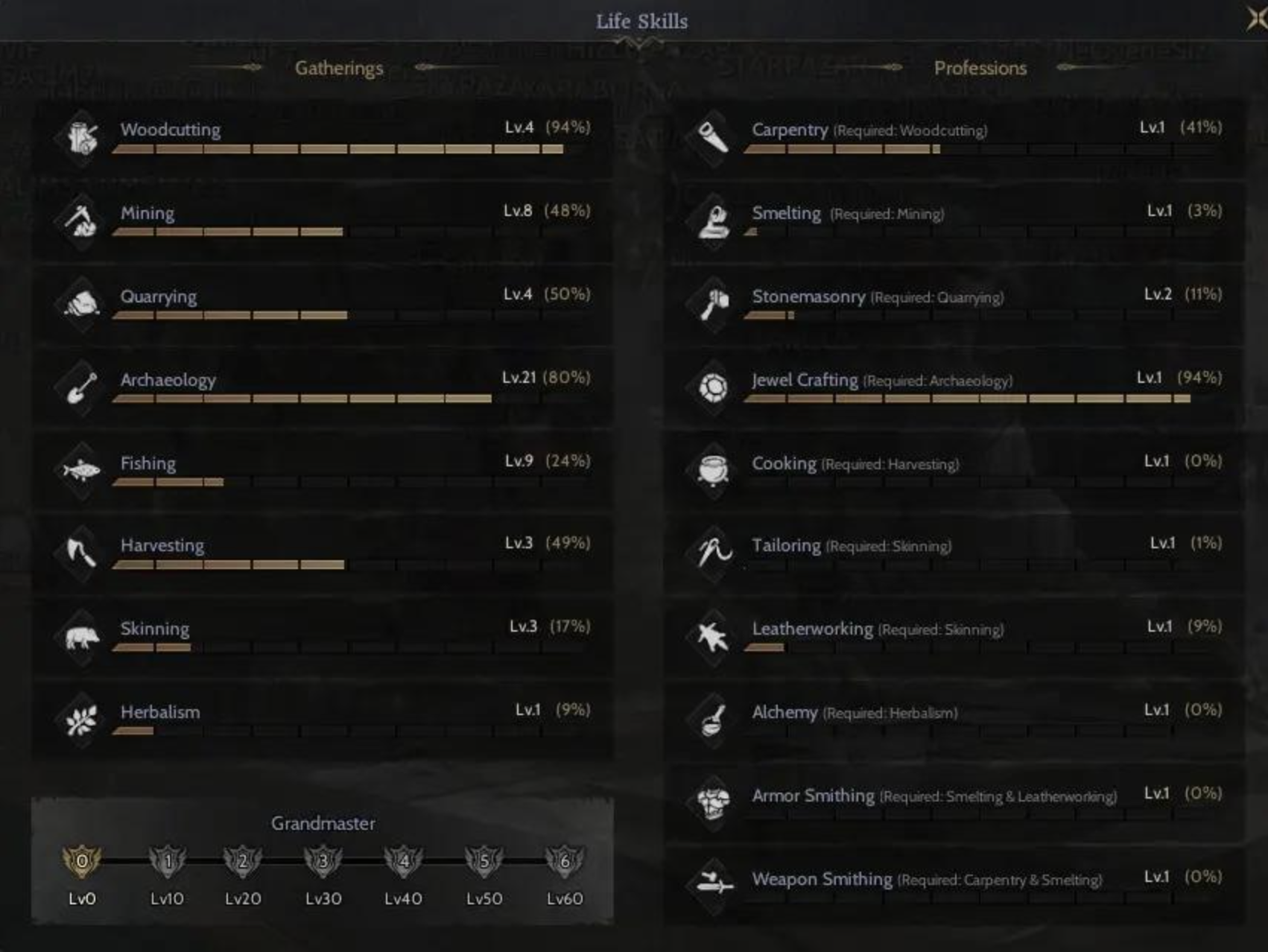
Players can progress through:
Field hunting
Dungeons
Gathering
Production
Trade
Resource collection
Different activities can also produce different gear and skill combinations.
That means a player who does not want to become a dedicated crafter should still have ways to progress.
It is less about deleting the crafting economy and more about removing crafting as a mandatory gatekeeper for progression.
There Are No Fixed Classes Either
The class system is receiving a similar redesign.
Rather than choosing a traditional fixed class and being locked into it, ArcheAge S allows players to build their combat identity around their equipment.
Weapons provide four combat skills, while armor also contributes abilities. Players can combine equipment to create their own combat setup.
In other words, your gear helps determine your class.
This is a deliberate attempt to preserve the freedom that was central to ArcheAge while making combat easier to control.
The developers have also moved toward a more familiar control scheme, including QWER abilities and WASD movement, rather than forcing players to manage the enormous skill selection that could make the original's combat difficult to handle.
So rather than moving toward fixed classes, ArcheAge S is actually moving in the opposite direction.
Scarcity Is Still Here
Interestingly, ArcheAge S is not abandoning scarcity.
It is changing where scarcity happens.
Every player will receive personal housing space, eliminating the original land rush where players competed for limited plots. That removes one of the biggest barriers created by the original housing system.
But resources will remain limited.
Players will have choices about what they produce, and certain resources will only be obtainable by participating in specific gameplay.
That means the economy can still create reasons for players to interact.
A player might specialize in producing one resource while another player focuses on something completely different. Surplus resources can then move through the game's trade systems.
This creates a different kind of scarcity.
Instead of fighting over who owns the piece of land needed to participate in the economy, players compete over what they produce and how they move it through the world.
Trade Could Become the New Economic Battleground
This is where ArcheAge S appears to be keeping one of the most important ideas from the original.
Resources are not supposed to exist in isolation.
Players produce them, move them and eventually use them for progression.
That movement creates opportunities for conflict.
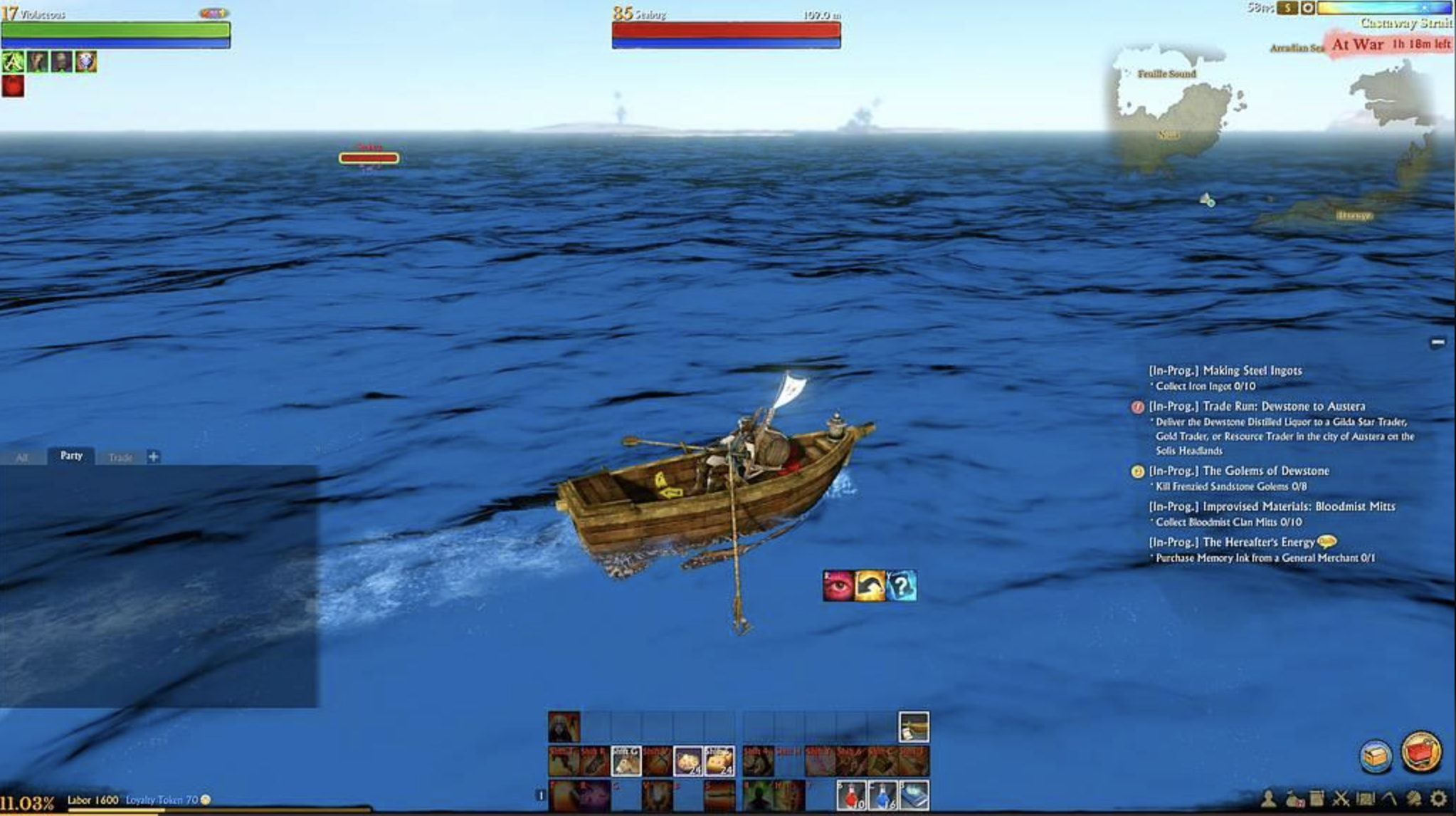
A player transporting valuable resources might become a target for another group. Trade routes can become dangerous. Guilds can develop around controlling resources or protecting valuable transportation routes.
The developers describe this as part of a broader loop that connects progression, production, trade and PvP.
The goal is not simply to create an auction house where players buy and sell items.
The goal is to make the economy itself generate gameplay.
The Developers Are Moving PvP Into the Economic Loop
This is another major change from the original formula.
ArcheAge's large-scale PvP was one of its defining features, but the developers acknowledge that power could become heavily concentrated. Once one side gained enough of an advantage, the imbalance could remain for long periods.
ArcheAge S is restructuring competition at multiple levels.
Smaller conflicts can occur between parties and guilds, while larger server-versus-server competition can rotate matchups to prevent one side from remaining permanently dominant.
The economic system feeds into this.
Players gather resources.
Resources support progression.
Progression supports guild activity.
Guild activity can lead to territorial and PvP conflicts.
That is the loop the developers are trying to establish.
So Did ArcheAge S Actually "Collapse" Its Economy?
Not exactly.
There is currently no evidence that ArcheAge S launched an economy that collapsed overnight. The game is still targeting a Q2 2027 release, meaning the economy being discussed is a development design rather than a live-service economy that has already failed.
What has happened is arguably more interesting from a design perspective.
The developers have looked at the economic structure of the original ArcheAge and identified several systems they believe contributed to its problems.
Then they redesigned those systems before launch.
The changes include:
| Original ArcheAge | ArcheAge S |
|---|---|
| Crafting central to gear progression | Multiple gear progression routes |
| Competitive land ownership | Personal housing space |
| Large skill selection | Equipment-based skill combinations |
| Production tied heavily to crafting progression | Production integrated with broader progression |
| Scarcity around land | Scarcity focused more on resources |
| PvP could become heavily imbalanced | Competition structured at multiple scales |
The result is not the death of the MMO economy.
It is an attempt to make the economy sustainable without removing the reasons players need each other.
The Real Experiment Is Whether Scarcity Can Still Feel Fun
This could ultimately be the most important question for ArcheAge S.
Scarcity is useful in an MMO because it gives players something valuable to chase.
But scarcity can also become frustrating when players feel that the game is preventing them from participating.
ArcheAge S appears to be trying to find the middle ground.
Housing is no longer restricted by land ownership. Gear is no longer locked behind crafting alone. Yet resources remain limited enough to encourage specialization, trade and competition.
That is a delicate balance.
Make resources too common and the economy loses meaning.
Make them too rare and players can feel forced into repetitive activities.
Make progression too dependent on trading and the economy can become dominated by wealth.
Make progression too independent of the economy and the player-driven sandbox starts losing its purpose.
ArcheAge S is effectively betting that multiple progression routes can prevent those problems from reinforcing one another.
A Different Kind of ArcheAge
The most interesting part of ArcheAge S is that the developers are not simply removing the systems that caused problems.
They are trying to reconnect them differently.
Crafting remains.
Resources remain.
Trade remains.
Scarcity remains.
PvP remains.
But their relationships are changing.
The new game is being built around the idea that no single system should completely control progression. Players should be able to hunt, explore, gather, produce, trade or fight and still participate in the broader world.
That could make the economy feel less restrictive while preserving the player interaction that made ArcheAge unusual in the first place.
Whether it works will ultimately depend on how these systems behave once thousands of players begin exploiting them at the same time.
For now, ArcheAge S is not the story of an MMO economy collapsing overnight.
It is the story of a developer trying to prevent the next economic collapse by rebuilding the rules before players ever get the chance to break them.