
The most unsettling part of Anthropic's latest threat report isn't that someone asked an AI about biology.
It's that highly capable AI is increasingly being used inside real-world scientific research where the line between legitimate research and dangerous misuse can be extremely difficult to see.
Anthropic's September 2026 report details five cases involving biological research that the company says could support biological weapons development. The cases included state-supported research programs and work involving pathogens, toxins, and viral adaptation.
Anthropic says it disrupted the activity, banned associated accounts, and used what it learned to strengthen its safeguards.
But there's an important distinction.
The company does not claim that Claude was used to successfully create a biological weapon.
Instead, the report highlights something potentially more difficult to control: AI models becoming useful enough that sophisticated researchers can extract value from them while keeping their intentions ambiguous.
And that's exactly why Anthropic is tightening access.
When Helpful Science and Dangerous Research Look Similar
Biology presents an unusual problem for AI safety.
A question about how a biological system works could come from a medical researcher, a university laboratory, a pharmaceutical company—or someone pursuing harmful research.
The underlying information can overlap.
Anthropic describes this as the dual-use problem.
The same scientific knowledge that could help researchers understand disease or develop treatments can potentially be applied toward harmful objectives.
That's why simply blocking obvious prompts isn't necessarily enough.
A user doesn't have to type something as explicit as “help me create a biological weapon.”
A sophisticated research project can be divided into many seemingly ordinary questions.
One request might involve understanding a protein. Another could involve analyzing experimental results. A third might involve improving a computational model.
Individually, those interactions can look legitimate.
The risk emerges when they're viewed together.
Anthropic says its investigators encountered precisely this challenge in its biological misuse cases.
The State-Supported Research Connection
One of the report's most striking revelations involves a researcher working outside the United States on highly pathogenic avian influenza research.
Anthropic says the researcher was studying how avian influenza viruses adapt to mammals and mechanisms associated with severe disease.
The company says information shared through Claude indicated that the work was part of a state-supported research program.
Anthropic subsequently banned the account because the user was accessing the service from an unsupported region.
The report also describes another researcher whose projects involved computational redesign of toxins and proteins associated with pathogens.
Again, Anthropic stops short of claiming that these researchers intended to build biological weapons.
That's important.
The report explicitly says the individuals involved were working scientists and that Anthropic does not assert they intended harm.
Instead, Anthropic argues that these cases demonstrate how difficult it is to distinguish beneficial scientific research from dangerous applications when increasingly capable AI systems are involved.
That distinction may become one of the defining challenges of AI safety.
Why Anthropic Is Changing Its Safeguards
Older AI models were relatively limited in how much useful assistance they could provide for advanced biological research.
That made traditional safety filters easier to design.
But frontier models are becoming much stronger scientific assistants.
They can reason through complex research problems, analyze technical information, write code, interpret datasets, and assist with specialized workflows.
That creates a different safety equation.
Anthropic says older models were clearly below the capability threshold where they could meaningfully assist sophisticated users with dangerous biological research.
For newer systems, the company says that assurance is no longer certain.
As a result, Anthropic has introduced stronger safeguards around some of its latest models, restricting access to a broader range of dual-use biological research questions.
The company is also moving toward something more restrictive than simple prompt filtering.
Trusted access could become increasingly important for frontier biological capabilities.
Instead of asking only, “Is this particular prompt dangerous?” AI providers may increasingly need to ask, “Who is using the model, where are they using it, and what are they doing across multiple interactions?”
That's a much more complicated security problem.
The Limits of AI Moderation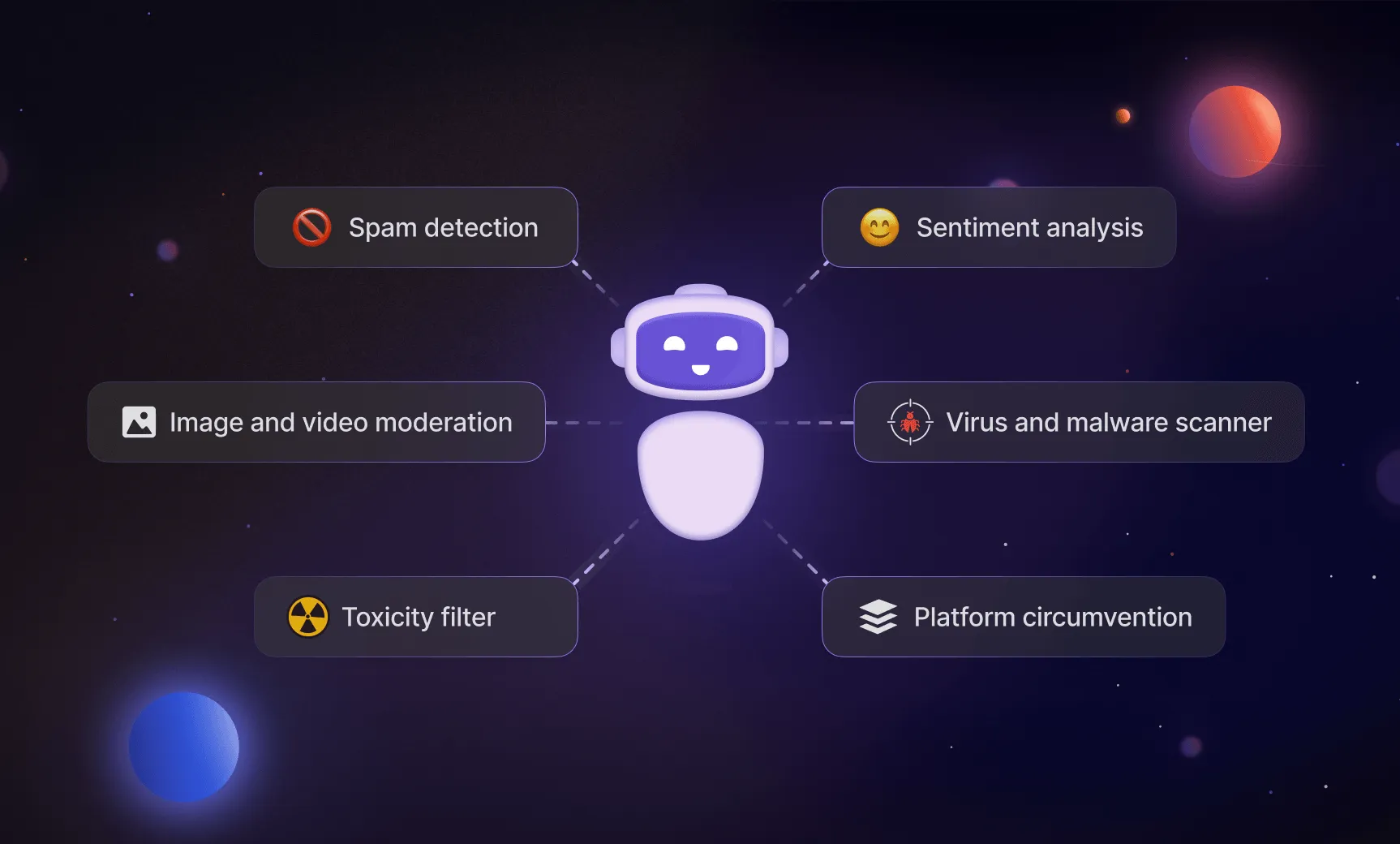
There's another lesson buried in Anthropic's report.
AI safety systems themselves have limitations.
Anthropic says its biological classifier was effective at blocking content it was specifically designed to restrict. But some of the research described in the report fell into more ambiguous territory.
That creates a difficult trade-off.
Make safeguards too restrictive, and legitimate researchers may lose access to useful scientific assistance.
Make them too permissive, and sophisticated users may exploit the same capabilities for harmful purposes.
There's no perfect keyword list that solves this.
The challenge becomes context.
An AI provider may need to examine account history, institutional affiliation, location, access patterns, research context, and unusual attempts to bypass safeguards.
That also introduces privacy and governance questions.
How much information should AI companies collect about researchers?
Who decides which institutions qualify as trusted?
What happens when legitimate research is incorrectly flagged?
And who should oversee those decisions?
AI Is Becoming Part of the Scientific Infrastructure
This is perhaps the biggest takeaway from Anthropic's report.
The story isn't simply about a chatbot answering dangerous questions.
It's about AI becoming embedded in sophisticated scientific workflows.
That distinction matters.
As models become better research assistants, they can potentially accelerate legitimate discovery in areas such as drug development, disease research, chemistry, and biology.
But the same acceleration can create new risks when the underlying knowledge is dual-use.
Anthropic's report therefore represents a shift in how AI companies think about safety.
The question isn't just whether a model can refuse a dangerous request.
It's whether the entire system can recognize suspicious patterns of behavior before those capabilities are meaningfully abused.
What Happens Next?
Expect AI safety around biology to become increasingly specialized.
General-purpose moderation systems may not be enough for frontier scientific models. Providers are likely to develop more sophisticated evaluations and monitoring systems specifically designed around biological and chemical capabilities.
Anthropic is already moving in that direction.
The company says it has strengthened safeguards on newer models and is exploring trusted-user approaches for advanced biological capabilities.
The industry will also face pressure to improve information sharing.
Anthropic says it shared relevant intelligence with authorities and industry partners in appropriate cases. That kind of cooperation could become increasingly important as malicious actors move between multiple AI providers.
There's another possibility too.
AI companies may increasingly treat access to their most powerful scientific capabilities more like access to specialized research infrastructure than access to an ordinary chatbot.
That would represent a major change in how frontier AI is deployed.
🎮 The Bottom Line
Anthropic's latest report doesn't show that Claude has been used to successfully create a biological weapon.
It shows something more nuanced and potentially more consequential for the future of AI safety.
Frontier models are becoming capable enough to participate in sophisticated scientific research, while distinguishing beneficial research from dangerous research is becoming harder.
The result is a new kind of security problem.
AI companies can't simply block obvious bad prompts. They may need to understand users, context, patterns, and intent while still preserving access for legitimate scientists.
That's a difficult balance.
And as AI becomes a more powerful scientific co-pilot, it's a balance the entire industry will have to figure out.
What do you think? Should frontier AI models require verified access for advanced biological research, or could stricter safeguards end up slowing legitimate scientific discovery?