
For years, buying a new graphics card was simple: more GPU power meant more performance.
You compared benchmarks, checked VRAM, looked at clock speeds, and picked the card that delivered the highest FPS for your budget.
In 2026, that formula is starting to change. Frame generation has become an important part of modern gaming, alongside AI-powered upscaling, ray tracing, and advanced graphics software.
The GPU market is increasingly becoming a battle over AI, memory, software, upscaling, frame generation, and system architecture rather than raw graphics horsepower. Modern GPUs are no longer judged only by how quickly they render pixels.
And that changes what your next graphics card purchase should look like.
Tip
Don't compare GPUs using FPS alone. Check VRAM, ray tracing, upscaling quality, frame-generation support, power consumption, and current pricing before buying.
Tip
Don't compare GPUs using FPS alone. Check VRAM, ray tracing, upscaling quality, frame-generation support, power consumption, and current pricing before buying.
The GPU Is No Longer the Whole Story
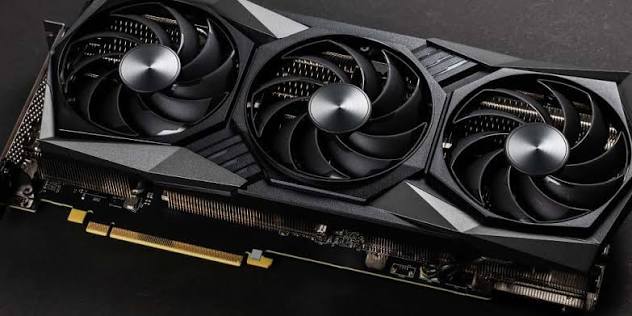
A powerful GPU can still make a huge difference. But modern gaming increasingly depends on technologies that sit around the GPU itself.
Nvidia's DLSS, AMD's FSR and Intel's XeSS can reconstruct higher-resolution images from lower-resolution frames. Frame-generation technologies can create additional frames between traditionally rendered ones.
Tom's Hardware notes that upscaling has become so important that a GPU with weaker traditional benchmark numbers can sometimes deliver a perfectly playable experience once modern reconstruction technology is enabled.
That means native FPS isn't always the best measure of real-world gaming performance anymore.
A graphics card producing 70 FPS natively isn't necessarily better for your gaming experience than one producing 60 FPS but offering significantly better upscaling and frame-generation technology.
AI Is Changing What a GPU Actually Does
The biggest shift isn't happening inside gaming. It's happening because GPUs have become the foundation of the AI industry.
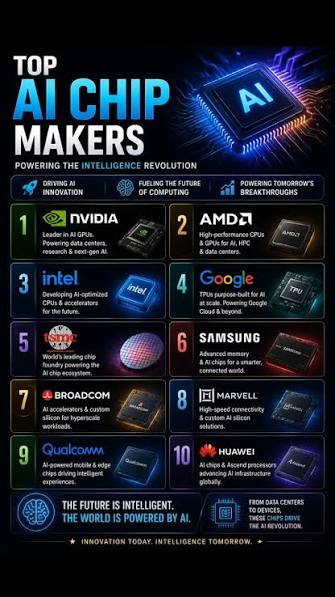
Nvidia, AMD and other chipmakers are competing aggressively for data-center AI workloads, where GPUs and specialized accelerators process enormous AI models.
This competition is having consequences for consumers.
In 2026, the traditional gaming GPU market is facing higher prices and memory pressure. Recent market tracking has shown major price increases across several current-generation graphics cards, with memory supply becoming a major factor.
The result is strange.
You might be buying a GPU designed primarily for gaming, but you're competing for some of the same semiconductor and memory resources demanded by the AI industry.
VRAM May Matter More Than Raw GPU Power
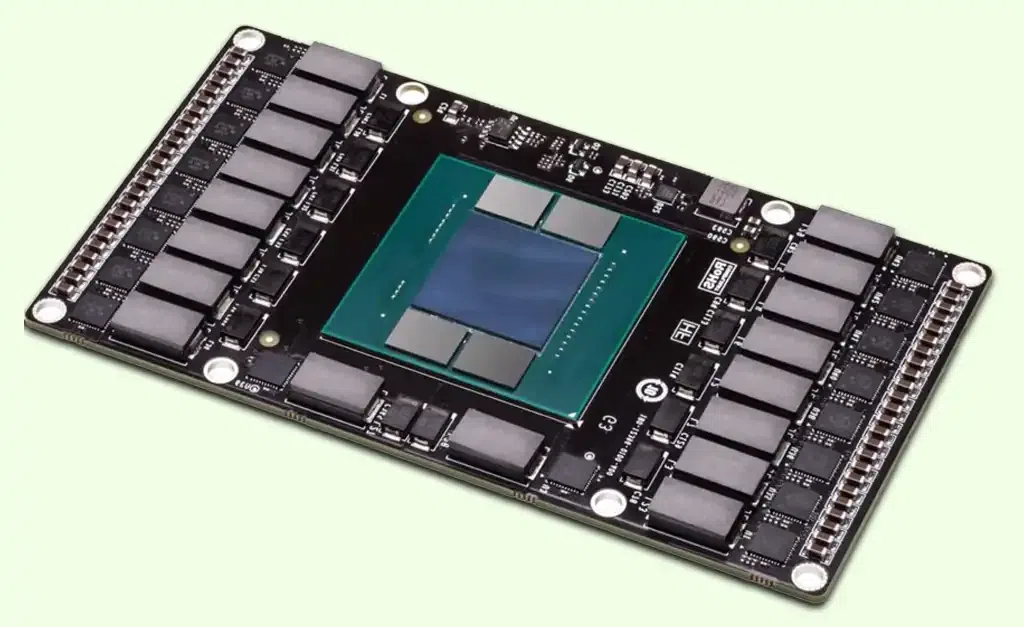
One of the biggest mistakes gamers can make is looking only at the GPU's processing power.
VRAM is becoming increasingly important.
Modern games can consume large amounts of video memory when running at high resolutions with detailed textures, ray tracing and other demanding settings. AI workloads make memory even more valuable.
This is why two GPUs with similar theoretical performance can age very differently.
A card with stronger compute performance but insufficient VRAM can eventually run into memory limitations, while a slightly slower card with enough memory may remain useful for longer.
Recent GPU research is also highlighting memory-system bottlenecks rather than simply raw compute as an increasingly important limitation.
In other words:
More cores don't automatically mean more useful performance.
Warning
A GPU with impressive raw performance can still age poorly if it has limited VRAM or weak long-term software support.
Upscaling Is Becoming Part of the Hardware
This is perhaps the most important change for gamers.
Traditional GPU reviews focused heavily on native rendering. Today, the software stack can dramatically change the experience.
AMD's 2026 FSR Redstone update, for example, includes AI-powered upscaling, frame generation and ray-regeneration technologies.
Nvidia and Intel have their own competing technologies.
That means the question is no longer simply:
"How fast is this GPU?"
It is increasingly:
"How good is the entire rendering ecosystem behind this GPU?"
Driver support, game compatibility, image quality, latency and AI acceleration can all influence the experience.
The GPU Arms Race Is Becoming a Software War
This is why the 2026 GPU market feels different.
Nvidia, AMD and Intel aren't just competing on silicon.
They're competing on ecosystems.
A company that delivers slightly weaker traditional rasterization performance can still compete if its software produces better image reconstruction, frame generation or ray-tracing results.
That creates a new type of GPU buyer.
Instead of choosing purely based on benchmark numbers, gamers increasingly need to consider:
- Native gaming performance
- VRAM capacity
- Ray-tracing performance
- Upscaling quality
- Frame-generation support
- Driver stability
- Game compatibility
- Power consumption
- Price
- Long-term software support
Bigger Isn't Always Better
The current market also demonstrates why simply buying the most powerful GPU isn't necessarily sensible.
Recent 2026 pricing data shows some high-end Nvidia cards selling far above their original positioning, while mid-range alternatives can provide considerably better value.
For most gamers, spending thousands on a flagship GPU may make little sense if the monitor, CPU or games themselves cannot take advantage of that performance.
The smarter approach may be buying a balanced system.
A slightly cheaper GPU combined with a good CPU, sufficient VRAM, fast storage and a high-quality monitor can deliver a better overall experience than putting the entire budget into one graphics card.
What This Means for Your Next GPU
The GPU isn't becoming irrelevant.
Quite the opposite.
It is becoming one component of a much larger performance system.
If you're buying a graphics card in 2026, don't automatically choose the one with the biggest benchmark number.
Look at how it performs with the technologies you actually use.
If you play competitive games at 1080p, raw rasterization and latency may matter most.
If you play cinematic AAA games at 4K, upscaling, ray tracing and frame generation can become much more important.
If you use your PC for AI, video production or creative workloads, VRAM and compute support could matter more than gaming FPS.
The Real GPU Arms Race
The GPU arms race of 2026 isn't simply Nvidia versus AMD versus Intel.
It's a competition between hardware and software, compute and memory, native rendering and AI reconstruction.
That is why your next graphics card might not matter as much as you think.
The winning GPU isn't necessarily the one with the most cores.
It's the one that combines enough raw power with the right memory, software, AI features and efficiency for the way you actually use your PC.
And as GPUs become increasingly intelligent, the old rule of "buy the fastest card you can afford" is starting to look seriously outdated.
FAQs
Is GPU performance becoming less important in 2026?
No. Raw GPU performance remains important, but technologies such as upscaling and frame generation can significantly influence the final gaming experience.
Is VRAM more important now?
Yes. Higher-resolution textures, ray tracing, AI workloads and modern games can place greater demands on video memory, making VRAM an increasingly important factor when choosing a GPU.
Should I buy a high-end GPU in 2026?
Only if you can actually use the additional performance. For many gamers, a balanced mid-range or upper-mid-range system can offer better value than an extremely expensive flagship card.
What should I look for when buying a GPU?
Consider performance, VRAM, price, power consumption, ray tracing, upscaling, frame generation, driver support and the games or applications you actually use.
Is AI affecting gaming GPU prices?
Yes. AI has dramatically increased demand for advanced accelerators and memory, while the broader semiconductor supply chain is also under pressure. Current 2026 market tracking shows substantial price increases for several consumer GPUs.
Bottom line: In 2026, buying a GPU is no longer just about buying more graphics power. It's about buying into an entire performance ecosystem.
Comments
Sign in to join the conversation
Sign inNo comments yet
Be the first to share your thoughts!