

What if the biggest problem with game streaming isn’t your internet connection but the video codec itself?
That’s the question Valve is testing with Pyrowave, a new experimental codec for Steam Remote Play. Instead of squeezing gameplay into the smallest possible stream, Pyrowave deliberately uses five to ten times more bandwidth than other Steam streaming codecs in exchange for extremely low encoding and decoding latency.
And Valve has a surprisingly simple recommendation for anyone who wants to try it:
Connect your gaming PC and client directly to the router with at least Gigabit Ethernet.
There is one important distinction, though. Pyrowave does not eliminate latency completely. Your total Remote Play latency still depends on encoding, network transmission, decoding and display time.
What Pyrowave aims to do is remove as much codec-related delay as possible.
Why Would Anyone Want a Codec That Uses More Bandwidth?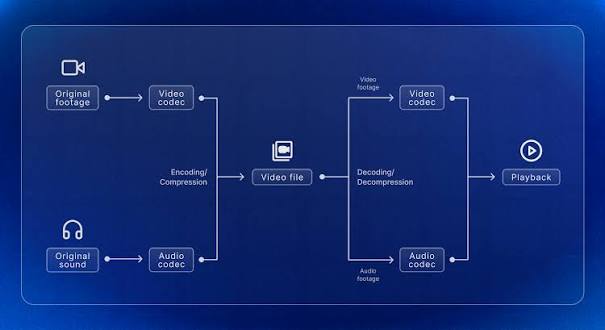
Traditional video codecs are obsessed with one thing: compression.
That makes sense when you're sending video across the internet. Every megabit matters. The less data you transmit, the easier it is to maintain a stable stream.
Pyrowave flips that philosophy around.
It is an intra-only video codec, meaning frames can be processed independently instead of relying heavily on information from previous frames.
That makes the codec particularly suited to fast GPU processing.
Pyrowave is designed around Vulkan compute shaders, allowing encoding and decoding work to be handled in a highly parallel way.
The trade-off is obvious.
Less compression work means more data.
The Gigabit Ethernet Requirement Makes Sense
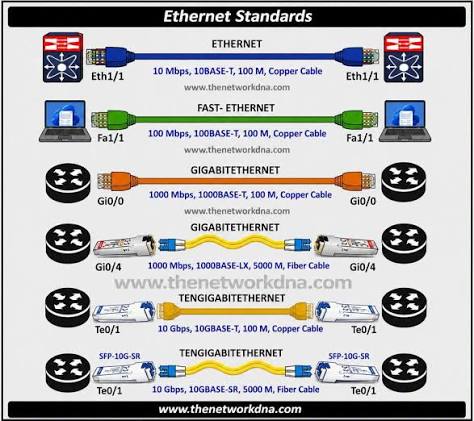
Valve says Pyrowave can consume 5–10× the bandwidth of other streaming codecs and recommends at least Gigabit Ethernet for the connection between the computers and router.
That sounds extreme until you look at what Steam is actually trying to accomplish.
A conventional streaming setup prioritizes keeping bitrate low enough for Wi-Fi and slower networks.
Pyrowave makes a different assumption:
What if the network inside your home has plenty of bandwidth, but every millisecond of processing matters?
In that scenario, spending additional bandwidth becomes a reasonable trade.
Steam allows users to disable automatic bitrate selection and manually choose a stream between 100 Mbps and 500 Mbps.
At 500 Mbps, you're pushing roughly 62.5 MB of data every second, before networking overhead.
That's an enormous amount of data compared with ordinary streaming workloads.
Pyrowave Isn't Just About Speed
The interesting part is that bandwidth isn't the only thing Pyrowave is throwing at the problem.
The codec supports HDR, provided both sides support it, and can also operate with YUV 4:4:4 chroma.
Why does that matter?
Because chroma subsampling can become surprisingly visible when you're streaming a desktop rather than just playing a game.
Fine text, UI elements and sharp colored edges can lose detail when color information is compressed. Full 4:4:4 chroma can preserve more of that information.
That makes Pyrowave interesting not only for couch gaming, but also for high-resolution desktop streaming.
Its underlying design also uses a wavelet-based approach and deliberately favors fast GPU processing over maximum compression efficiency.
In other words, Pyrowave isn't trying to win the bandwidth competition.
It's trying to win the latency competition.
The Real Upgrade May Be What You Don't See
The biggest improvement with Pyrowave may not be sharper graphics.
It may be responsiveness.
Remote Play has several stages between pressing a button and seeing the resulting frame:
The game renders the frame.
The frame is encoded.
The data crosses the network.
The client decodes it.
The display presents it.
Pyrowave specifically targets the encoding and decoding portions.
That doesn't make network latency disappear. If your Wi-Fi connection is congested or your router is adding significant delay, Pyrowave can't magically fix it.
But when the network is already fast and stable, reducing codec overhead could make remote gaming feel considerably closer to playing directly on the host machine.
That's the fundamental idea behind the technology.
Instead of making the video smaller, Valve is trying to make the video faster.
What Happens Next?
Pyrowave is an experimental Steam Client Beta feature, rather than an immediate replacement for Steam's existing streaming codecs.
Its development is particularly interesting because the underlying Pyrowave project is open source and built around Vulkan, giving developers a look at the technology behind Valve's approach.
Support for additional Steam Remote Play clients could make the technology more interesting over time.
But the biggest question is whether this bandwidth-heavy philosophy can work beyond wired home networks.
Wi-Fi keeps getting faster, but raw throughput isn't the only consideration. Interference, congestion, packet loss and latency can all affect interactive game streaming.
For now, Pyrowave's sweet spot is much clearer:
A powerful gaming PC, a capable client, and a fast local network where bandwidth is plentiful.
🎮 The Bottom Line
Pyrowave isn't Valve trying to make Remote Play consume less data.
It's almost the opposite.
Valve is effectively saying: if your home network has bandwidth to spare, let's spend it to reduce the processing overhead that makes game streaming feel less immediate.
The result is an experimental codec built around extremely fast GPU processing, HDR, optional 4:4:4 color and very high bitrates with Gigabit Ethernet becoming an important part of the equation.
It's not literally zero-latency streaming, and it isn't designed to replace conventional codecs for every situation.
But it represents an intriguing change in priorities.
For years, video streaming technology has been about doing more with less bandwidth.
Pyrowave asks a different question:
What if we have enough bandwidth and would rather spend it to make games feel faster?
Would you try Pyrowave if it made Steam Remote Play feel noticeably more responsive, or would you stick with a lower-bandwidth codec and Wi-Fi?