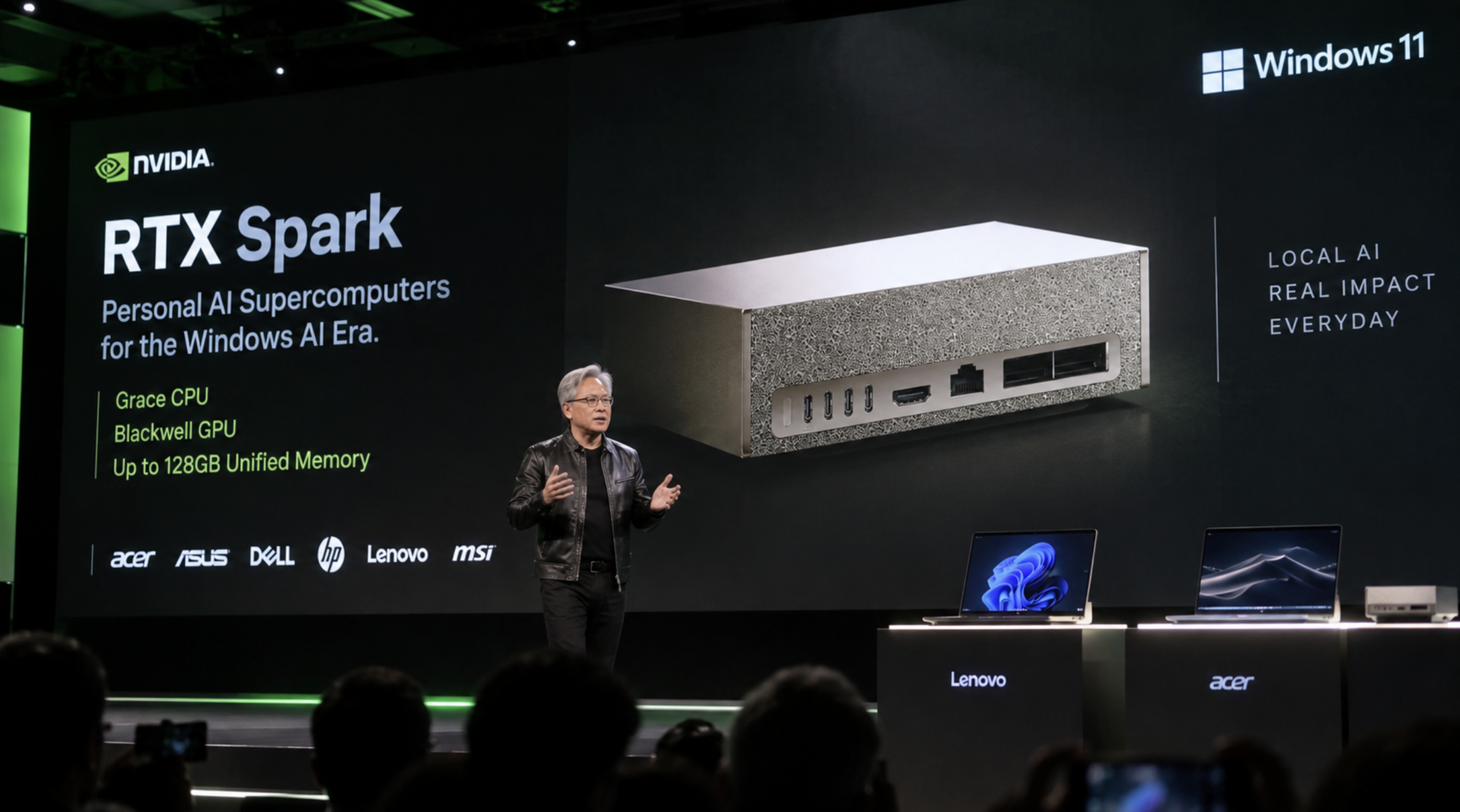

Nvidia RTX Spark PCs: Why the 128GB Unified Memory Platform is a Game Changer for Local AI
The biggest change coming to Windows PCs might not be a faster gaming GPU.
It could be a PC that can run serious AI models without sending everything to the cloud.
At IFA 2026, Nvidia confirmed that its new RTX Spark Windows PCs will begin arriving in October, with Lenovo and Acer among the first companies showing off systems based on the platform.
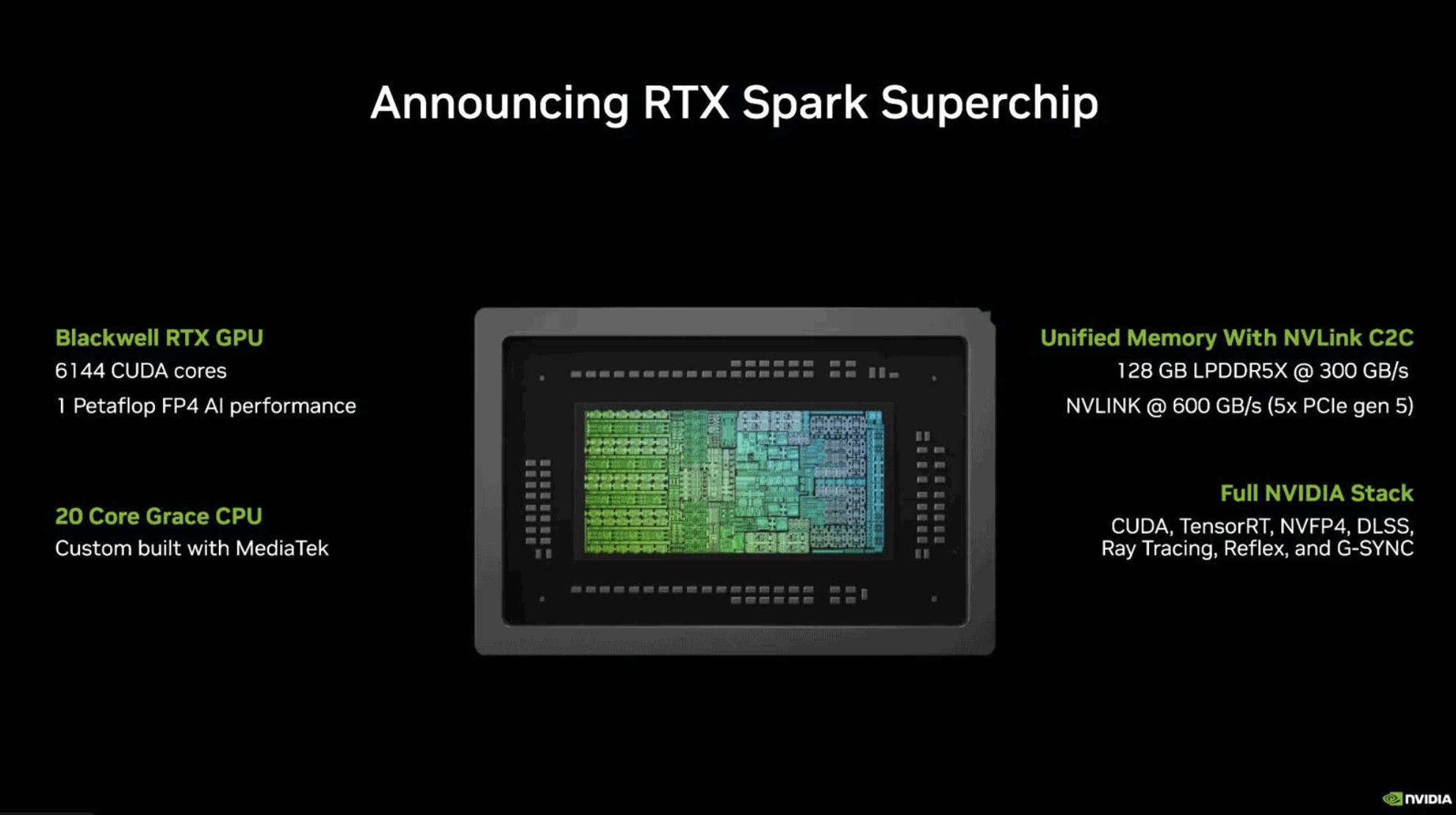
The headline specifications are hard to ignore: up to 128GB of unified memory, a 20-core Grace CPU, a 6,144-core Blackwell RTX GPU and up to 1 petaflop of FP4 AI performance.
But the real story isn't the numbers.
It's what happens when that much memory and GPU compute are available inside a Windows PC.
Why 128GB of Unified Memory Matters
Traditional PCs separate system RAM from dedicated GPU memory.
That works extremely well for gaming, but AI workloads can run into a different problem: the model has to fit somewhere.
RTX Spark takes a different approach.
The high-end N1X configuration can provide up to 128GB of LPDDR5X unified memory, allowing the CPU and GPU to access the same large memory pool. Nvidia says this makes it possible to prototype, fine-tune and run large AI models locally rather than automatically moving them to a cloud server.
Nvidia says RTX Spark systems can run 120-billion-parameter models locally, with up to a million tokens of context when using agents.
That's the important part.
The 128GB figure isn't just there to make a specification sheet look impressive.
It gives local AI models room to breathe.
The Grace + Blackwell Combination
The RTX Spark platform combines two very different pieces of silicon into one system.
The high-end N1X configuration pairs a 20-core Nvidia Grace CPU with a 6,144-core Blackwell RTX GPU. The two are connected through Nvidia's high-bandwidth architecture and share the unified memory pool.
The GPU handles the massively parallel work AI models need.
The Grace CPU handles general computing and the parts of an agent workflow that aren't pure GPU workloads.
That distinction becomes important with AI agents.
An agent isn't simply generating text.
It might read files, call tools, execute code, analyze an image, generate another request and then continue reasoning based on the result.
The PC has to orchestrate all of that.
RTX Spark is designed around that idea rather than treating AI as just another application.
Lenovo Is Putting It Into a Premium Laptop
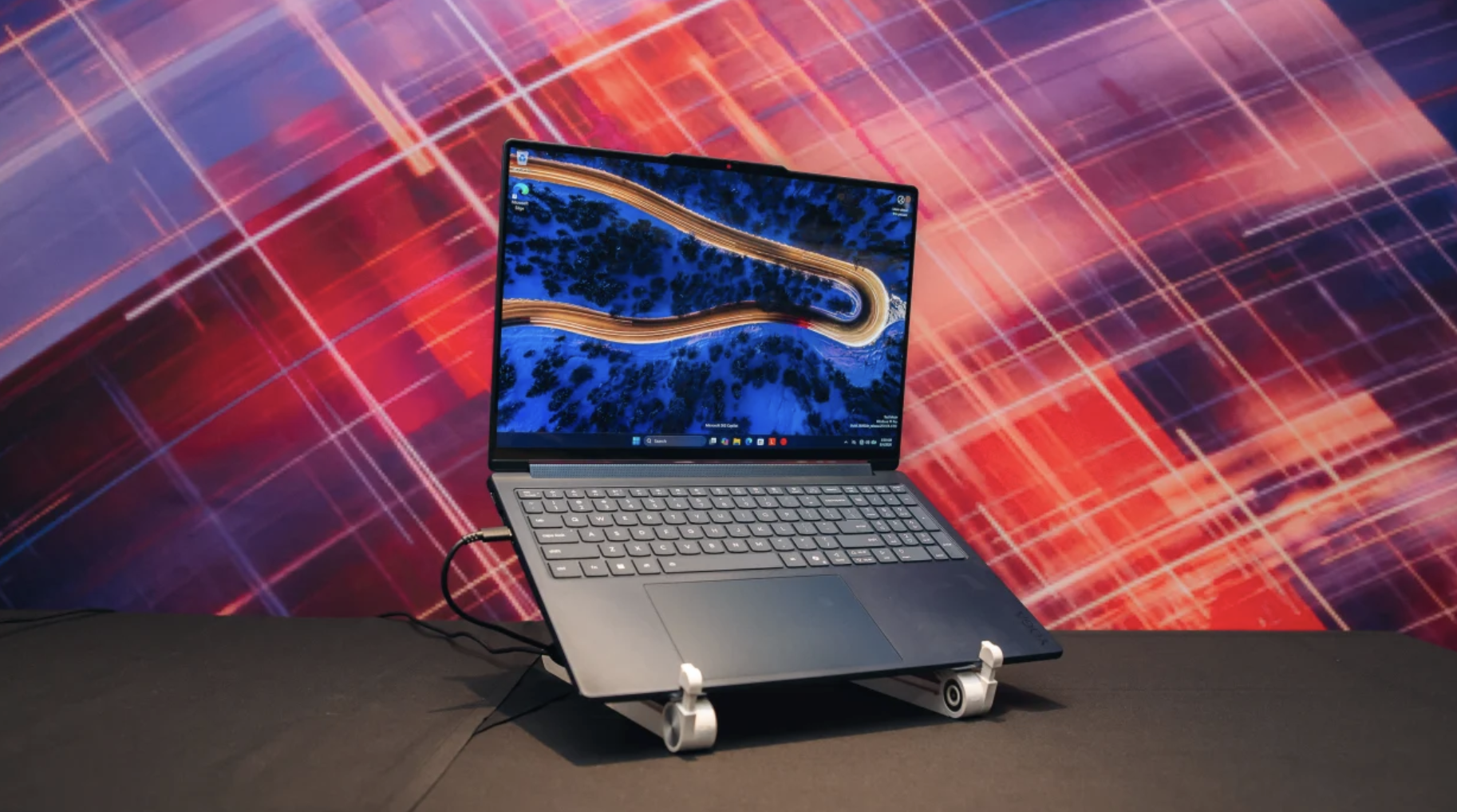
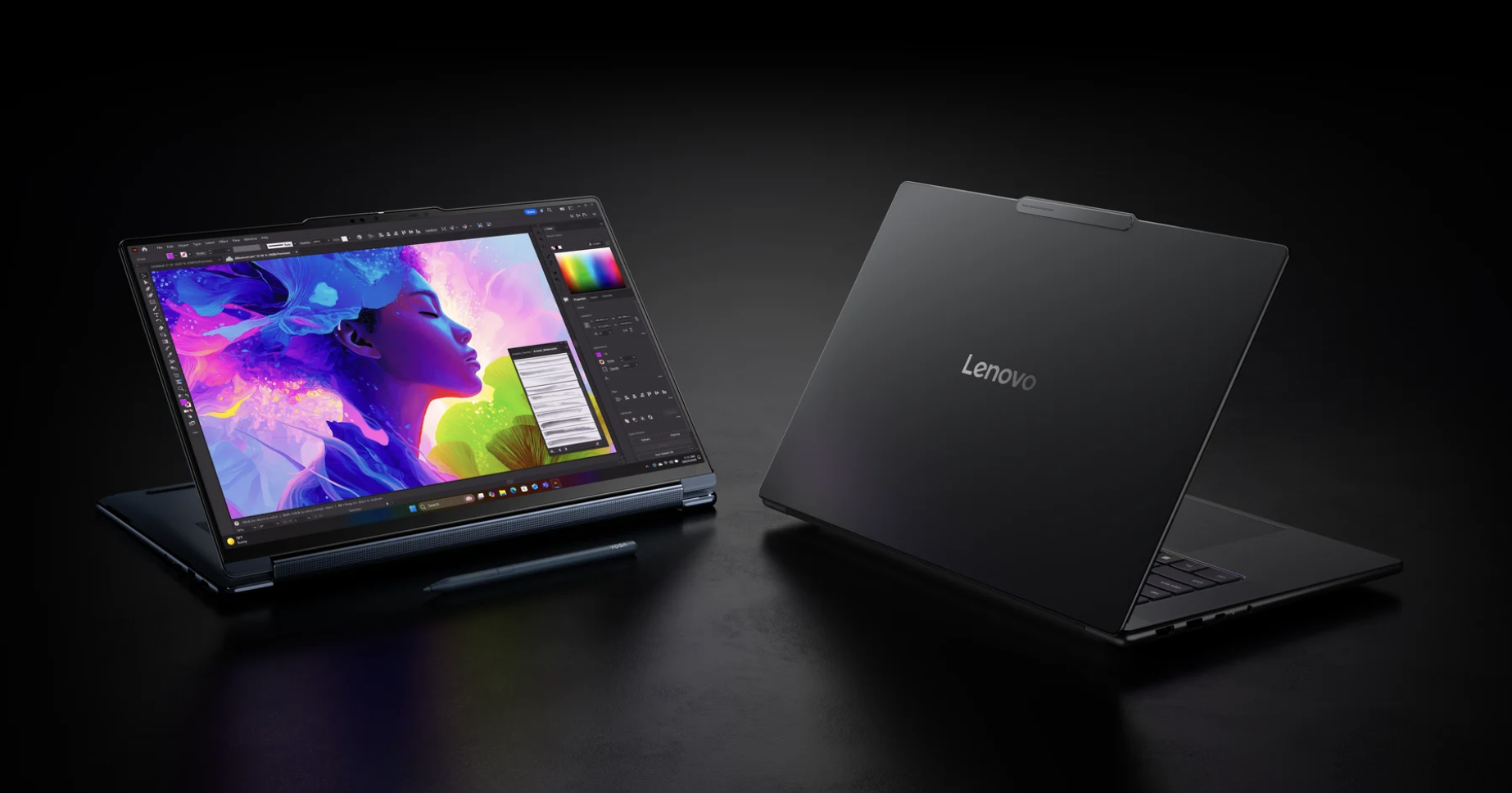
Lenovo's first RTX Spark machines include the Yoga Pro 9n and Yoga 9n 2-in-1.
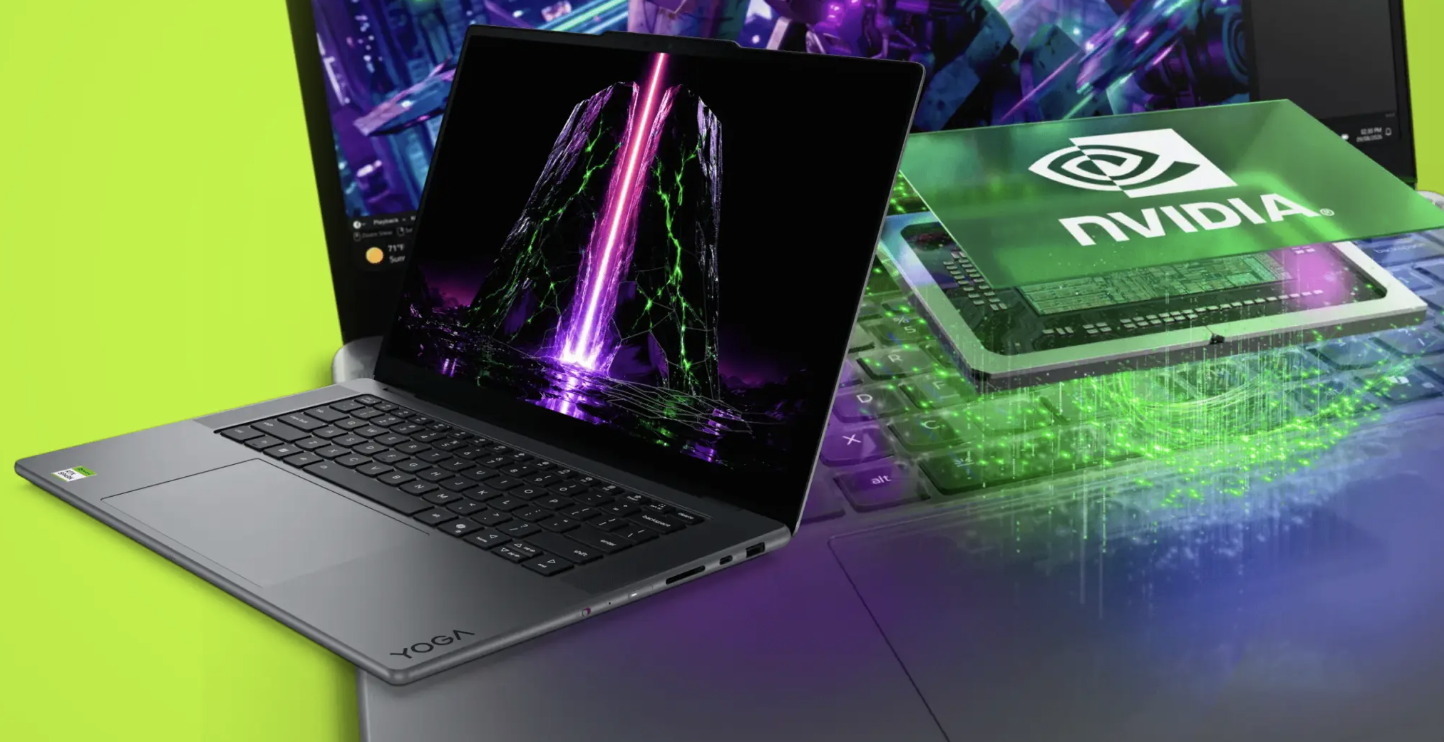
The Yoga Pro 9n is particularly interesting because Lenovo is offering configurations with up to 128GB of 9400 MT/s unified memory. The company positions it at creators and developers running demanding AI development, software development, content creation and 3D workloads locally.
That changes what an AI laptop can mean.
Instead of a thin machine that occasionally uses AI acceleration, this is a system designed to make local AI part of the primary workflow.
Lenovo also says its RTX Spark system can coordinate multiple specialized AI agents across applications, moving toward workflows where the computer handles a sequence of tasks rather than simply accelerating one AI feature.
Acer Is Taking the Mini-PC Route
Acer is approaching the same technology from the opposite direction.
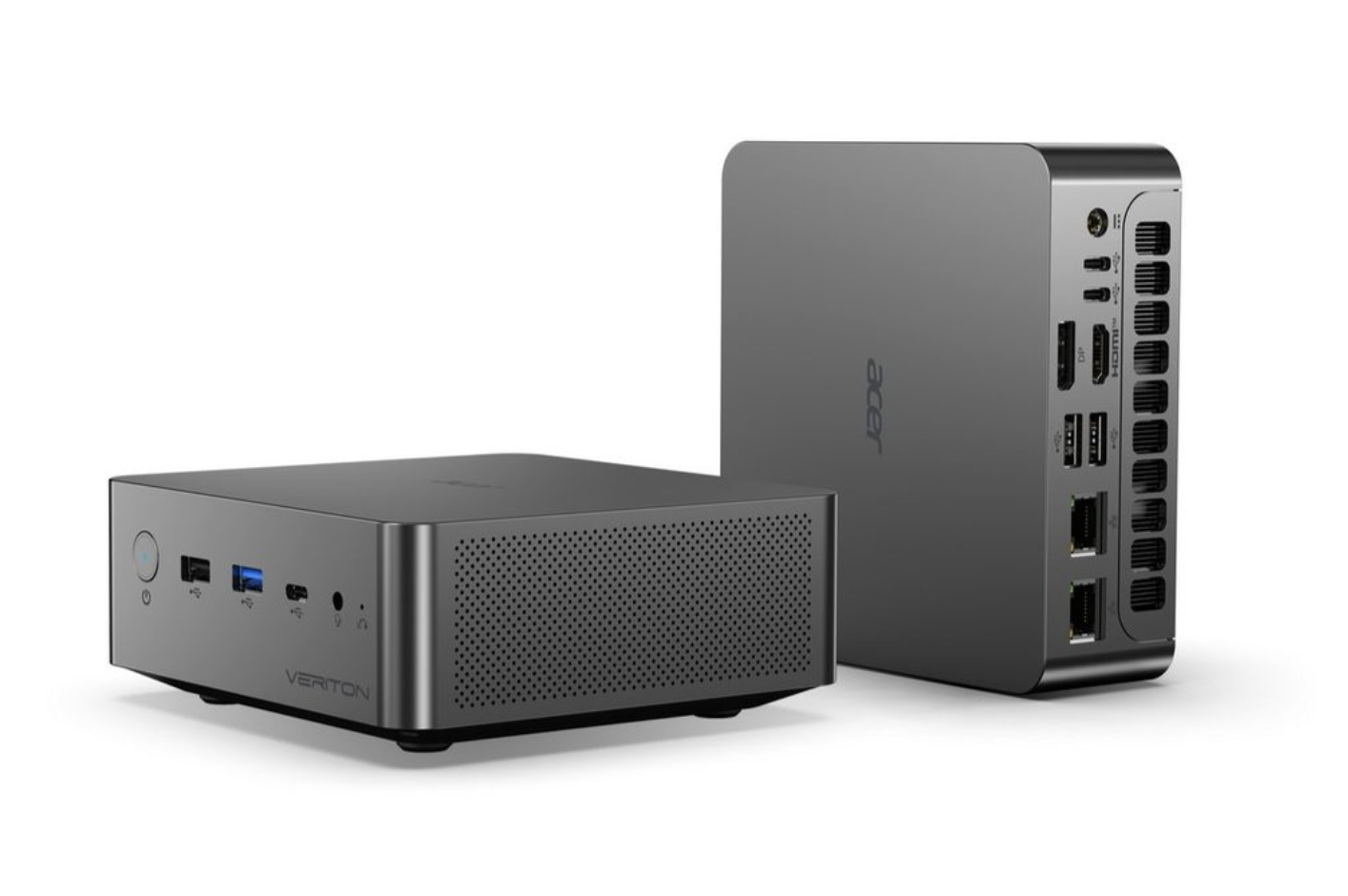
Its SFF RTX Spark is a compact desktop design built around the RTX Spark superchip.
Acer's configuration reaches 6,144 Blackwell GPU cores, 20 Grace CPU cores, 128GB of unified memory and up to 1 petaflop of AI performance.
The company specifically positions the system for local agentic AI, content creation and gaming.
There's something significant about that form factor.
A desktop doesn't need to worry about fitting everything into a laptop chassis or maximizing battery life. It can instead act as a small, always-on AI workstation sitting next to your monitor.
Acer hasn't announced final availability details yet, so the October timing should be treated as part of the broader RTX Spark rollout rather than a confirmed Acer retail date.
What Can Offline AI Agents Actually Do?
This is where RTX Spark gets interesting.
Nvidia isn't positioning these machines as glorified offline chatbots.
The company describes them as agent computers.
With Windows-native agent support, an RTX Spark PC can run AI software locally while the operating system manages how those agents interact with the computer. Nvidia is also bringing its AI software stack, CUDA and OpenShell security technology to the platform.
Imagine telling your PC:
“Take these 500 photos, organize them, identify the best shots, remove obvious duplicates and prepare them for editing.”
Instead of uploading everything to a remote service, the workload could potentially be handled directly on the machine.
Or imagine a developer asking an agent to inspect a large codebase, run tests, identify a problem and propose a fix.
That's the kind of workflow RTX Spark is targeting.
It doesn't mean every AI agent will suddenly work offline. Software support, model size, memory requirements and security still matter.
But the hardware removes one of the biggest barriers: local compute and memory capacity.
Nvidia Is Also Making Local AI Faster
The hardware isn't arriving alone.
Nvidia announced new optimizations for llama.cpp and vLLM that it says can deliver up to 1.9× faster local inference in supported workloads. These improvements are also available through applications such as LM Studio and Ollama.
Nvidia is also introducing PAIR, or Personal AI Router.
The idea is particularly interesting for people who own multiple RTX systems. Instead of forcing one machine to handle every AI workload, PAIR can distribute inference across compatible PCs on the same local network.
So the bigger picture isn't necessarily one super-powerful PC.
It could eventually be a network of local AI machines working together.
The Cloud Isn't Going Away
Despite all the excitement around local AI, RTX Spark doesn't eliminate cloud computing.
Some models will simply be too large.
Some workloads will need data-center-level compute.
And companies may still prefer cloud infrastructure for collaboration, scalability and centralized management.
What RTX Spark changes is the decision.
Instead of automatically asking:
“Can I send this to the cloud?”
users can increasingly ask:
“Do I even need the cloud for this?”
That's a much bigger shift.
What Happens Next?
The first RTX Spark Windows PCs are expected in October 2026, with Lenovo among the companies preparing actual products and Acer showcasing its compact desktop design. Nvidia says additional OEMs including ASUS, Dell, HP, Microsoft and MSI are also developing RTX Spark systems.
The biggest question will be price.
Nvidia has created a platform that combines high-end AI hardware, large unified memory and a full RTX software ecosystem.
That isn't likely to make these machines cheap.
But if manufacturers can bring the technology down to a price that serious creators, developers and AI enthusiasts can justify, RTX Spark could create a completely new PC category.
Not quite a gaming PC.
Not quite a workstation.
An AI computer that happens to do everything else too.
🤖 The Bottom Line
Nvidia's RTX Spark isn't just another AI PC badge.
The combination of 128GB of unified memory, a 20-core Grace CPU and a Blackwell GPU addresses one of the biggest limitations of running large AI models locally: keeping enough model data and context available to the system.
Lenovo is putting that hardware into premium creator laptops, while Acer is taking it into compact desktop territory.
And with Windows-native agents, CUDA, local inference tools and Nvidia's growing AI software stack, these machines could make offline AI agents feel less like an experiment and more like a normal PC workload.
October will show whether the hardware is as transformative in the real world as it looks on paper.
Would you actually buy a PC with 128GB of unified memory just to run AI locally?

Comments
Sign in to join the conversation
Sign inNo comments yet
Be the first to share your thoughts!