

NVIDIA DLSS 5 Leak Is a Disaster: Why Emulation Communities Are Calling It “AI Slop”
NVIDIA spent months pitching DLSS 5 as the next major leap in real time graphics.
Then an unfinished build leaked.
And suddenly, the conversation changed.
Instead of asking how realistic DLSS 5 could make games look, gamers started asking a much simpler question:
Is this actually worth the performance cost?
Modders managed to get an apparent leaked DLSS 5 DLL running across several games and experimental setups. The results were impressive in some scenes, but they also exposed two major problems: a huge performance hit and an AI generated visual style that can clash with the original art direction.
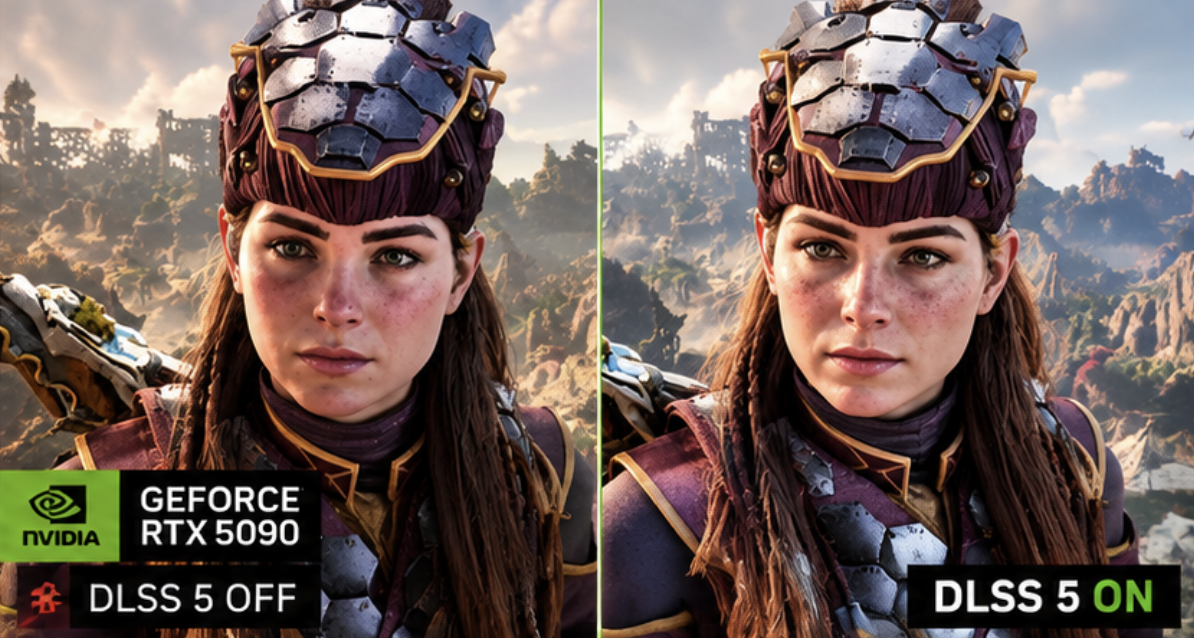
The reaction became especially hostile inside emulation communities.
The official RPCS3 account described the technology as an “AI slop generator”, arguing that increasingly aggressive upscaling and frame generation techniques can end up hiding optimization problems rather than solving them.
So what exactly is DLSS 5 doing differently?
And why has NVIDIA's most ambitious DLSS technology become one of its most controversial?
🎮 DLSS 5 Is Not Just Another Upscaler
Previous generations of DLSS were primarily designed to reconstruct an image more efficiently.
DLSS Super Resolution takes a lower resolution input and reconstructs it into a higher quality output.
DLSS Ray Reconstruction focuses on improving ray traced effects.
Frame Generation creates additional frames to increase perceived smoothness.
DLSS 5 goes somewhere different.
NVIDIA describes it as a generative neural rendering stage that uses learned visual information to enhance the appearance of rendered frames. The company says the technology can add effects such as more realistic skin shading and light scattering through foliage that would otherwise be difficult to reproduce within traditional real time rendering budgets.
That difference is crucial.
Traditional DLSS
Game rendering
↓
AI reconstruction
↓
Higher quality image
DLSS 5 Neural Rendering
Game rendering
↓
AI based appearance enhancement
↓
Additional visual detail and realism
That is also where the controversy begins.
💥 The Leak Exposed a Huge Performance Problem
The biggest criticism surrounding the leaked DLSS 5 build is not actually the AI.
It is the amount of GPU power the AI requires.
Testing of leaked builds showed dramatic performance reductions in some configurations.
One widely reported test on an RTX 5070 Ti running at 4K saw performance fall from 71 FPS to 35 FPS when neural rendering was enabled.
Another demonstration showed an RTX 5090 dropping from 91 FPS to 50 FPS.
That is roughly a 50 percent reduction.
And that is a strange proposition for technology carrying the DLSS name.
📊 The Performance Controversy
| Configuration | DLSS 5 Off | DLSS 5 On | Approximate Impact |
|---|---|---|---|
| RTX 5070 Ti at 4K | 71 FPS | 35 FPS | Around 51 percent lower |
| RTX 5090 at 4K | 91 FPS | 50 FPS | Around 45 percent lower |
These are leaked or early testing results rather than a universal benchmark for every game.
That distinction matters.
The leaked build was not necessarily representative of the final optimized implementation.
However, the concern did not disappear after the official launch.
Testing of the released technology has also found a substantial fixed performance cost, with some RTX 50 series GPUs experiencing very large reductions when DLSS 5 neural rendering is enabled without relying on frame generation to inflate the final frame rate.
That creates an uncomfortable question.
If AI rendering costs nearly as much performance as the visual improvement provides, who is DLSS 5 actually for?
🤖 Why Emulation Communities Are Calling It “AI Slop”
The strongest criticism has come from communities that traditionally care deeply about preserving the original rendering behavior of games.
RPCS3 developers were particularly blunt.
After users experimented with the leaked DLSS 5 DLL inside the PlayStation 3 emulator, the RPCS3 account criticized what it saw as AI generated visual processing and argued against using such technology as part of its rendering philosophy.
That reaction is important because emulation has a different goal from modern graphics enhancement.
An emulator generally wants to reproduce how the original game behaves.
DLSS 5 wants to make the output look better according to a learned visual model.
Those objectives can conflict.
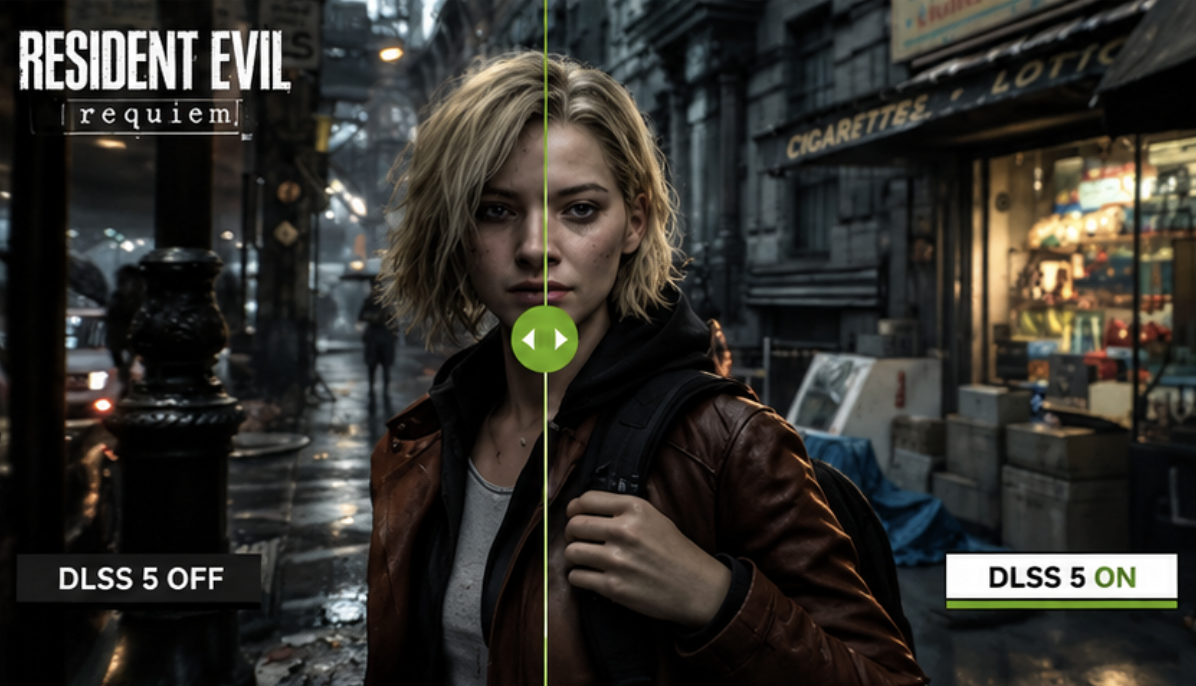
🧩 Preservation vs Enhancement
| Emulation Philosophy | Neural Rendering Philosophy |
|---|---|
| Preserve original appearance | Enhance perceived realism |
| Reproduce existing graphics | Generate additional visual appearance |
| Respect original art direction | Apply learned visual priors |
| Accuracy is the priority | Visual improvement is the priority |
This does not automatically make DLSS 5 bad.
It explains why some communities are much more skeptical of it.
🎨 The Bigger Problem: What Happens to Stylized Games?
This could become DLSS 5's most interesting weakness.
Photorealistic games are an obvious target for neural rendering.
If a game already tries to reproduce realistic skin, hair, lighting and materials, adding additional learned realism can make sense.
But what happens when the game isn't supposed to look realistic?
Consider:
Anime games
Cel shaded games
Stylized RPGs
Retro inspired games
Hand painted environments
Artistic horror games
Low polygon games
These games intentionally break the rules of photorealism.
Their visual identity comes from exaggeration, simplification and controlled imperfection.
A neural rendering model trained around real world appearance could potentially push those visuals in the wrong direction.
🎭 When “Better” Graphics Become Worse Art
Imagine a stylized character with deliberately exaggerated facial proportions.
The developer chose that look.
Now imagine an AI model sees the character and tries to make the skin more realistic, add natural looking shadows and modify facial appearance.
Technically, the output might contain more detail.
Artistically, it could become less faithful to the original design.
That is the heart of the “AI slop” criticism.
The complaint is not simply:
“AI is bad.”
It is:
“Why should a machine learning model decide what a game is supposed to look like?”
🧠 NVIDIA Says Developers Still Have Control
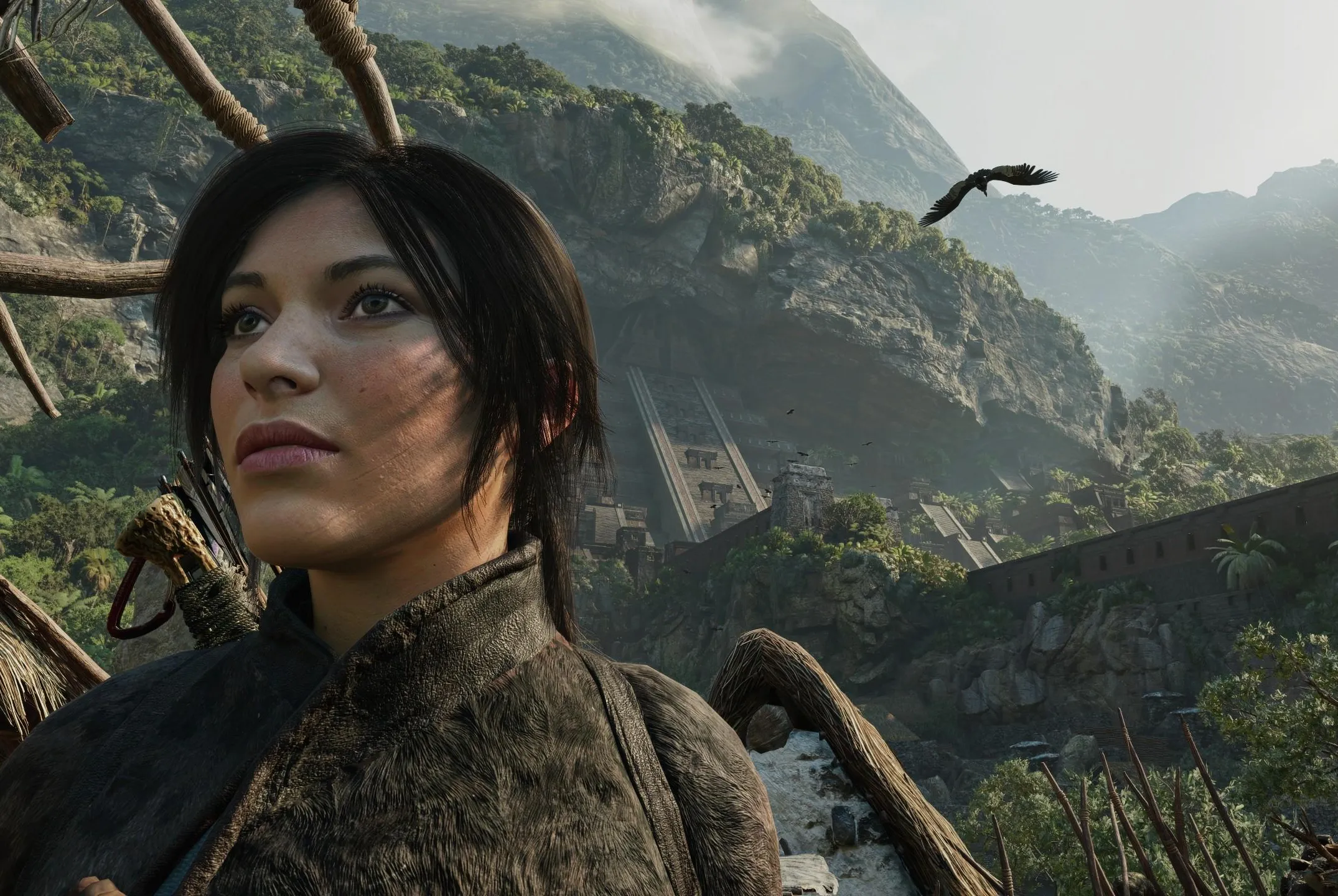
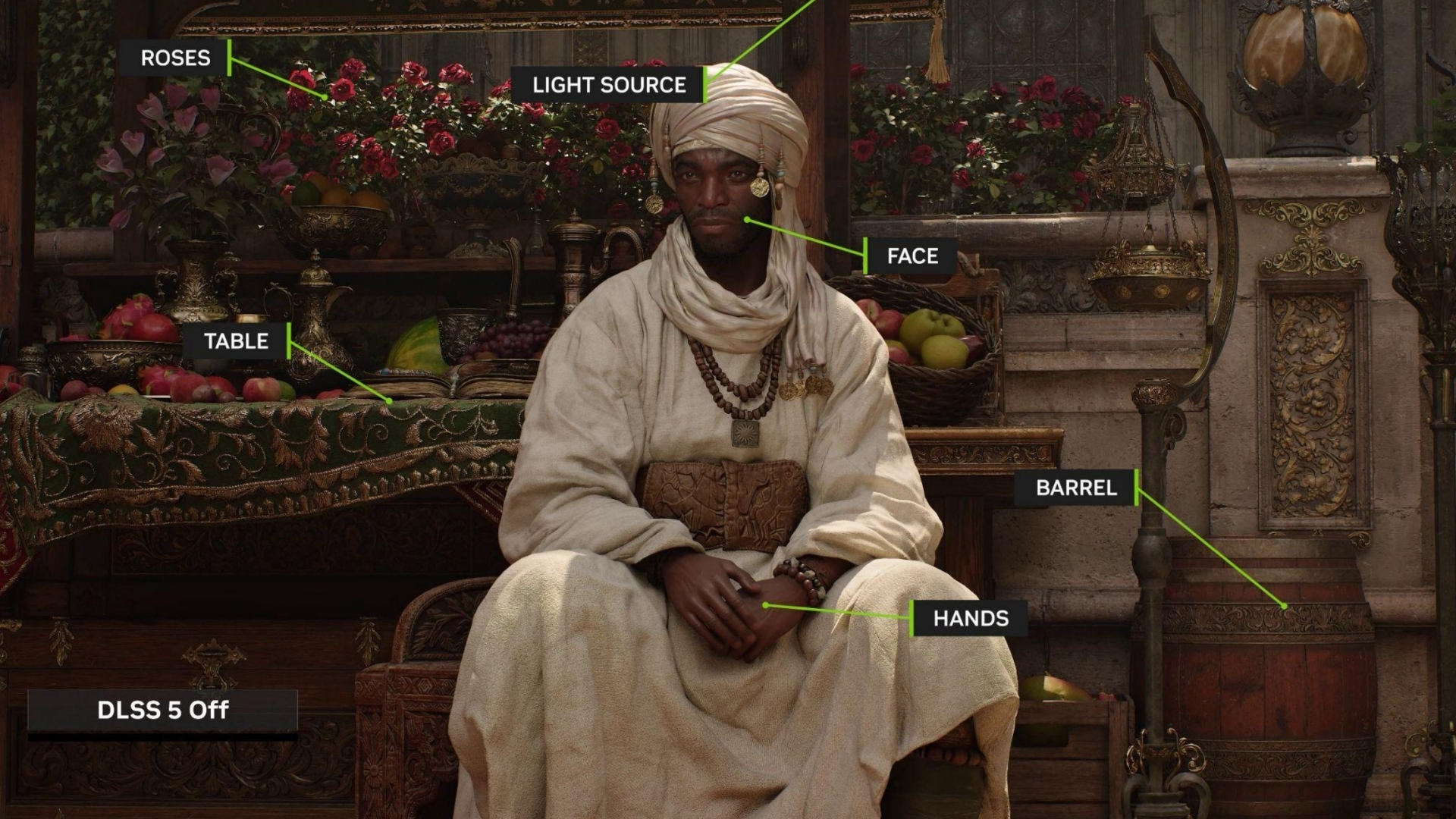
NVIDIA has pushed back against the idea that DLSS 5 simply paints an AI filter over games.
Jensen Huang has argued that the system is guided by the underlying 3D scene and that developers remain responsible for the visual structure that DLSS 5 works from.
NVIDIA has also demonstrated additional controls for developers.
These include settings for Structure Intensity and Tone Intensity, along with different neural models and selective application to particular objects or scenes.
That is a significant difference from the leaked demonstrations that made DLSS 5 look like a universal AI beauty filter.
The final implementation gives developers considerably more control.
But that does not completely solve the artistic argument.
⚡ The 50 Percent Performance Question
Here is where the controversy becomes more complicated.
Traditional DLSS is generally associated with getting more performance from your GPU.
DLSS 5 can instead consume a significant amount of GPU resources to produce additional visual quality.
That means the value proposition changes.
Traditional DLSS Philosophy
Lower rendering cost
↓
AI reconstruction
↓
Higher FPS
DLSS 5 Philosophy
Traditional rendering
↓
Neural rendering cost
↓
Higher visual fidelity
The two technologies can work together, but DLSS 5 itself introduces a meaningful computational cost.
Testing has shown that this fixed cost can dominate performance on lower end RTX 50 series hardware.
That is why the performance debate is not just about one leaked build.
It is about the fundamental direction of the technology.
🚀 Is DLSS 5 Actually a Disaster?
Not necessarily.
Calling it a disaster is understandable when looking at the leaked build and its extreme performance impact.
But the complete picture is more complicated.
Official demonstrations and testing show that DLSS 5 can produce genuinely impressive visual improvements, especially in photorealistic scenes and character rendering.
The problem is that impressive visuals do not automatically equal useful technology.
A graphics feature needs to answer three questions:
Does It Look Better?
Sometimes, absolutely.
Does It Preserve the Game's Artistic Identity?
That depends heavily on how developers use it.
Is the Performance Cost Worth It?
This is still the biggest question for many gamers.
🔮 Where DLSS 5 Could Actually Make Sense
DLSS 5 could be extremely valuable in situations where realism is already the goal.
Potentially strong use cases include:
Realistic character faces
Skin rendering
Hair and eyes
Complex lighting
Dense foliage
Cinematic scenes
Photorealistic environments
NVIDIA's own research specifically points toward effects such as subsurface scattering and light scattering that are difficult to reproduce using conventional real time techniques.
That makes the technology much more interesting than simply calling it an AI filter.
🧪 The Modding Community Is Already Stress Testing It
Perhaps the most fascinating part of the DLSS 5 story is what happened after the leak.
Instead of waiting for official support, modders started experimenting.
They pushed the technology into games that were never designed around it.
They tested different GPUs.
They experimented with older games.
They tried different visual styles.
And they exposed weaknesses that polished NVIDIA demonstrations could easily hide.
One experimental project has even attempted to integrate DLSS 5 into Doom 3 BFG Edition, showing how quickly the modding community has begun exploring the technology.
That experimentation is valuable.
It shows where neural rendering works.
And just as importantly, it shows where it doesn't.
🏁 Final Verdict
The DLSS 5 leak did not prove that NVIDIA has created useless technology.
It proved something more interesting.
Neural rendering is powerful enough to change how we think about game graphics.
But power comes with tradeoffs.
A technology that can make a character look more realistic can also make that character look less faithful to the artist's vision.
A system that adds visual detail can also consume enough GPU power to cut performance dramatically.
And a feature designed to make games look better can become controversial when “better” means more photorealistic rather than more artistically accurate.
That is why the “AI slop” debate is not going away.
The real test for DLSS 5 will not be whether NVIDIA can make a demo look incredible.
It will be whether developers can use neural rendering without sacrificing performance, artistic identity or player control.
If they can, DLSS 5 could become one of the most important graphics technologies of this generation.
If they cannot, gamers may remember it as the moment NVIDIA tried to make every game look like the same AI generated version of itself.
And that is a much bigger problem than one leaked DLL.