
The Emulation Explosion: How KyTyPS5 Pushed Demon’s Souls Toward 30FPS in 24 Hours
PlayStation 5 emulation has reached another surprising milestone, but the most important part of the story is not simply the number displayed in the corner of a video.
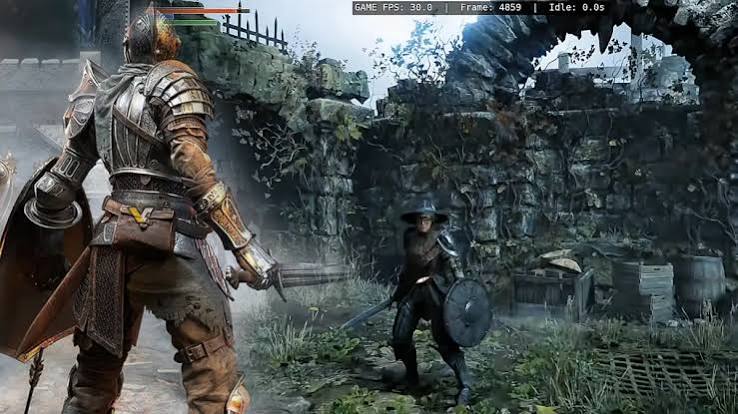
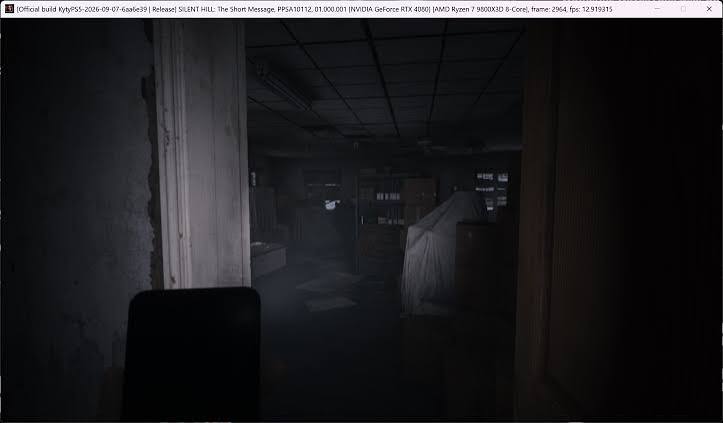
The remake of Demon’s Souls has reportedly moved from extremely low performance to around 25–30 frames per second on the KyTyPS5 emulator in a remarkably short period of time. Some reports describe the jump as happening within roughly 24 hours, while other coverage places the improvement across several days of rapid testing.
That sounds like the moment PS5 emulation finally becomes practical on PC.
It is not.
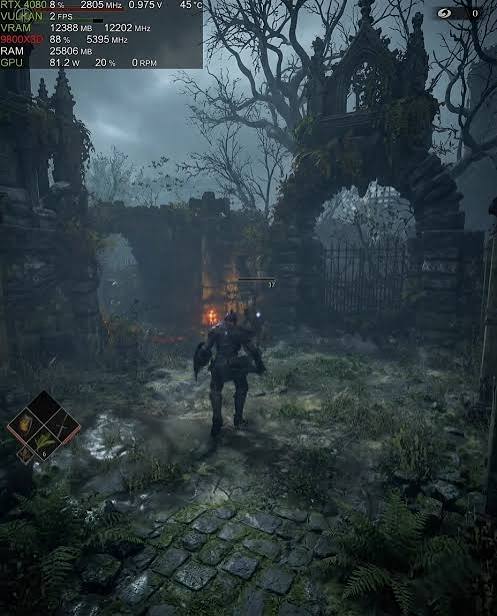
The footage represents a major technical achievement, but it does not yet demonstrate a stable, fully playable version of Demon’s Souls. Performance can fall sharply when the camera moves, frame pacing remains inconsistent, and the available tests do not establish a reliable experience across the entire game.
The real story is more interesting than a simple “PS5 games now run at 30FPS” headline. KyTyPS5 is showing how quickly modern emulation can improve when developers focus on targeted compatibility, community testing, and rapid optimisation.
From Almost Unplayable to Nearly 30FPS
The reported improvement is striking because the earlier tests were operating at extremely low frame rates.
Some reports placed Demon’s Souls at approximately 1–2FPS during earlier stages of testing. Newer footage showed the game reaching around 25–30FPS in certain scenes.
That is a dramatic improvement in raw performance.
However, frame rate alone does not tell the whole story. An emulator can display a high number for a short period while still suffering from:
- Severe frame-time spikes
- Stuttering during camera movement
- Missing visual effects
- Incorrect rendering
- Audio problems
- Input delay
- Crashes
- Broken shaders
- Incomplete system emulation
In the latest demonstrations, the game reportedly drops back toward the high teens when the camera moves or the scene becomes more demanding. That means the 30FPS figure should be treated as a milestone rather than a guarantee of consistent gameplay.
The difference is important. A short 30FPS demonstration proves that the emulator can reach a particular performance target under certain conditions. It does not prove that the entire game can maintain that target from beginning to end.

Why Demon’s Souls Is Such a Difficult Test
The 2020 remake of Demon’s Souls is not a lightweight retro title.
It was developed for the PlayStation 5 by Bluepoint Games and Japan Studio, with detailed environments, advanced lighting, dense geometry, high-quality animation, complex materials, and a modern rendering pipeline.
The game also relies on systems that are closely tied to the PS5’s hardware and software environment. Reproducing those systems on a PC requires more than translating basic instructions.
An emulator must recreate the behaviour of the original console’s:
- CPU
- GPU
- Memory system
- Graphics APIs
- Audio hardware
- File systems
- Thread scheduling
- Synchronisation behaviour
- Input systems
- Operating-system services
The PS5 uses an AMD-based architecture, which gives PC hardware some broad similarities. But similar hardware does not mean that software can simply be copied across and expected to work.
The emulator still needs to reproduce the console’s specific behaviour accurately enough for the game to render and respond correctly.
That is why getting a game to boot is one milestone, reaching real-time gameplay is another, and maintaining stable performance is an entirely different challenge.
────────────────────────────────────────

────────────────────────────────────────
The 24-Hour Claim Needs Some Context
The most dramatic version of the story says that Demon’s Souls went from around 2FPS to approximately 30FPS in just one day.
That claim appears in community discussions and specialist coverage, but it should not be interpreted as a complete emulator transformation carried out entirely within 24 hours.
Several factors can create a sudden performance jump:
1. A single major bottleneck may have been fixed
Emulators can spend a large amount of time blocked by one inefficient function, rendering path, shader process, or synchronisation issue. Fixing that bottleneck can produce an unusually large improvement.
2. The test scene may have changed
A game may run at different speeds depending on the location, camera angle, number of visible objects, effects, and active enemies. A result recorded in one area may not represent the entire game.
3. Shader and cache behaviour can affect results
The first time an emulator encounters a new effect, it may need to compile or prepare resources. Later runs can appear faster because some data has already been cached.
4. Different builds may produce different results
Community testing often involves experimental builds, unofficial forks, custom settings, and changing patches. Comparing two videos requires knowing whether the same build, settings, hardware, and scene were used.
The reported jump is still impressive. It simply needs to be understood as a targeted technical breakthrough rather than proof that PS5 emulation has suddenly become mature.
────────────────────────────────────────
────────────────────────────────────────
What KyTyPS5 Has Already Demonstrated
The Demon’s Souls footage is part of a broader wave of PS5 emulation development.
KyTyPS5 has reportedly made progress with several 3D games, while other projects such as SharpEmu and RPCSX are approaching the problem from different technical directions.
KyTyPS5 has generally focused on getting more games to boot and reach playable scenes. SharpEmu has placed greater emphasis on emulator architecture, accuracy, and broader platform support. RPCSX remains more research-oriented, with work focused on understanding and reproducing the PS4 and PS5 software environment.
This division of priorities is important.
An emulator that boots many games may not be the most accurate. An emulator with a carefully designed architecture may support fewer games initially but provide a stronger foundation for future compatibility.
Both approaches can contribute to long-term progress.
The current emulation scene is therefore not one single project moving toward a finish line. It is a collection of teams and developers experimenting with different strategies, each solving separate parts of the same difficult problem.
────────────────────────────────────────
Why This Matters Beyond Demon’s Souls
The significance of the KyTyPS5 breakthrough extends beyond one PlayStation exclusive.
Every successful rendering test gives developers more information about the PS5’s architecture. Every fixed shader, system call, memory issue, or synchronisation problem can improve the emulator’s behaviour across multiple games.
That is how emulation tends to progress.
A breakthrough in one title may reveal a general solution that benefits several others. A game-specific workaround may also help developers understand how a particular engine interacts with the console.
The process can be slow for years and then appear to accelerate suddenly when enough technical knowledge, testing data, and developer effort come together.
The current pace has also been encouraged by wider interest in game preservation, changing distribution models, and the growing demand to access console games on PC hardware.
However, emulation development is not the same as guaranteed future compatibility. Some games may depend on unusual hardware behaviour, online services, proprietary systems, or protections that take much longer to reproduce.
────────────────────────────────────────
────────────────────────────────────────
Why 30FPS Is Not the Finish Line
For a demanding action game, 30FPS can be a reasonable performance target. The original Demon’s Souls remake itself offers different visual modes, including a 30FPS cinematic mode and a higher-frame-rate performance mode.
But emulation adds another layer of difficulty.
A native console game is built around a known hardware target. Developers can optimise directly for that machine and its predictable performance characteristics.
An emulator must reproduce the console while also translating or simulating its behaviour on a different system. That extra work can create overhead and unpredictable performance problems.
A stable 30FPS experience would require more than reaching 30FPS in a short clip. It would need:
- Consistent frame pacing
- Reliable input response
- Correct rendering
- Stable audio
- Fewer crashes
- Proper loading behaviour
- Functioning menus
- Correct save handling
- Reliable performance across multiple areas
- Compatibility with different PC configurations
Until those conditions are met, the most accurate description is that Demon’s Souls is showing promising progress on KyTyPS5, not that it is already a polished PC experience.
────────────────────────────────────────
What Happens Next?
The next stage of development will likely focus on stability rather than headline frame rates.
Developers may need to investigate why performance drops during camera movement, how the emulator handles shader compilation, whether visual errors appear in later areas, and how the game behaves during combat or loading transitions.
The most useful future demonstrations will show:
- Longer uninterrupted gameplay
- Multiple areas rather than one short scene
- Consistent frame-time graphs
- Clear emulator version information
- Hardware specifications
- Input and audio performance
- Fewer graphical glitches
- Reliable saves and loading
- Repeatable results across different systems
Those details will tell players much more than a single 30FPS counter.
The most convincing milestone would not be a short clip reaching 30FPS. It would be a complete play session that remains stable, responsive, and visually accurate over several hours.
────────────────────────────────────────
Final Thoughts
KyTyPS5’s recent Demon’s Souls progress is a remarkable example of how quickly emulation can improve when developers identify and remove major technical bottlenecks.
The reported jump from roughly 1–2FPS to around 25–30FPS shows that PS5 emulation is no longer limited to boot screens and static demonstrations. Real-time 3D gameplay is becoming possible in selected cases.
But the breakthrough should not be confused with a finished emulator.
Performance still fluctuates, frame pacing remains a concern, and the available footage does not establish that Demon’s Souls is stable from beginning to end. The 30FPS figure is best understood as evidence of progress, not proof of a complete PC release.
That distinction makes the story more exciting, not less.
PS5 emulation may still be years away from becoming a reliable everyday option for demanding games. Yet the speed of recent development suggests that the technical foundations are improving faster than many expected.
For now, Demon’s Souls is not the final victory lap for PS5 emulation.
It is a glimpse of what might become possible next.