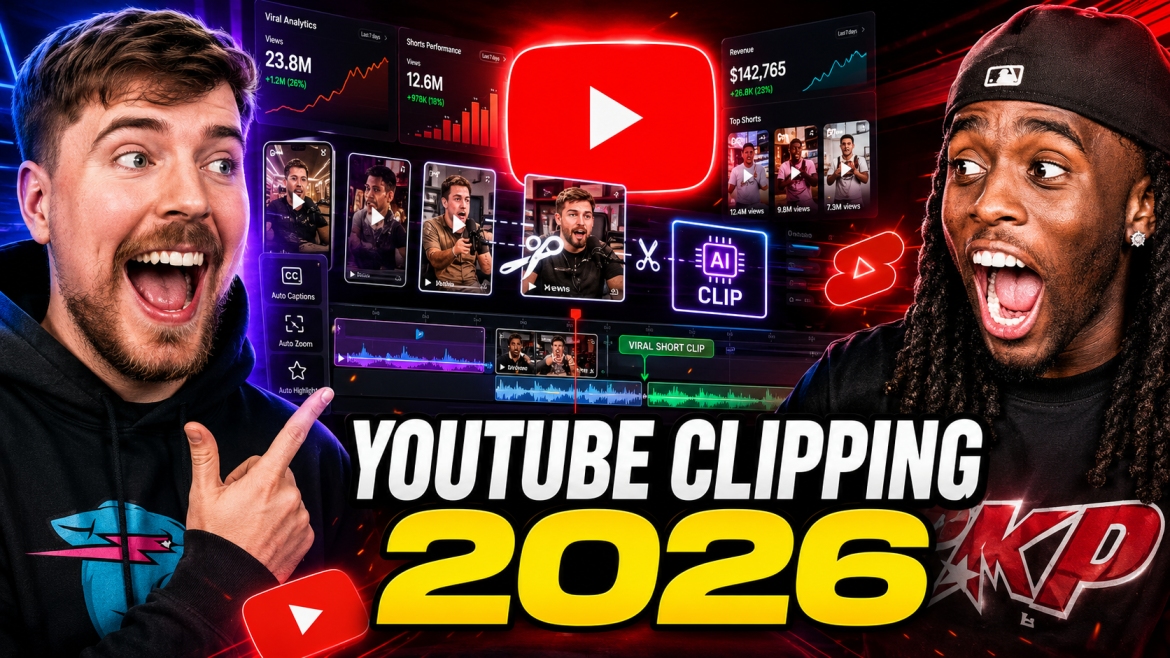

How YouTube Clipping Works in 2026: The Business Behind Viral Shorts, Automation, and Creator Monetization
A surprising number of YouTube channels with hundreds of thousands — or even millions — of subscribers are not filming videos themselves. Instead, they are clipping someone else's content.
Open YouTube Shorts for a few minutes, and you'll see it everywhere. IShowSpeed screaming during a livestream. Kai Cenat reacting to a viral moment. MrBeast giving away money. Joe Rogan discussing a controversial topic. A podcast guest making a surprising statement.
In 2026, YouTube clipping is no longer just screen recording and uploading. Successful clipping channels operate like mini media companies. They use editing workflows, AI automation, analytics, and distribution strategies to publish dozens of clips every week.
What Is a YouTube Clipping Channel?

A YouTube clipping channel takes long-form content created by another creator and transforms it into shorter, highly engaging videos.
The source content usually comes from:
- YouTube livestreams
- Twitch streams
- Podcasts and interviews
- Gaming sessions
- Business discussions
For example, a 4-hour IShowSpeed livestream can contain dozens of viral moments. A clipper might extract a 30-second reaction, add captions, zoom effects, and sound design, then upload it as a Short.
However, the goal is never to reupload an entire video. Instead, the goal is to identify the most engaging 15–90 seconds, edit it for retention, and publish it in a format built for Shorts.
Why YouTube Clipping Exploded in 2026
The biggest reason is YouTube Shorts.
Short-form video has become one of the strongest discovery engines on YouTube. In fact, Shorts can generate millions of views even on relatively small channels.
Clipping works especially well because creators such as IShowSpeed, Kai Cenat, MrBeast, Adin Ross, and Joe Rogan produce hours of content every week. One long livestream or podcast can easily generate 20–50 individual clips.
As a result, clipping channels get an enormous content supply without constantly filming new videos. This is why entire ecosystems have formed around popular creators, with dedicated channels posting nothing but highlights from their streams and podcasts.
Is YouTube Clipping Legal? The Fair Use Question
The most common question people ask is simple: is YouTube clipping legal?
The answer depends on fair use — a legal doctrine that can allow limited use of copyrighted material for purposes such as commentary, criticism, education, or transformative content.
The key word here is transformative.
A clipping channel stands on much stronger fair-use ground when it adds meaningful value rather than simply reposting someone else's work.
What makes a clip more transformative?
- Editing and restructuring
- Captions and subtitles
- Commentary or reactions
- Visual enhancements
- Educational framing
- New storytelling or context
Simply downloading a MrBeast video and reuploading it, on the other hand, usually does not create a strong fair-use argument. That's why successful clipping channels spend significant time editing rather than merely trimming a clip.
What Successful Clipping Channels Actually Do
A good clipping channel is never just a random collection of highlights. Instead, the best operators focus entirely on viewer retention.
A typical clipping workflow looks like this:
- Watch or scan long-form content
- Identify a strong hook within the first few seconds
- Cut the clip tightly
- Remove pauses and filler
- Add animated captions
- Reframe the video for vertical viewing
- Publish consistently
Ultimately, editing is what separates a 10,000-view clip from a 1-million-view clip. A Speed clip with fast captions and zoom effects will usually outperform a raw screen recording of the same moment.
The Shorts Strategy That Works
Most clipping channels are built around YouTube Shorts rather than traditional long-form uploads, since the Shorts algorithm heavily rewards watch time, retention, and rewatchability.
Successful clippers optimize for:
- Immediate hooks
- Fast pacing
- Large subtitles
- Vertical framing
- Emotional reactions
- Surprising information
- Clean endings and loop potential
Many editors intentionally begin with the most shocking or interesting sentence before explaining the context afterward. This simple technique dramatically improves retention and increases the chances of a clip being pushed by the algorithm.
How Automation Has Changed the Clipping Business

In 2026, clipping is increasingly assisted by AI. Many channels now use automation tools for:
- Transcription and caption generation
- Silence removal
- Clip detection
- Face tracking and vertical reframing
- Title and thumbnail generation
- Upload scheduling
This allows creators to process far more content than was possible a few years ago. That said, automation does not replace editing judgment — it simply reduces production time. This is exactly why some clipping businesses run multiple channels at once, each targeting a different creator or niche.
Can You Actually Make Money From YouTube Clipping?

Yes — but the business model is often misunderstood. Many people assume clippers only earn YouTube ad revenue. In reality, successful clipping channels usually combine multiple income sources.
The main monetization methods:
- YouTube Ad Revenue — Eligible channels earn through the YouTube Partner Program from Shorts and long-form uploads.
- Revenue Sharing with Creators — Some creators allow clippers to use their content in exchange for a percentage of revenue.
- Affiliate Marketing — Promoting software, courses, newsletters, or products related to the creator being clipped.
- Sponsorships — Larger clipping channels often land direct brand deals.
- Community Programs — Platforms such as Whop run clipping competitions, editor payouts, and performance-based reward systems.
For many people, clipping eventually becomes less of a YouTube hobby and more of a full content-distribution business.
The Biggest Mistake Beginners Make
Most beginners think clipping is easy because the source content already exists. In reality, though, distribution is the hard part — uploading random clips rarely works.
Instead, the channels that grow consistently usually focus on one niche.
Niches that perform especially well:
- Gaming
- Finance
- Entrepreneurship
- Motivation
- Crypto
- Sports and entertainment
For example, a channel that only clips IShowSpeed gaming moments is often easier for YouTube to understand than a channel posting Speed, MrBeast, finance clips, and podcasts all at once. In short, niche focus matters more than raw editing skill.
Long-form content → Short clips → Automated multi-platform distribution
Frequently Asked Questions
Is YouTube clipping legal without permission? It depends on fair use. Clips that add commentary, editing, or transformative value stand on stronger legal ground than raw reuploads.
How much money can a clipping channel make? Earnings vary widely — from a few hundred dollars a month to full-time income, depending on niche, consistency, and monetization method.
Do you need permission from the original creator? Not always, but revenue-sharing programs and creator partnerships offer a safer, more sustainable path than relying solely on fair use.
What tools do clippers use in 2026? Common tools handle transcription, caption generation, silence removal, auto-reframing, and clip detection through AI automation.


Comments
4Sign in to join the conversation
Sign in