
How IRL Streaming Changed YouTube and Twitch
A decade ago, most livestreaming happened from a bedroom. A webcam, a gaming setup, and a chat window were enough to build an audience. Today, some of the biggest moments in streaming happen on a busy street in Tokyo, inside a crowded market in Lagos, or on a subway platform in New York.
That shift has a name: IRL streaming. And it has fundamentally changed how YouTube and Twitch operate, how creators build audiences, and how viewers experience live content.

What Is IRL Streaming?
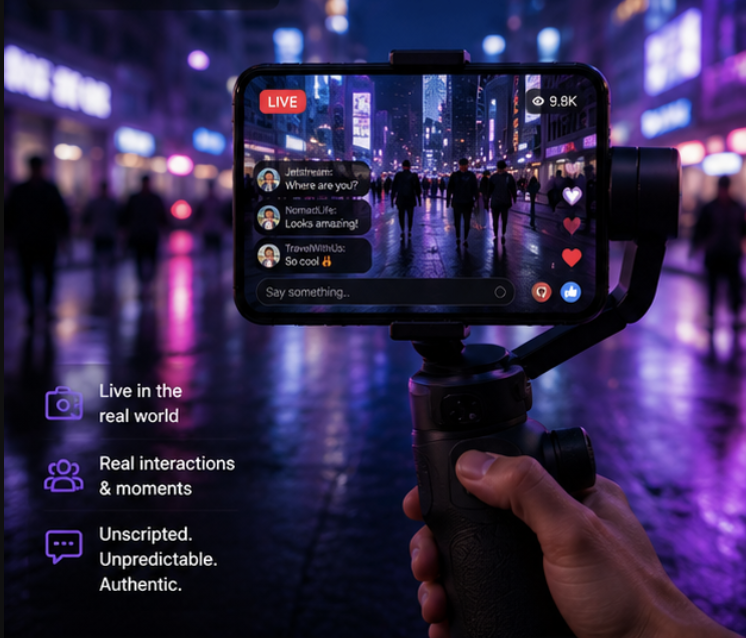
IRL — short for "In Real Life" — refers to streams filmed outside a traditional studio or gaming setup. Instead of sitting at a desk, the creator carries a camera into the real world, and the content becomes unscripted, unpredictable, and driven entirely by what happens next.
This format exploded because it removed the biggest limitation of early streaming: the assumption that content had to come from a screen. Twitch has leaned so heavily into this shift that it recently rebuilt its entire discovery system around IRL content, as detailed in the platform's official IRL Takeover announcement.
Travel Streams Turned the World Into a Set
Travel-based IRL streaming is one of the fastest-growing formats on both platforms. Creators now broadcast entire international trips live, sometimes for hours at a stretch, letting viewers experience a country in real time rather than through a heavily edited highlight reel.
This matters for two reasons:
- Unpredictability drives watch time. Travel streams keep viewers engaged far longer than scripted content usually does, since nobody — including the streamer — knows what happens next.
- They expand who watches. A stream from Seoul, Rio de Janeiro, or Cairo naturally attracts local viewers who rarely saw themselves represented in mainstream streaming content before.
As a result, travel IRL content hasn't just grown view counts — it has expanded who watches streaming platforms in the first place.
Public Interactions Became the New Highlight Reel
Where gaming clips once dominated Twitch and YouTube Shorts, IRL interaction clips now compete for the same attention. A streamer meeting a stranger, getting recognized on the street, or reacting to an unexpected event can generate more views than an entire gaming session.
This has changed what creators optimize for. Instead of building a highlight around a clever in-game play, many IRL streamers now build their entire session around the possibility of an interesting real-world moment.
This shift also raised new questions around consent, safety, and moderation, since IRL streams involve real people who never agreed to appear on camera. Both platforms have had to formalize their rules around this — YouTube's live streaming restrictions policy specifically addresses filming minors and bystanders, while Twitch maintains dedicated safety resources for creators streaming in public spaces.
Mobile Technology Made It Possible
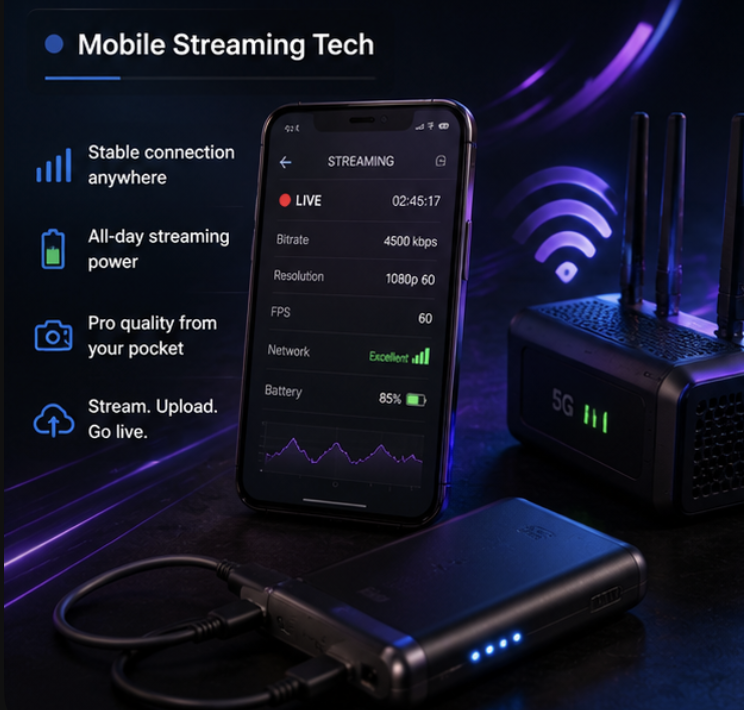
None of this would have scaled without major advances in mobile streaming technology. A few years ago, streaming from a moving location required expensive, bulky equipment and a stable internet connection that was nearly impossible to guarantee outdoors.
That changed with:
- Dedicated IRL streaming backpacks with built-in encoders and battery packs
- Multi-carrier cellular bonding devices that combine several networks into one stable connection
- Increasingly capable smartphone cameras that rival dedicated video equipment
Creators can now stream in near broadcast quality from a train, a festival, or a foreign city, with the connection automatically switching between networks to avoid dropouts. This technology didn't just make travel and public streaming possible — it made it reliable enough for full-time creators to build a business around it, and lower equipment costs opened the format to smaller creators who couldn't previously afford it.
Global Audience Growth
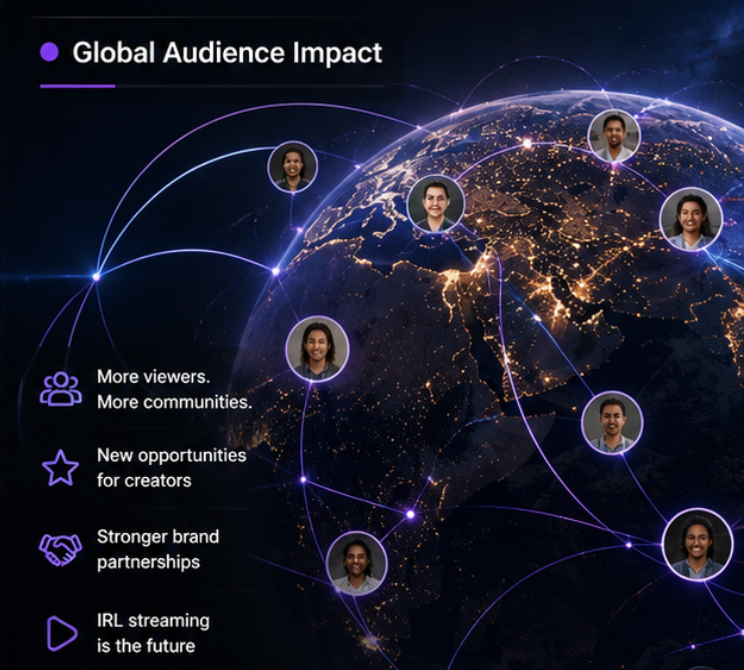
Perhaps the most significant long-term effect of IRL streaming is audience globalization. Traditional gaming and desk-based content tends to cluster around whatever games or personalities are popular in a specific region. IRL content breaks that pattern.
A stream filmed in Bangkok can attract viewers from Thailand who want to see their own city represented, alongside international viewers who are simply curious about a place they've never visited. This cross-border appeal has pushed both platforms to invest more heavily in international creator support and localized discovery.
It has also changed how brands approach sponsorships. IRL streamers with global travel content are increasingly attractive to tourism boards, airlines, and mobile carriers — audiences that had little reason to sponsor traditional gaming streams before.
The Bigger Shift
IRL streaming didn't just add a new content category to YouTube and Twitch. It expanded the definition of what a livestream could be. The camera left the desk, audiences stopped expecting a script, and the unpredictability of the real world became the main draw rather than a distraction.
As mobile technology keeps improving and international audiences keep growing, IRL content is likely to keep pushing both platforms further away from their studio-bound origins — and closer to something that looks more like live, global television than traditional streaming ever did.

Comments
Sign in to join the conversation
Sign inNo comments yet
Be the first to share your thoughts!