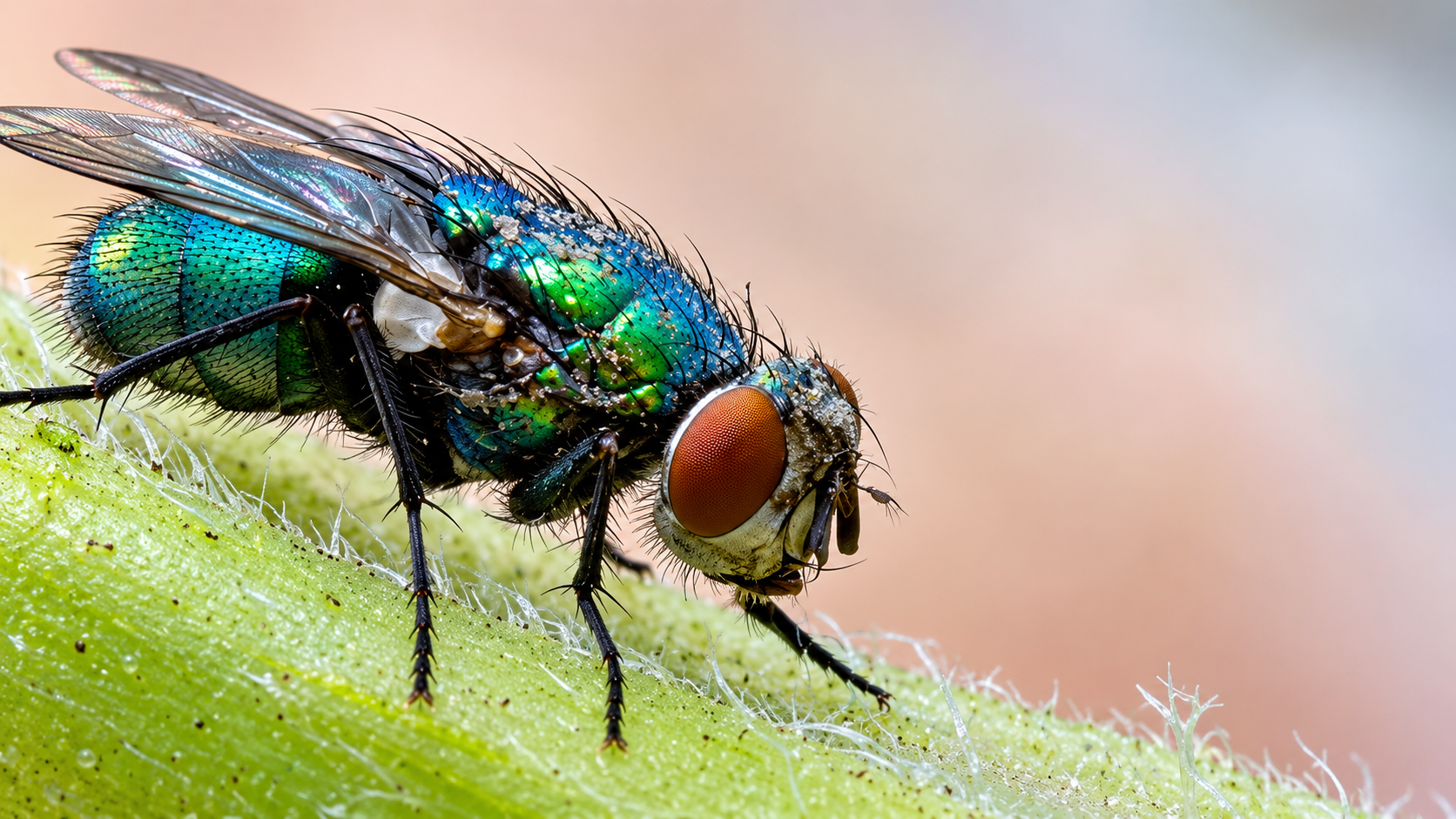

The Fruit Fly Doom Mod: Why Neuroscientists Are Letting Insects Play Shooters
The Fruit Fly Doom experiment sounds like something invented for a late-night internet joke: scientists map a tiny insect brain, engineers download the resulting neural wiring diagram, and almost immediately somebody makes it play DOOM.
But the underlying technology is real.
In September 2026, Google Research, HHMI Janelia and collaborators released a complete map of the central nervous system of an adult male fruit fly. The dataset reconstructs more than 166,000 neurons, along with millions of neural connections, creating one of the most detailed digital maps of an animal nervous system ever produced.
Then the internet did what the internet does.
Engineers started connecting the simulated fly brain to video games.
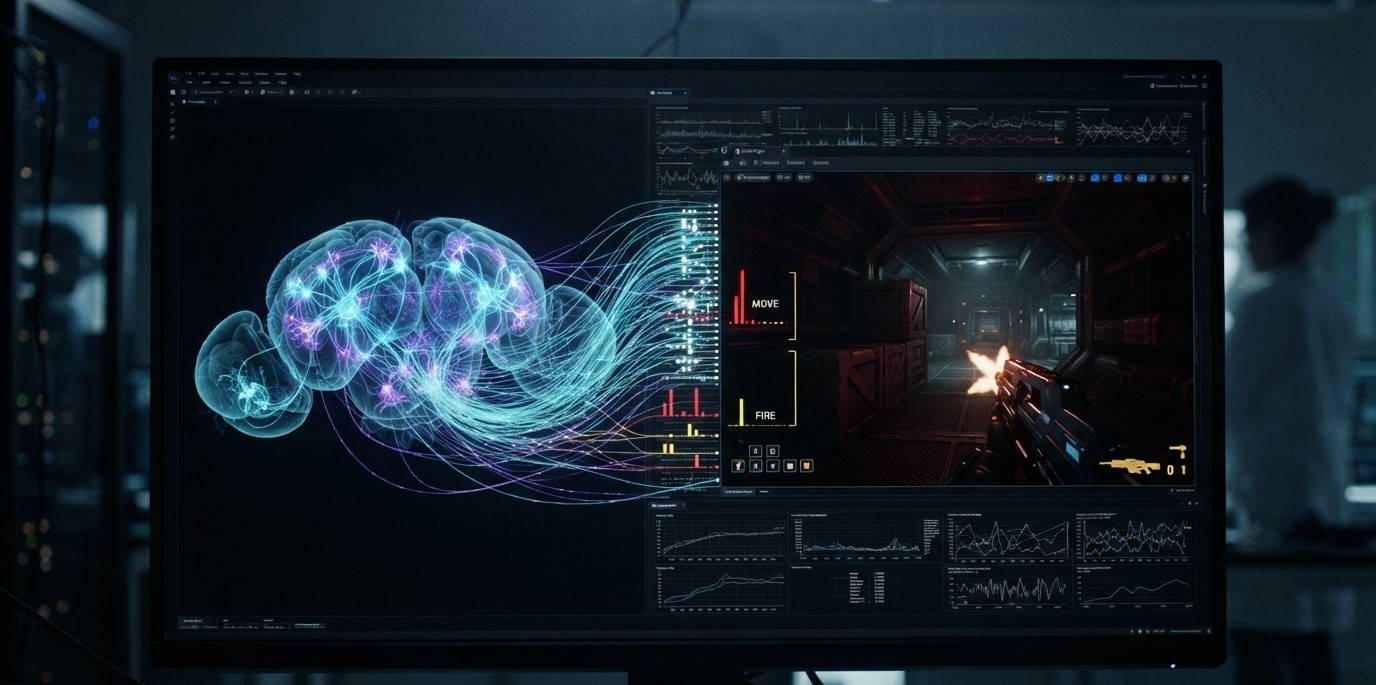
One of the most notable experiments involved the original DOOM. Engineer Alex Wormuth described a system where each DOOM frame stimulates simulated sensory neurons, neural activity is translated into game controls, and damage produces reinforcement signals through specific dopamine-related cells.
The result is not a biological fruit fly sitting at a keyboard.
It is something arguably even more fascinating: a digital reconstruction of a real animal nervous system being used as a controller for a video game.
────────────────────────────────────────
────────────────────────────────────────
What Scientists Actually Built
The key word here is connectome.
A connectome is essentially a wiring map of a nervous system.
Instead of simply recording brain activity, researchers attempt to reconstruct which neurons connect to which other neurons and how those connections are organized.
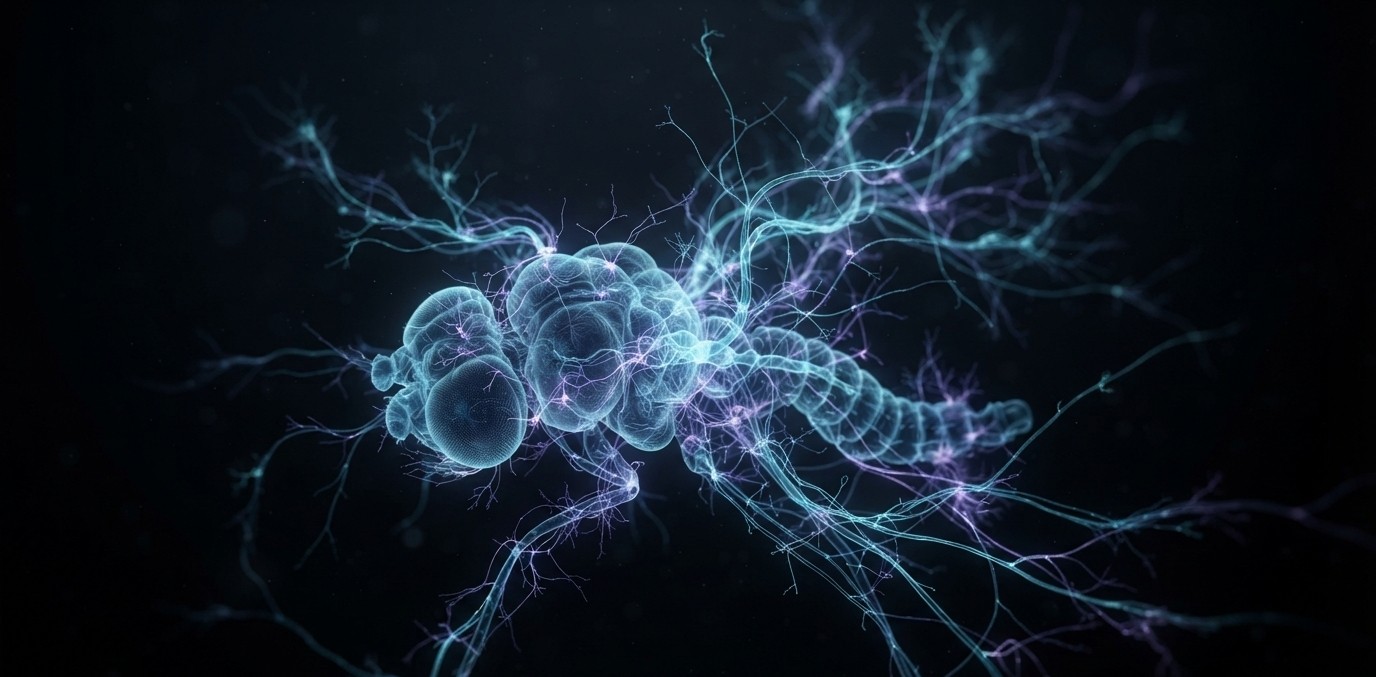
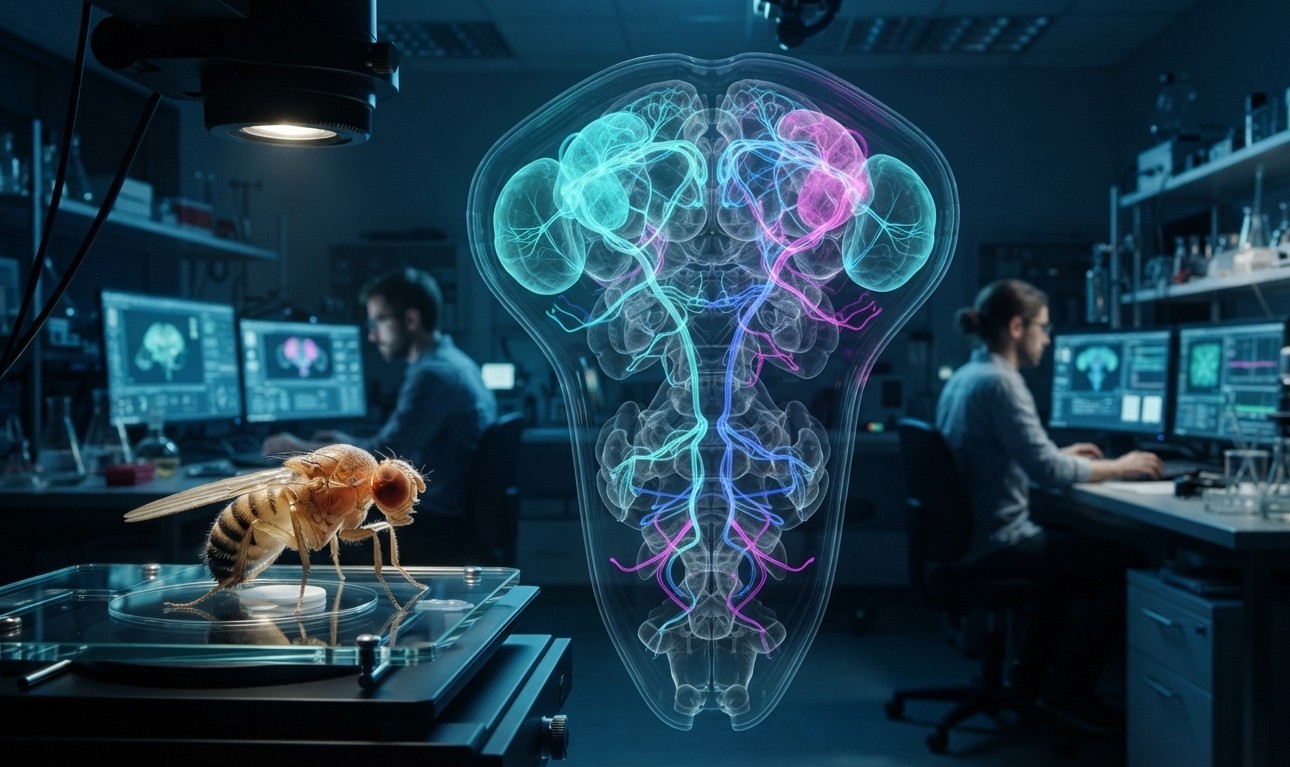
For the male fruit fly project, researchers used electron microscopy to examine extremely thin slices of the nervous system. AI-assisted processing then helped reconstruct those two-dimensional images into a three-dimensional representation of the neural architecture.
The resulting MaleCNS v1.0 dataset contains more than 166,000 reconstructed neurons.
The importance of the project goes far beyond gaming.
Researchers can now use the digital map to investigate how sensory information travels through the nervous system, how movement is controlled, how different behaviors are produced and how individual neural circuits interact.
The DOOM experiment is essentially an unexpected stress test for that scientific achievement.
────────────────────────────────────────
────────────────────────────────────────
How the Fruit Fly Ends Up Playing DOOM
This is where the experiment gets weird.
The engineers are not teaching a real fly how to hold a controller.
Instead, the digital connectome receives information representing what is happening inside the game.
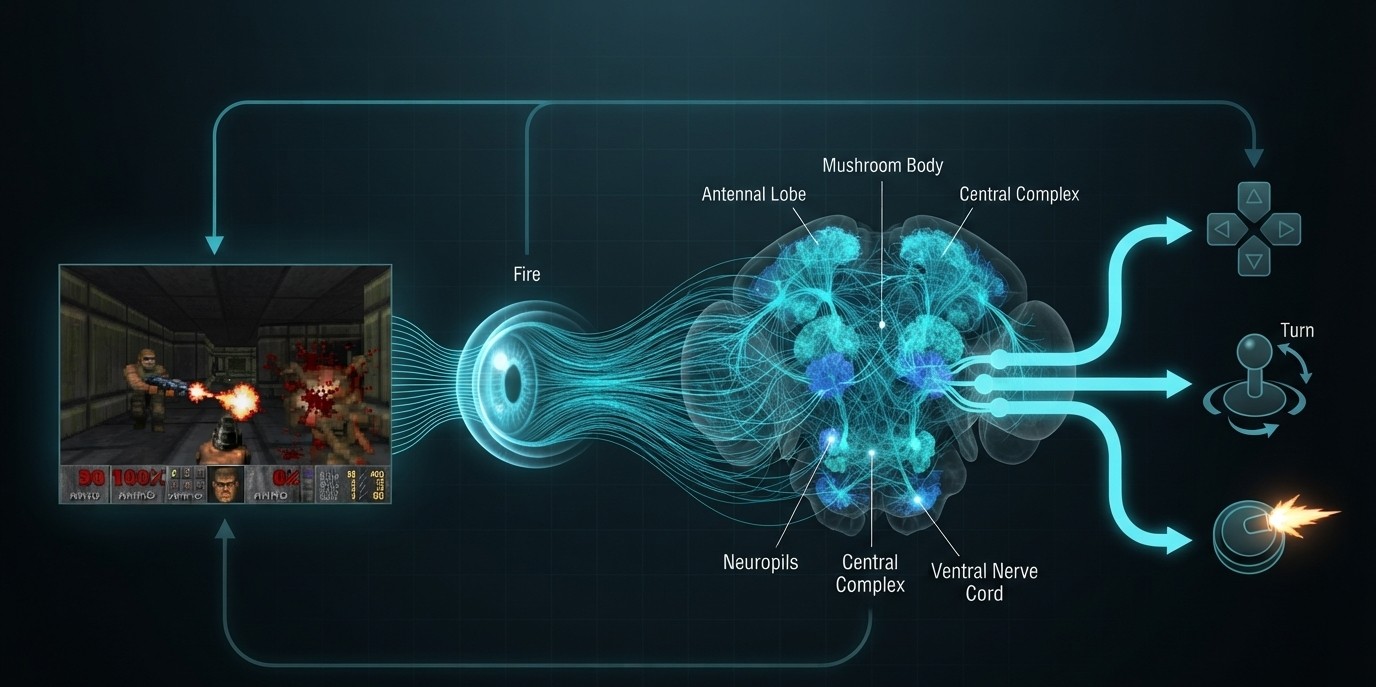
According to Wormuth's description, each DOOM frame is used to stimulate sensory neurons in the simulated fly nervous system.
The resulting neural activity is then interpreted and mapped to game actions.
In simple terms:
Game image → simulated fly senses → neurons activate → neural activity is interpreted → game control
That means the digital fly can theoretically receive visual information, process it through its reconstructed neural architecture and produce an action.
The system also introduces reinforcement.
When the simulated character takes damage, specific dopamine-related neurons can receive a reinforcement signal.
That creates a simplified version of a biological learning mechanism.
Instead of programming the controller with a giant list of instructions such as:
"If enemy appears on the left, turn left."
the experiment attempts to let neural activity itself become part of the control system.
That distinction is what makes the project scientifically interesting.
────────────────────────────────────────
────────────────────────────────────────
This Isn't a Living Fly Playing DOOM
This is the most important clarification in the entire story.
The viral headline makes it sound like scientists somehow strapped electrodes onto a fruit fly and made the insect play DOOM.
That is not what happened.
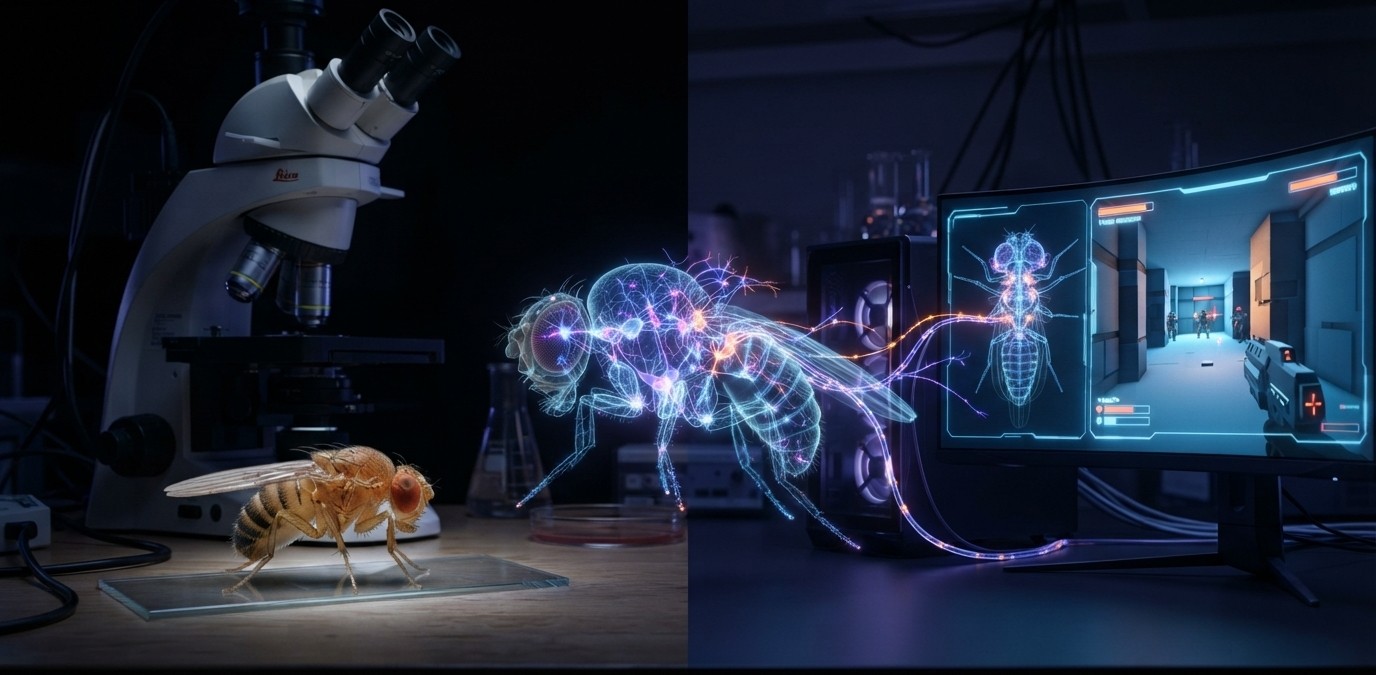
The experiment uses a digital simulation of the fruit fly nervous system.
The original biological brain was mapped from physical tissue. The resulting connectome is then represented computationally.
So when the simulated brain plays DOOM, the "fly" is essentially a software reconstruction of biological neural wiring.
There is no fruit fly sitting in front of a monitor.
There is no tiny keyboard.
And there is no insect physically controlling a mouse.
That makes the achievement less like a bizarre animal experiment and more like a new type of biological computing experiment.
────────────────────────────────────────
────────────────────────────────────────
Why DOOM?
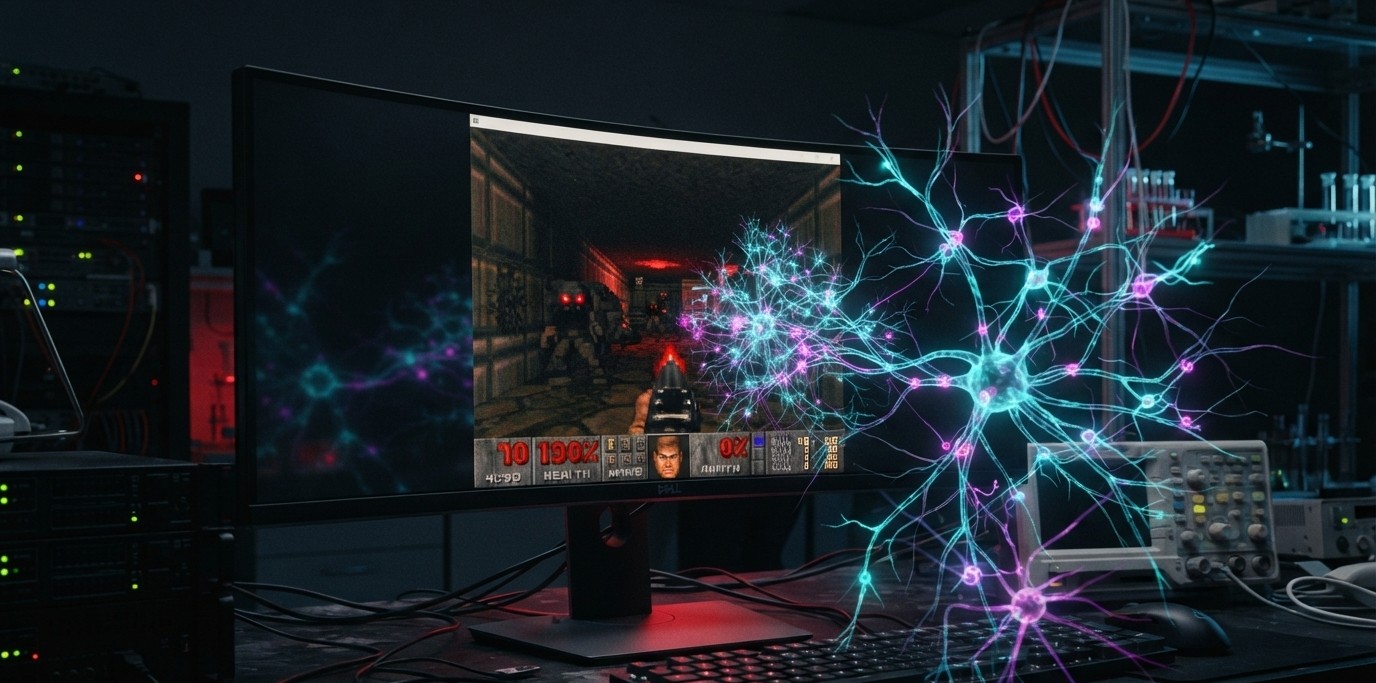
There is a long-running tradition in technology of making every sufficiently interesting computer capable of running DOOM.
Calculators.
Printers.
Smartwatches.
Old operating systems.
Embedded devices.
And now, apparently, reconstructed insect nervous systems.
But there is a deeper reason DOOM is useful for experiments like this.
It is comparatively simple.
The original game has a limited set of actions and a relatively controlled environment.
A system does not need to understand language, economics or social relationships to interact with the game.
It needs to perceive a visual environment and produce basic actions.
Move.
Turn.
Shoot.
Avoid danger.
That makes DOOM a useful sandbox for testing unusual control systems.
The fruit-fly experiment essentially asks a fascinating question:
Can a reconstructed biological neural network turn visual information into useful behavior inside a digital world?
────────────────────────────────────────
────────────────────────────────────────
The 166,000-Neuron Advantage
The scale of the connectome is what makes this experiment possible in the first place.
The MaleCNS dataset contains more than 166,000 neurons.
It also represents tens of millions of directed neuron-to-neuron connections.
That does not mean every neuron suddenly becomes an intelligent artificial-neural-network node in the conventional AI sense.
The system is a reconstruction of biological circuitry.
Its behavior emerges from the structure and dynamics being simulated.
That distinction matters.
Modern AI models are generally designed by engineers and trained through enormous amounts of data.
A connectome is different.
Researchers are starting with an actual biological wiring diagram.
The long-term scientific question is whether studying these biological networks can reveal principles that could eventually inspire better computational systems.
────────────────────────────────────────
The Fruit Fly Is Actually a Serious Neuroscience Model
The comedy surrounding the DOOM experiment can make the underlying science easy to overlook.
Fruit flies have been used in biological research for more than a century.
Drosophila melanogaster has helped scientists investigate genetics, development, behavior and neuroscience.
The new male connectome is particularly important because it can be compared with the previously published female fruit fly brain map.
Researchers can examine how neural circuits differ between the sexes while also identifying circuits that remain broadly conserved.
The maps also provide researchers with a foundation for testing hypotheses about how sensory information becomes behavior.
That is much more significant than making an insect shoot virtual demons.
────────────────────────────────────────
────────────────────────────────────────
From DOOM to Digital Biology
The most exciting part of the project may be what happens after the joke wears off.
Once researchers have a digital nervous system that can receive simulated sensory information and produce actions, the same architecture can be connected to different environments.
And that is already happening.
Other developers have experimented with the connectome in games including Super Mario 64, Beat Saber and Minecraft.
Some projects are playful demonstrations.
Others are designed to explore how biological neural circuits respond to different inputs.
The distinction between the two is important.
A video of a simulated fly stumbling through a game is entertaining.
A carefully designed experiment measuring which neural pathways produce particular behaviors could become legitimate neuroscience research.
The same underlying technology can support both.
────────────────────────────────────────
What This Could Mean for AI
The fruit-fly project also raises an intriguing possibility for artificial intelligence.
Modern AI is largely dominated by artificial neural networks inspired loosely by biological brains.
But most AI systems do not reproduce an actual biological brain's wiring.
A connectome gives researchers something different.
Instead of asking:
"How can we design an artificial network that behaves intelligently?"
researchers can also ask:
"What computational principles are already hiding inside biological neural circuits?"
The fruit fly is obviously nowhere near the complexity of a human brain.
But that is precisely why it is useful.
A complete map is currently manageable enough to study computationally.
If researchers can understand how relatively small nervous systems transform sensory information into behavior, those discoveries could eventually contribute to better models of biological intelligence.
That is a much bigger goal than making DOOM run through a fly.
────────────────────────────────────────
The Weirdest Part: The Internet Did This Almost Immediately
The timeline is almost comically fast.
Google and its collaborators released the male fruit fly connectome on September 3.
Within days, developers were already connecting it to games.
By September 6, Wormuth was publicly describing the DOOM experiment.
Other developers soon started experimenting with Mario 64, Beat Saber, Minecraft and other environments.
That speed is significant.
A scientific dataset that once would have been restricted to a small research community can now become a playground for software engineers almost immediately.
The tools required to experiment with complicated biological models are becoming increasingly accessible.
That creates a new category of experimentation somewhere between neuroscience, simulation, AI and open-source programming.
And yes, apparently the first question everyone asks is:
Can it run DOOM?
────────────────────────────────────────

────────────────────────────────────────
The Big Limitation
There is an important scientific caveat.
A connectome is a wiring diagram.
It is not automatically a complete explanation of a brain.
Knowing which neurons connect does not necessarily tell researchers everything about how those neurons behave under every condition.
Biological brains involve electrical activity, chemical signaling, neuromodulators, timing, environmental feedback and many other factors.
The computational experiments therefore involve engineering decisions.
The DoomFly project itself openly distinguishes between the biological wiring taken from the connectome and the engineering choices used to turn that wiring into a game controller.
That means the DOOM experiment should not be interpreted as:
"We completely simulated a fruit fly's mind."
It is more accurate to say:
"We used a detailed reconstruction of a fruit fly's neural wiring as part of a computational system capable of interacting with a game."
That is still remarkable.
It is simply a different claim.
────────────────────────────────────────
Could This Eventually Work With a Human Brain?
This is where the story becomes much more speculative.
The human brain contains roughly 86 billion neurons, compared with the roughly 166,000 neurons represented in the male fruit fly connectome.
The difference is enormous.
Mapping the human brain at the same level of detail would involve vastly more biological data and computational complexity.
There are also enormous scientific and ethical questions.
Would a sufficiently detailed brain simulation represent a mind?
Could a digital reconstruction experience anything?
Where would consciousness begin or end?
How should researchers treat increasingly sophisticated biological simulations?
The fruit fly experiment does not answer those questions.
But it provides a fascinating stepping stone.
Researchers can experiment with a much smaller nervous system before attempting to understand dramatically more complicated biological networks.
────────────────────────────────────────
The Real Breakthrough Isn't the DOOM Mod
The viral headline is obviously going to focus on the funniest part.
Scientists mapped a fly brain and somebody made it play DOOM.
But the real breakthrough happened before anyone opened the game.
Researchers created an extraordinarily detailed digital map of an entire adult male fruit fly central nervous system.
That map is now available for computational experimentation.
The gaming experiments demonstrate one possible use of the dataset.
They show that a biological neural architecture can be placed inside a digital environment and connected to sensory inputs and actions.
That is an important proof of concept.
DOOM is simply the most entertaining way to demonstrate it.
────────────────────────────────────────
What Comes After Fruit Fly Doom?
The next generation of experiments could become much more scientific.
Researchers could use digital connectomes to investigate:
- visual processing
- navigation
- movement
- sensory integration
- reward systems
- aggression
- learning
- decision-making
- neural damage
- circuit reconstruction
- biologically inspired AI
The gaming experiments may therefore end up being remembered as the funny beginning of a much larger research direction.
The fly did not become a gamer.
The researchers built a digital nervous system and gave engineers a new way to ask questions about how biological computation works.
That is considerably more interesting.
────────────────────────────────────────
FAQ
Did a real fruit fly play DOOM?
No. The viral DOOM experiment uses a computational simulation based on a detailed fruit fly connectome. No physical fruit fly was sitting at a gaming computer.
How many neurons are in the mapped fruit fly nervous system?
The male MaleCNS v1.0 reconstruction contains more than 166,000 neurons. The dataset also contains tens of millions of directed neural connections.
Who created the fruit fly brain map?
Google Research worked with HHMI Janelia and other collaborators, including researchers in Cambridge, to produce the complete male fruit fly central nervous system map.
Why was DOOM used?
DOOM provides a relatively controlled environment where visual input can be translated into a limited set of actions. That makes it useful for experimenting with unusual controllers.
Is the digital fruit fly actually intelligent?
The experiment should not be interpreted as creating human-like intelligence. The system uses a reconstructed biological wiring diagram together with engineered input, simulation and control mechanisms.
Can the fruit fly learn?
The DOOM experiment uses reinforcement signals as part of its control and training system. That is not the same thing as proving that a simulated fruit fly possesses human-like learning or consciousness.
Can the connectome play other games?
Yes. Developers have experimented with the digital fly nervous system in environments including Super Mario 64, Beat Saber and Minecraft.
Is this the same as AI?
Not exactly. The connectome is based on biological neural wiring, while conventional AI models use mathematically designed artificial neural networks. The two approaches can overlap in computational experiments.
────────────────────────────────────────
Final Take
The Fruit Fly Doom experiment is one of those rare internet stories where the meme is almost as interesting as the science behind it.
A complete male fruit fly nervous system was reconstructed at extraordinary detail.
Then engineers took that digital biological wiring and connected it to a video game.
The result was a simulated insect brain trying to survive inside DOOM.
It sounds ridiculous.
But underneath the joke is a serious technological milestone.
For the first time, researchers and developers have an unusually detailed digital map of an entire animal nervous system that can be explored computationally.
The gaming experiments demonstrate what happens when that biological architecture leaves the laboratory and enters a digital world.
Today it is DOOM.
Tomorrow it could be experiments in navigation, perception, learning, robotics or biologically inspired AI.
The strangest part isn't that someone made a fruit fly play DOOM.
It's that we now have enough of a map of an animal brain to make the question possible in the first place.