
AI Chips & the GPU Race
Artificial Intelligence is transforming nearly every industry, from healthcare and finance to gaming and robotics. Behind every powerful AI model lies one critical piece of hardware—the AI chip.
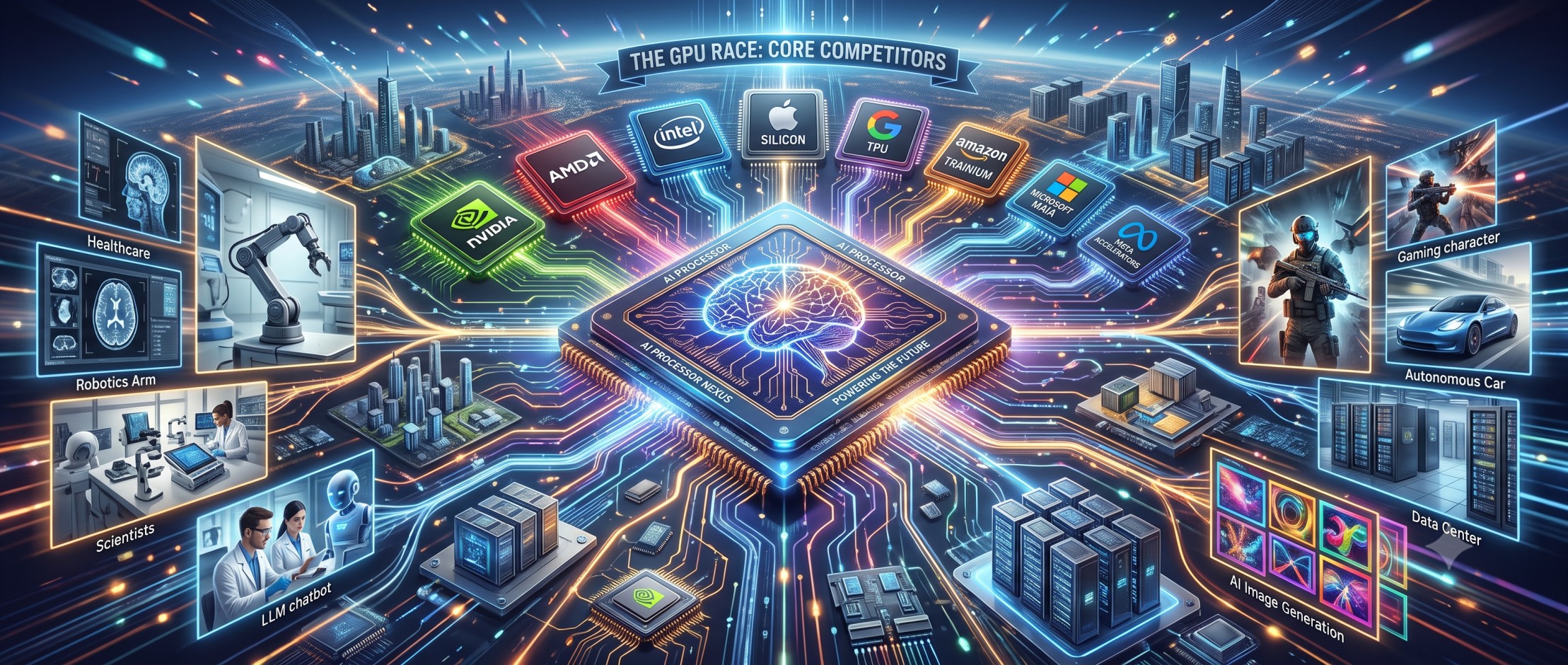
As companies race to build faster and more efficient processors, the competition between NVIDIA, AMD, Intel, Apple, Google, and other chip manufacturers has become one of the biggest technology battles of the decade.
This GPU race isn't just about gaming anymore. It's about powering the future of AI.
Why AI Chips Matter More Than Ever
Modern AI models require enormous computing power.
Training large language models, generating realistic images, powering autonomous vehicles, and running intelligent assistants all depend on specialized processors capable of handling trillions of calculations every second.
AI Chips Power
- 🤖 AI chatbots
- 🎮 Modern video games
- 🎨 AI image generation
- 🚗 Self-driving vehicles
- ☁️ Cloud computing
- 🔬 Scientific research
Without powerful GPUs and AI accelerators, today's AI revolution simply wouldn't be possible.

The GPU Race Explained
For years, graphics cards were mainly built for gaming.
Today, they're the foundation of artificial intelligence.
Major companies are investing billions of dollars into developing next-generation AI hardware.
Leading Competitors
- NVIDIA
- AMD
- Intel
- Apple Silicon
- Google TPUs
- Amazon Trainium
- Microsoft Maia AI Chips
Each company is designing processors optimized for different AI workloads, cloud computing, and high-performance computing.
Why NVIDIA Leads the AI Industry
NVIDIA has become the dominant force in AI computing.
Its GPUs are widely used for:
- Training large language models
- AI research
- Data centers
- Cloud AI platforms
- Scientific simulations
- Robotics
The company's CUDA software ecosystem has also helped developers build AI applications more efficiently, giving NVIDIA a significant advantage over competitors.
AMD and Intel Are Catching Up
Although NVIDIA currently dominates the market, AMD and Intel are investing heavily in AI hardware.
AMD's Focus
- High-performance AI GPUs
- Data center accelerators
- Energy-efficient computing
Intel's Strategy
- AI PCs
- AI accelerators
- Enterprise computing
- Edge AI devices
Competition is increasing rapidly, leading to faster innovation and better hardware for consumers and businesses.
Custom AI Chips Are Changing Everything
Many technology companies are now designing their own processors instead of relying entirely on traditional GPU manufacturers.
Examples include:
- Apple's Neural Engine
- Google's Tensor Processing Units (TPUs)
- Amazon Trainium
- Microsoft Maia
- Meta AI Accelerators
Custom chips improve performance while reducing energy consumption and operating costs.
AI Chips Are Powering the Future of Gaming
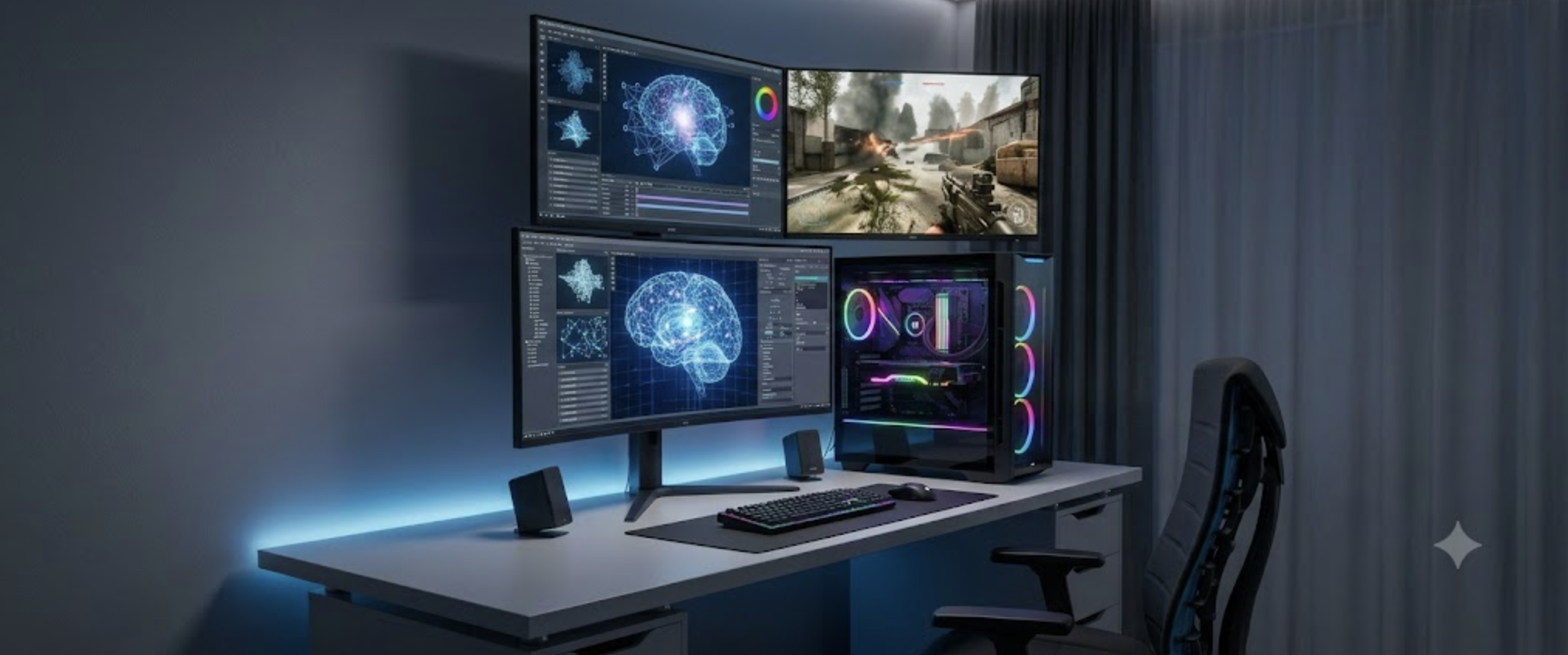
The gaming industry is also benefiting from AI hardware.
Modern GPUs now enable features such as:
- AI-powered frame generation
- Ray tracing
- Real-time upscaling
- Intelligent NPC behavior
- Better physics simulations
- Photorealistic graphics
Future AAA games will increasingly rely on AI processors to deliver more immersive experiences.
Challenges Facing the AI Chip Industry
Despite rapid growth, several challenges remain.
These include:
- Global semiconductor shortages
- Rising manufacturing costs
- High power consumption
- Cooling requirements
- Supply chain disruptions
- Increasing competition
As demand continues to grow, manufacturers must balance performance, efficiency, and affordability.
What the Future Looks Like
The next generation of AI chips will be faster, smaller, and significantly more energy-efficient.
Future innovations may include:
- AI-first personal computers
- Fully autonomous robots
- Smarter cloud infrastructure
- Advanced healthcare diagnostics
- Real-time language translation
- More realistic gaming experiences
The companies leading today's GPU race are helping build the foundation for tomorrow's AI-powered world.



Comments
Sign in to join the conversation
Sign inNo comments yet
Be the first to share your thoughts!