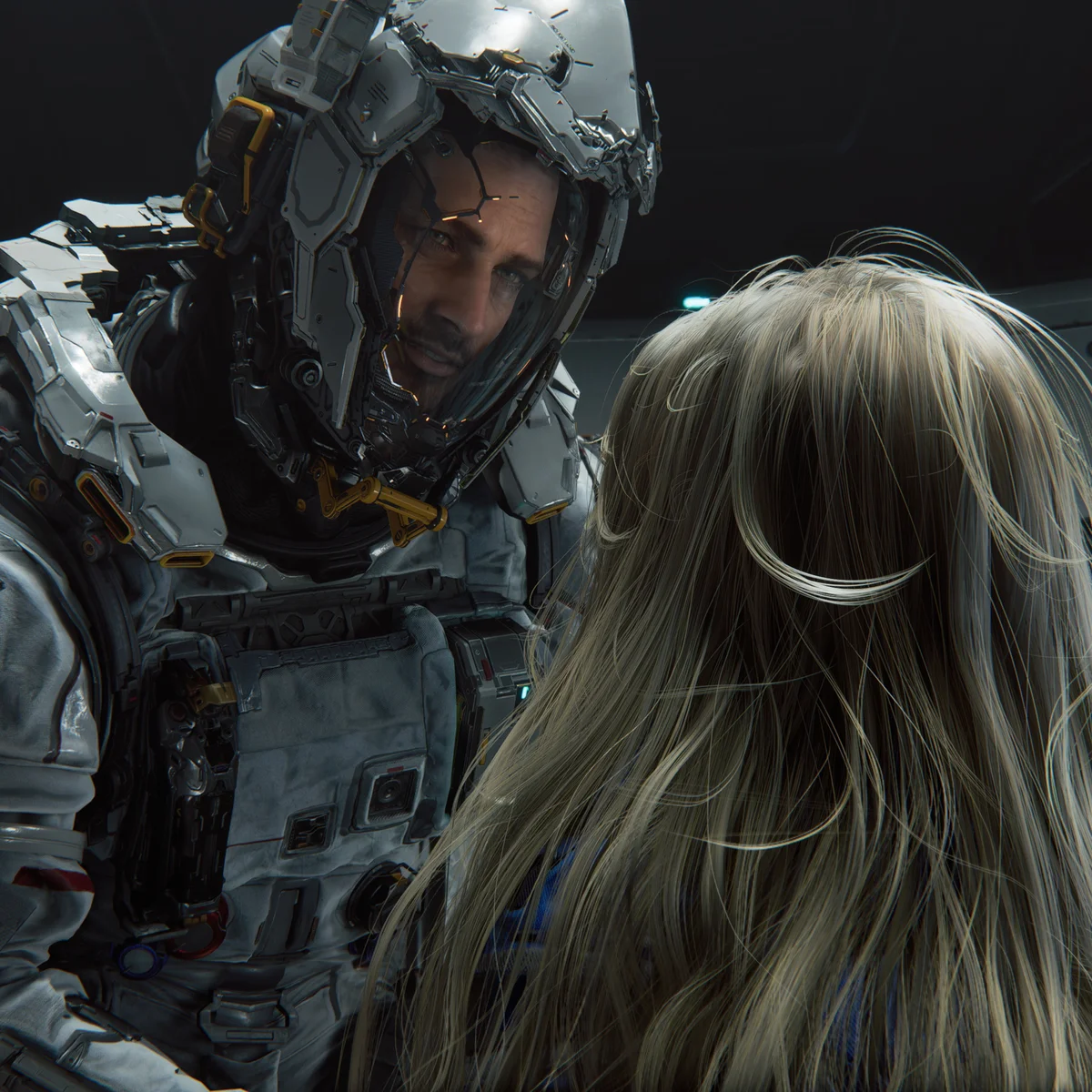

A man wakes up on the Moon.
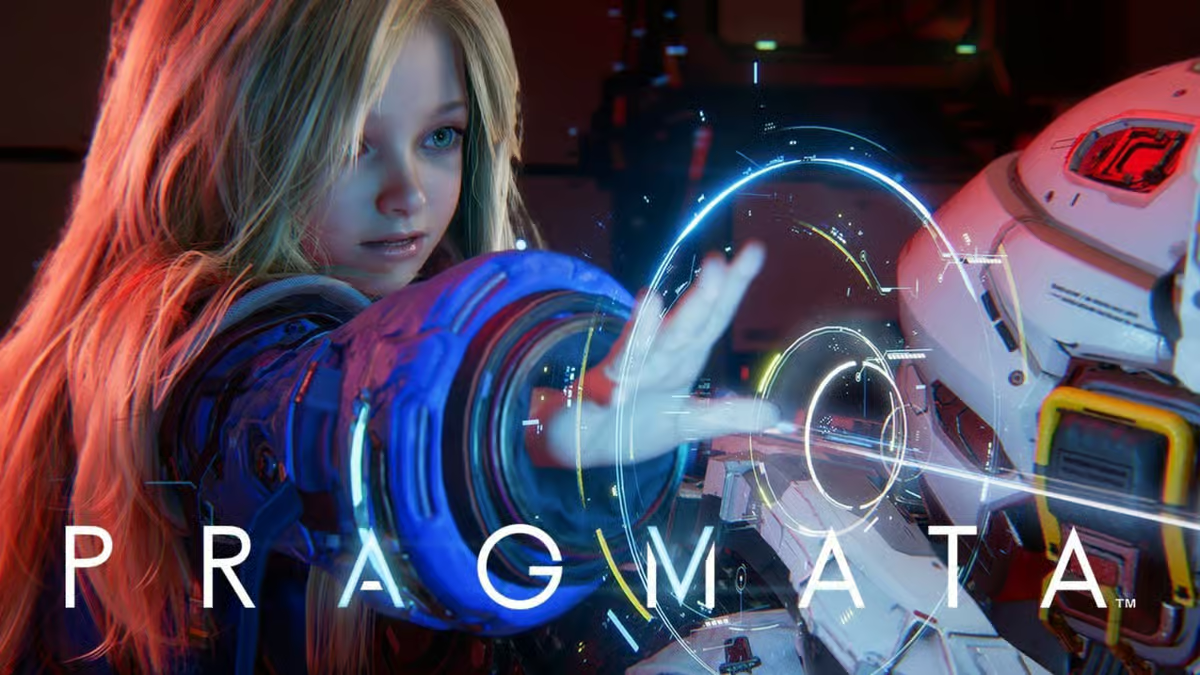
An android child is waiting for him.
And somewhere inside the facility, an artificial intelligence has decided that humanity is no longer welcome.
That sounds like the setup for a straightforward sci-fi thriller.
Pragmata is anything but straightforward.
Capcom's bizarre lunar action-adventure drops Hugh into a world where malfunctioning machines, shifting environments and mysterious technology make it increasingly difficult to tell what's real, what's programmed and what might be something in between.
But beneath all the surreal imagery is a surprisingly human story.
At its center are Hugh and Diana, two characters who couldn't seem more different at first, yet gradually become dependent on one another.
And that's where Pragmata starts to click.
Welcome to the Lunar Facility
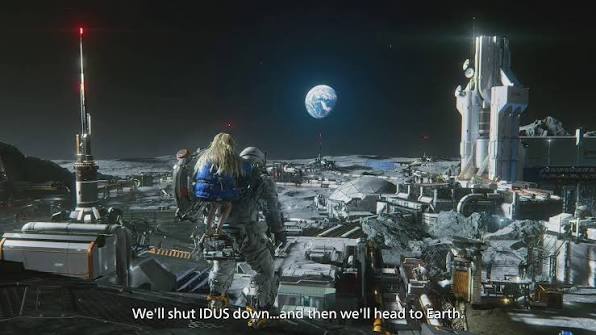
The first thing Pragmata gets right is its setting.
The lunar facility isn't simply another science-fiction backdrop filled with metallic corridors and glowing computer screens.
It feels wrong.
The station has been overtaken by a rogue AI, leaving Hugh trapped inside an environment that was presumably designed to support human life but now seems determined to eliminate it.
Machines behave unpredictably.
Systems malfunction.
Rooms don't always feel like they belong together.
And the deeper Hugh travels, the more questions emerge.
Who built this place?
Why was Diana created?
What exactly happened to the people who were supposed to be here?
And perhaps most importantly:
Why does the facility seem so interested in Diana?
The answers aren't handed over immediately.
Instead, Pragmata turns its environment into part of the mystery.
Every strange hallway and malfunctioning machine feels like another piece of a much larger puzzle.
Hugh and Diana Are the Real Story
For all the lunar technology and bizarre sci-fi concepts, Pragmata ultimately revolves around two people.
Hugh is the obvious outsider.
He's human, he's experienced, and he's trying to survive a facility that appears to be actively working against him.
Diana, meanwhile, looks like a child.
But she's not human.
She's an android with capabilities that make her far more important than her innocent appearance suggests.
That contrast creates the emotional foundation of the story.
Hugh initially sees Diana as someone he needs to protect.
Diana sees Hugh as someone who can help her survive.
Neither completely understands the other.
And that's precisely what makes their relationship work.
Their partnership gradually develops from necessity into trust.
Instead of simply being the mysterious companion who follows the protagonist around, Diana becomes an active part of the adventure.
She affects how Hugh moves through the facility, how he approaches problems and how he understands the world around him.
The Childlike Android Is More Complicated Than She Looks
Diana's design is deliberately deceptive.
Her appearance suggests innocence, but her capabilities suggest something much more complicated.
She can interact with systems Hugh cannot access. She understands aspects of the facility that remain completely mysterious to him. At the same time, her behavior retains a childlike quality that makes it difficult to view her purely as a machine.
That creates an uncomfortable question at the heart of the story:
If an artificial intelligence can think, feel and form relationships, where does "machine" end and "person" begin?
Pragmata doesn't need to answer that question immediately.
In fact, it's more interesting when it doesn't.
Diana's identity becomes part of the mystery, while her relationship with Hugh gives that mystery emotional weight.
We're not simply wondering what Diana is.
We're wondering what she means to Hugh and what Hugh might eventually mean to her.
A Rogue AI Makes Everything More Unsettling
The facility's AI is more than a conventional villain.
A simple evil computer would make the story much easier to understand.
Instead, Pragmata plays with the idea that an artificial intelligence might genuinely believe it is doing the right thing.
That makes its actions much more unsettling.
If the AI controls the lunar facility, then every automated door, security system and hostile machine potentially becomes an extension of its will.
Hugh isn't simply fighting enemies.
He's fighting an entire environment that can think.
And Diana appears to be caught somewhere in the middle.
The AI wants something from her.
Hugh wants to protect her.
Diana is trying to understand herself.
Those three motivations create a fascinating triangle.
Why the Surrealism Matters
It would be easy to dismiss Pragmata's stranger moments as style for the sake of style.
That would be a mistake.
The game's surrealism reinforces its central themes.
Hugh is trapped somewhere that doesn't behave according to normal expectations. Diana is an artificial being trying to navigate human concepts. The AI has its own interpretation of what humanity needs.
Even the physical world reflects that uncertainty.
Things can look familiar one moment and deeply strange the next.
The result is a world where nothing should be accepted at face value.
That's exactly the atmosphere a story about artificial intelligence, identity and memory needs.
The Lunar Setting Makes the Story Feel Different
We've seen plenty of science-fiction games set in space.
We've seen abandoned stations.
We've seen rogue AIs.
We've seen mysterious androids.
But putting these ideas together on the Moon gives Pragmata a distinctive atmosphere.
The Moon is close enough to Earth to feel familiar, yet distant enough to feel completely isolated.
There is nowhere obvious for Hugh to escape.
No city.
No civilization.
No easy rescue.
Just a massive facility surrounded by an unforgiving lunar landscape.
That isolation makes the relationship between Hugh and Diana even more important.
They have each other.
And as the mystery grows, that relationship becomes one of the few things the player can trust.
When the Weirdness Finally Starts Making Sense
This is where Pragmata becomes particularly compelling.
At first, its world can feel like a collection of disconnected ideas.
Lunar colony.
Rogue AI.
Android child.
Strange machines.
Surreal environments.
Hugh's mysterious past.
But as these elements begin to overlap, the bizarre presentation starts feeling intentional rather than random.
The central mystery isn't simply:
"What happened here?"
It's:
"What is this place trying to become?"
And where does Diana fit into that transformation?
Those questions give the story momentum without requiring every mystery to be immediately explained.
Why Hugh and Diana Work So Well Together
The strongest stories about unlikely partnerships usually depend on contrast.
One character understands something the other doesn't.
One provides strength while the other provides knowledge.
One starts skeptical while the other is more trusting.
Hugh and Diana fit that structure almost perfectly.
Hugh brings human experience and determination.
Diana brings access to technology and an entirely different perspective on the world.
Neither character can completely solve the mystery alone.
That matters because it prevents Diana from becoming a simple sidekick and Hugh from becoming a traditional action hero.
They need each other.
And the longer they survive together, the more that necessity begins to resemble genuine companionship.
That's where the story gets its emotional edge.
What Makes Pragmata Stand Out
The biggest risk with a bizarre sci-fi narrative is becoming so mysterious that the player stops caring about the answers.
Pragmata avoids that problem by giving the mystery a human center.
We care about the lunar facility because Hugh is trapped inside it.
We care about the AI because it's threatening their survival.
We care about Diana because Hugh begins to see her as more than a machine.
And eventually, the biggest question isn't necessarily whether Hugh can escape.
It's whether Hugh can get Diana out with him.
That gives all the strange technology and surreal storytelling a purpose.
What Happens Next?
The most interesting questions surrounding Pragmata aren't necessarily about its next gameplay feature.
They're about its characters.
How much does Diana actually understand about her origins?
What does the rogue AI believe it is protecting?
Why was Diana created?
And how much of Hugh's own story is connected to the facility?
As those pieces come together, the relationship between Hugh and Diana could become increasingly important.
Because if the game's central mystery is ultimately about humanity and artificial intelligence, Diana isn't merely standing at the center of the story.
She may be the question the entire story is trying to answer.
🎮 The Bottom Line
Pragmata works because it refuses to explain everything too quickly.
Its lunar facility is strange. Its AI is unsettling. Its technology is deliberately mysterious. And Diana's identity raises more questions than it answers.
But beneath all that weirdness is a surprisingly straightforward emotional hook:
A man is trying to protect a child who isn't technically human.
The more Hugh and Diana depend on each other, the less important the distinction between human and machine starts to feel.
That's what makes Pragmata's bizarre world finally click.
The Moon may be full of machines, secrets and rogue intelligence.
But the story's real mystery is much simpler:
Can two completely different beings learn what it means to care about each other?
What do you think? Does Diana's relationship with Hugh make Pragmata more compelling, or is the game's surreal mystery the real star of the adventure? Let us know in the comments.


Comments
1Sign in to join the conversation
Sign in