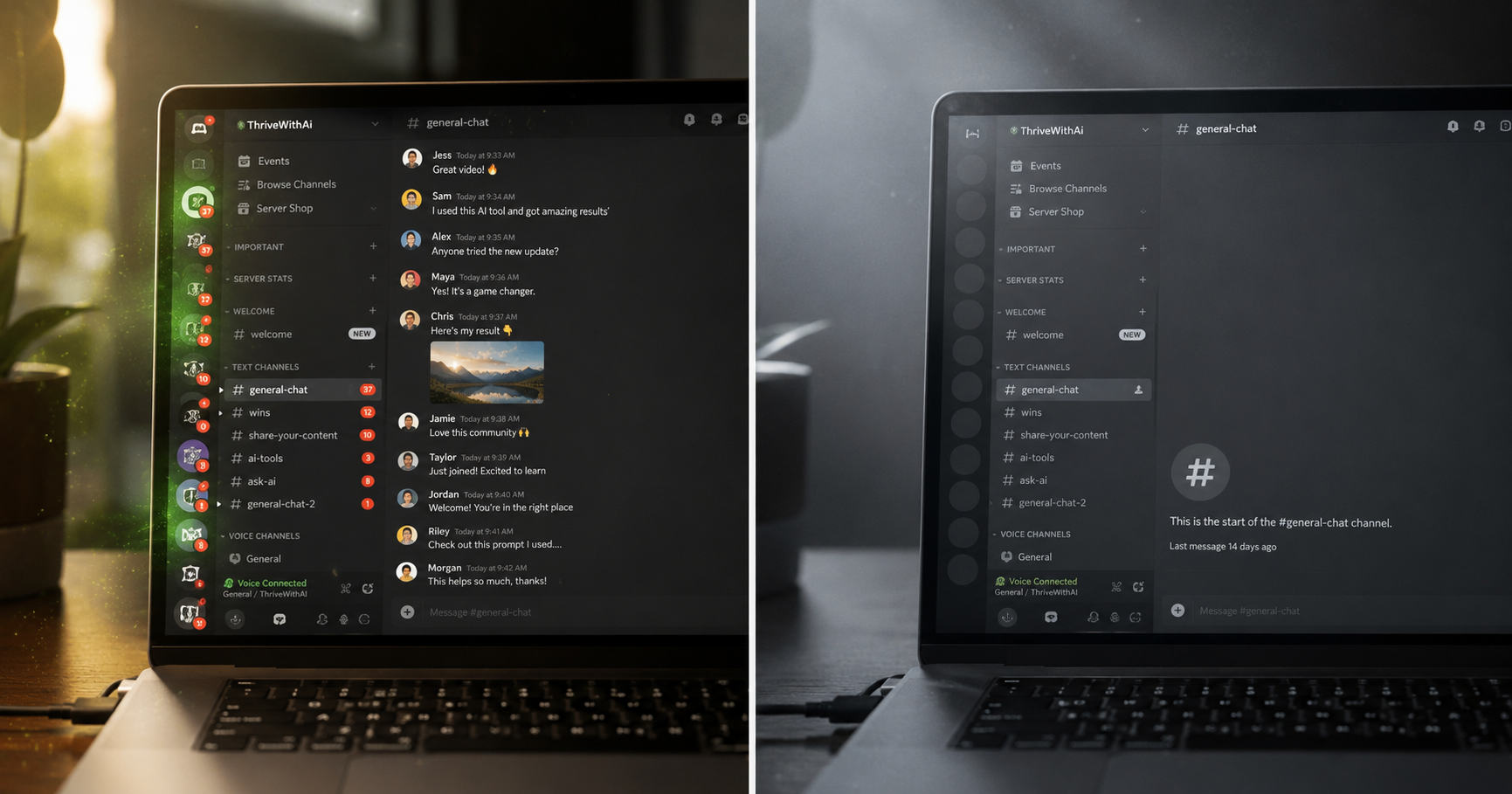

The Psychology of Discord Server Death: Why Most Communities Go Silent Within 90 Days
Every Discord server starts the same way.
The first week is exciting. New members join every day, conversations flow naturally, and notifications never seem to stop.
Then, slowly, everything changes.
A month later, activity starts slowing down. By the third month, your server may have hundreds—or even thousands—of members, yet barely anyone is talking.
If this has happened to your community, you're not alone.
Most Discord servers don't die because the niche is bad or the content isn't good enough. They become inactive because they're built around launch excitement instead of long-term engagement.
Let's look at the psychology behind why this happens—and how to prevent it.
The 90-Day Discord Server Death Curve
Most communities follow a surprisingly similar pattern.
Days 1–7: High excitement, active conversations, and rapid member growth.
Days 8–30: The novelty wears off. The owner posts less, and casual members slowly disappear.
Days 31–60: Conversations become less frequent. New members see inactive channels and choose not to participate.
Days 61–90: The server settles into a quiet routine where only a small core of members remains active.
The problem isn't usually content.
It's the lack of systems that encourage people to keep coming back.
Why Discord Communities Go Silent
1. The Bystander Effect
As communities grow, people assume someone else will start the conversation.
Ironically, a server with 20 active members often feels more alive than one with 2,000 silent members.
2. The Empty Room Effect
People judge a community within seconds.
If the latest message is several days old, most visitors assume the server is inactive and leave without saying anything.
Silence creates more silence.
3. No Reason to Come Back
People regularly check communities because something interesting might happen—a reply, a meme, a discussion, or a notification.
When those moments disappear, so does the habit of opening the server.
4. Weak Community Identity
People stay in communities where they feel they belong.
Without conversations, recognition, or shared experiences, members slowly lose that connection and drift away.
How to Keep Your Discord Server Active
Build a Strong Core
Instead of chasing thousands of members, focus on your first 10–15 active people.
Talk to them regularly, recognize their contributions, and make them feel like they're helping shape the community.
Keep Your Main Channel Active
Never let your server look abandoned.
Daily discussion prompts, community questions, news, or scheduled conversation starters keep the server looking alive—even during quieter weeks.
Create Unexpected Moments
Not everything should follow a schedule.
Surprise events, giveaways, voice chats, member spotlights, or random rewards give people a reason to check back regularly.
Recognize Your Members
People enjoy being noticed.
Founding member roles, contributor badges, milestone celebrations, and public shout-outs strengthen a sense of belonging and encourage long-term participation.
Bring Back Inactive Members
Many members don't leave—they simply forget.
A friendly reminder, a community event, or a "Here's what's new" update can often bring them back before they're gone for good.
A Simple 90-Day Plan
Days 1–30: Build relationships with your most active members.
Days 31–60: Introduce daily prompts and recurring community activities.
Days 61–90: Add member recognition, surprise events, and community traditions that encourage long-term participation.
These small systems create habits, and habits are what keep communities alive.
Final Thoughts
Discord server death isn't bad luck—it's predictable human behavior.
Communities thrive when they're intentionally designed to encourage conversations, reward participation, and give members a reason to return.
If you're launching a new server or trying to revive an inactive one, focus on building engagement before chasing member count. You can also list your server on Discords.ai to attract new members while these engagement systems begin creating long-term momentum.
At the end of the day, successful Discord communities aren't built by chance—they're built by design.


