
What happens when you put a chip designed to behave more like a desktop processor inside a smartphone?
Usually, the answer is heat.
Lots of it.
Modern smartphone processors can produce extraordinary performance for their size, but sustained performance has always been a different challenge. A phone can run incredibly fast for a few seconds. Keeping that performance going for minutes is where things get complicated.
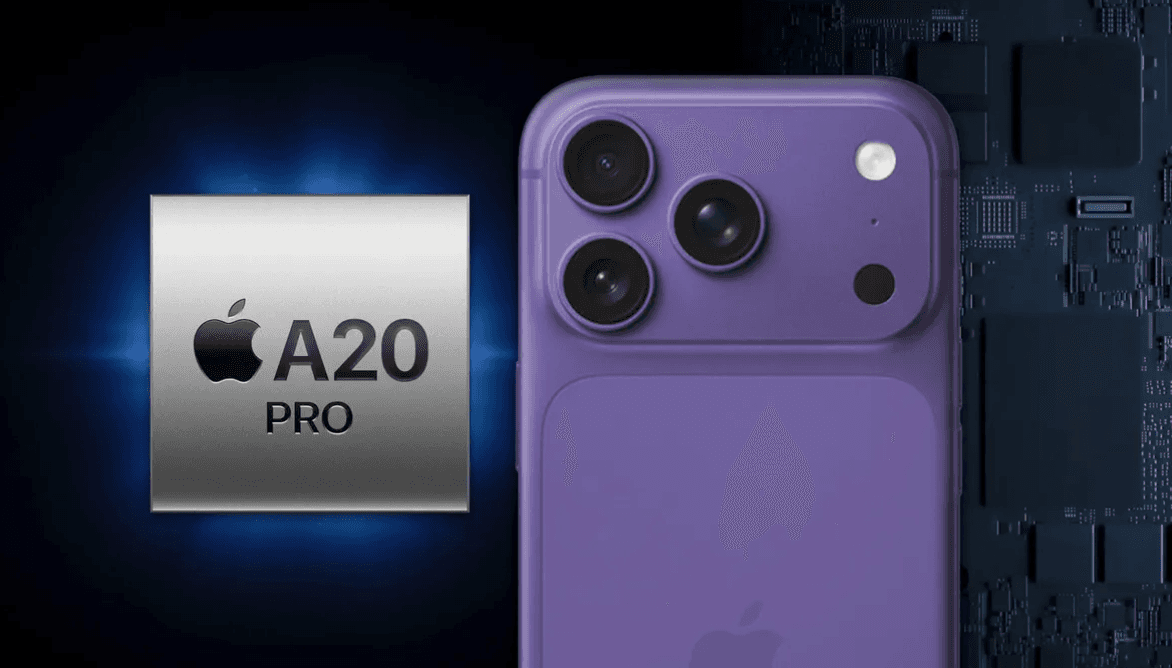
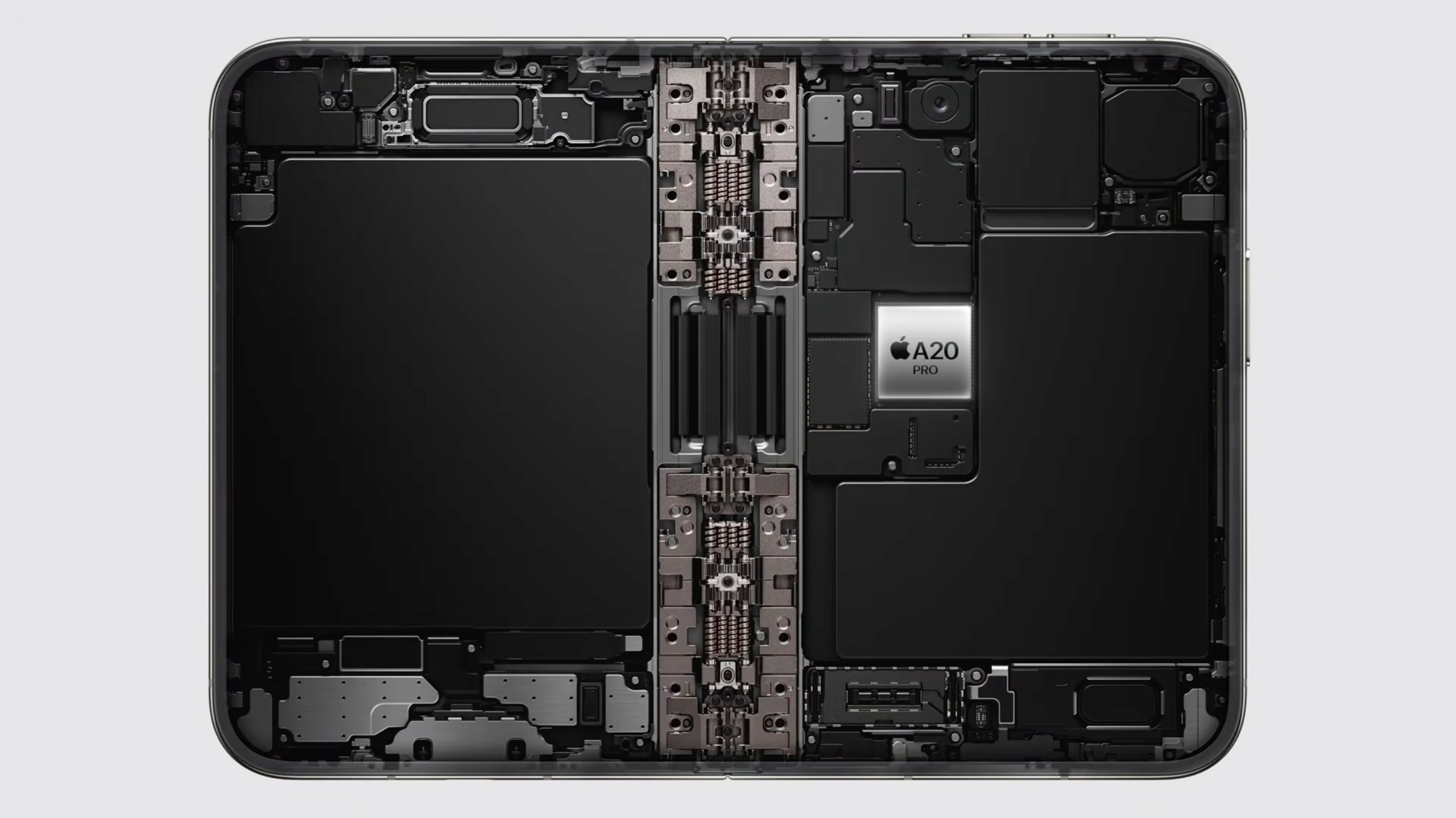
The A20 Pro uses a new packaging design inspired by Apple's M series chips, while the thermal system surrounding it has been substantially expanded.
Apple says the new vapor chamber has three times the surface area of the previous generation and can enable up to 40 percent better sustained performance compared with the iPhone 17 Pro.
That's not a small cooling upgrade.
It's a change in philosophy.
The Real Problem Wasn't Peak Performance
Smartphone processors have reached a strange point.
Peak performance isn't particularly difficult anymore.
The A20 Pro has a six core CPU with two high performance cores and four efficiency cores, alongside a seven core GPU and Apple's new dual 16 core Neural Engine. Apple also says the chip delivers up to 40 percent faster graphics performance than the A19 Pro.
Those numbers sound impressive.
But benchmark screenshots only tell part of the story.
Run a short CPU test and almost any flagship smartphone can look spectacular.
Run a demanding game.
Compile something.
Process a large AI model.
Render continuously.
Then keep doing it.
That's where thermal throttling enters the conversation.
A processor can only dissipate so much heat through a tiny phone chassis before temperatures force it to reduce clock speeds.
Apple's solution for the A20 Pro is essentially to give the heat somewhere else to go.
The A20 Pro Is Built Differently
One of the most interesting changes isn't actually the vapor chamber.
It's what's sitting above it.
Apple says the A20 Pro uses custom packaging inspired by its M series processors. Instead of placing the memory directly in the thermal path of the processor, Apple places the silicon die and memory side by side.
That sounds like a small packaging change.
It isn't.
The traditional arrangement can put memory directly above the processor, creating another layer that heat needs to travel through before reaching the cooling system.
Apple's new approach removes memory from that thermal path.
More importantly, it allows the A20 Pro to connect directly to the next generation vapor chamber.
In other words, Apple isn't simply adding a larger cooler.
It's changing the route the heat takes to reach the cooler.
That is arguably the more important engineering decision.
Three Times the Cooling Surface
This is where the teardown gets interesting.
The iPhone 18 Pro's next generation vapor chamber has three times the surface area of the system used in the previous iPhone 17 Pro.
Apple has also introduced more thermally conductive materials around the system.
The result is a much larger thermal pathway between the A20 Pro and the rest of the phone.
Think about it like a highway.
A small thermal system is a two lane road trying to move traffic away from a busy city.
Eventually, congestion appears.
Apple has effectively built a much larger highway.
Heat can spread across a greater area instead of concentrating around the processor.
And that's exactly what you want from a high performance mobile chip.
The goal isn't necessarily to make the phone cold.
The goal is to prevent heat from becoming the limiting factor.
And Then There's Graphite
The vapor chamber gets most of the attention, but thermal graphite is another important part of the equation.
Graphite sheets are extremely useful in thin electronics because they can spread heat across a larger surface area without requiring the space occupied by a conventional heatsink.
That matters enormously inside a smartphone.
A desktop PC can afford a giant cooler.
A laptop can use fans and heat pipes.
A phone has neither luxury.
Every fraction of a millimeter matters.
So instead of trying to remove heat with a large mechanical cooling system, the iPhone 18 Pro uses a combination of vapor chamber technology, thermally conductive materials and graphite based heat spreading to move energy away from the A20 Pro and distribute it through the chassis.
Apple's new thermal design also incorporates new materials around the cooling system, while reporting up to a 40 percent improvement in sustained performance compared with the previous generation.
That is the key phrase.
Sustained performance.
The A20 Pro Is Where the Desktop Comparison Gets Interesting
Calling a smartphone chip "desktop class" has become something of a cliché.
But the A20 Pro makes the comparison more interesting than it sounds.
The chip is built on a 2 nanometer process and combines a six core CPU, seven core GPU and a dual 16 core Neural Engine.
Apple has also increased memory bandwidth by 50 percent and added new Neural Accelerators for on device AI workloads.
This isn't simply a faster version of last year's processor.
Apple is increasingly designing its silicon around the same principle that made its M series chips so competitive.
Performance per watt matters as much as raw performance.
A desktop processor can brute force its way through workloads using significantly more power.
A smartphone can't.
The A20 Pro has to deliver its performance inside a tiny battery powered computer that also needs to remain comfortable enough to hold.
That's a much harder engineering problem.
The Benchmark Problem
This is also where the post Glowtime benchmark conversation gets complicated.
The A20 Pro is extremely fast, and early testing is already positioning it as a serious competitor to performance levels traditionally associated with larger computers.
But saying it "beats PCs" requires an enormous asterisk.
Which PC?
Which processor?
Which benchmark?
Which power limit?
Which workload?
A smartphone winning a short single core benchmark against a mid range desktop doesn't mean it can replace that desktop for every task.
A desktop has more cooling capacity, more sustained power and often significantly more memory.
But that's not really the point.
The remarkable part is how close the performance conversation has become.
The iPhone 18 Pro is a device that fits in your hand.
Its processor has seven GPU cores, dedicated neural acceleration and a sophisticated thermal system designed specifically to sustain workloads that would have been considered excessive for a phone only a few years ago.
That is the real benchmark story.
The gap is getting uncomfortable.
AI Is Probably the Bigger Story Than Gaming
Gaming is an obvious demonstration of the A20 Pro's capabilities.
AI may be more important.
Apple's new Neural Engine has 32 total cores, split into two 16 core engines, and Apple says it provides twice the AI processing power of the previous generation.
The company has also increased memory bandwidth by 50 percent.
That's important because on device AI isn't only about raw compute.
It's also about moving large amounts of data quickly and efficiently.
A faster Neural Engine helps.
Higher memory bandwidth helps.
Better thermal management helps even more.
Because AI workloads can run continuously.
The phone isn't simply generating a quick response.
It may be processing images, audio, language and other data repeatedly.
That's exactly the kind of workload where sustained performance becomes more important than a five second benchmark burst.
Why the Cooling System May Be the Biggest Upgrade
The easiest thing Apple could have done was increase peak chip performance.
Instead, Apple spent significant engineering effort making sure the chip could actually use that performance for longer.
That's an important distinction.
Imagine two phones.
Phone A is dramatically faster for thirty seconds.
Phone B is slightly slower at its absolute peak but can maintain nearly its maximum performance for twenty minutes.
For serious gaming, AI processing, video work and other sustained workloads, Phone B may ultimately be the faster device.
That's the philosophy behind the iPhone 18 Pro.
Apple isn't just chasing benchmark peaks.
It's chasing performance consistency.
And the new thermal architecture is what makes that possible.
The Seven Millimeter Challenge
This is what makes the whole design impressive.
Inside a phone chassis only a few millimeters thick, Apple has to fit a processor, memory, battery, cameras, antennas, display components, speakers, wireless charging hardware and an increasingly sophisticated cooling system.
There's almost no wasted space.
The A20 Pro's packaging therefore becomes just as important as the processor architecture itself.
Moving memory away from the chip's thermal path gives the silicon a more direct relationship with the vapor chamber.
The larger vapor chamber spreads heat across a much greater area.
Graphite and other thermally conductive materials then help distribute that energy through the device.
It's a chain.
A20 Pro generates the heat.
The packaging gets that heat out.
The vapor chamber spreads it.
The graphite helps distribute it.
The chassis ultimately becomes part of the thermal strategy.
That's how Apple manages to keep increasing performance without simply turning the iPhone into a miniature gaming laptop with a fan.
What This Means for Mid Range PCs
This is probably the most provocative part of the A20 Pro conversation.
The iPhone 18 Pro isn't replacing a gaming desktop.
It isn't suddenly going to outperform a high end workstation in every professional application.
But the performance level of mobile silicon is becoming difficult for cheaper PCs to ignore.
A mid range PC has traditionally had a major advantage in sustained compute.
It has more physical space.
It has larger cooling systems.
It can draw more power.
Smartphones historically accepted lower performance in exchange for efficiency and portability.
The A20 Pro is narrowing that compromise.
Apple is effectively asking a strange question:
How much performance can we extract from a computer that you can put in your pocket?
The answer is becoming increasingly uncomfortable for the traditional PC market.
The Most Important Upgrade Isn't the Chip
There's a temptation to look at the A20 Pro and conclude that Apple simply built a faster processor.
That's not really what happened.
Apple built an ecosystem around the processor.
The packaging changed.
The memory arrangement changed.
The vapor chamber became substantially larger.
Thermal materials improved.
The software gets access to more AI capability.
And the entire system is designed around keeping the silicon operating efficiently for longer.
That's why the iPhone 18 Pro feels less like another annual chip upgrade and more like an architectural reset.
What Happens Next?
The interesting question isn't whether Apple can make the A20 Pro faster.
Of course it can.
The more interesting question is how much performance Apple can continue extracting from this architecture without increasing the physical size of the phone.
Watch three areas closely.
Sustained gaming: Longer workloads will reveal whether the larger vapor chamber delivers the real world gains Apple promises.
On device AI: The dual Neural Engine and higher memory bandwidth could become more important as Apple pushes more intelligence onto the phone itself.
PC comparisons: As mobile benchmarks continue improving, the distinction between premium smartphones and entry level or mid range computers will become increasingly difficult to explain to consumers.
That's where this generation could ultimately matter.
Not because your iPhone is suddenly a desktop replacement.
But because the computer in your pocket is beginning to behave like one.
🎯 The Bottom Line
The iPhone 18 Pro's biggest innovation isn't the camera.
It isn't the new colors.
It isn't even the A20 Pro itself.
It's what Apple built around the A20 Pro.
A new M class inspired packaging design puts the silicon and memory side by side. A dramatically larger vapor chamber provides three times the surface area of the previous generation. Graphite and thermally conductive materials help spread the heat. And together, those changes allow Apple to target up to 40 percent better sustained performance than the previous generation.
Now it's learning how to stay fast.
And after Glowtime, that may be the most important story inside the iPhone 18 Pro.
What do you think? Has Apple pushed smartphone silicon far enough to seriously challenge mid range PCs, or are desktop processors still in a completely different league? Let us know in the comments.