
The Blood of Dawnwalker Pre-Nerf: Why Devs Mangled the Time Mechanic Over 'Fear of Complaints'
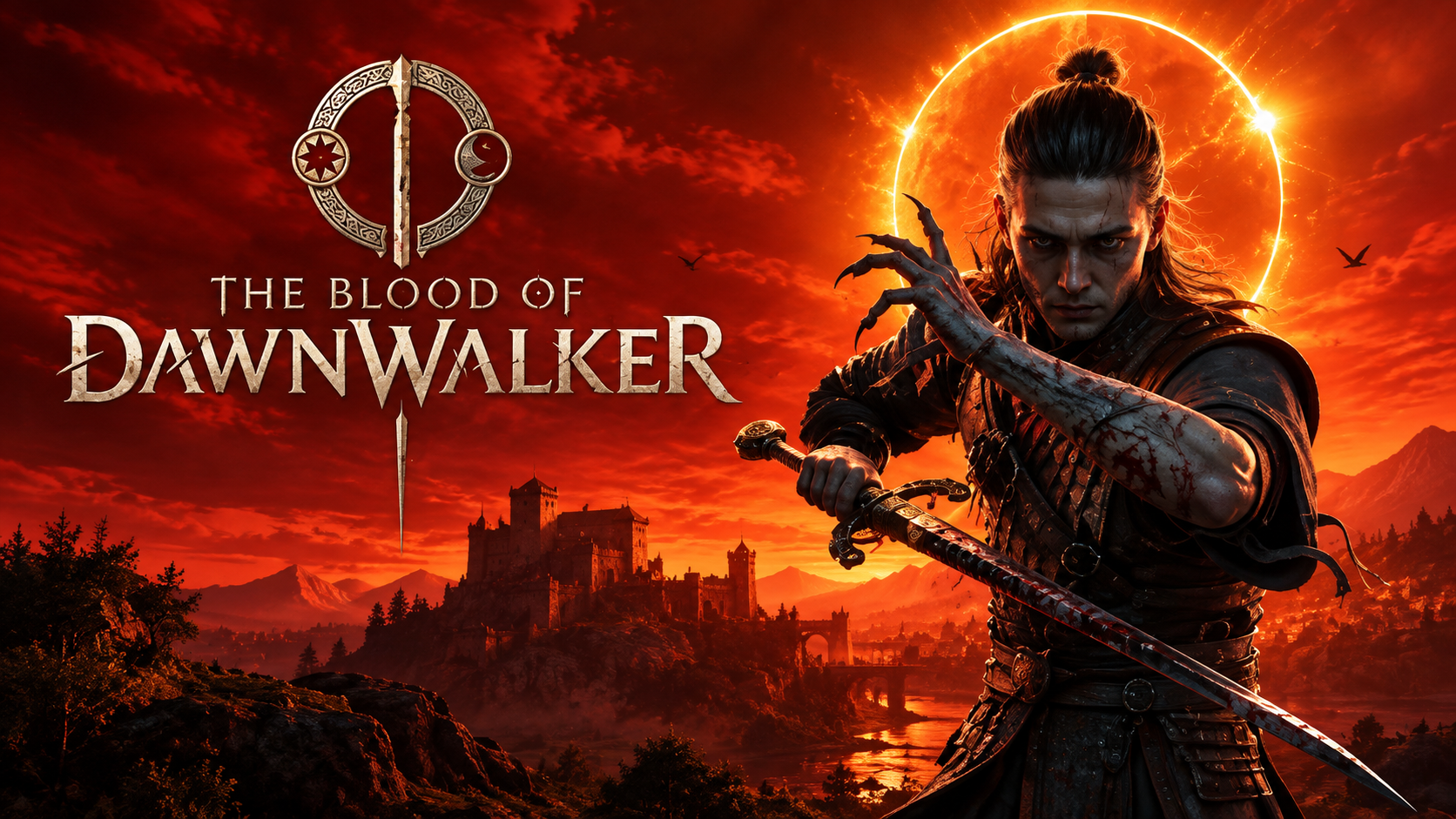
The Blood of Dawnwalker time mechanic was supposed to be one of the defining ideas behind Rebel Wolves' ambitious vampire RPG.
Instead of giving players an enormous open world where every side quest can simply wait forever, the game gives Coen a limited window to act. Decisions consume time, quests compete for the same resource, and the world is designed around the idea that you cannot experience everything in one run.
That sounds familiar in concept, but the actual implementation is unusual for a modern open-world RPG.
And now we know something even more interesting.
The Blood of Dawnwalker time mechanic was originally much stricter than the version players received. According to game director Konrad Tomaszkiewicz, Rebel Wolves deliberately loosened the system before launch because the studio was worried that players would complain about the restrictions.
That admission has reignited the debate around one of the game's most controversial systems.
Did Rebel Wolves make the game more accessible by adding breathing room, or did it weaken the very mechanic that was supposed to make Dawnwalker different from almost every other open-world RPG?
────────────────────────────────────────
────────────────────────────────────────
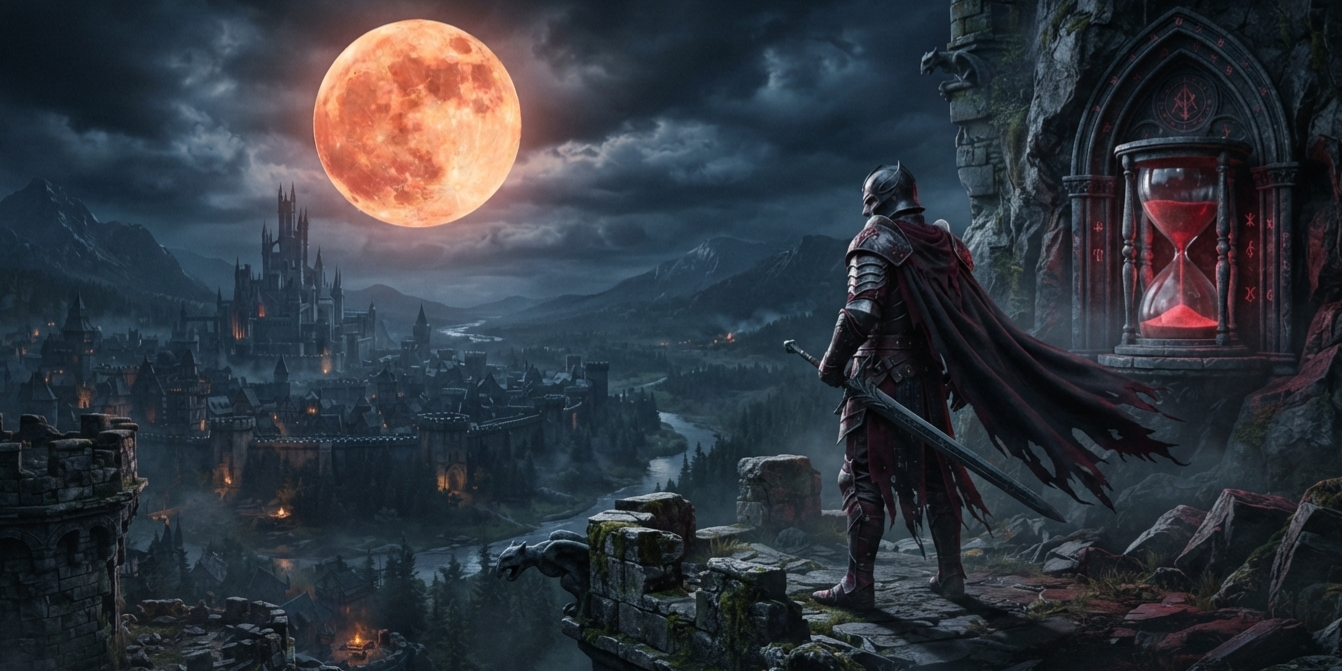
The Time Mechanic Was Supposed to Be the Point
The Blood of Dawnwalker is built around a simple but powerful premise.
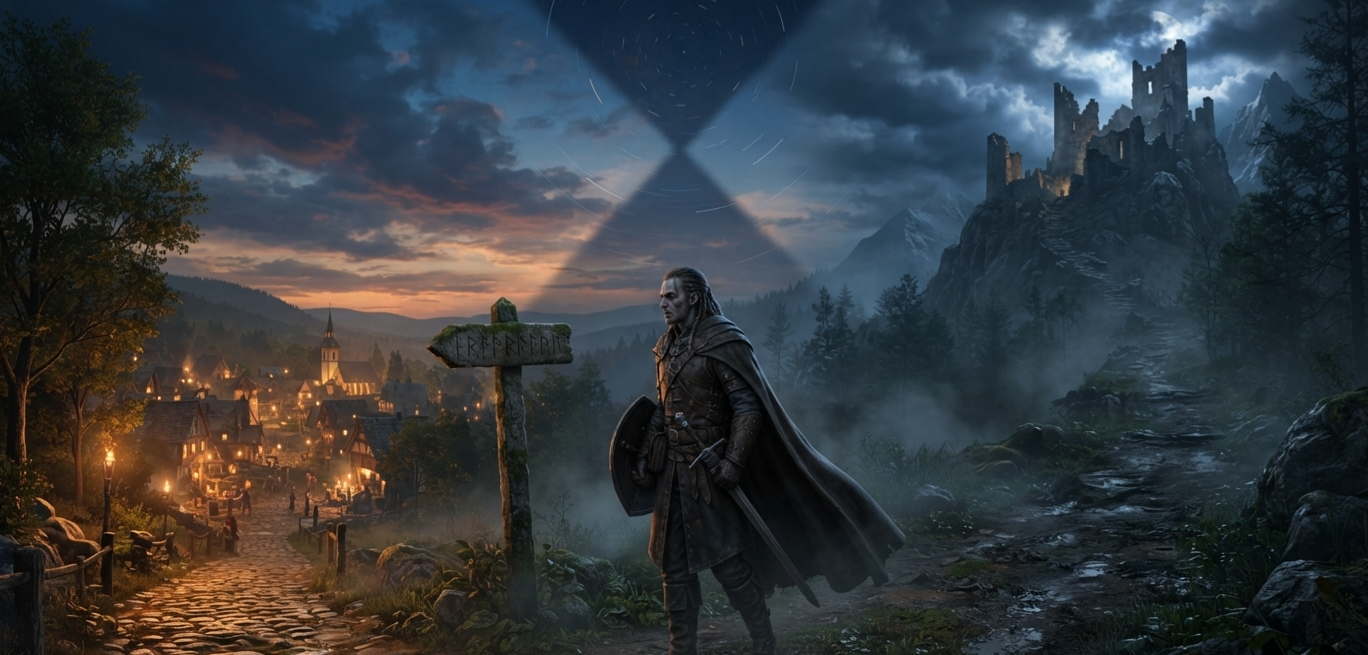
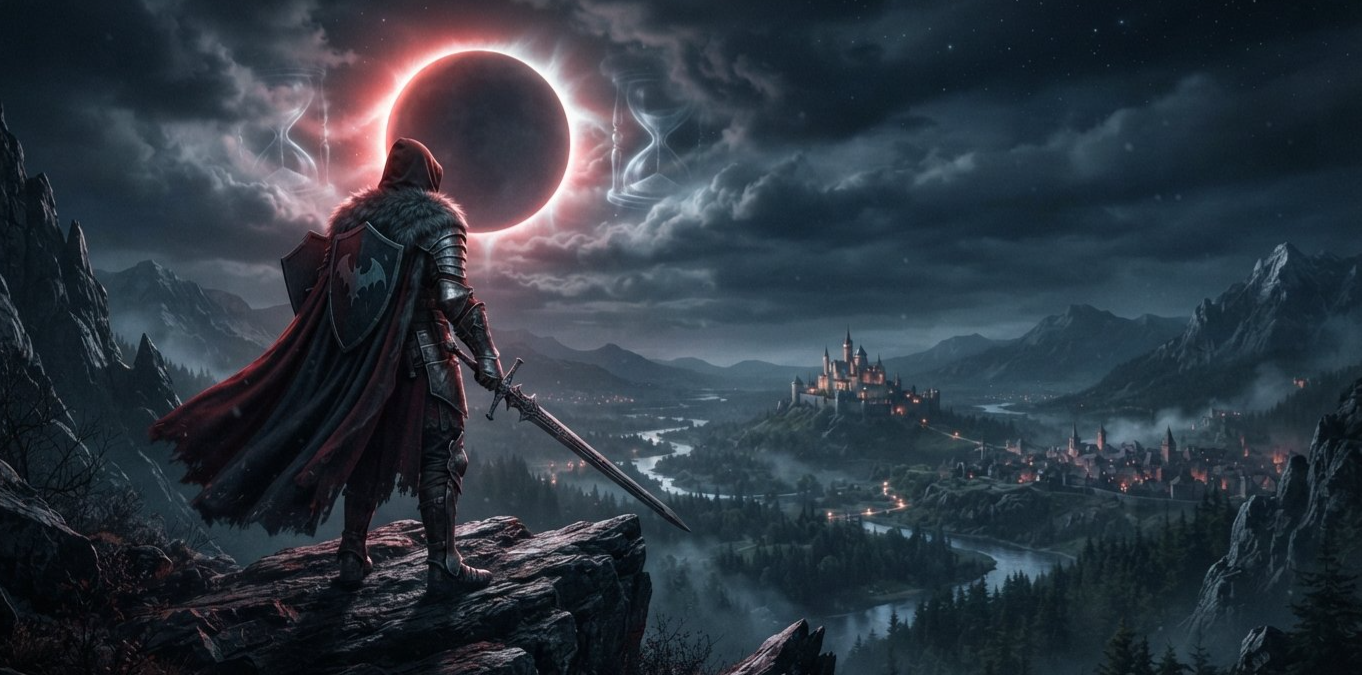
Coen has roughly 30 days and nights to save his family from the vampire lord Brencis. Instead of treating that deadline as a piece of background story, Rebel Wolves designed time as an actual gameplay resource.
The clock does not simply tick away while the player runs around the world.
Instead, certain actions consume portions of the available time. Quest decisions, conversations, travel and other activities can advance the calendar, with the game showing players when an action will cost them time.
That design creates a different type of open world.
Normally, RPG players are trained to accept every quest.
See an NPC with a question mark?
Take the quest.
Find an abandoned camp?
Clear it.
Discover a cave?
Explore it.
Find a new skill?
Unlock it.
The assumption is that there will always be enough time to come back later.
Dawnwalker attempts to challenge that assumption.
Its developers wanted players to think about what they were doing instead of treating the entire map as a checklist.
That was not an accidental side effect.
Time was supposed to be a central pillar of the experience.
────────────────────────────────────────
────────────────────────────────────────
What Rebel Wolves Changed
The controversy comes from what happened during development.
In an interview with Eurogamer, game director Konrad Tomaszkiewicz explained that the original version of the system was considerably more restrictive.
Players would have had to think much more carefully about how they spent their available time.
The team eventually decided to give players a larger buffer.
The important detail is why.
Tomaszkiewicz said that after players raised concerns about the mechanic before release, Rebel Wolves concluded that the system could become a problem. The studio then rebalanced the main game to make the time restriction less intimidating.
The prologue was largely left alone because the developers wanted it to demonstrate what the system could feel like.
The main game, however, received more breathing room.
That means the version players received was not necessarily the version Rebel Wolves originally envisioned.
It was a compromise.
And that compromise is now being questioned because the game is finally in players' hands.
────────────────────────────────────────
The Developer's "Fear of Complaints" Admission
This is where the controversy gets interesting.
Tomaszkiewicz did not simply say that the developers balanced the mechanic after testing.
He explicitly connected the changes to concerns about player reaction.
The original system was difficult enough that players would have needed to think about almost every significant decision.
Rebel Wolves ultimately decided it did not want the time mechanic to become a separate challenge that overwhelmed the main story.
The team's goal was to preserve the emotional consequences of time without turning the entire game into what Tomaszkiewicz described as a kind of mini-game.
That distinction matters.
There is a difference between designing a mechanic around player feedback and designing a mechanic primarily around avoiding complaints.
The former is standard development.
The latter raises a much bigger creative question.
How much should developers compromise a game's defining mechanic before release?
────────────────────────────────────────
────────────────────────────────────────
Why the Prologue Feels So Different
One of the most revealing details is the relationship between the prologue and the main game.
Players have reported that the opening hours create a much stronger feeling of urgency.
Small decisions feel expensive.
Helping one character can mean delaying another objective.
Choosing one activity means accepting that something else might have to wait.
That is exactly what Rebel Wolves wanted players to experience.
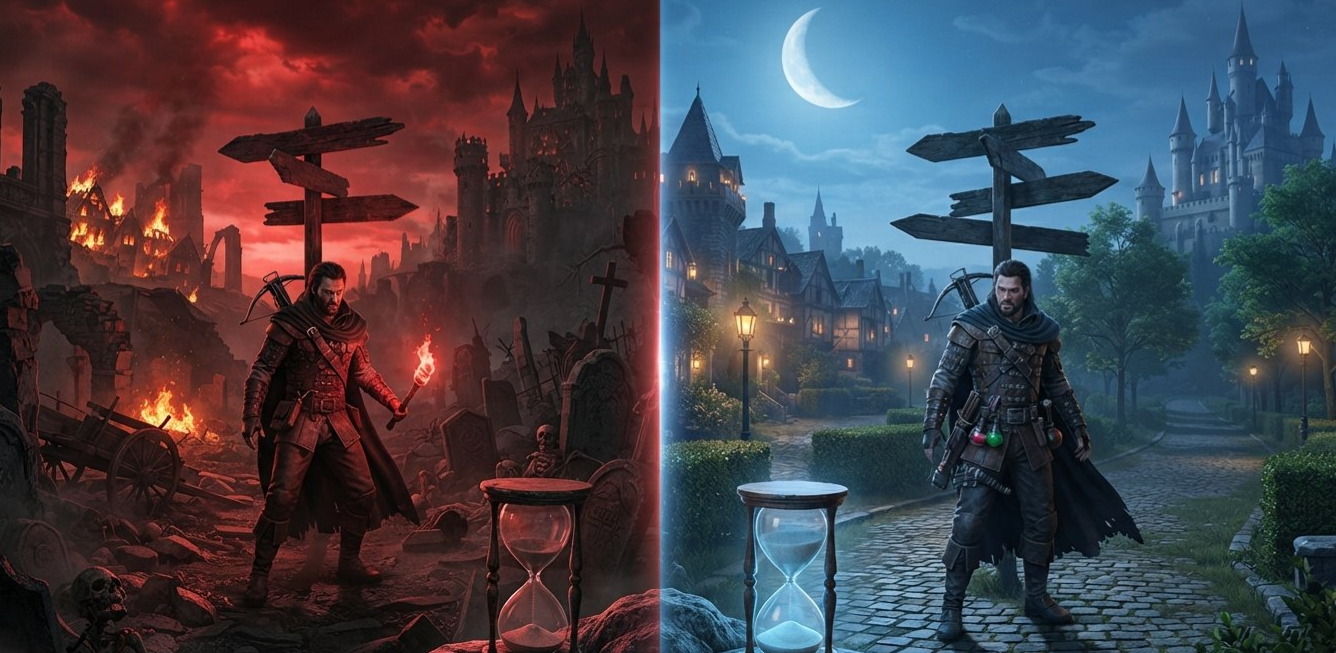
The prologue essentially acts as a demonstration of what a stricter version of the system can feel like.
Then the main game opens up.
Suddenly, there is more breathing room.
The player can explore.
The player can experiment.
The player can pursue additional content without constantly feeling that one wrong decision will destroy the playthrough.
That accessibility has obvious benefits.
But it also creates a design contradiction.
If the prologue teaches players that every hour matters, while the main game gives them substantially more freedom, the emotional pressure can weaken.
The player learns to worry about time before discovering that there is often less reason to worry than expected.
────────────────────────────────────────
Why Time Matters in an Open-World RPG
The most interesting thing about Dawnwalker's system is what it tries to fix.
Modern open-world RPGs are often criticized for being too large and too forgiving.
Players can spend dozens of hours clearing optional content before returning to a supposedly urgent main quest.
A character might tell you that an enemy army is coming tomorrow.
You can then spend three weeks hunting collectibles.
The story treats the situation as urgent.
The gameplay does not.
Dawnwalker attempts to close that gap.
If a character says something is happening soon, the game wants your choices to reflect that.
That creates the possibility of consequences that are difficult to reproduce in traditional open-world structures.
You might save one person and lose another.
You might complete a quest chain but miss another.
You might invest time into becoming stronger while sacrificing opportunities elsewhere.
The result is supposed to be a world where choices are not simply dialogue options.
They are scheduling decisions.
That is a compelling idea.
It is also incredibly difficult to balance.
────────────────────────────────────────
The Problem With Making a Time Mechanic Too Lenient
There is a fundamental danger with any resource-management system.
If the resource is too scarce, players become frustrated.
If the resource is too abundant, the resource stops mattering.
That is the dilemma facing Dawnwalker.
A strict time limit can make every quest meaningful.
But it can also create anxiety.
A forgiving time limit reduces frustration.
But it can also turn the mechanic into decoration.
This tension is especially noticeable because Dawnwalker is still an open-world RPG.
Players naturally want to explore.
They want to experiment with combat.
They want to hunt for upgrades.
They want to complete side quests.
They want to discover hidden locations.
The more of those activities the game allows players to complete within the deadline, the less meaningful the deadline becomes.
The system therefore has to walk a very narrow line.
It needs to create pressure without making players feel punished for playing the game.
────────────────────────────────────────
────────────────────────────────────────
Why Players Were Worried in the First Place
It would be unfair to portray the pre-release criticism as completely irrational.
The idea of losing access to content because of a timer can be intimidating.
Players have spent years becoming accustomed to open-world RPGs that allow them to eventually complete almost everything.
Games like this encourage completionist behavior.
Collect every weapon.
Finish every side quest.
Clear every map marker.
Unlock every ability.
See every dialogue branch.
A strict deadline directly challenges that mentality.
Dawnwalker essentially asks players to accept that some content may remain unfinished during a particular playthrough.
For players who enjoy replayability and meaningful consequences, that can be attractive.
For completionists, it can be uncomfortable.
That difference helps explain why the developers were concerned about the mechanic before launch.
The question is whether the correct response was to make the system more forgiving or to offer players different ways of experiencing it.
────────────────────────────────────────
The Other Side of the Argument
There is another interpretation of what Rebel Wolves did.
The developers may not have "mangled" the mechanic at all.
They may have refined it.
A mechanic can be conceptually exciting and still fail when implemented too aggressively.
If early testing showed that players were spending more time worrying about the timer than engaging with characters and storylines, changing the system could have been necessary.
Tomaszkiewicz's explanation suggests that this was part of the studio's reasoning.
The goal was not to eliminate consequences.
It was to prevent the timer from becoming the entire game.
That is an important distinction.
The developers wanted time to generate emotional pressure rather than become an optimization puzzle.
Whether the final balance achieves that is ultimately a matter of player experience.
But the decision itself is understandable from a game-design perspective.
────────────────────────────────────────
Did Rebel Wolves Actually Nerf the Wrong Thing?
This is where the debate becomes much more interesting.
Instead of simply asking whether Dawnwalker's timer should have been stricter, consider what the timer is actually trying to accomplish.
If its purpose is to force players to make choices, then the system does not necessarily need to make the entire game brutally restrictive.
It needs to make choices meaningful.
That could be achieved in several ways.
| Design Approach | Potential Effect |
|---|---|
| Stricter global timer | Creates constant pressure |
| More time-consuming quests | Makes individual decisions heavier |
| Optional hard mode | Allows players to choose intensity |
| More mutually exclusive quests | Makes decisions meaningful without extreme scarcity |
| More dynamic world events | Makes missed opportunities feel natural |
| Multiple endings | Gives different playthroughs greater value |
| Adjustable time settings | Supports both completionists and challenge-focused players |
The key difference is that scarcity does not have to come exclusively from a brutally short countdown.
A game can create meaningful consequences through the structure of its world.
────────────────────────────────────────
────────────────────────────────────────
Could a Difficulty Setting Have Solved This?
One of the most obvious alternatives would have been a dedicated time-pressure setting.
Imagine three options.
Relaxed
Players receive a generous amount of time and can experience most of the game's content.
Standard
The original intended balance, where players need to make meaningful choices but still have room for exploration.
Hardcore
A significantly stricter clock where quests compete aggressively for limited time and missing content becomes a central part of the experience.
That approach could have allowed Rebel Wolves to preserve the original vision without forcing every player into the same level of pressure.
It would also have fit naturally into the RPG structure.
Different players want different experiences.
Some want to role-play every decision.
Some want to complete every side quest.
Others want a stressful, consequence-heavy adventure where every hour matters.
The challenge is that difficulty settings do not automatically solve narrative design problems.
A harder timer can also create different story pacing issues.
Still, the concept demonstrates that "strict versus forgiving" did not have to be an all-or-nothing decision.
────────────────────────────────────────
What Happens Next for Dawnwalker?
The controversy may not end with the launch version.
Rebel Wolves has already indicated that the time mechanic could be reconsidered for future games in the Dawnwalker saga.
Tomaszkiewicz has said the studio would not necessarily force the system into a sequel if it did not serve that game's story.
That is significant.
It suggests Rebel Wolves is treating the mechanic as a design tool rather than a permanent franchise rule.
The studio can now evaluate how players actually interacted with it.
Did they feel genuine tension?
Did they ignore the clock?
Did they finish with huge amounts of time remaining?
Did they miss content and enjoy the consequences?
Did they simply become frustrated?
Those answers will matter far more than pre-release speculation.
The first Dawnwalker game can effectively become a giant real-world test of the idea.
────────────────────────────────────────
────────────────────────────────────────
The Bigger Problem With Modern RPG Design
The Dawnwalker controversy points toward a larger issue in modern game development.
Developers increasingly have access to enormous amounts of player feedback before launch.
Social media, Reddit, Discord, previews, demos and online communities can tell studios exactly which features players are worried about.
That information can be incredibly useful.
But it can also create pressure to remove anything that appears controversial.
And some of the most memorable game mechanics are memorable precisely because they are controversial.
A mechanic that makes everyone comfortable may not make anyone think.
Dawnwalker's time system was interesting because it challenged a familiar assumption.
You cannot do everything.
You have to choose.
You have to live with what you miss.
That is potentially powerful role-playing.
The danger is that developers may become so worried about players disliking that concept that they dilute it until the mechanic becomes much less meaningful.
Rebel Wolves' comments have brought that tension directly into the spotlight.
────────────────────────────────────────
The Real Question: Was the Original Better?
We do not have enough public information to reconstruct every detail of the earliest version of the system.
That matters.
The developers have said it was significantly more restrictive, but the public does not have a complete specification showing exactly how much time players originally had, how every activity was priced, or what the full consequence structure looked like.
So saying that Rebel Wolves "destroyed" the original system would go further than the available evidence allows.
What we do know is more interesting.
The studio created a stricter version.
Players expressed concerns.
Rebel Wolves changed the main game to provide more breathing room.
The prologue retained a stronger demonstration of the original philosophy.
And now players are debating whether the final system still creates enough pressure to justify its existence.
That is the real story.
────────────────────────────────────────
FAQ
What is the Blood of Dawnwalker time mechanic?
The Blood of Dawnwalker gives players a limited 30-day and 30-night narrative window. Certain actions advance the in-game clock, making time a resource that players must manage.
Was Dawnwalker's time mechanic originally stricter?
Yes. Game director Konrad Tomaszkiewicz confirmed that the original version was more restrictive and made completing the game harder.
Why did Rebel Wolves change the time mechanic?
Tomaszkiewicz said the team received concerns from players before release and worried that the system was too restrictive. Rebel Wolves therefore added more of a buffer to the main game.
Did the developers remove the mechanic?
No. The time system remains part of the game. The controversy concerns how restrictive the final version is compared with the earlier design.
Why is the prologue more stressful?
Rebel Wolves intentionally kept much of the prologue's tighter time experience because it wanted players to understand the intended philosophy of the system.
Is the time mechanic supposed to make players miss content?
The design encourages players to make choices rather than necessarily experience everything in a single playthrough. The exact experience depends on how players spend their available time.
Could a future Dawnwalker game remove the mechanic?
Possibly. Rebel Wolves has indicated that the studio would not force the mechanic into a sequel if it did not serve that game's story.
────────────────────────────────────────
Final Takeaway
The controversy surrounding The Blood of Dawnwalker time mechanic is not really about whether timers are good or bad.
It is about how much creative risk an RPG should be willing to take.
Rebel Wolves built its game around the idea that time should matter.
The studio wanted players to make decisions, accept consequences and understand that a single playthrough could not contain everything.
Then player concerns arrived.
The developers responded by loosening the system before launch.
That decision may have made Dawnwalker more approachable, but it also created an uncomfortable question: if the time mechanic is no longer restrictive enough to force difficult choices, what exactly is it doing?
There is a reasonable argument on both sides.
The stricter version could have produced more memorable decisions and stronger replayability.
The more forgiving version can allow players to enjoy the game's story without constantly worrying that they have ruined their playthrough.
The interesting part is that Rebel Wolves did not simply stumble into this compromise.
The studio made a conscious choice after hearing player concerns.
Now that the game is in players' hands, the debate has moved from theory to evidence.
If most players barely feel pressured by the clock, critics of the pre-release changes will have a stronger case that the mechanic was softened too much.
If players consistently find themselves making difficult choices while still being able to experience the game's major storylines, the extra breathing room may prove to have been exactly what the developers intended.
Either way, The Blood of Dawnwalker's most controversial feature has become one of its most revealing experiments.
The game is asking a question that many modern open-world RPGs avoid:
What if the player simply cannot do everything?
And perhaps the most interesting question for Rebel Wolves is what happens when players finally answer that question.