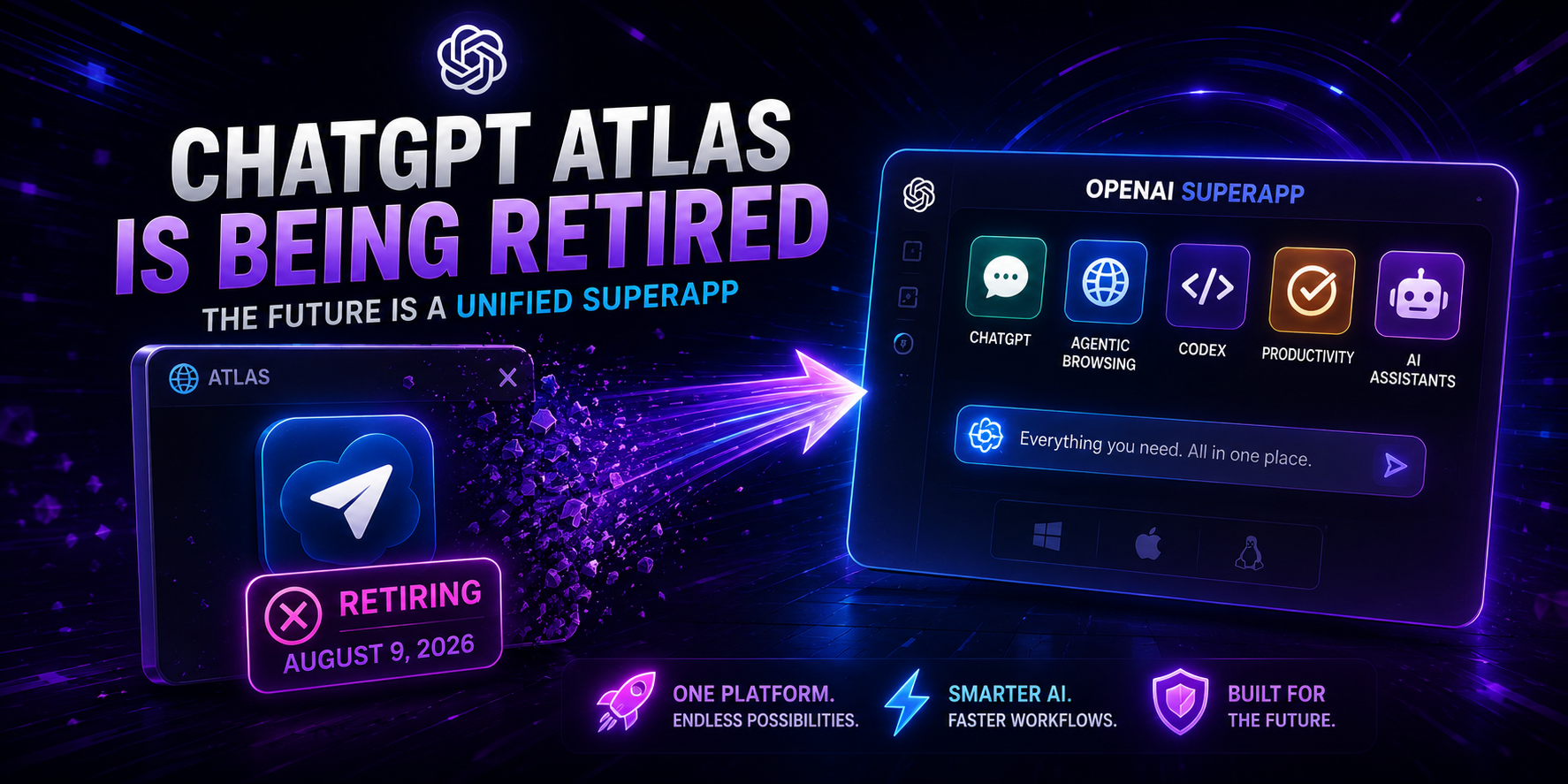

Less than a year after launching its ambitious AI-powered browser, OpenAI is preparing to retire ChatGPT Atlas.
The announcement surprised many users, especially since Atlas was introduced as an intelligent browser capable of completing complex tasks using AI agents.
Rather than signaling the end of OpenAI's desktop ambitions, however, the move appears to be part of a much bigger strategy.
Here's why Atlas is being discontinued and what's coming next.
Why Is OpenAI Shutting Down Atlas?
ChatGPT Atlas officially launched on October 21, 2025 as OpenAI's vision for an AI-first web browser.
Unlike traditional browsers, Atlas focused on helping users automate browsing tasks instead of simply displaying webpages.
However, OpenAI has now confirmed that Atlas will be retired on August 9, 2026.
Rather than maintaining multiple standalone products, the company is consolidating its AI experiences into a single application.
The Future Is a Unified Superapp
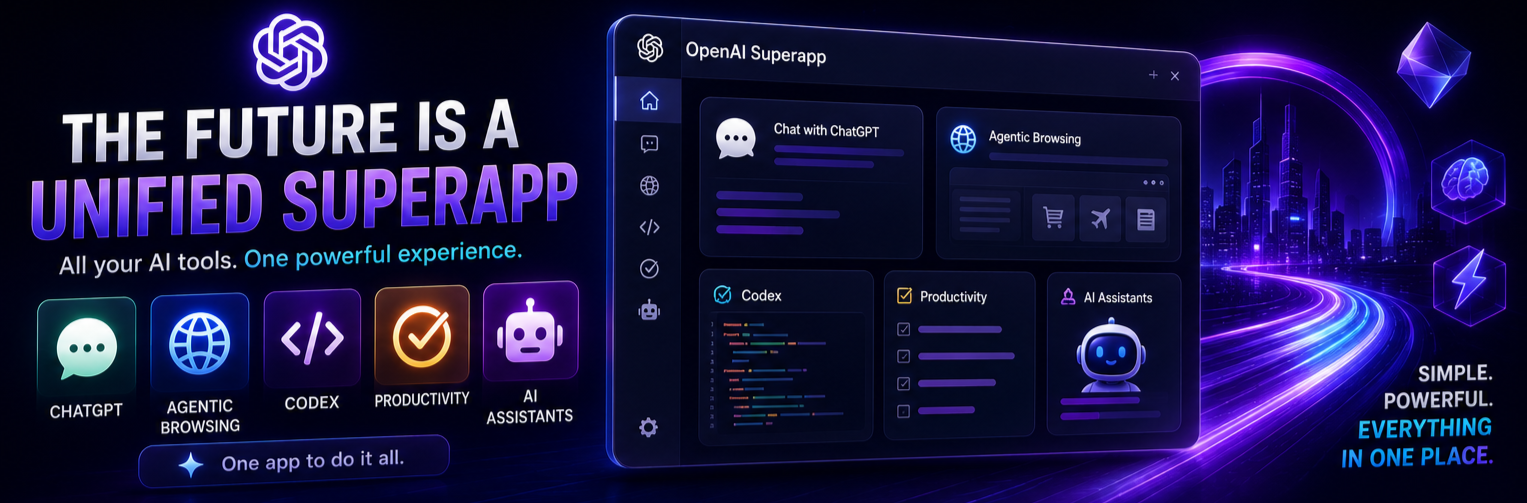
According to reports, OpenAI is developing an all in one desktop application often referred to as a Superapp.
Instead of switching between multiple AI products, users will have access to everything in one place.
The new application is expected to combine:
- ChatGPT
- Agentic browsing
- Codex coding tools
- Productivity features
- AI assistants
This unified approach aims to simplify the user experience while expanding what AI can accomplish inside a single application.
Competition Is Moving Faster Than Ever
The AI industry has become increasingly competitive.
Companies are rapidly releasing new productivity tools, coding assistants, and AI workflows.
OpenAI's restructuring appears to be part of a broader effort to streamline its product lineup and remain competitive as the market continues evolving.
Rather than spreading development across several separate applications, the company is focusing resources on one unified platform.
GPT Live Is Also Arriving
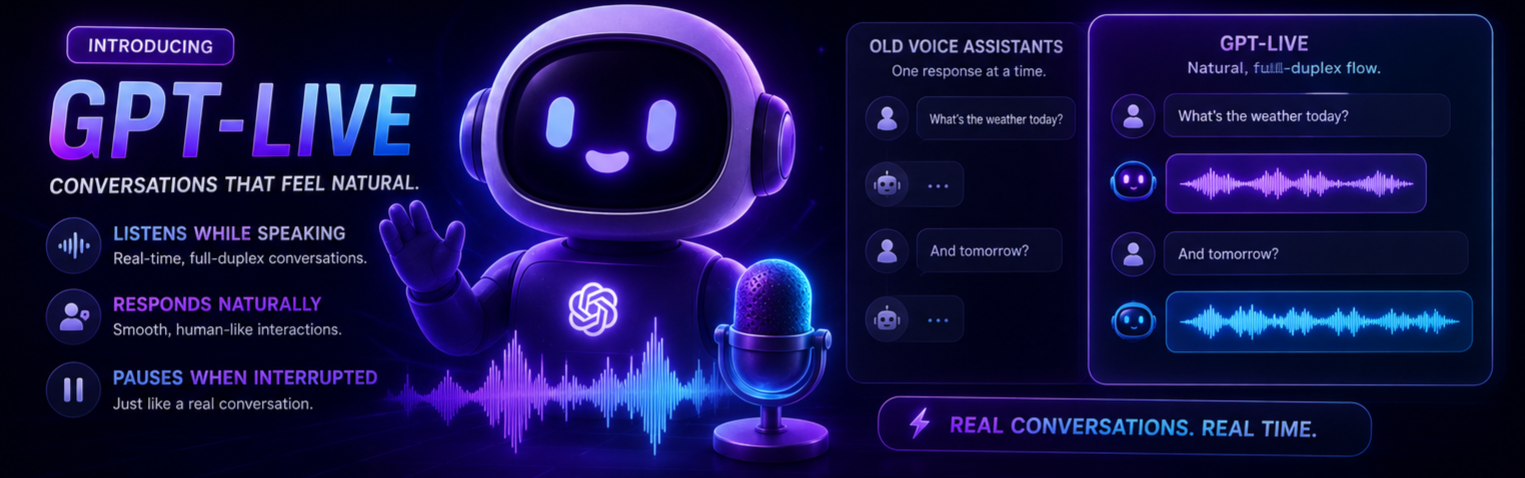
Alongside the Atlas announcement, OpenAI introduced GPT Live, a major improvement to conversational AI.
Unlike traditional voice assistants that process conversations one response at a time, GPT Live uses a full duplex architecture.
This allows it to:
- Listen while speaking.
- Respond naturally.
- Pause when interrupted.
- Create smoother, human like conversations.
The result is a much more fluid voice experience compared to previous AI voice systems.
What Atlas Users Should Expect
Current Atlas users should prepare for the browser's retirement before August 9, 2026.
OpenAI is expected to transition many of Atlas' capabilities into its upcoming desktop application, reducing the need for multiple standalone AI tools.
While Atlas itself is disappearing, its core technology is expected to continue evolving inside OpenAI's future ecosystem.
Final Thoughts
Although the end of ChatGPT Atlas may seem surprising, it reflects a broader trend in AI software: consolidation.
Rather than maintaining several separate applications, OpenAI is building a single platform capable of handling conversations, coding, browsing, and productivity together.
If the company's vision succeeds, Atlas won't really disappear It will simply become part of something much larger.
Sources
- OpenAI Announcements
- OpenAI Product Updates
- OpenAI Desktop Roadmap


Comments
2Sign in to join the conversation
Sign in