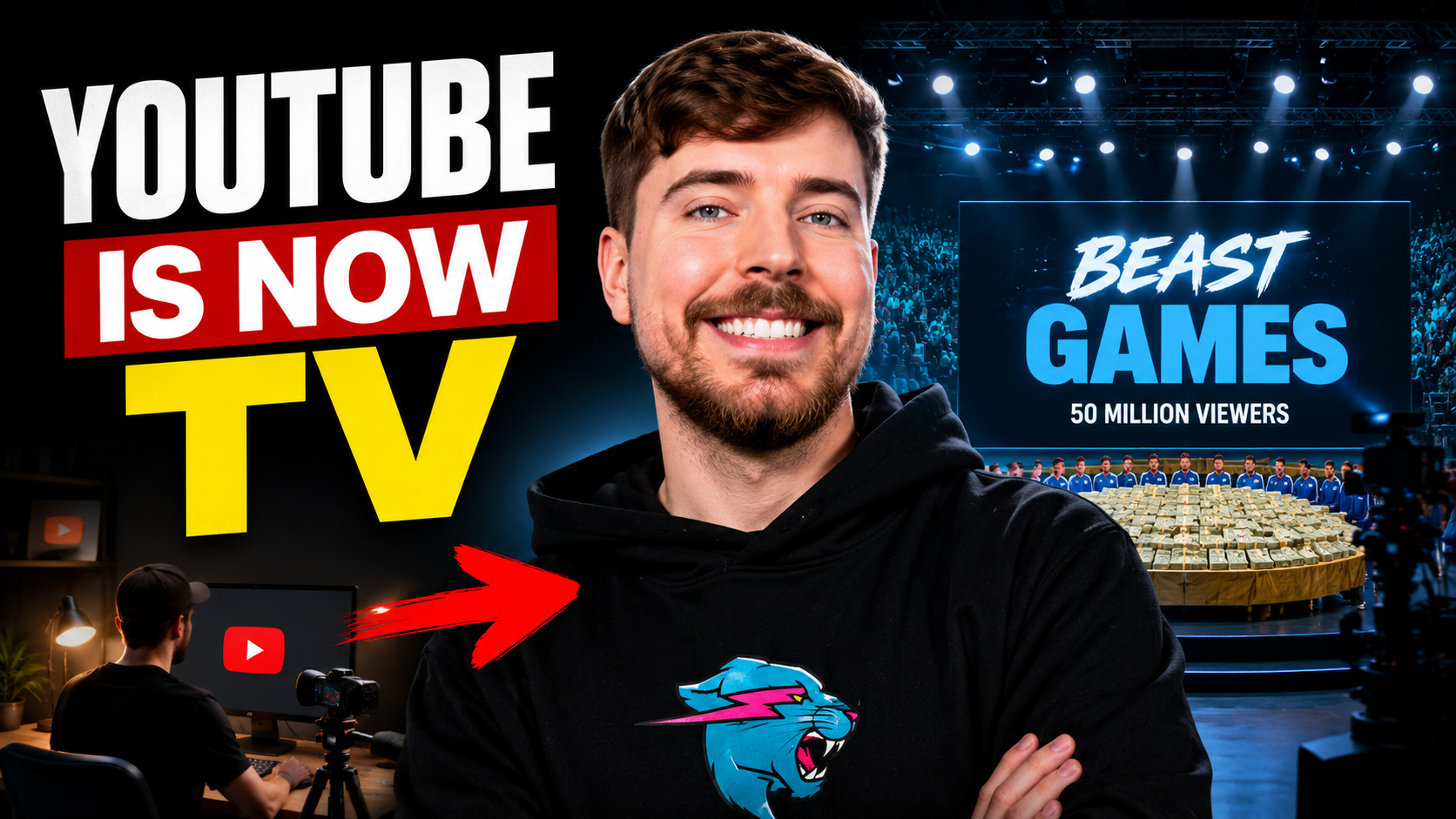

🎬 MrBeast & The "Hollywood-ification" of YouTube
For most of its history, YouTube was defined by what it wasn't: not a studio production, not scripted, not polished like television. That was the entire appeal. Creators filmed in bedrooms, cut their own footage, and uploaded whenever they wanted.
That era is over.
In 2026, the line between "YouTuber" and "TV Producer" has all but vanished — and nobody has erased that line faster than MrBeast.
🚀 The Trend: YouTube Content Is Becoming Television
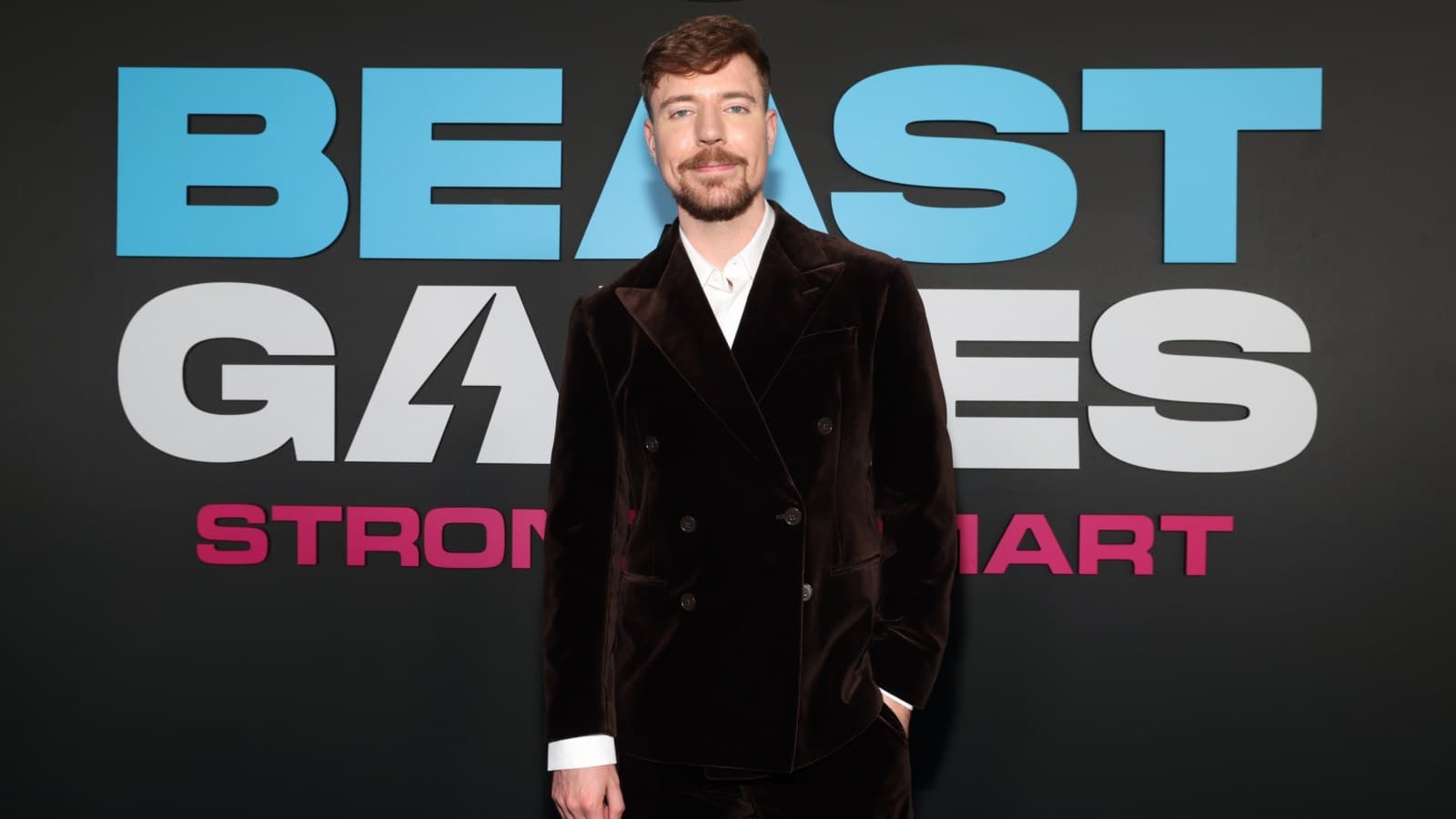
When Beast Games premiered on Amazon Prime Video in December 2024, it wasn't just a YouTuber making a side project. It became Prime Video's most-watched unscripted show ever, pulling in 50 million viewers in just 25 days — a number most traditional network reality shows never come close to.
Amazon didn't treat it as an experiment either. The show was renewed for two additional seasons during Amazon's annual upfront presentation — the same event where networks lock in their biggest, highest-budget programming for the year ahead. Season 2 premiered in January 2026 with a "Strong vs. Smart" format and 200 competitors battling for a $5 million prize, and Season 3 is already filming with a global casting call spanning contestants from every country on Earth.
🎥 MrBeast Isn't Alone
The shift isn't isolated to one channel. Across the platform, top creators are abandoning the "random upload" model in favor of structured, TV-style formats — and streaming platforms are actively recruiting them to do it.
- Mark Rober has moved toward tightly produced, high-concept science specials that function more like documentary episodes than casual vlogs — complete with multi-month production timelines and cinematic editing.
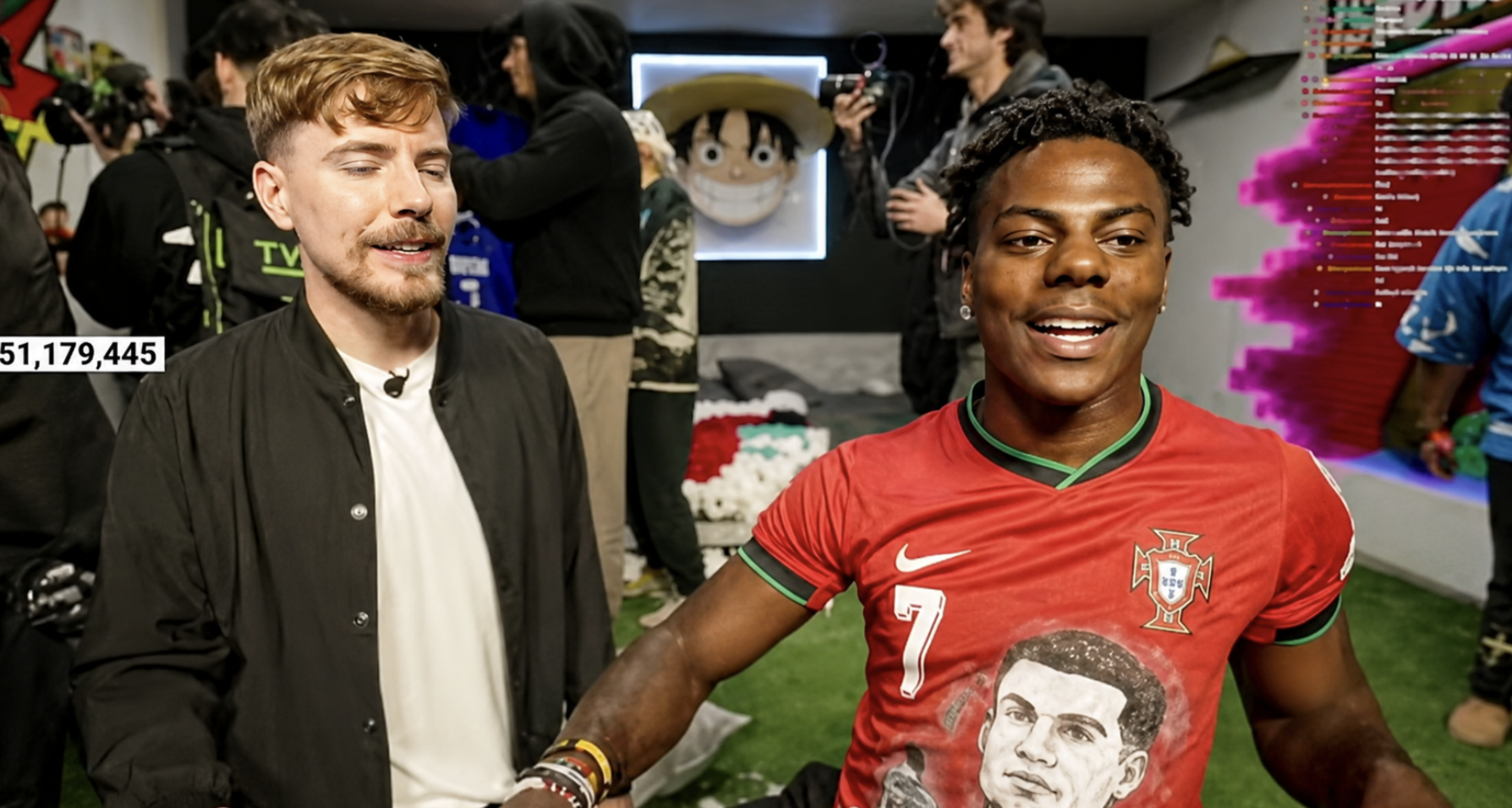
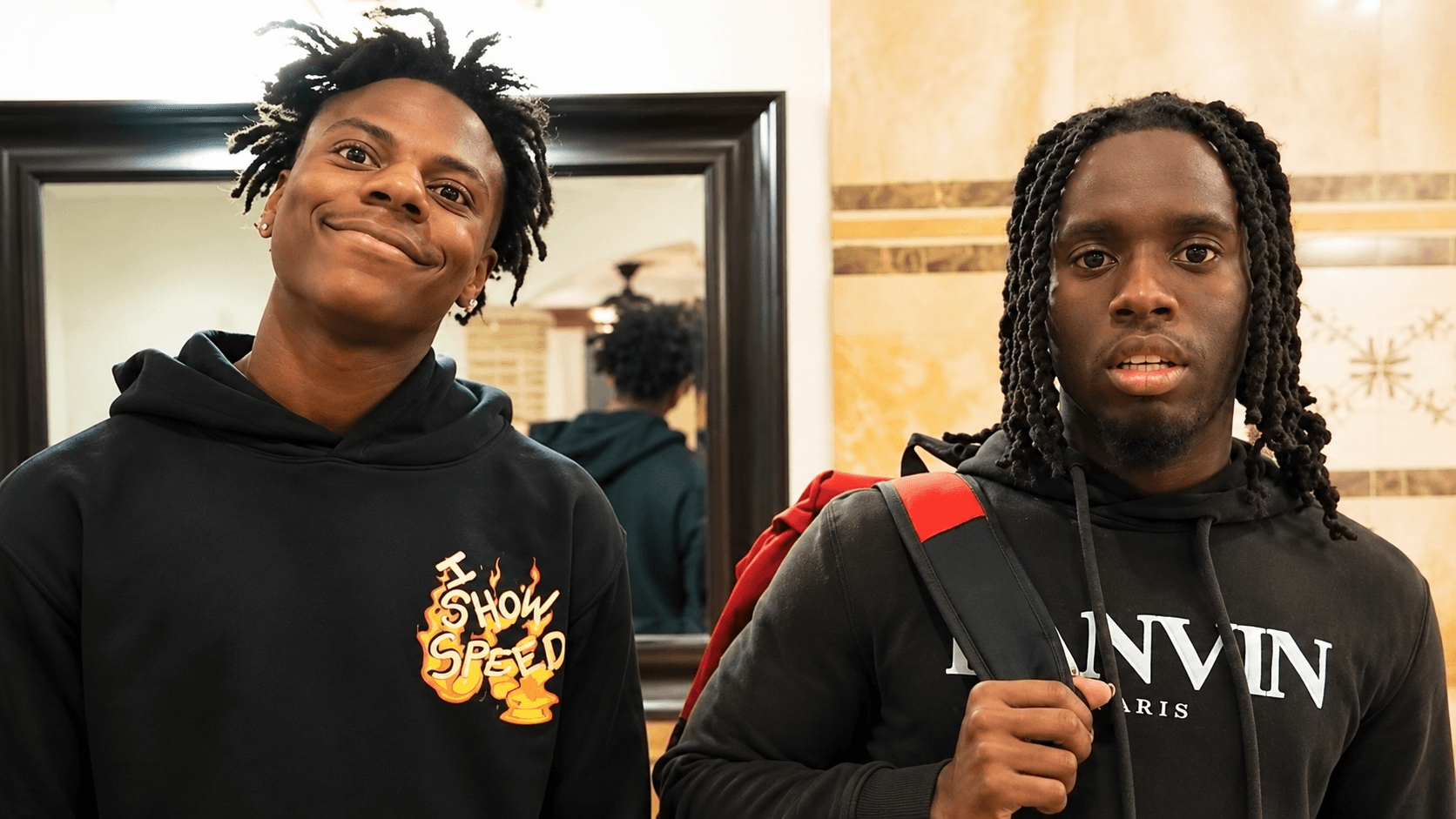
- IShowSpeed, once known purely for chaotic, unscripted livestreams, has increasingly leaned into structured travel "seasons" — extended story arcs filmed across multiple countries with clear narrative throughlines, rather than one-off clips.
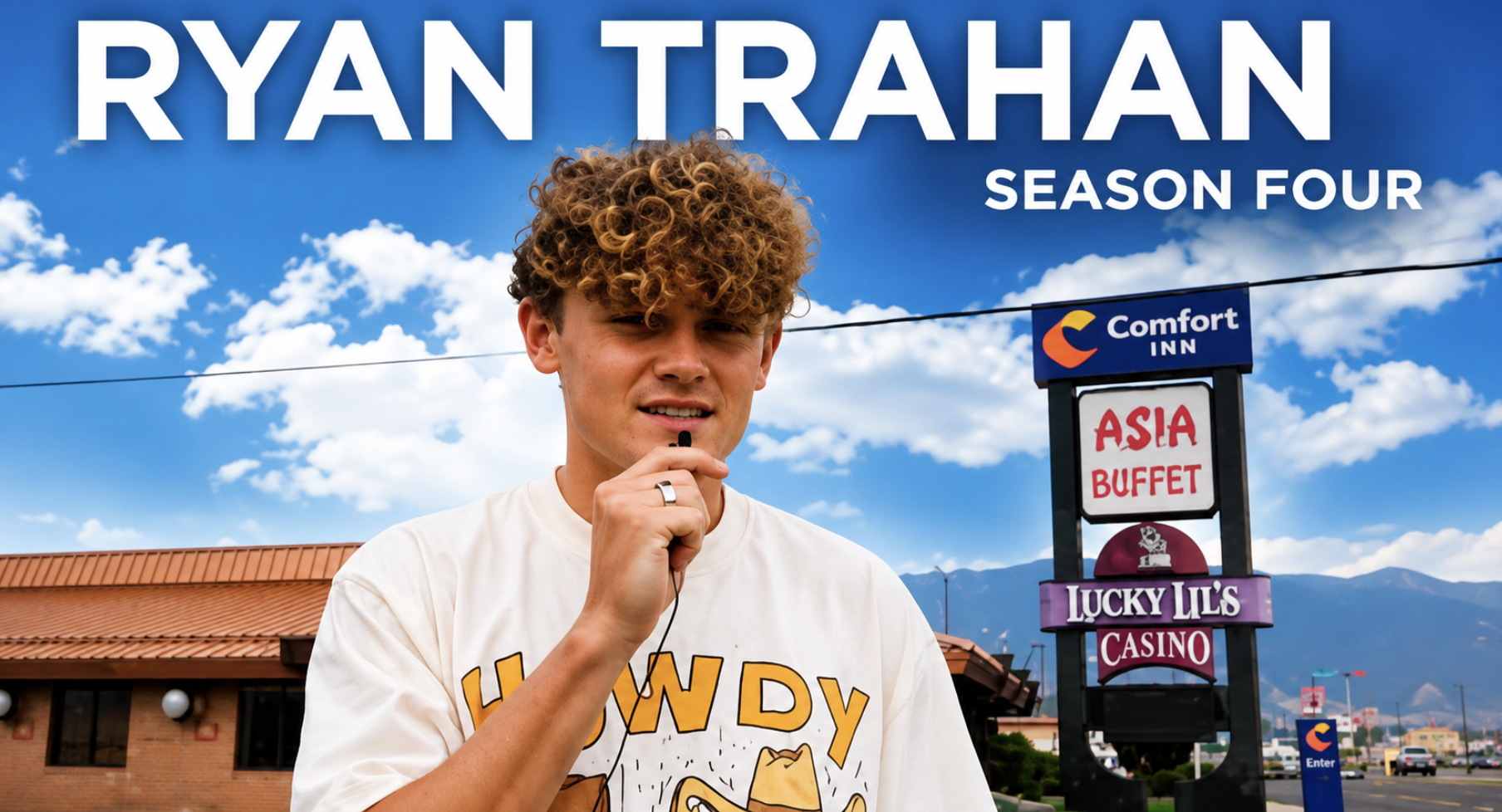
- Ryan Trahan turned his viral "Penny Series" fundraising journey into a fully packaged show, now streaming as its own multi-episode series on Prime Video — complete with season structure, IMDb credits, and a cast list.
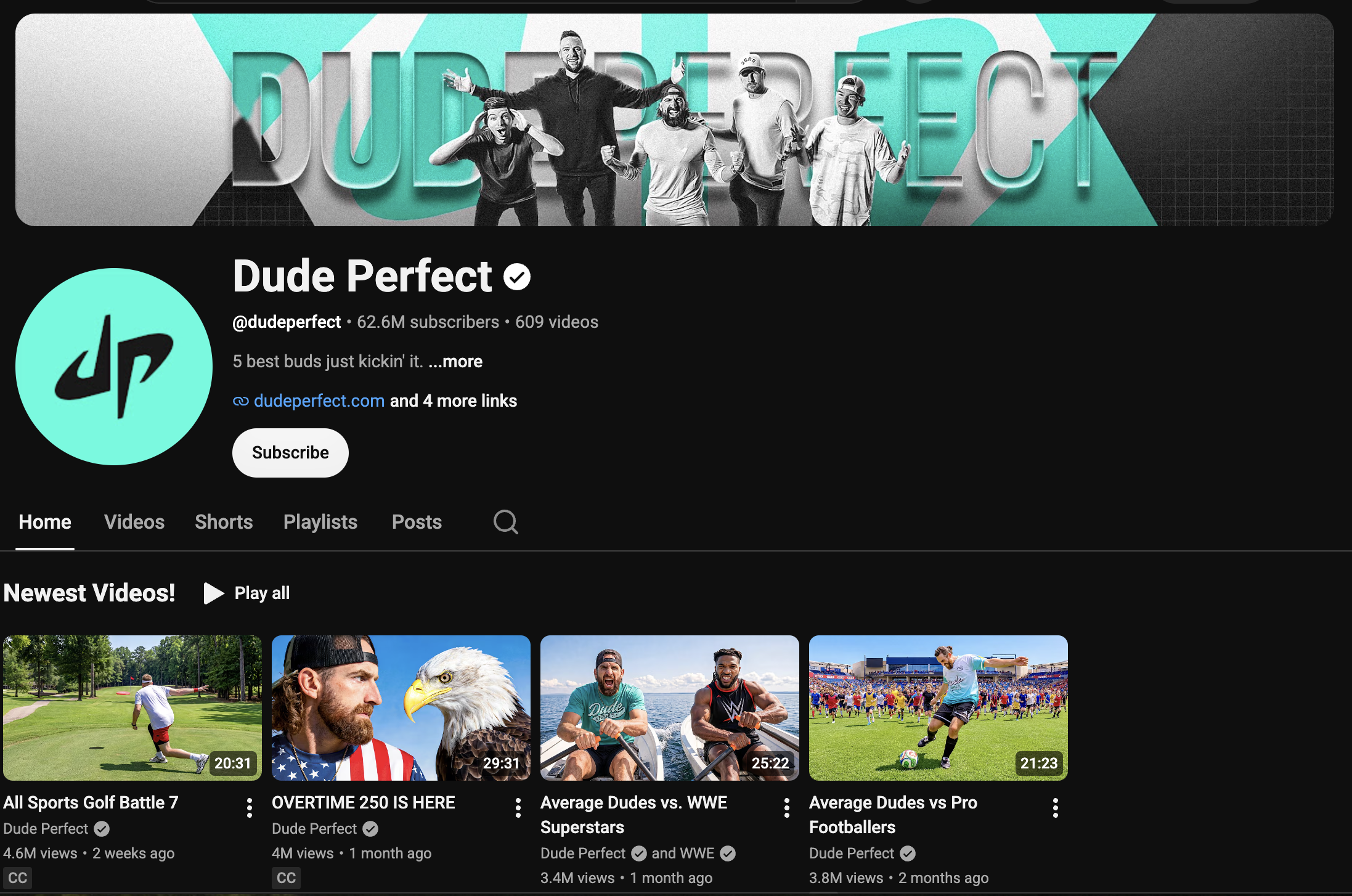
- Dude Perfect has gone furthest of all, running an entire streaming service of their own content and launching "Squad Games," now in its second season with live event face-offs and celebrity competitors — essentially their own version of a competition franchise, built the same way a network builds a returning hit.
The common thread across all of them: audiences aren't just watching a video anymore. They're watching an episode — and they expect the next one.
📺 YouTube Itself Is Building the Infrastructure
Here's the part most creators miss: this shift isn't only happening because creators are leaving YouTube for Netflix or Prime Video. YouTube is actively pushing its own creators toward this format, right on the platform.
At its 2026 Brandcast presentation, YouTube unveiled an entire slate of new Creator Shows — competition series, investigative docuseries, and live talk-show formats — all designed, marketed, and scheduled the way a network would roll out its fall lineup. This isn't a side experiment. It's a direct signal from the platform about what kind of content it wants to promote and monetize going forward.
❓ Is the Vlog Dead?
It's worth asking directly: is the classic YouTube vlog — the loosely structured, "come along with me today" format — actually dying?
Not entirely. But its dominance is fading fast, and the reasons come down to how both audiences and the algorithm have changed.
📉 Attention is harder to hold with loose structure
Viewers in 2026 have more content competing for their time than ever before. A meandering, unstructured video asks a lot of someone's attention span. A tightly formatted episode — with a clear hook, stakes, and payoff — respects that attention and rewards it, which keeps watch time high.
🔁 Series create appointment viewing
A single vlog is easy to skip. A Season 1, Episode 4 is much harder to skip once someone has already watched Episodes 1 through 3. Formatted series create the same psychological pull that turned network and streaming television into a habit — and that habit translates into returning viewers, not just one-off clicks.
💰 Advertisers and platforms both prefer it
Structured, episodic content is easier to sponsor, easier to schedule, and easier to license for platforms like Netflix, Prime Video, and Hulu — all of which are now actively courting YouTube creators for original programming deals, as seen with Ryan Trahan, Dude Perfect, and MrBeast himself. A polished, branded format is simply a better business asset than a stream-of-consciousness vlog, even if the vlog took less effort to make.
🌍 Global audiences expect a "show," not a clip
As more of YouTube's biggest breakout hits become internationally licensed — the way Beast Games now casts contestants from every country on Earth — the format itself has to travel well across cultures. A tightly structured episode with a clear premise translates far more easily across languages and markets than a rambling, personality-driven vlog ever could.
🛠️ How to Turn Your Random Videos Into "Season 1"
The good news: you don't need an Amazon-sized budget to apply this shift to your own channel. You need a format.
- 🎯 Pick a throughline. Instead of unrelated one-off videos, choose a theme, challenge, or storyline that can stretch across multiple uploads — a skill you're learning, a project you're building, a competition you're running.
- 🔢 Number your episodes. Literally labeling videos "Episode 1," "Episode 2," and so on signals to viewers — and to YouTube's recommendation system — that this is a series worth returning to, not a standalone clip.
- 🎬 Open with a cold open or recap. Even 15–20 seconds reminding viewers what happened last time (or teasing what's coming) mimics the structure that makes TV shows addictive.
- 📅 Commit to a release rhythm. Weekly, biweekly — it doesn't matter which, as long as it's consistent. Predictability is what turns casual viewers into a returning audience.
- 🎞️ Design a season arc, not just individual videos. Know roughly where your "season" is headed before you start filming Episode 1. Even a rough three-act shape — setup, complication, payoff — makes a real difference in retention across the series.
- 🖼️ Treat thumbnails and titles as episode branding. Consistent visual language across a series (same font, same color treatment, episode numbers in the thumbnail) helps viewers instantly recognize your series in a crowded feed.
- 🏆 Borrow structure from formats that already work. Ryan Trahan's "Penny Series" and Dude Perfect's "Squad Games" both succeed because they follow a recognizable competition or challenge arc. You don't need a new invention — a familiar structure, executed consistently, beats a clever concept with no follow-through.
None of this requires a Hollywood crew. It requires treating your channel less like a folder of random videos and more like a show with a beginning, a middle, and a reason to come back.
🏁 Final Takeaway
MrBeast didn't just make a hit show — he proved that YouTube-native production values can compete directly with traditional television, and that streaming platforms are willing to pay for it. Mark Rober, IShowSpeed, Ryan Trahan, and Dude Perfect adopting similar episodic, high-production formats — combined with YouTube itself launching an entire slate of Creator Shows — shows this isn't a one-creator anomaly. It's the direction the entire platform is moving.
The classic vlog isn't gone completely, but the creators winning the algorithm in 2026 are the ones thinking in seasons, not just uploads. If you're still posting disconnected, one-off videos, the highest-leverage change you can make this year isn't better lighting or a new mic — it's giving your content a format worth following.

Comments
1Sign in to join the conversation
Sign in