
Tensions Flare in Lindsay Clancy Courtroom Over Holdout Juror

The Lindsay Clancy trial has entered its most dramatic stage yet, with six days of jury deliberations ending without a verdict and an extraordinary dispute erupting over a single juror.
On Thursday, September 3, the jury foreperson sent Judge William Sullivan a note indicating that one member of the 12-person panel was allegedly refusing to follow the court’s instructions concerning reasonable doubt.
That immediately changed the atmosphere inside Plymouth Superior Court.
Clancy’s defense attorney, Kevin Reddington, demanded that the juror be removed.
Judge Sullivan refused.
The disagreement led to a heated courtroom exchange, jurors being questioned individually and the growing possibility that one of the most closely watched murder trials in the country could end in a mistrial.
The jury has now been ordered to return Friday and try again.
What Happened With the Holdout Juror?
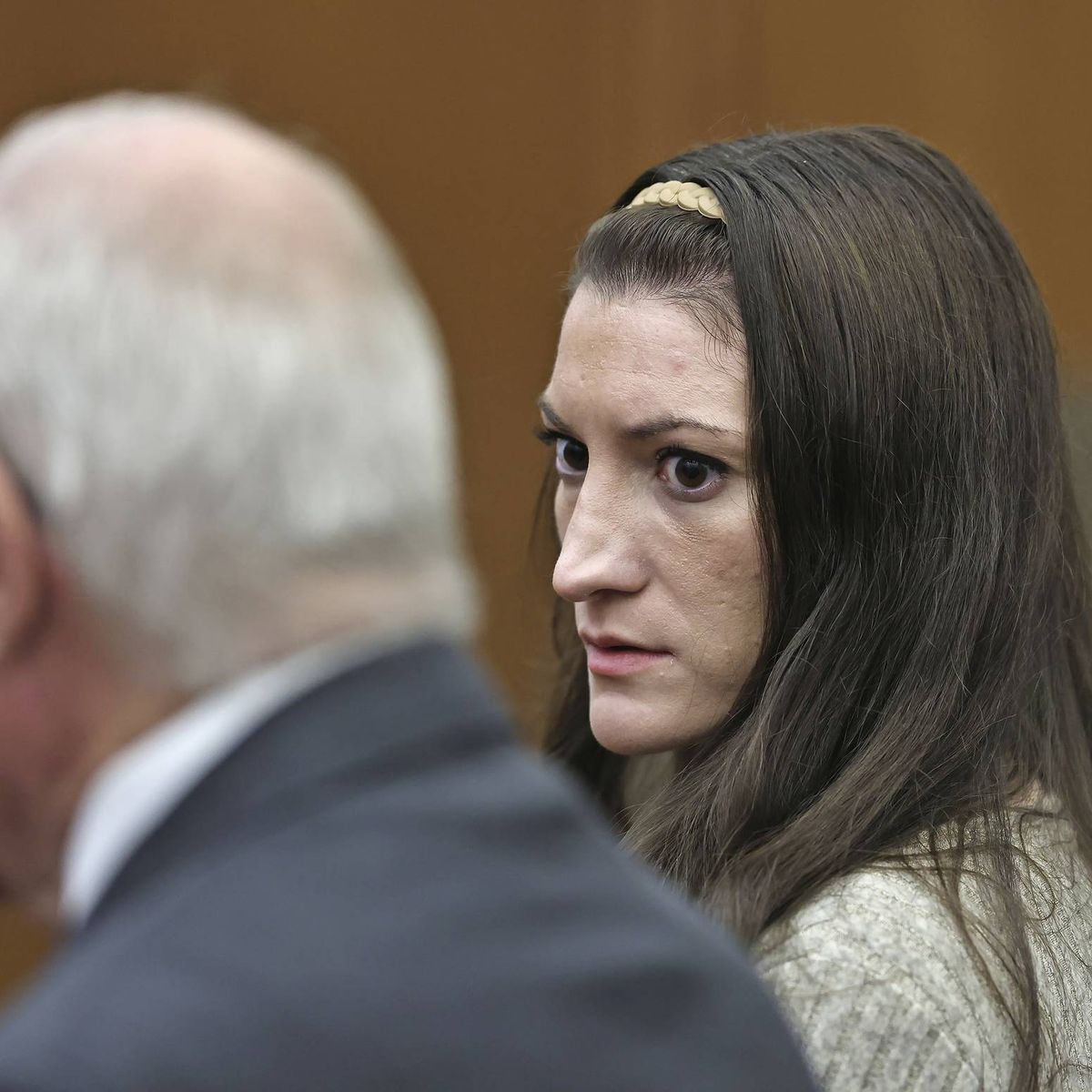
Defense attorney Kevin Reddington sits alongside Lindsay Clancy during court proceedings.
Thursday began as the sixth day of jury deliberations.
The jury had already told the court twice that it could not reach a unanimous decision over whether Clancy should be held criminally responsible for the deaths of her three children.
Then came a new note.
This one was different.
According to the Associated Press, the foreperson told the court that one juror was not following the judge’s instructions regarding reasonable doubt.
That immediately raised an extremely sensitive question.
Was this simply a juror who disagreed with the other 11?
Or was the juror actually refusing to apply the law as instructed?
Those are two very different situations.
A juror cannot be removed simply because they hold a different view of the evidence.
But deliberately refusing to follow a judge’s legal instructions can create a much more serious issue.
Kevin Reddington Demands the Juror Be Removed
Clancy’s defense attorney did not hide his frustration.
Reddington argued that the juror identified in the foreperson’s note should be removed because, in his view, that person was refusing to follow the law.
He told the court there was a juror who “refuses to listen to the law” regarding reasonable doubt.
Reddington also warned that allowing the situation to continue could result in a mistrial after weeks of testimony and days of deliberations.
His frustration became visibly apparent inside the courtroom.
Reports from the hearing describe Reddington raising his voice and forcefully objecting to how the judge was handling the situation.
The Judge Refuses to Remove the Juror
Judge William Sullivan took a much more cautious position.
Removing a juror once deliberations have already begun is an extremely sensitive step.
Sullivan questioned jurors individually and asked whether they were capable of following the court’s instructions.
The jurors affirmed that they could.
The judge then brought the panel back together and again explained the legal standard of reasonable doubt before sending them back to deliberate.
Reddington still wanted the disputed juror removed.
Sullivan declined.
The judge explained that he did not believe it was appropriate for him to effectively take the side of one juror or the other 11 during deliberations.
Clancy pictured during jury selection earlier in the trial.
A Heated Sidebar Changes the Atmosphere
Before the disagreement became public, the lawyers and judge held an intense sidebar discussion.
The public could not hear what was being said.
But reporters inside the courtroom could see that something unusual was happening.
Court TV reported that Reddington became visibly upset during the conversation, at one point pushing papers back across the table and striking the desk.
Clancy herself was brought toward the sidebar in her wheelchair so she could participate with her legal team.
Then jurors were brought forward individually.
Only afterwards did the issue become clearer.
The foreperson’s note was apparently focused on one juror and the legal standard of reasonable doubt.
This was also significant because the jury’s previous deadlock notes had not accused any individual juror of misconduct or refusing to follow instructions.
Until Thursday, the court simply knew that the jury could not agree.
Now there appeared to be significant tension inside the jury room itself.
Is the Lindsay Clancy Jury Split 11-1?
Possibly.
But that needs an important qualification.
Reddington has publicly indicated that he believes 11 jurors are aligned and one juror is holding out. People reported his description of an apparent 11-1 split following Thursday’s courtroom developments.
However, the court has not officially announced what verdict those 11 jurors favour.
That means it would be inaccurate to claim that 11 jurors have definitely voted to acquit Clancy or definitely voted to convict her.
What appears clearer is that one juror has become the focus of the dispute.
The actual direction of the jury’s vote remains confidential.
Why Reasonable Doubt Matters So Much
The entire dispute centres on one of the most important standards in American criminal law:
Proof beyond a reasonable doubt.
The prosecution must prove the case to that standard before a jury can convict.
A juror is allowed to have genuine doubts about evidence.
A juror is allowed to disagree with everyone else.
And a juror cannot be removed simply because their conclusion is unpopular with the rest of the panel.
The defense’s argument is different.
Reddington claims the juror is not merely disagreeing but refusing to apply the judge’s instructions about what reasonable doubt means.
Judge Sullivan has so far been unwilling to make that finding.
After questioning the jurors, he decided they should continue deliberating.

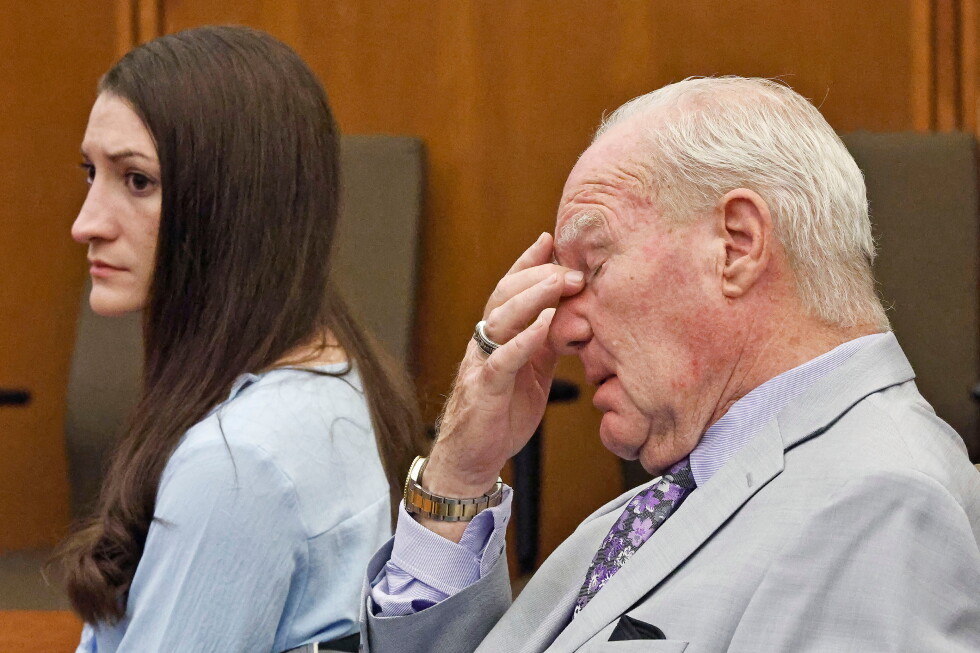
Clancy listens to proceedings alongside members of her defense team.
The Jury Has Already Said It Is Deadlocked Twice
Thursday’s confrontation did not appear out of nowhere.
The jury has struggled for days.
Jurors began deliberating after hearing weeks of testimony from medical professionals, family members, investigators and expert witnesses.
They subsequently told Sullivan twice that they could not reach a unanimous verdict.
The judge then gave what is known in Massachusetts as a Tuey-Rodriguez instruction, sometimes informally compared with a “dynamite charge.”
The instruction encourages jurors to reconsider opposing viewpoints while making clear that nobody should abandon an honestly held belief simply for the sake of reaching a verdict.
Even after receiving that instruction, the panel remained unable to reach a decision.
By Thursday evening, jurors had deliberated for roughly 36 hours across six days.
Could the Lindsay Clancy Trial End in a Mistrial?
Yes.
That possibility is becoming increasingly real.
A criminal jury generally needs to reach a unanimous verdict.
If the jurors ultimately conclude that they cannot agree, the judge can declare a hung jury and end the trial with a mistrial.
That would not mean Clancy had been found guilty.
It also would not mean she had been acquitted.
It would mean the jury simply could not reach the unanimous decision required to resolve the case.
Judge Sullivan has so far continued encouraging the jurors to deliberate rather than immediately ending the case.

Plymouth Superior Court, where the six-week Lindsay Clancy murder trial is taking place.
What Happens if There Is a Mistrial?
A mistrial would not automatically end the criminal case.
Prosecutors could decide to try Clancy again before another jury.
They could also potentially negotiate a plea agreement or, less likely, decide not to pursue another trial.
Reuters reports that a retrial remains one possible outcome if the current jury cannot reach a verdict.
That prospect helps explain why Thursday’s dispute became so intense.
This trial has already lasted around six weeks.
More than 80 witnesses have reportedly testified, and jurors have reviewed hundreds of pieces of evidence.
Starting again would mean another enormous legal process for everyone involved.
What Is Lindsay Clancy Accused Of?
Clancy, a former labor-and-delivery nurse, is charged in connection with the January 2023 deaths of her three children at the family’s home in Duxbury, Massachusetts.
She does not dispute causing their deaths.
The central issue at trial has instead been whether she was criminally responsible for her actions because of her mental state at the time.
That distinction has dominated nearly every part of the case.
The Defense: Lindsay Clancy Was Psychotic
Clancy’s lawyers argue that she was experiencing a severe psychiatric crisis, including postpartum psychosis, and should therefore be found not criminally responsible.
The defense has presented testimony about Clancy’s deteriorating mental health, psychiatric treatment, hospitalisation and the numerous medications she had been prescribed in the months before the deaths.
Defense witnesses have also discussed reports that Clancy experienced hallucinations and believed she heard a voice directing her actions.
The defense argues that the tragedy occurred after a mother repeatedly sought help but did not receive treatment that successfully identified and controlled her illness.
Clancy pictured during testimony earlier in the six-week trial.
Image description: Real courtroom photograph of Lindsay Clancy during the defense stage of her trial.
ALT text: Lindsay Clancy postpartum psychosis defense trial
The Prosecution: She Knew What She Was Doing
Prosecutors strongly dispute the defense’s interpretation.
They acknowledge Clancy was experiencing mental-health problems but argue that she was not psychotic to the point that she lacked criminal responsibility.
The prosecution has argued that her actions showed planning and awareness.
Among other points, prosecutors say Clancy arranged for her then-husband to leave the home on errands before the killings occurred.
That conflict between two interpretations of Clancy’s mental state is ultimately what jurors must resolve.
And after more than a week in the jury room, they still have not been able to do so unanimously.
Lindsay Clancy Deliberation Timeline
| Date / Stage | What Happened |
|---|---|
| Late August | Jury begins deliberating after weeks of testimony |
| First deadlock note | Jurors tell Judge Sullivan they cannot unanimously agree |
| Second deadlock note | Jury again reports that it is at an impasse |
| Sept. 2 | Sullivan gives a Tuey-Rodriguez instruction encouraging further deliberation |
| Sept. 3, Day 6 | Jury resumes deliberating |
| Thursday afternoon | Foreperson sends a new note concerning one juror and reasonable doubt |
| Sidebar | Judge, prosecutors and defense hold an intense private discussion |
| Juror questioning | Jurors are questioned individually |
| Defense objection | Kevin Reddington asks for one juror to be removed |
| Judge’s decision | Sullivan declines and rereads the reasonable-doubt instruction |
| End of Day 6 | Jury goes home without reaching a verdict |
| Sept. 4 | Jurors are scheduled to return for a seventh day |
The jury’s internal vote has not been officially released, although the defense has described the situation as involving one holdout juror.
The Trial Has Drawn Huge Public Attention
The case has attracted intense national interest from the beginning.
The courtroom has repeatedly been packed with reporters, members of the public and people following the wider debate surrounding postpartum mental health.
Clancy has also reportedly received large amounts of correspondence from supporters around the world.
The public reaction remains deeply divided.
Some observers view the case primarily through the lens of postpartum psychosis and failures in maternal mental-health treatment.
Others believe Clancy should be held criminally responsible for the deaths of her children.
That same fundamental disagreement now appears to exist inside the jury room.
What Happens Friday?
All eyes will be back on Plymouth Superior Court when jurors return.
Three possibilities now stand out.
The jury could finally reach a unanimous verdict.
The dispute involving the holdout juror could trigger further questioning or legal arguments.
Or the panel could again tell Judge Sullivan that there is no realistic possibility of reaching an agreement.
If that happens, the pressure to declare a mistrial will increase significantly.
For now, Sullivan has made clear that he wants the jury to continue trying.
And Reddington has made equally clear that he believes the court must address the disputed juror before the case collapses into a mistrial.
Frequently Asked Questions
Has the Lindsay Clancy jury reached a verdict?
No. The jury ended its sixth day of deliberations on September 3 without reaching a unanimous verdict.
Why is the Lindsay Clancy jury deadlocked?
The jury has repeatedly said it cannot unanimously decide whether Clancy was criminally responsible for killing her three children. On Thursday, the foreperson also alleged that one juror was not following the court’s reasonable-doubt instructions.
Is the jury split 11-1?
Defense attorney Kevin Reddington has described an apparent situation involving 11 jurors and one holdout. However, the court has not publicly confirmed which verdict either side supports.
Did the judge remove the holdout juror?
No. Judge William Sullivan declined the defense request to remove the juror and instead instructed the panel to continue deliberating.
Why did Kevin Reddington want the juror removed?
Reddington argued that the juror was not merely disagreeing with the other jurors but refusing to follow the judge’s legal instructions regarding reasonable doubt.
Could the trial end in a mistrial?
Yes. If the jury remains hopelessly deadlocked, Sullivan could declare a mistrial. Prosecutors could then potentially retry the case.
When will the jury return?
The jurors are scheduled to return on Friday, September 4, 2026 to continue deliberations.
Final Thoughts
After six weeks of testimony, hundreds of exhibits and more than 36 hours of deliberations, the Lindsay Clancy trial may now come down to one juror.
At least, that is how the defense sees it.
The jury foreperson’s complaint transformed what had previously looked like a difficult but ordinary deadlock into a much more complicated legal dispute.
Kevin Reddington believes one juror is refusing to follow the law.
Judge William Sullivan has not accepted that conclusion.
The jurors themselves insist they can follow the court’s instructions.
And somewhere behind the closed doors of the jury room, 12 people are still trying to answer the question that has defined this entire trial:
Was Lindsay Clancy criminally responsible for killing her three children?
For the sixth day in a row, they could not agree.
Friday may finally bring a verdict.
Or it could bring a mistrial.
Either way, the dramatic dispute over the holdout juror has pushed the Lindsay Clancy trial closer than ever to a defining moment.
Comments
1Sign in to join the conversation
Sign in