
🎥 The End of One-Platform Streaming?
For years, major streamers were closely associated with a single platform.
Twitch meant livestreaming. YouTube meant video.
But that relationship is changing.
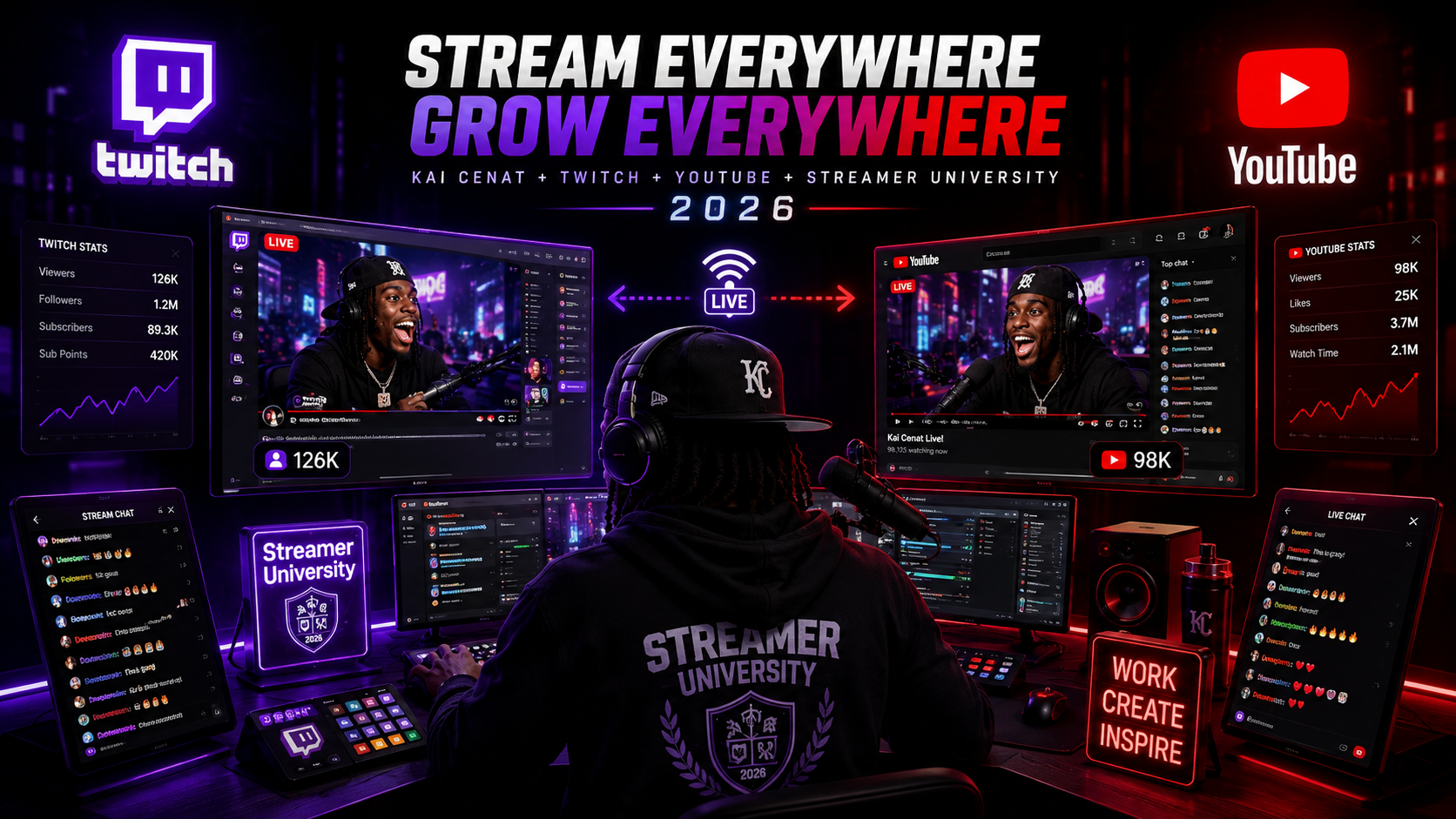
In July 2026, Kai Cenat returned to livestreaming with a broadcast running simultaneously on Twitch and YouTube to reveal the lineup for Streamer University 2026. It marked his first dual-platform broadcast and drew more than one million combined live viewers.
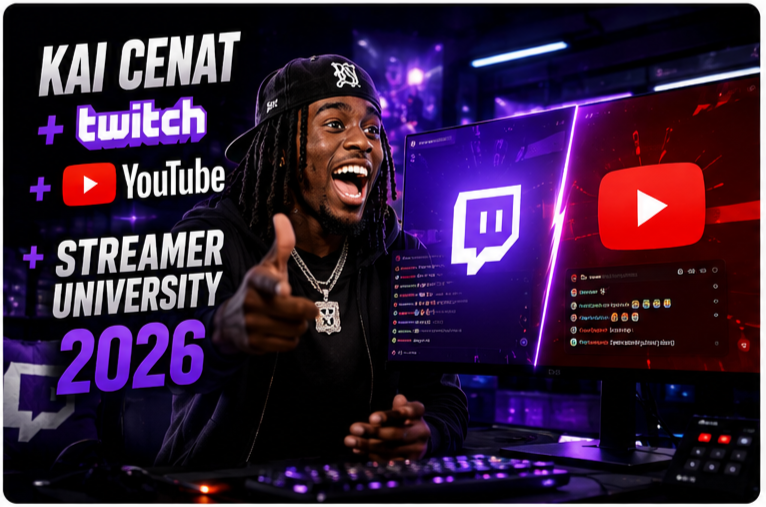
🔴 Twitch Meets YouTube
Kai's decision is important because creators don't necessarily have to choose one audience anymore.
Twitch has a massive live-streaming culture, while YouTube gives creators access to a huge video ecosystem and audiences who may not regularly use Twitch.
Broadcasting to both platforms means a creator can potentially:
- 🌐 Reach more viewers
- 📈 Grow across multiple platforms
- 🎬 Turn livestream moments into YouTube content
- 💬 Build communities in different places
- 🚀 Reduce dependence on a single platform
The technology behind simulstreaming is already accessible to creators, and both Twitch and YouTube provide guidance for broadcasting across platforms.
🎓 Why Streamer University Was the Perfect Test
Streamer University isn't a normal livestream.
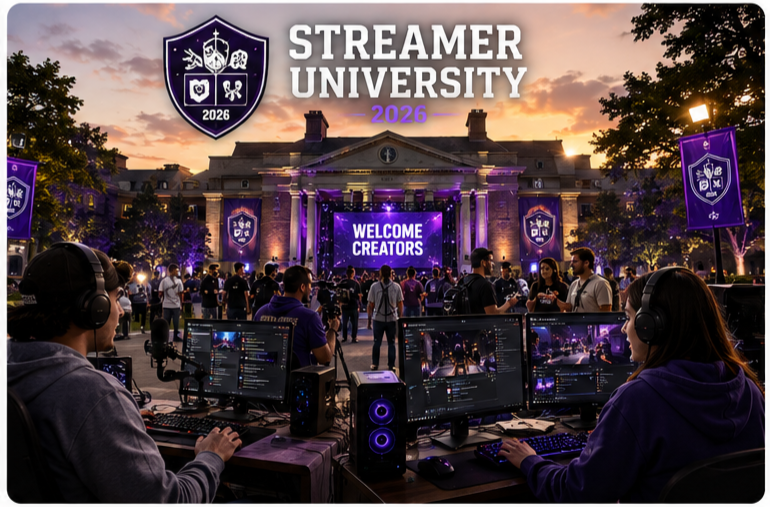
The 2026 event brought together 120 creators for a multi-day creator-focused program, with content broadcast across a much wider network of channels. Stream Hatchet reported 58.3 million hours watched across the six-day event.
That makes the project a perfect example of how a creator can turn a livestream into a multi-platform media event.
📱 The Bigger Shift: Creators Want Their Own Audience
The most interesting part isn't simply Twitch vs. YouTube.
It's the idea that creators can build an audience that follows them wherever they go.
A streamer who has spent years building followers can bring that community to multiple platforms instead of relying completely on one company's ecosystem.
This could become increasingly important for large creators, esports personalities, and gaming communities.
💬 Discord Becomes the Community Layer
There is another platform benefiting from this shift: Discord.
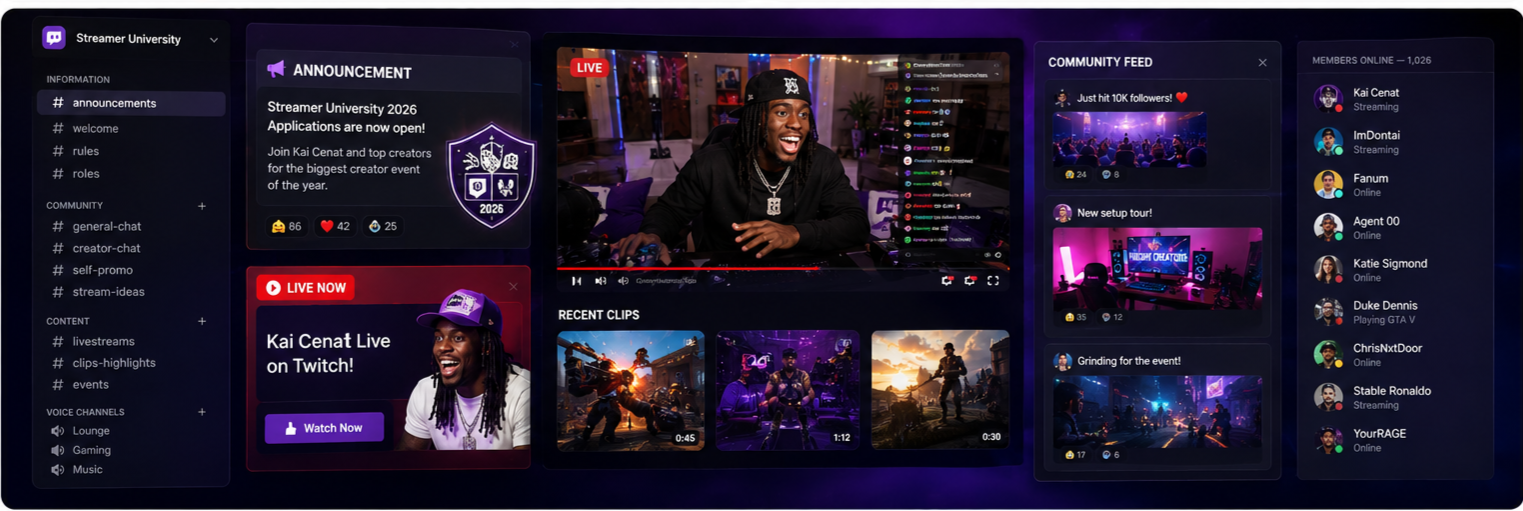
A livestream might happen on Twitch or YouTube, but the conversation can continue inside a Discord server.
Creators can use Discord for:
Announcements → Live notifications → Clips → Discussions → Community events
That gives fans a permanent place to stay connected even when the livestream ends.
🚀 What Happens Next?
Kai Cenat's move doesn't mean Twitch is disappearing or that every streamer will immediately become a multi-platform creator.
But it does show that the old idea of “one creator, one platform” is becoming harder to maintain.
With simulcasting becoming easier and audiences spread across different services, the future of livestreaming may belong to creators who can build communities rather than simply build platform-specific audiences.
The platform hosts the stream. The creator owns the community.
🔥 Final Take
Kai Cenat's Twitch and YouTube simulcast is more than a technical experiment.
It represents a broader change in the creator economy.
As major personalities become bigger than any single platform, multi-platform streaming, Discord communities, and cross-platform content could become the standard rather than the exception.
And Streamer University 2026 may end up being remembered as one of the clearest examples of that transition.